My search for Wall Madonna’s in the Valmalenco began in Torre di Santa Maria. I knew from research that – somewhere – and if lucky – I would find an ancient Madonna Enthroned in this small village or in one of its frazioni. The Valmalenco is a valley that is considered part of the Valtellina even though it begins above Sondrio and proceeds laterally and north for about ten miles to the Pizzo Bernina – the highest mountain in the Rhaetian Alps. It is a lovely valley, and easy to access and drive through. There is skiing in the mountains here and because of this the roads are wide and well managed even to the smaller frazioni – something one cannot count on in the Valtellina. Because the sun does not favor the Orobic side of the Valtellina the alto-valley villages are accessible only in the warmer months and host pastoralism rather than the viticulture which the sun makes possible on the Rhaetian side. Hence, the roads need not be maintained for a 12-month season and fall to the responsibility of the comune rather than the state.
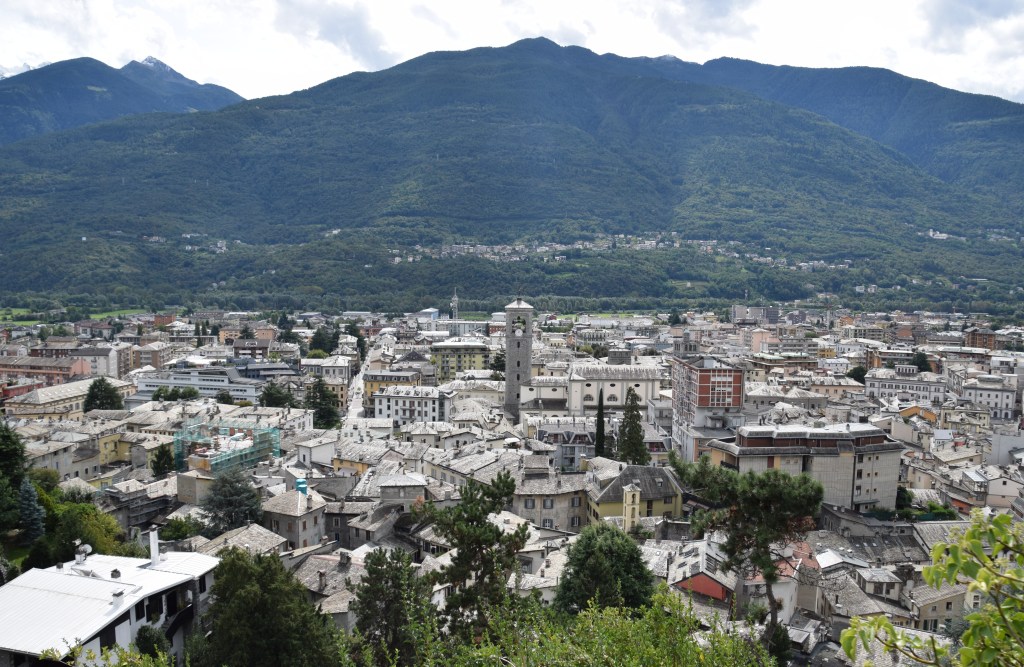
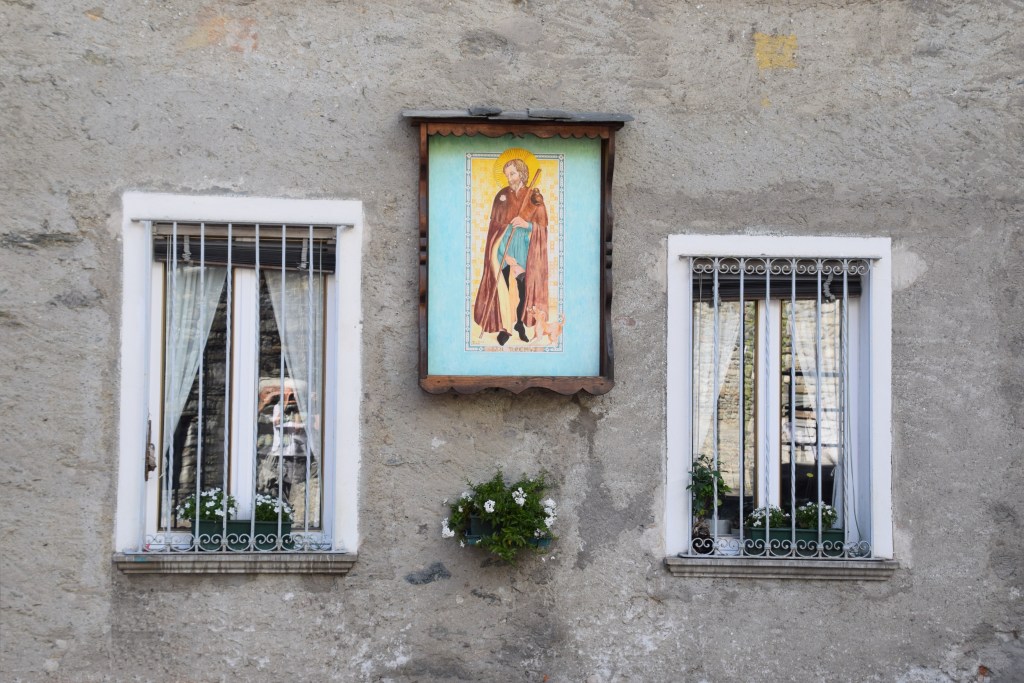
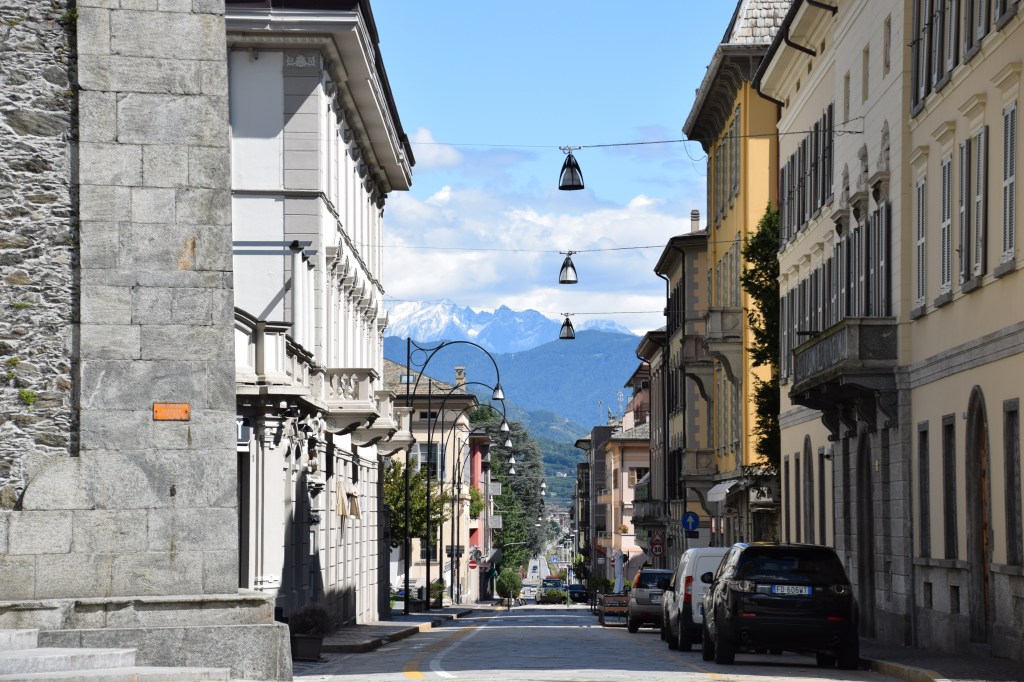
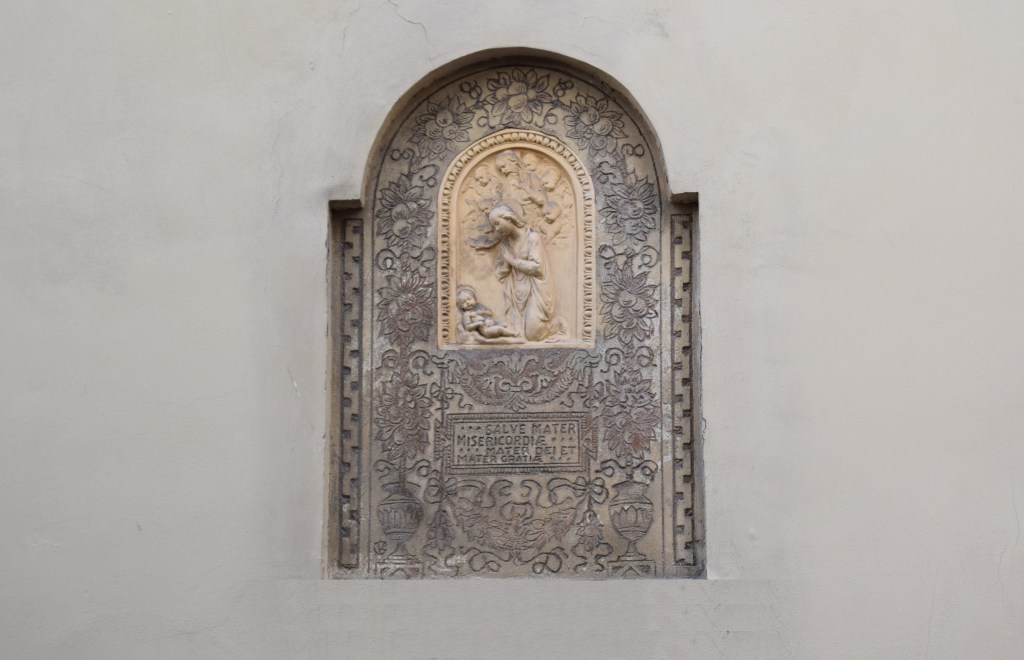
There are only five major villages and I visited two – Torre di Santa Maria and Spiriana. I came looking for a Wall Madonna in Torre di Santa Maria – a Madonna Enthroned. Because the reference material I am using mentions the Madonna but included no photo, I am not sure I found it – perhaps I did!

It can be difficult to find an old fresco even with a photo because the source materials will locate a Madonna in the main town when it is actually on a home in one of the frazioni associated with the town. This makes my search interesting but lengthy. For example, in looking for a fresco painted by Francesco Ambrosione in Castione Andevenno I had to search 16 frazioni to find it!
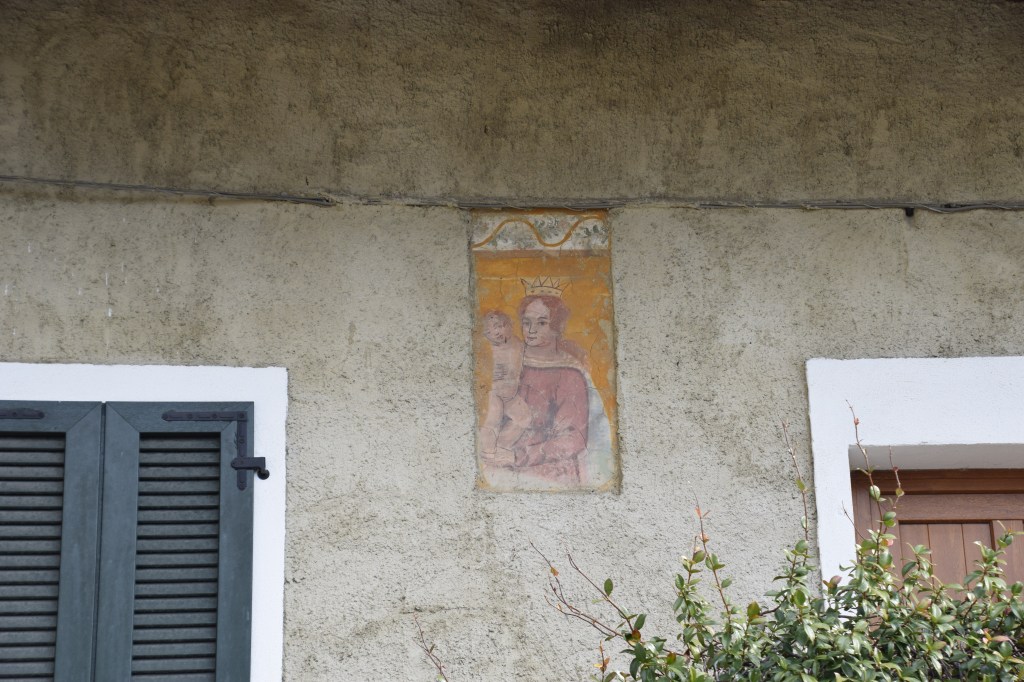
But this post is not dedicated to the Wall Madonna of my quest even though I include it. I am offering a brief glimpse of three villages – Torre di Santa Maria (800 meters) and Spiriana (754 meters) in the Valmalenco and Fusine (285 meters) in the Valtellina in order to share the work of the Brescian artist Vincenzo de Barberis (born Brescia 1490, died Sondrio 1551).
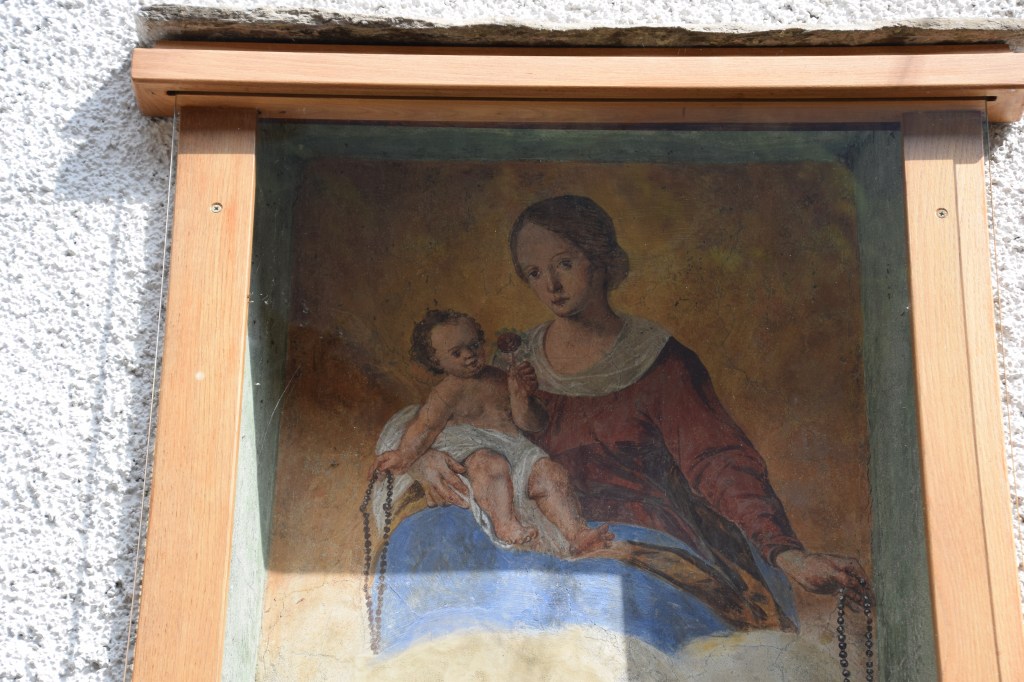
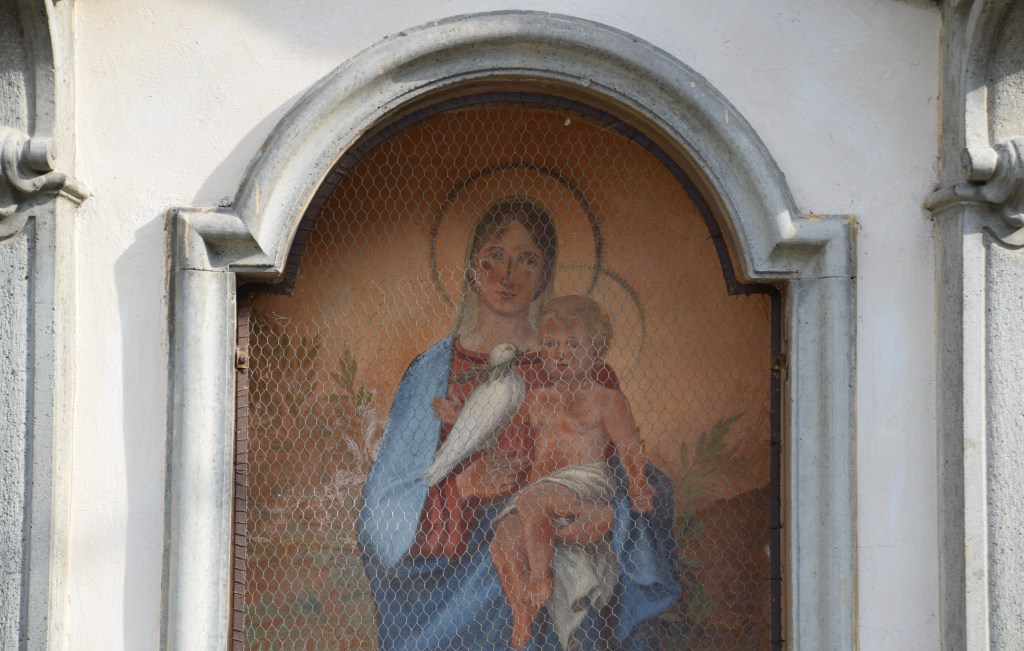
This is the Madonna Enthroned – a Madonna del Rosario – that I found in Torre di Santa Maria. This small excerpt is what is left of a much larger fresco and it is behind glass. The fresco is dated 1676 as can be seen by the ‘preserved’ date from the top of the original fresco. I am not certain that this is the Wall Madonna mentioned in the small booklet – Sengi Sacre Sulle Case published in 2010 by the Comunità Montana Valtellina di Sondrio that I am consulting. This is only the result of the first day of my search for Wall Madonna’s in the Valmalenco.
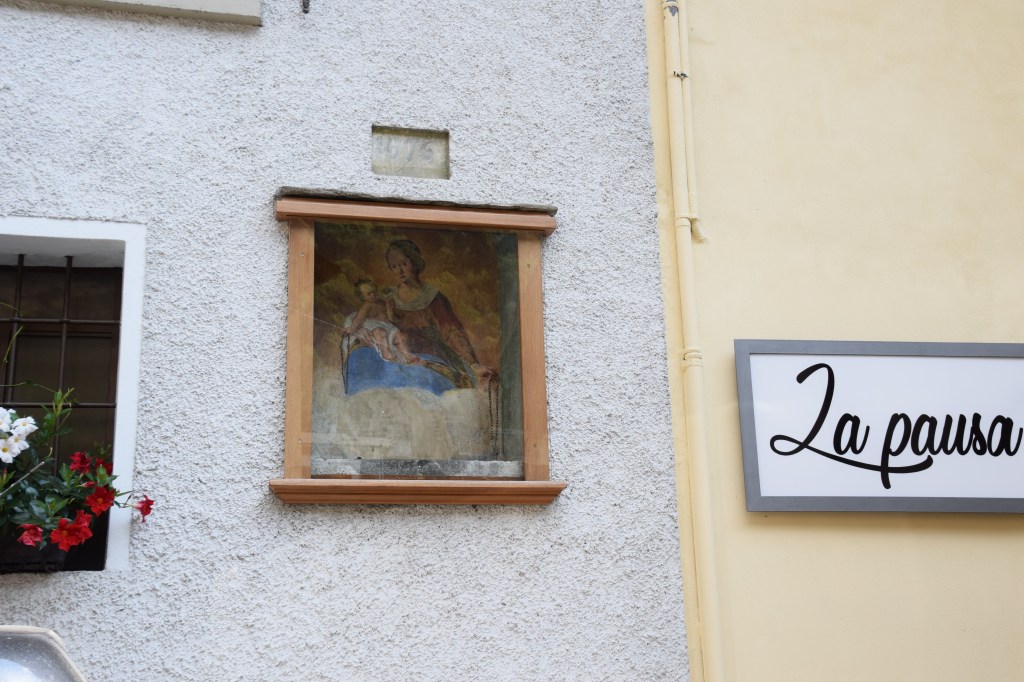
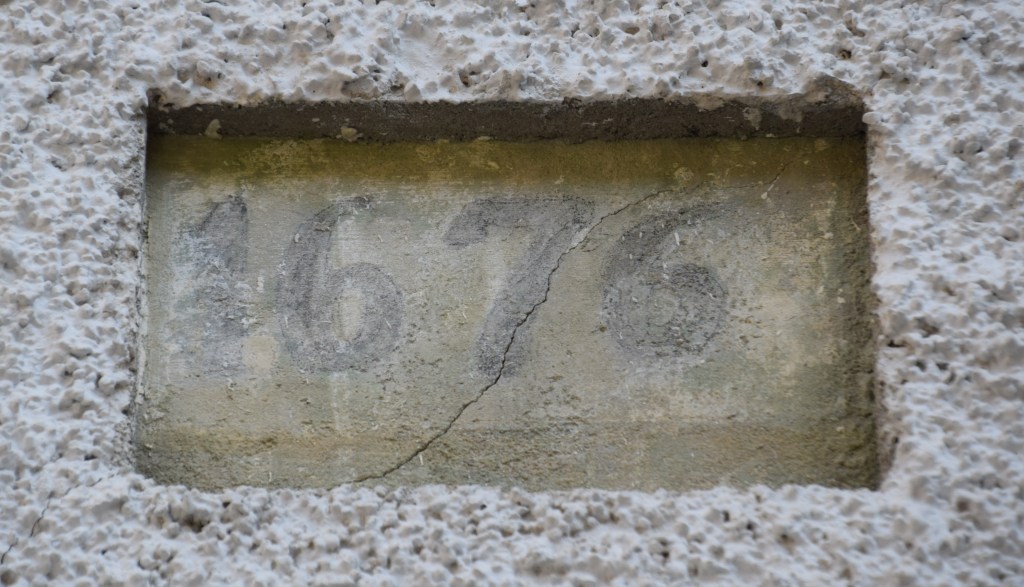
The remains of the original fresco are behind glass and because of the glare, the small size, and the location the fresco is easily missed. This Wall Madonna is located on via Risorgimento next to the sign for a pizzeria – La Pausa. This location is where the old via Lopalto – foot traffic only – intersects the via Risogimento. This Madonna and Child is the only affresco that I found in the village proper.
When I visit a village I begin in the historic center which always includes a church and a large Lavatoio Comunale – a municipal wash house – a communal laundry. It is very common to find an old fresco near to the town laundry trough where all the women gathered to do the wash. Although this was not the case in Torre di Santa Maria, I did find the Madonna del Rosario below the church and between two wash troughs – one southeast of the church near the cemetery and one southwest of the church on an old footpath along which one stills finds occupied homes.
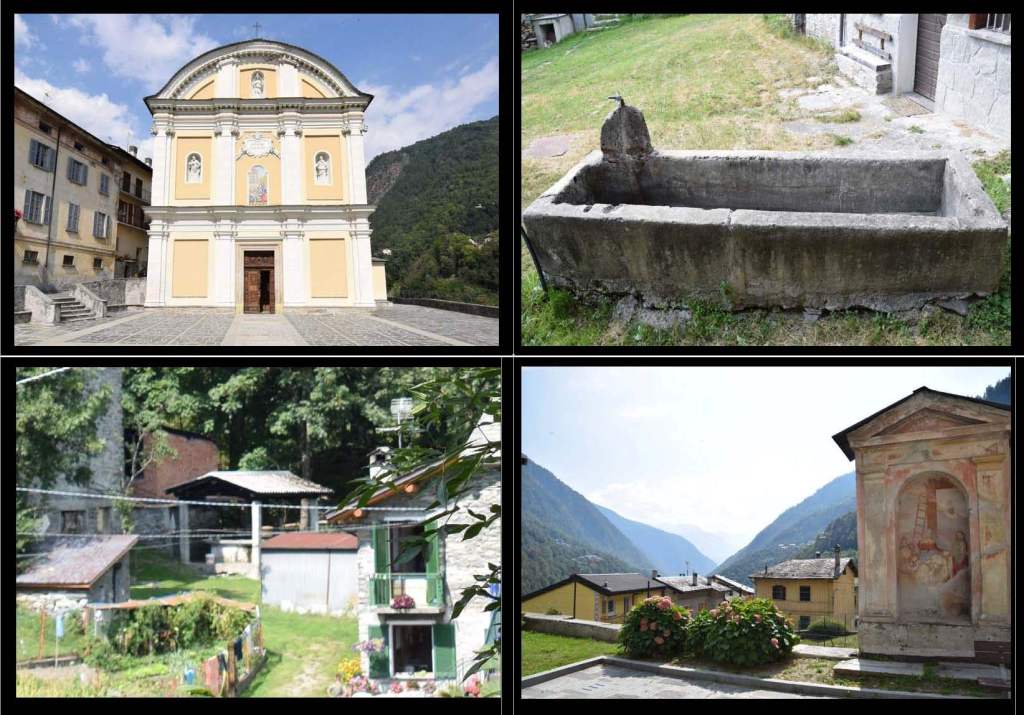
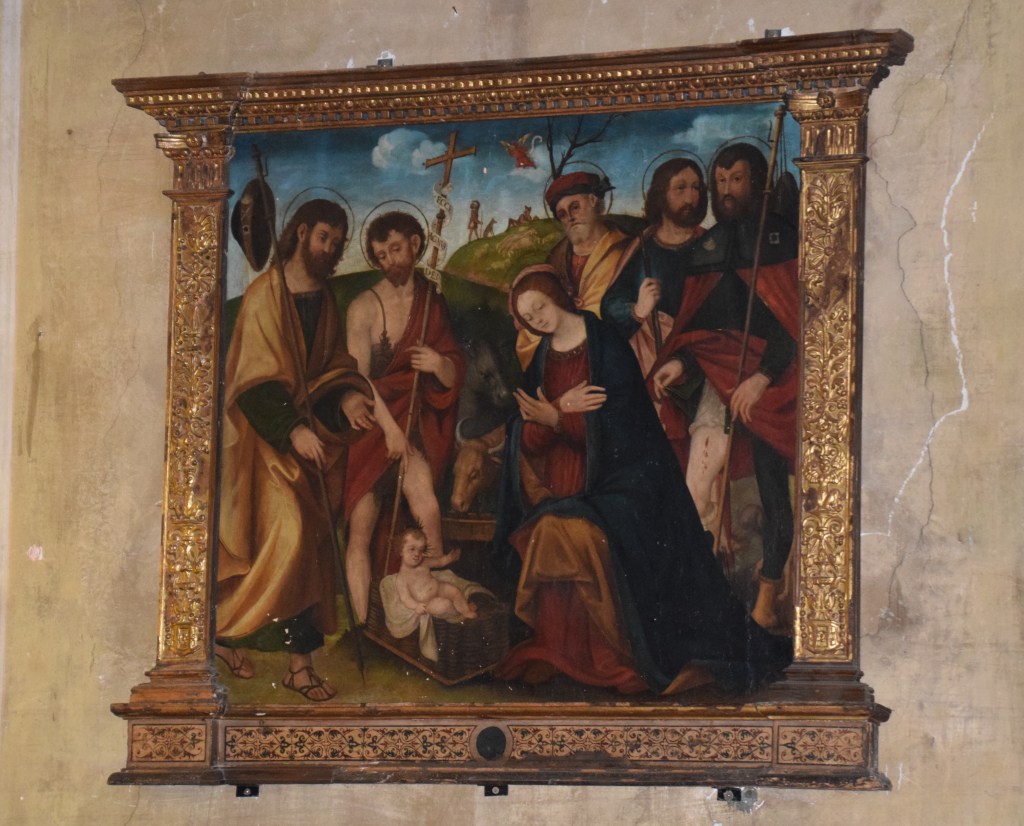
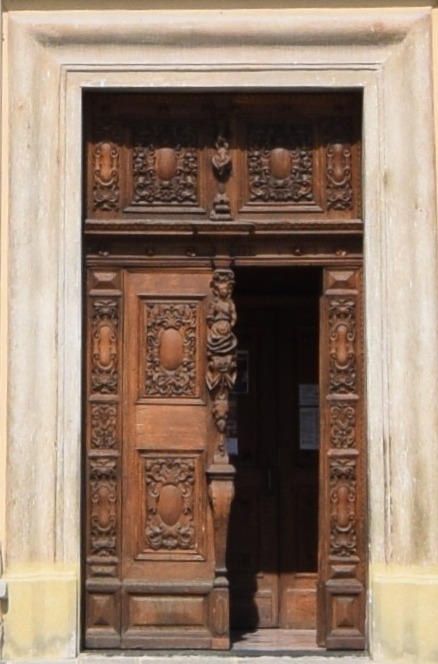
The Chiesa di Santa Maria Nascente is outstanding in the center of the village high above the valley floor through which flows the River Mellaro. The church – rebuilt in 1620 – incorporated and replaced a smaller church built in 1415. The beautiful carved entry doors date to 1685. Inside the church I found the preserved remains of an original Madonna fresco and the gorgeous nativity painted by Vincenzo de Barberis (featured here and below the title of the blog).
Vincenzo de Barberis was active in various towns in the Valtellina from 1521 to 1551. Because a sculptor with the same name was active in Brecia from 1551 to 1576 there is speculation that this Vincenzo de Barberis and the Vicenzo de Barberis whose work is in Torre di Santa Maria were the same artist. The argument was that artist often trained in to work in different mediums and that Barberis returned to Brescia in his old age and work there until dying in his 80’s. Currently, the agreement is the these two artist are not the same and that Vincenzo de Barberis died in Sondrio in 1551. Given life expectancy in this era and the presence of the plague in the Valtellina at this time, it is more likely that these were two different artists.
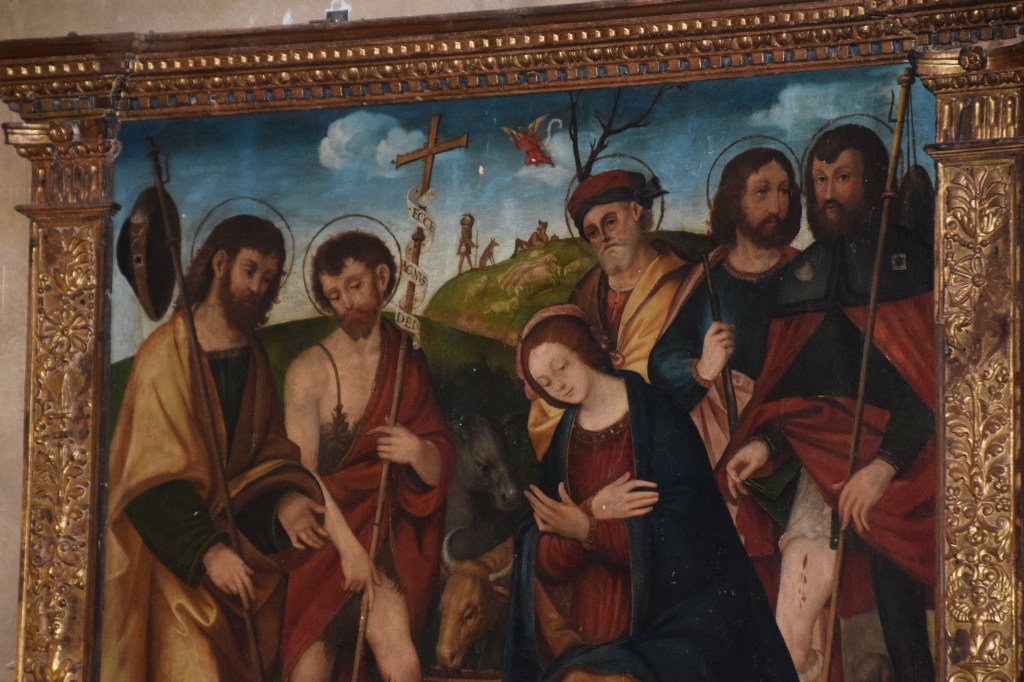
This beautiful Nativity certainly commissioned to compliment the church of the same name – The Nativity of Saint Mary – is cluttered with saints and imagery – San Gottardo and Saint John the Baptist on Mary’s right, gaze down at the infant Jesus as does Mary and Saint Philip on her left. Saint James looks off to the distance and Saint Rocco gazes at the viewer. In the background are an ass and an ox and on the hill two shepherds with a dog and a flock of sheep. An angel hovers above.

Vincenzo de Barberis’ work is found in many Valtellina towns such as Morbegno, Caiolo, Fusine. Spiriana, Sassella, Torre de Santa Maria, Sondrio, and Teglio. I had the pleasure of encountering his work in three churches – the Chiesa di Santa Maria Nascente in Torre di Santa Maria, the Chiesa di San Lorenzo in Fusine, and the Chiesa di San Gottardo in Spiriana. Although I have visited most of the towns in which de Barberis painted most of the churches with his work are not open regularly. For example, the Chiesa San Antonio which has a series of frescoes is desanctified and used as a musical venue. Most of the frescoes are not viewable being blocked by equipment and other sundries. The sanctuary in Sassella is only open for festivals, as is St Victor’s Church in Caiolo.
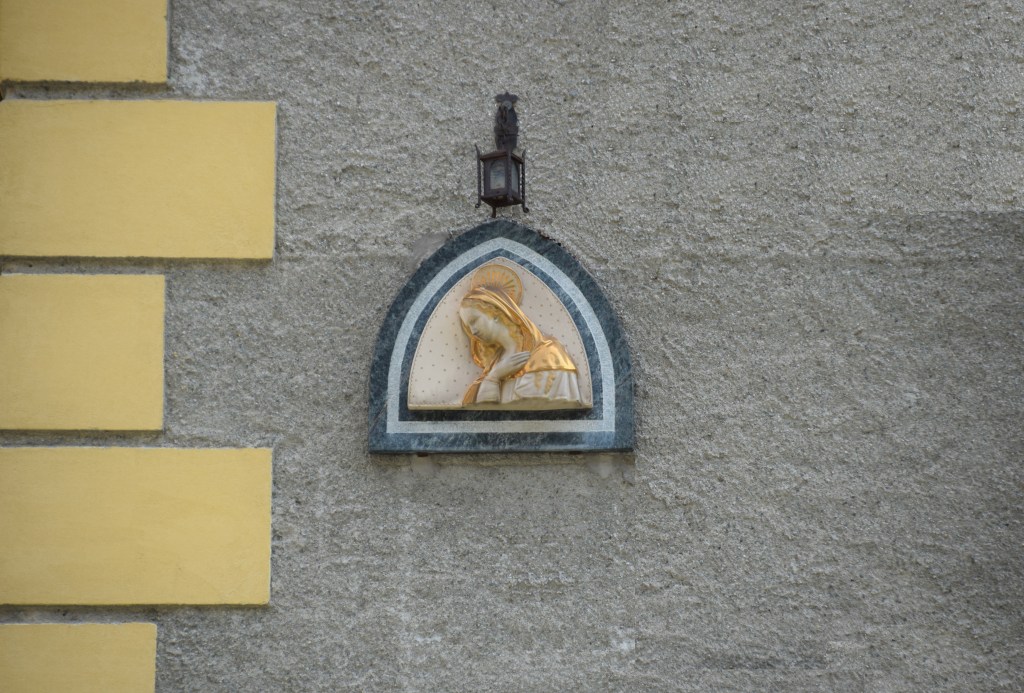
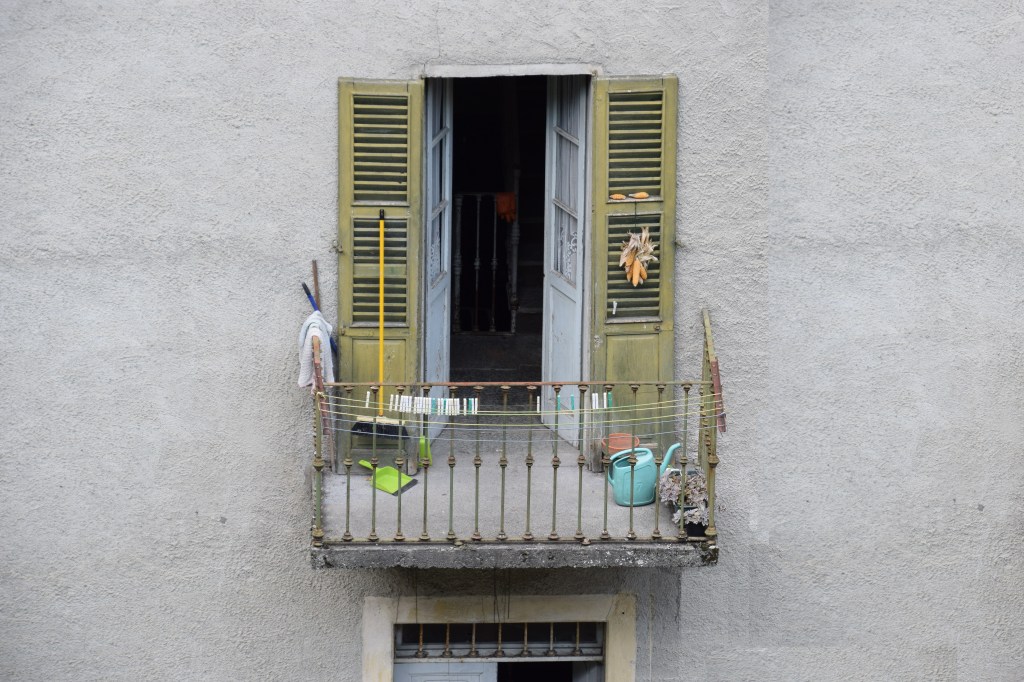
Although Vincenzo de Barberis’ work is not as fabulous as Bernardino Luini’s with whom he collaborated in the Milan area, his paintings are – for me – representative of the last art of my preferred time period. They are colorful and wonderful but moving toward the naturalistic style of representation that ‘normalizes’ the sacred and robs it of much of the other-worldliness that I find so appealing in the Gothic art and art of the ancient icons.
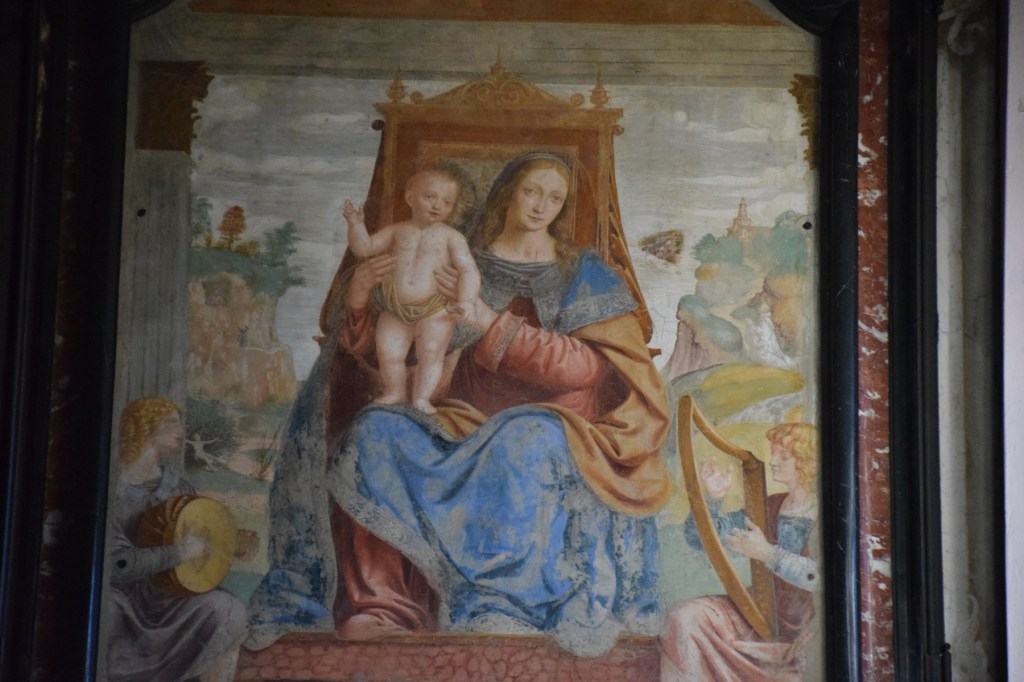
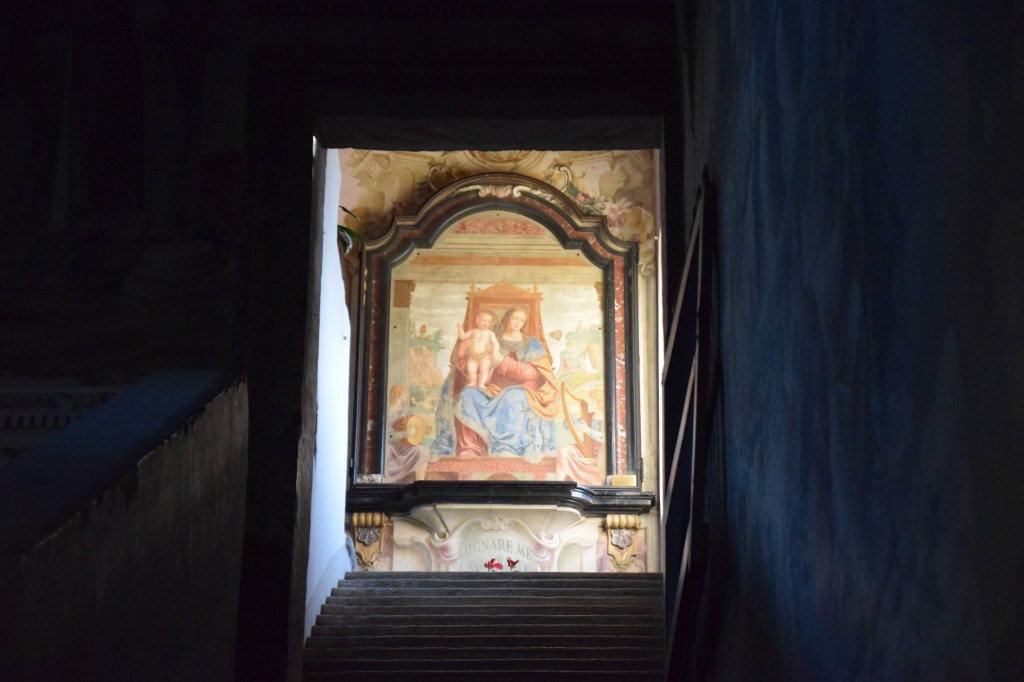
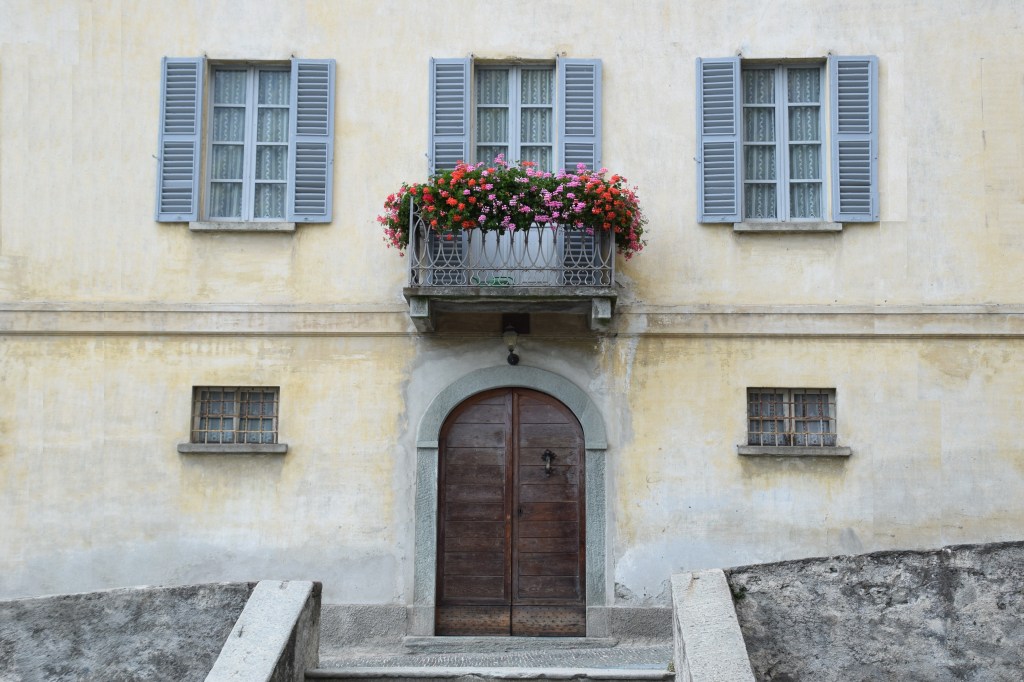
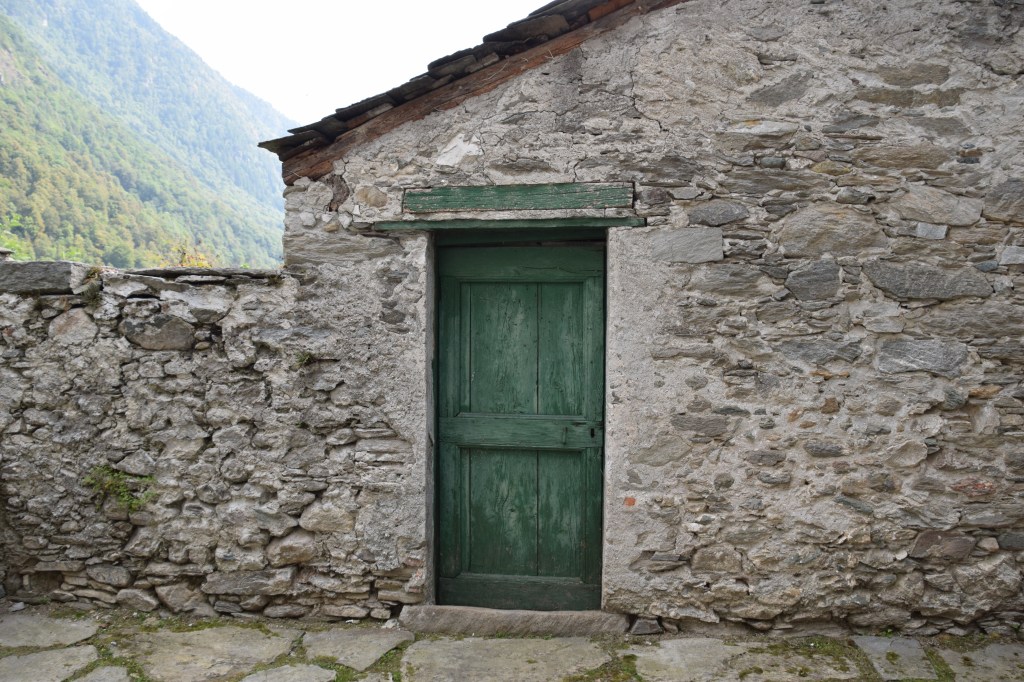
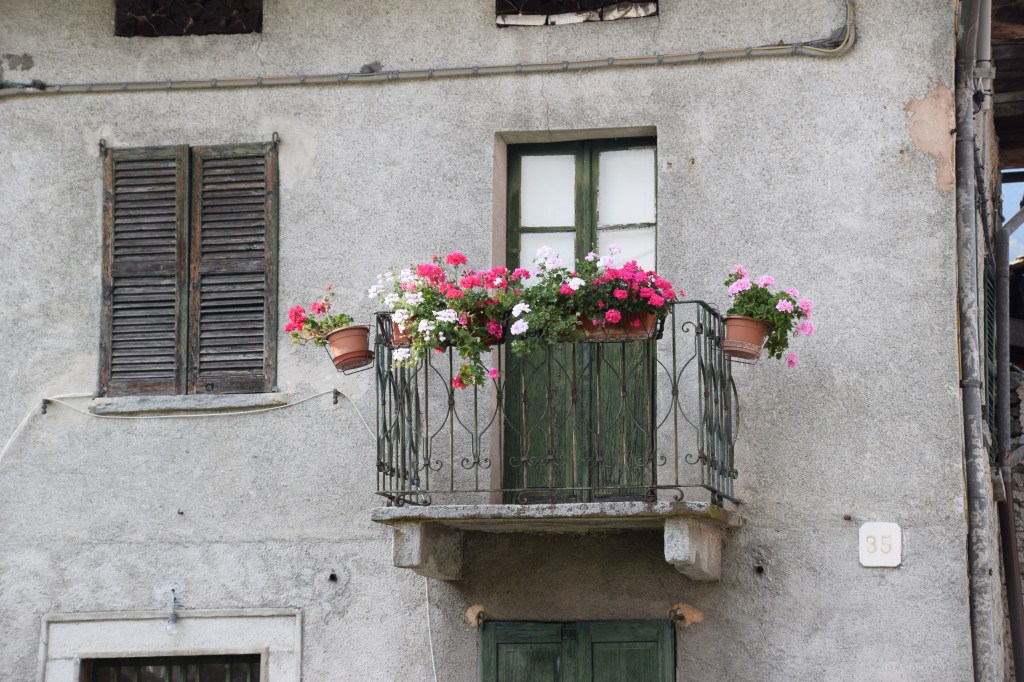
So – here are the best photos of the Vincenzo de Barberis paintings that I found – all being difficult to photograph well because of lighting – mixed in with a few doors and Wall Madonna’s. I hope you enjoy this wonderful art – free for the viewing and in equally lovely old towns situated in the landscapes of two breathtaking alpine valleys!
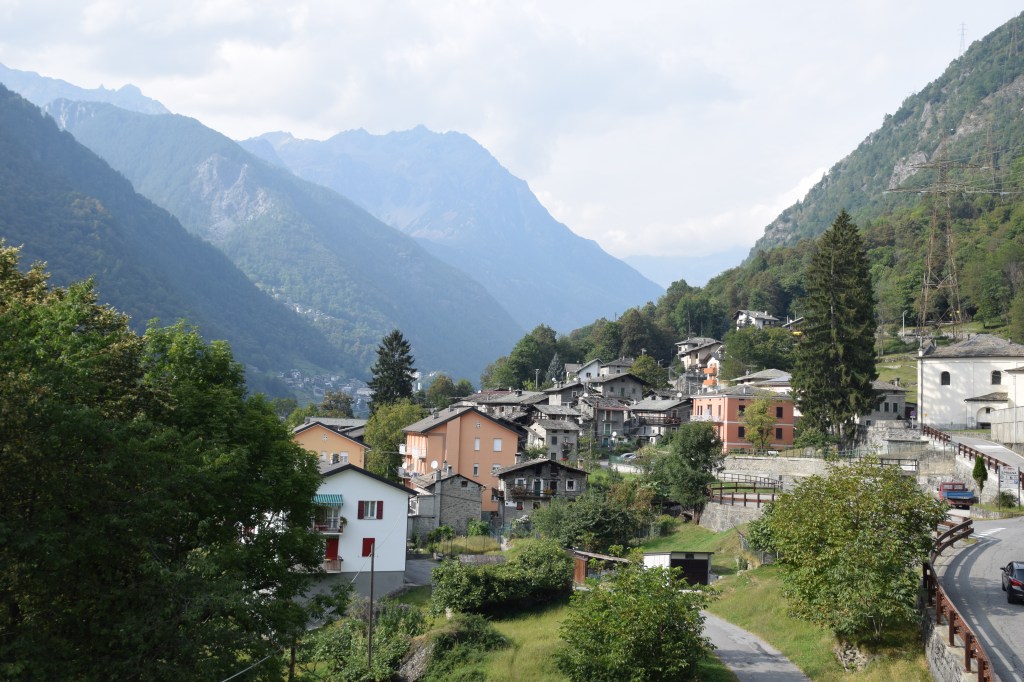
Spiriana is one of the five village in the Valmalenco. It is across the River Mallero. With 79 inhabitants it is fully occupied. There is an old castello here that looks more like an apartment building than a fortification. The Chiesa di San Gottardo was built in 1459, rebuilt in 1625 and updated in 1818 and the early 1900’s. The interior ceiling and vault were frescoed by Luigi Tagliaferri (Pagnona, 1841-Mandello del Lario, 1927).
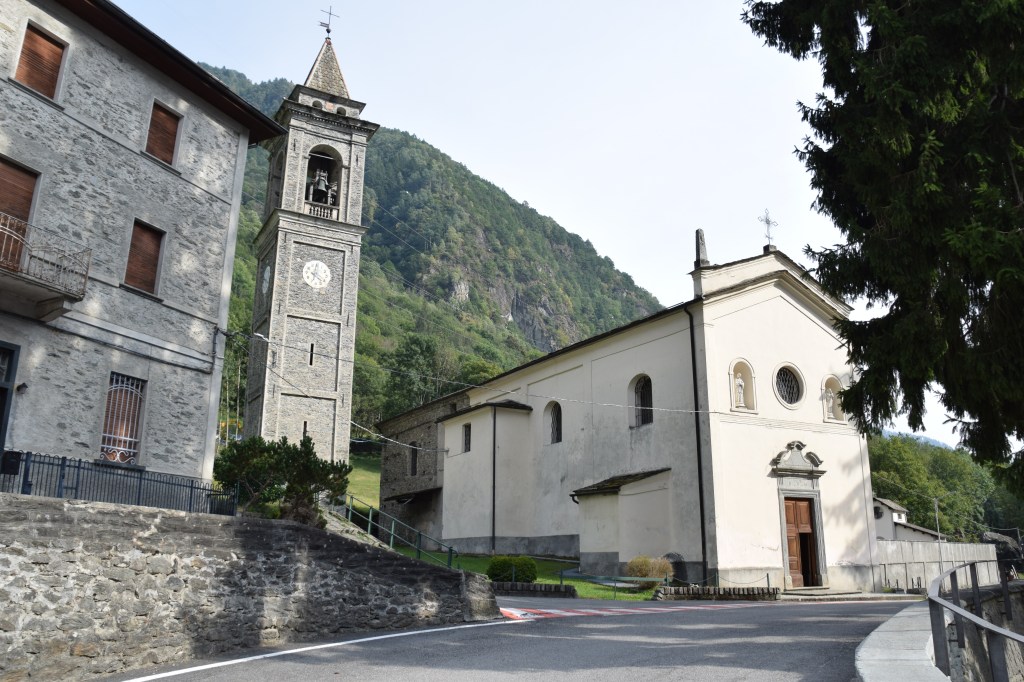

The Vincenzo de Barberis Madonna was moved from a back wall to the altar in recent years. The altar candles and tabernacle block a full view of the painting.
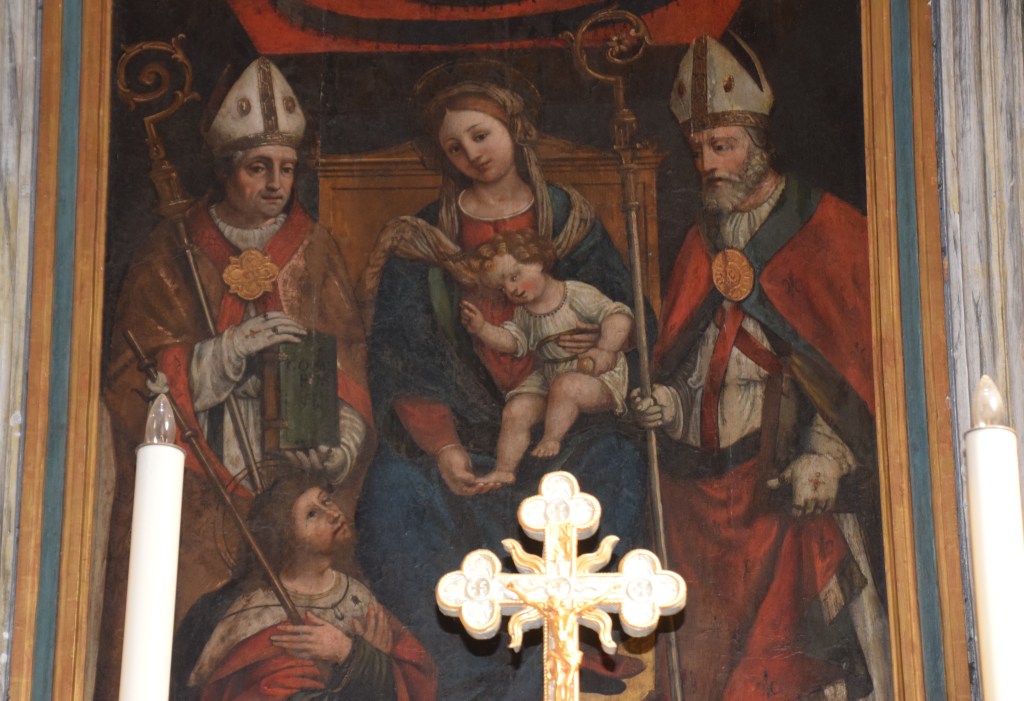
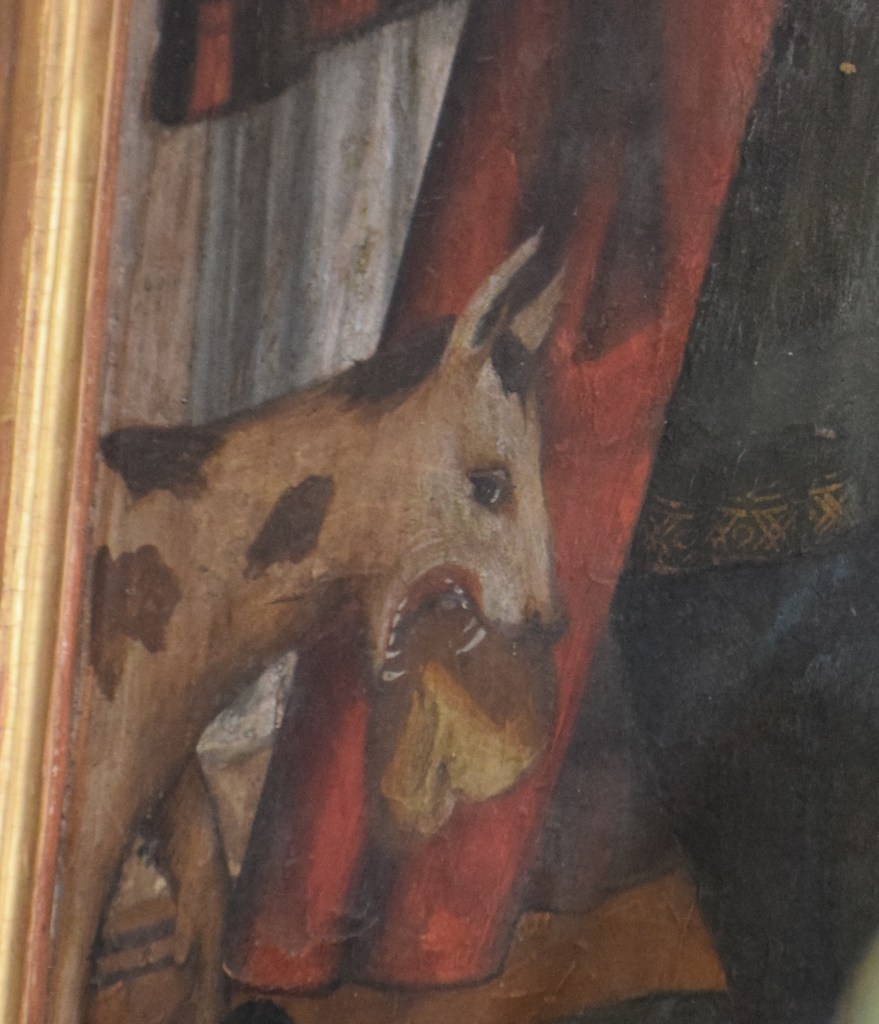
The painting shows an enthroned Madonna and Child. Saint Rocco – with his dog holding a loaf of bread – kneels at Mary’s feet gazing up at the infant Jesus who offers a benediction. San Gottardo – the dedicated saint of the village – holds a bible on Mary’s right offering it to the infant. Saint Donato stands on Mary’s left.
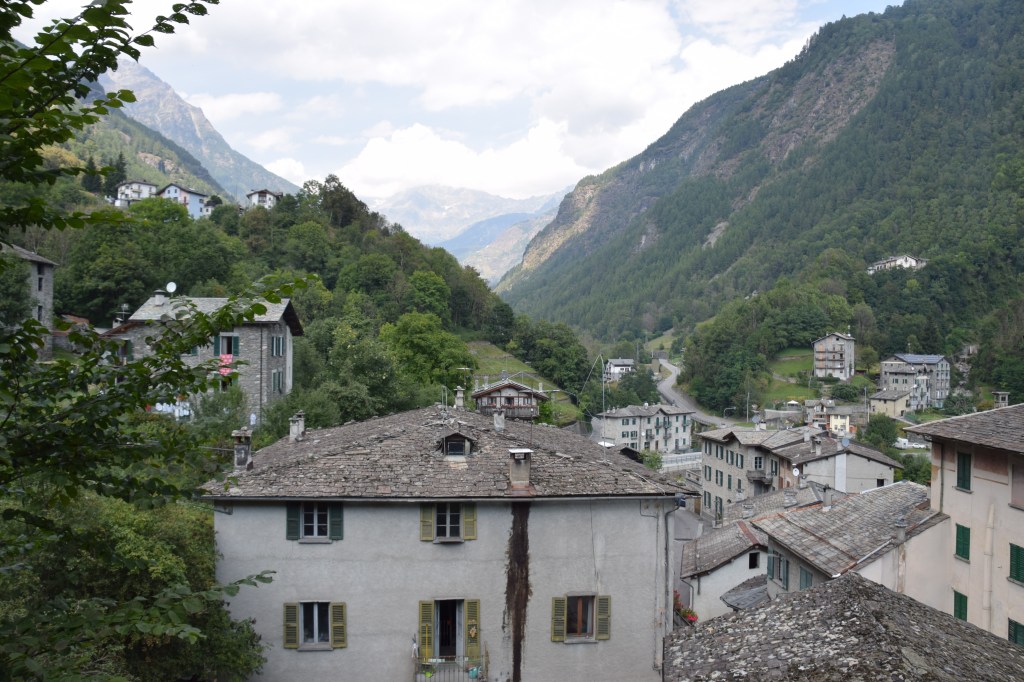
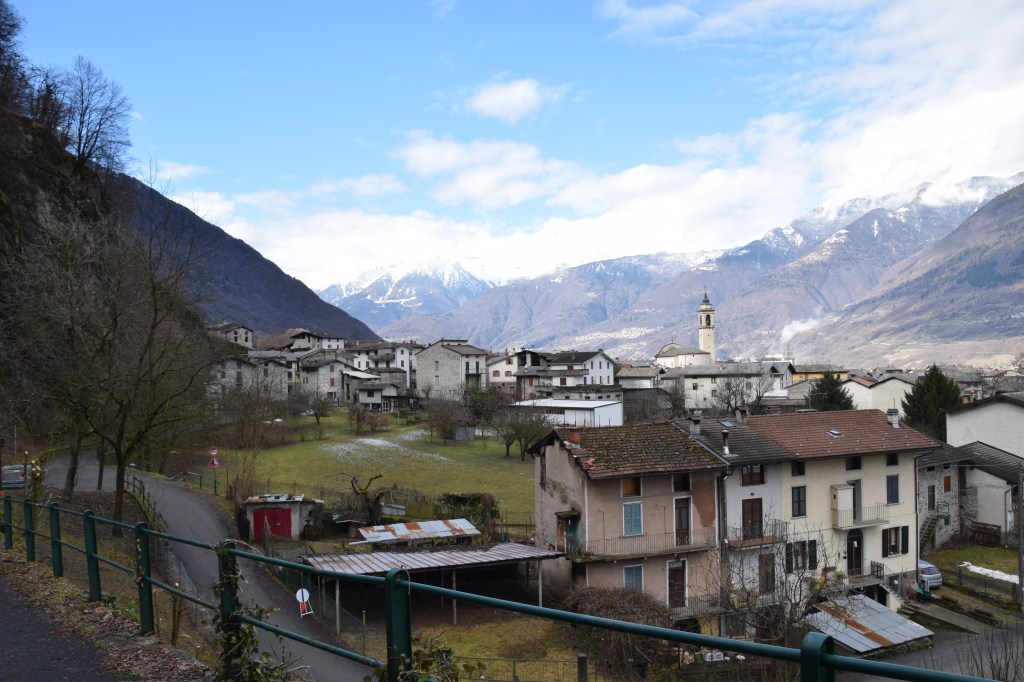
Some views from the village of Spiriana!


Fusine is a town on the Orobic side of the Valtellina through which lies the Strada della Valmadre that leads through the Valmadre to the Passo Dordona over which is Bergamo in the Val Brembana. Here one finds a treasure in old frescoes dating from the 15th to the 19th-centuries. Many painters of the Valtellina frescoes came from Bergamo crossing over the alps by the Passo Dordona outside Fusine or the Passo San Marco outside Morbegno.
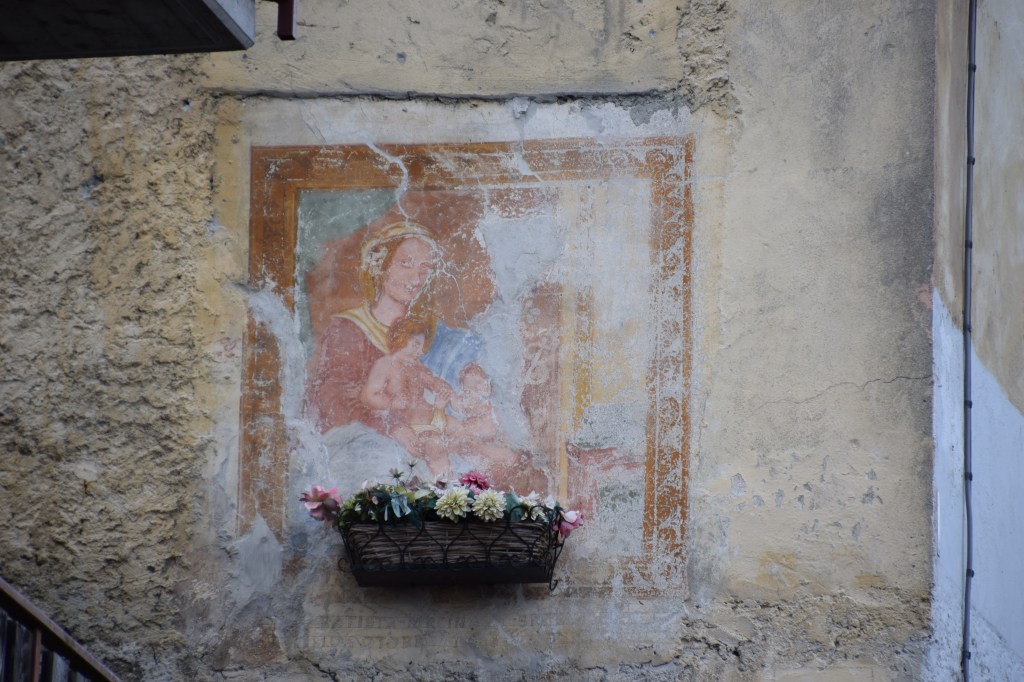
This wonderful fresco is located in Fusine on a home that is at the foot of the old Mulatierra that leads to the ValMadre. It was painted in the late 17th-century by Francesco Ambrosione who was from Branzi – near Bergamo and at the mouth of the Val Brembana. Francesco and Giuseppe Ambrosione – the affine link between the two is not known – were known as ‘magistri vagantes’ – wandering painters. They worked in the Valtellina and Vassassina – both valleys accessible to the bergamasco by mountain passes and mulatierra. There are four identified Ambrosione frescoes in the Valtellina – one in Fusine, two in Caiolo, and one in Gausto – a tiny frazione of Castione Andevenno.
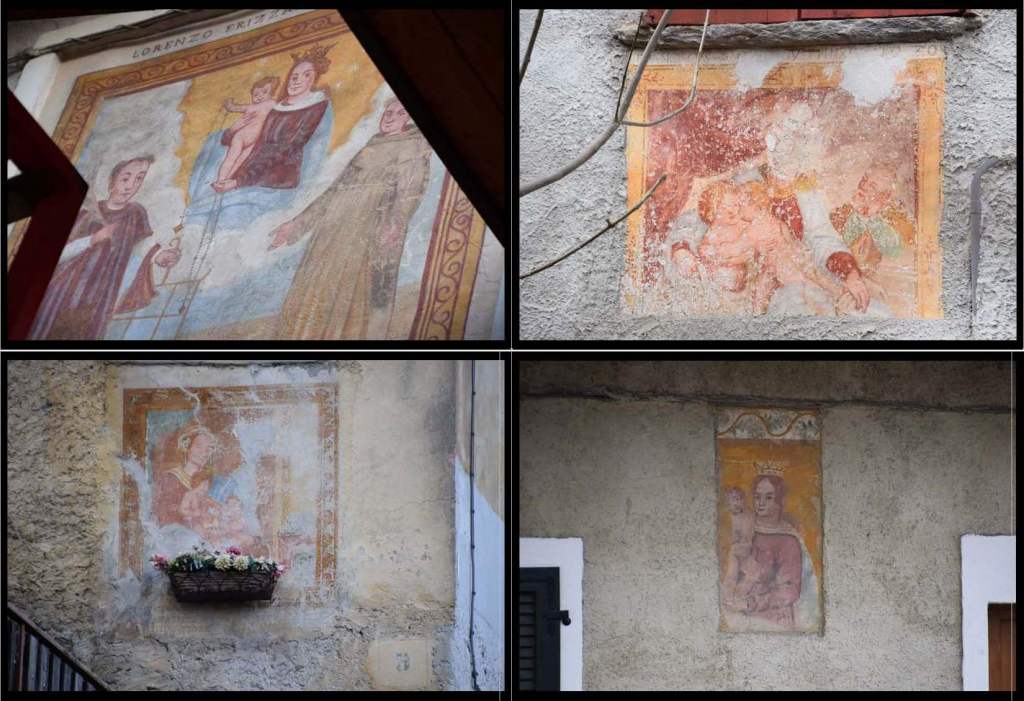
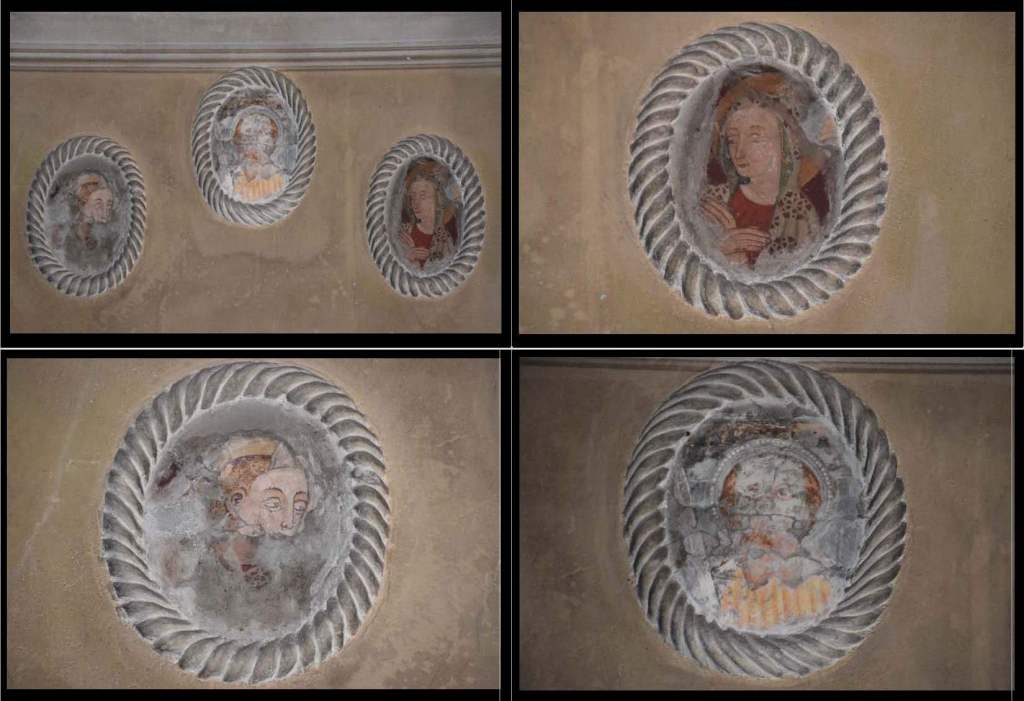
This is a montage of the four frescoes painted by Francesco Ambrisione. The two fresco on the top left and right are found in Caiolo Alto. The fresco on the bottom right is in Gausto – a frazione of Castione Andevenno, and the fresco on the bottom right is in Fusine.
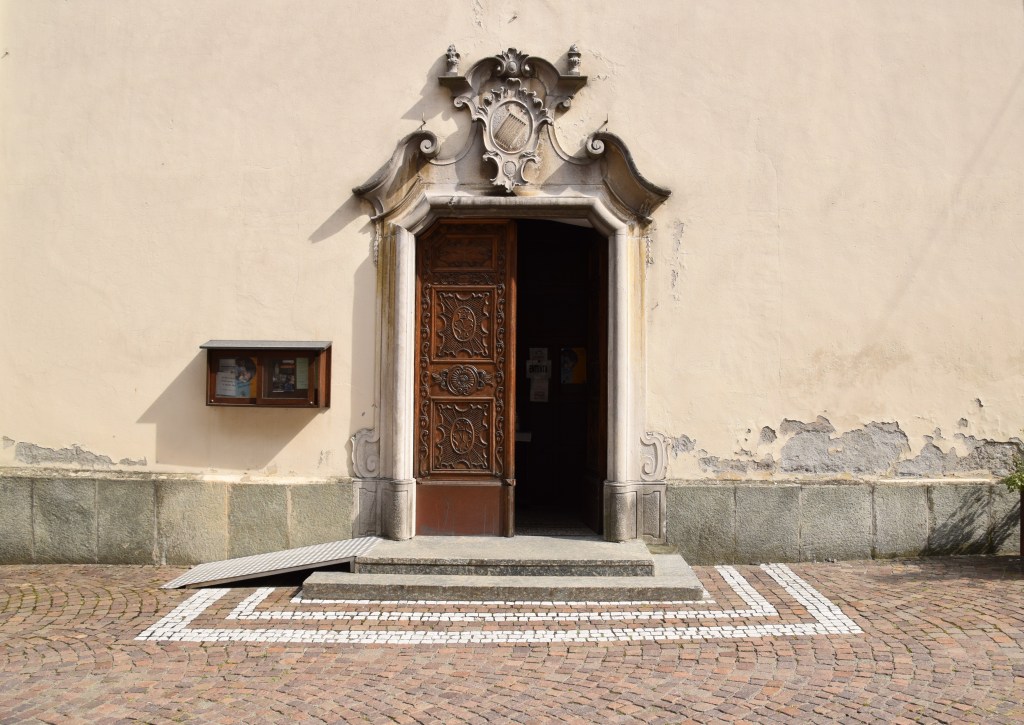
These are the entry doors to the Chiesa di San Lorenzo. An image of a grill – on which the dedicated saint was martyred – is carved above the door. The church dates to the early 16th-century
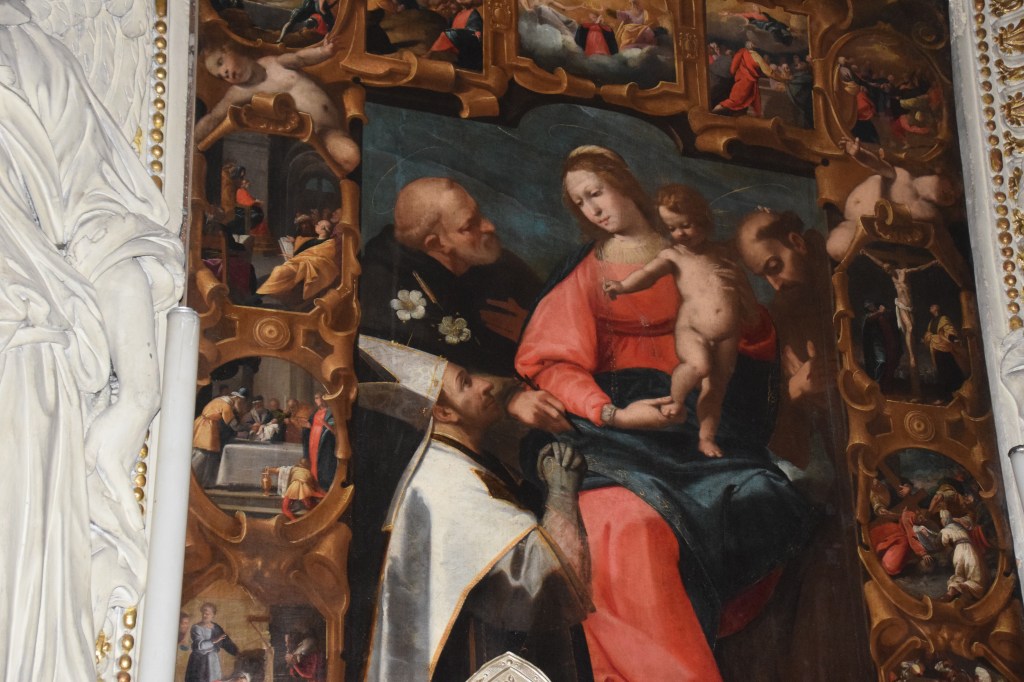
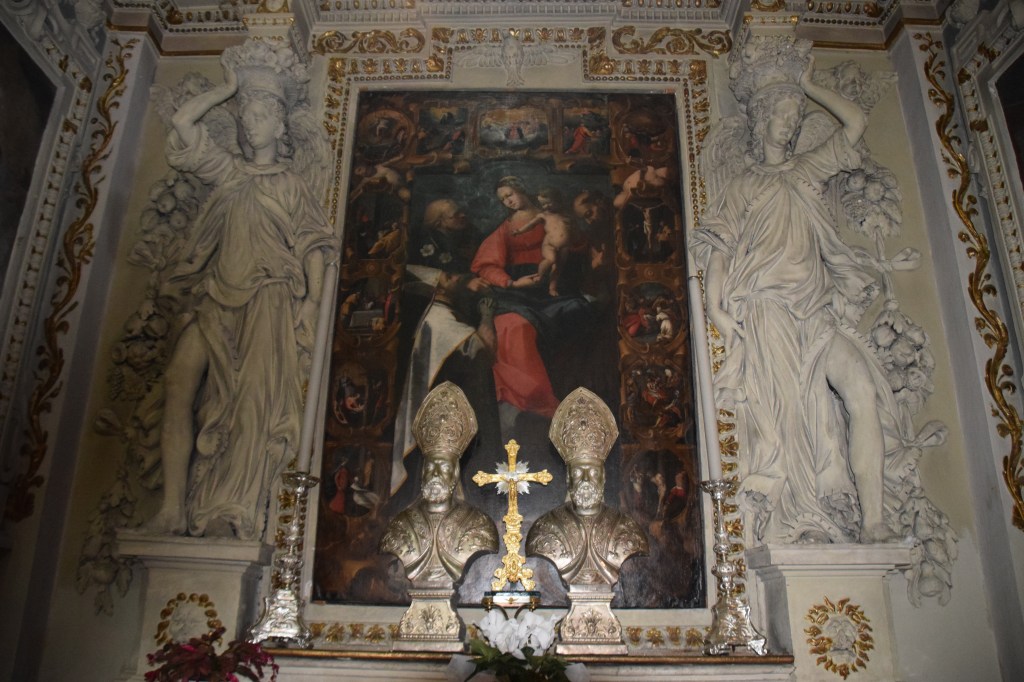
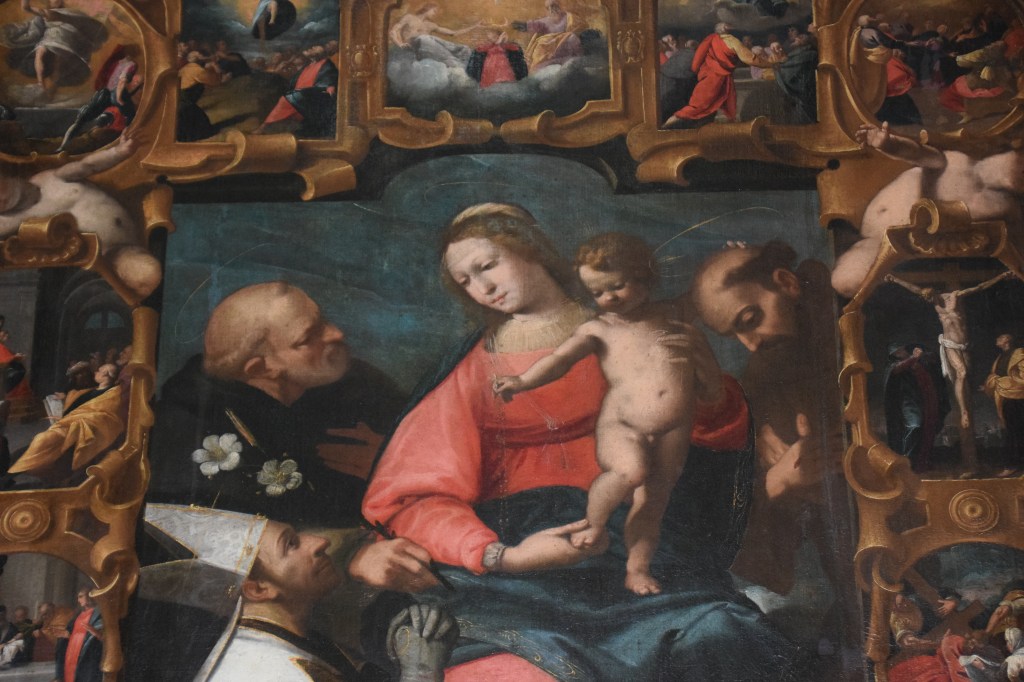
This painting by Vincenzo de Barberis is astonishing in its colors, imagery, and brightness and it was incredibly difficult to photograph. The work was illuminated by neither electric nor natural light. The paining cannot be fully seen and the darkness required the use of a camera light which bounced off the paintings varnish and created a glare. I am posting the best of the photos I took. In this magnificent work a bishop – likely San Gottardo – kneels at Mary’s feet, Saint Dominic is on Mary’s right and Saint Bernard of Clairvaux in on her left. Mary and the saints are surrounded by scenes from the life of Christ. Each small scene is beautifully detailed.
Some views from Fusine!
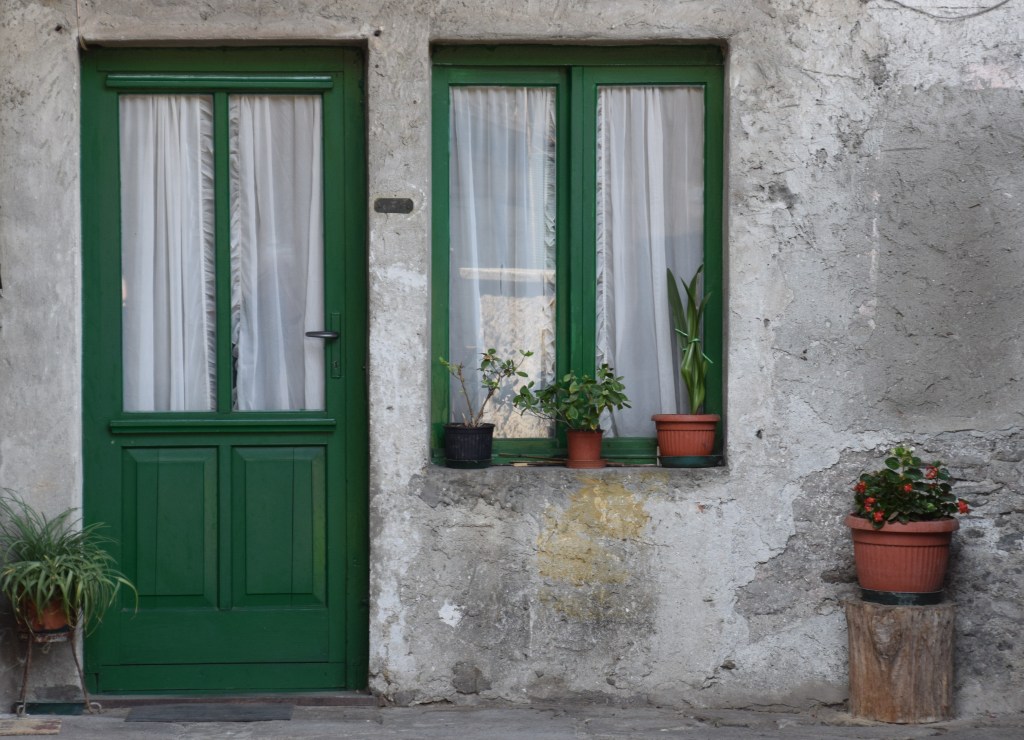
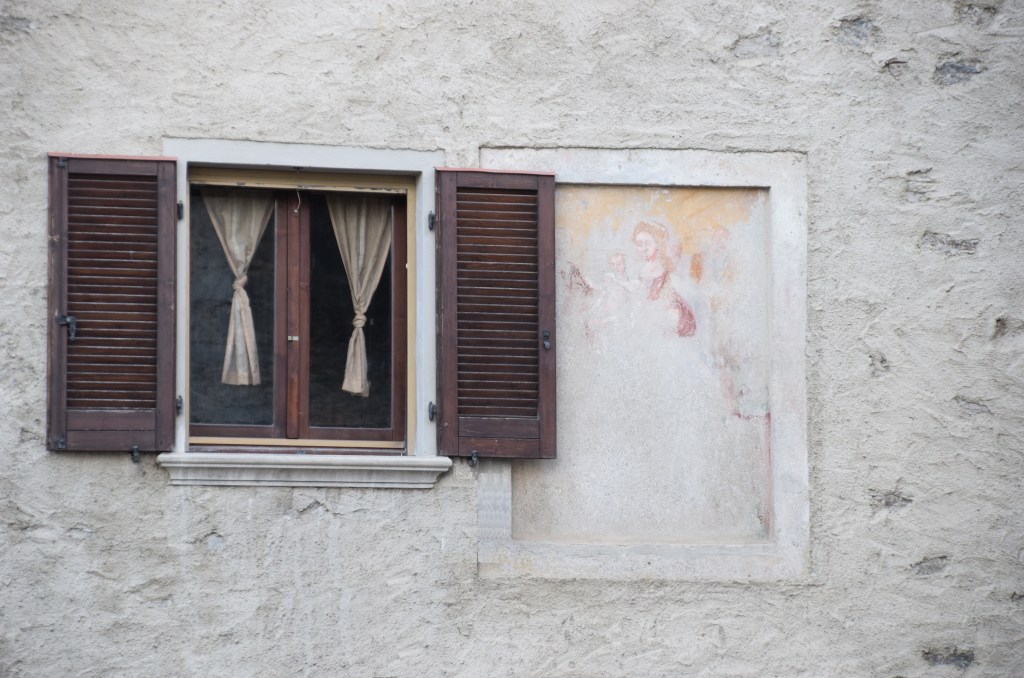
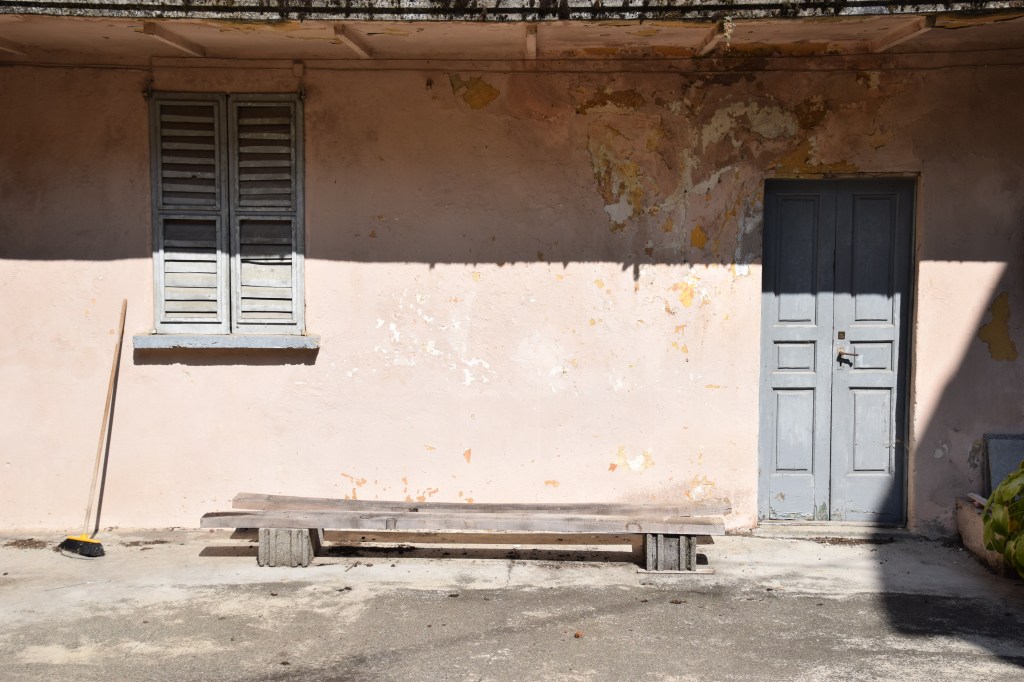
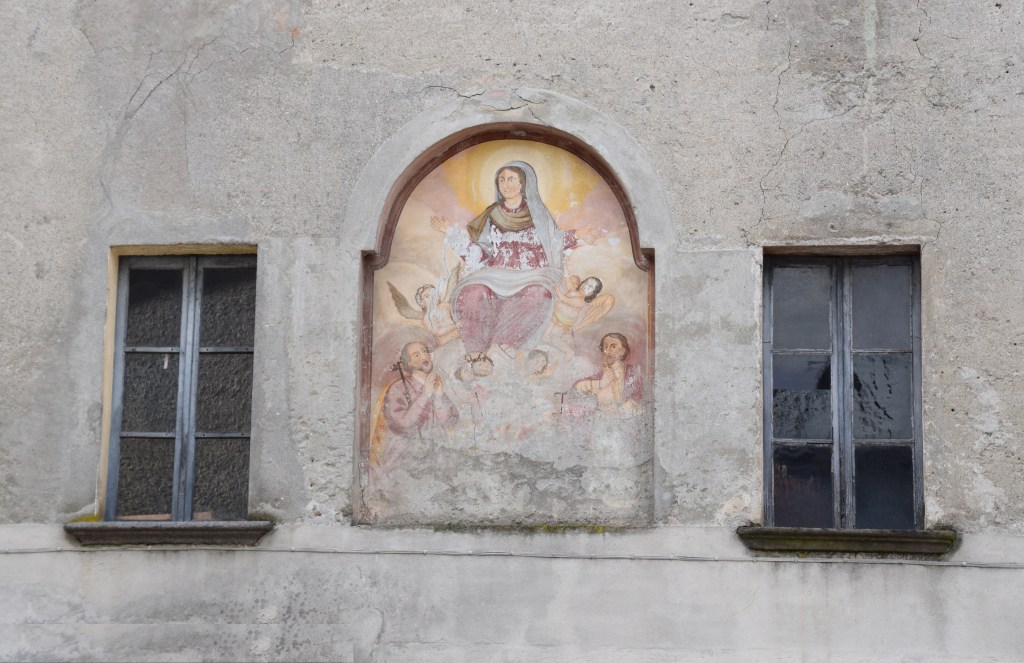
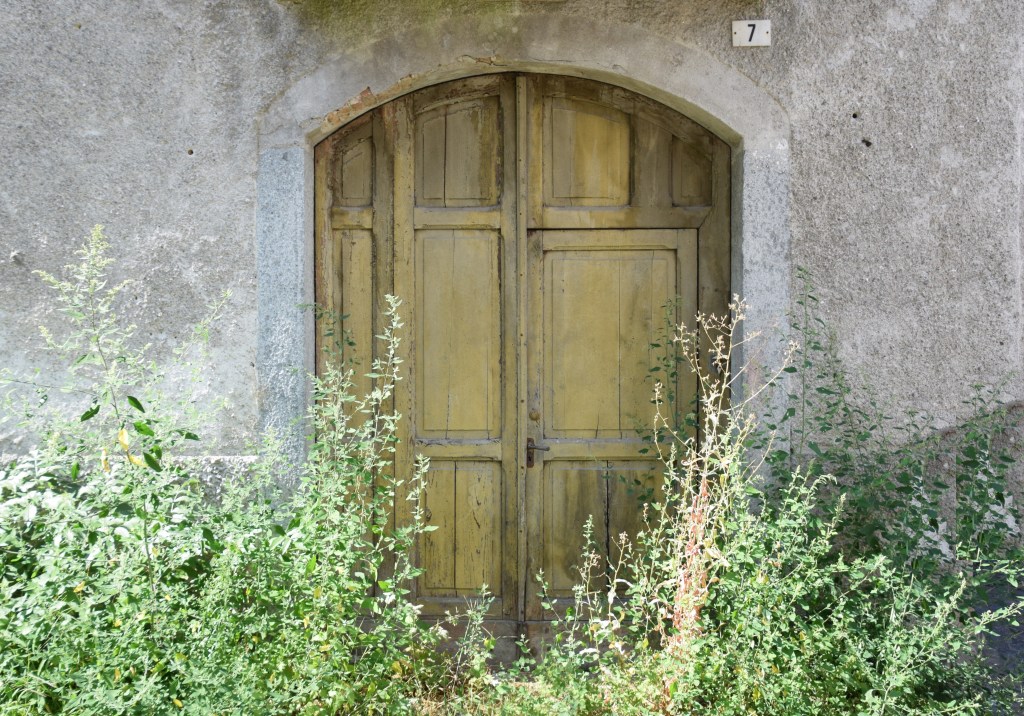
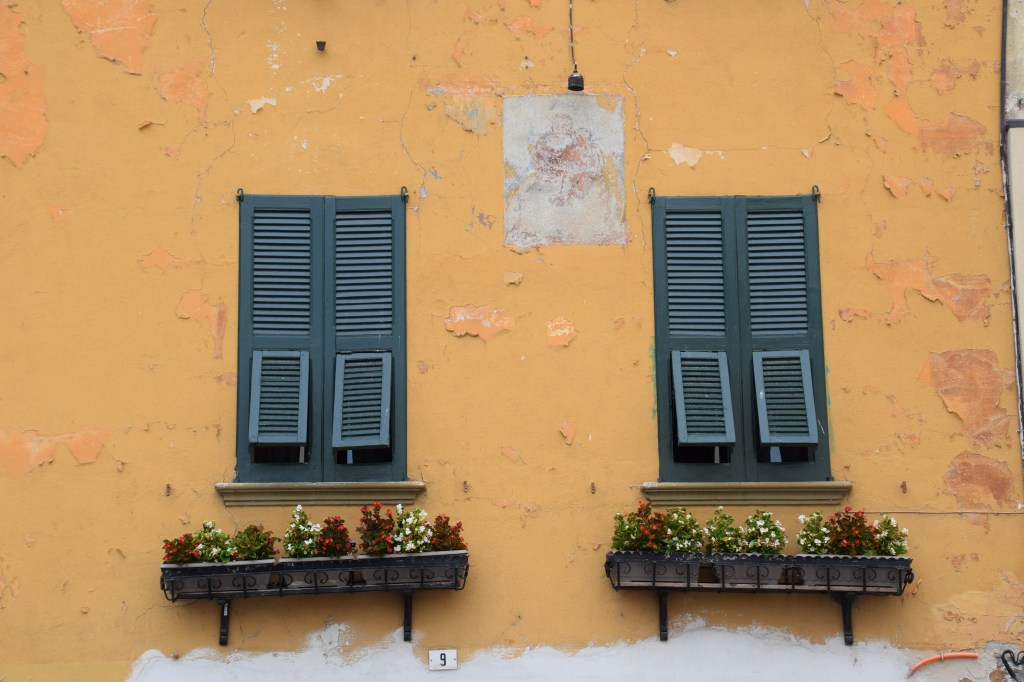
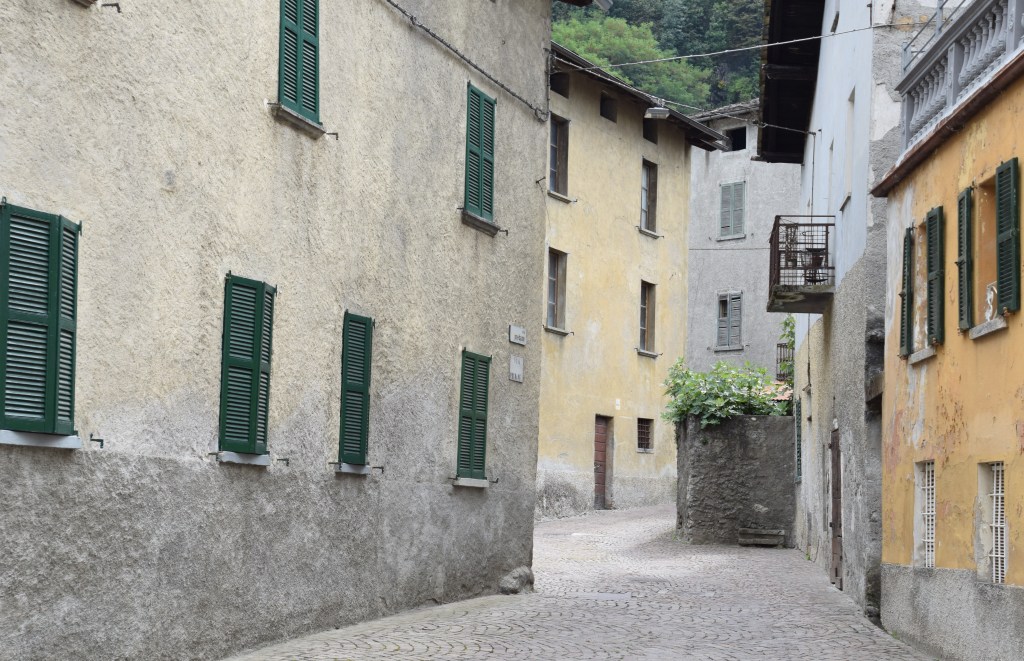
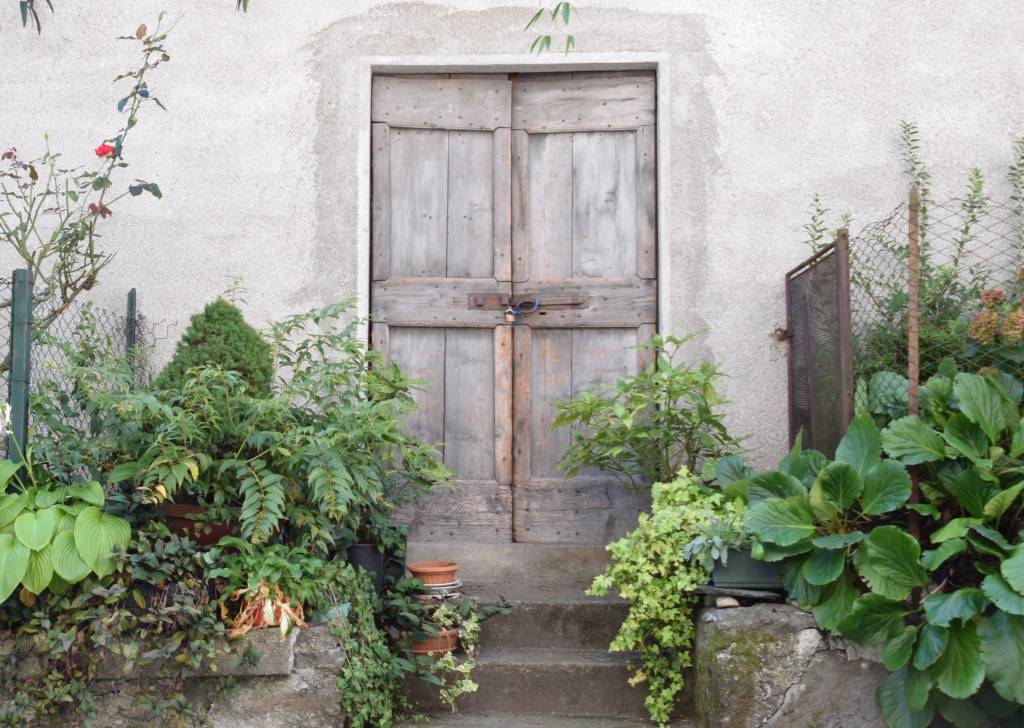
I hope you enjoyed the mixture of formal paintings – commissioned by parish churches, Wall Madonna’s – paid for with the hard earned wages of the contadini, old wooden doors that both invite one in and keep one out, and picturesque views of the towns.
 Wall Madonna's of the Valtellina
Beautifully written. Love your constant research and your sharing, so informative. I have learned so much. Thank you for sharing with us.
LikeLike
Thank you!
LikeLike