ESINO LARIO is 913 meters above Lake Como in the Valsassina and about 2.7 miles from the shore as the crow flies. It is also an 8 mile drive from the nearest train station and – with the very few buses that visit the village each day – without a car one needs to be prepared for isolation. It is a pretty town though merged from two ancient villages – Esino Lario Superiore and Esino Lario Inferiore.
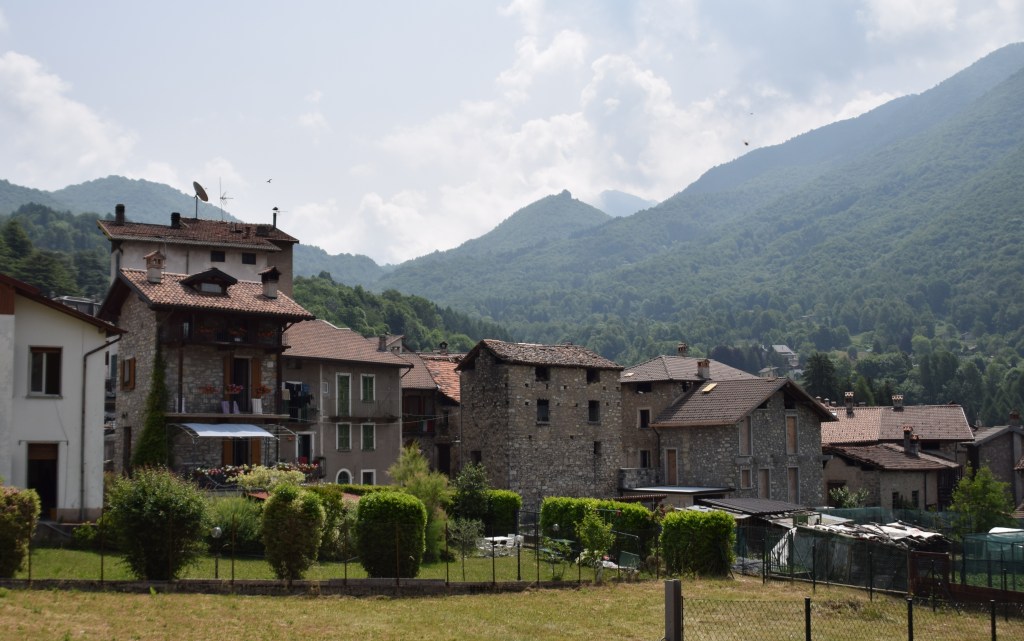
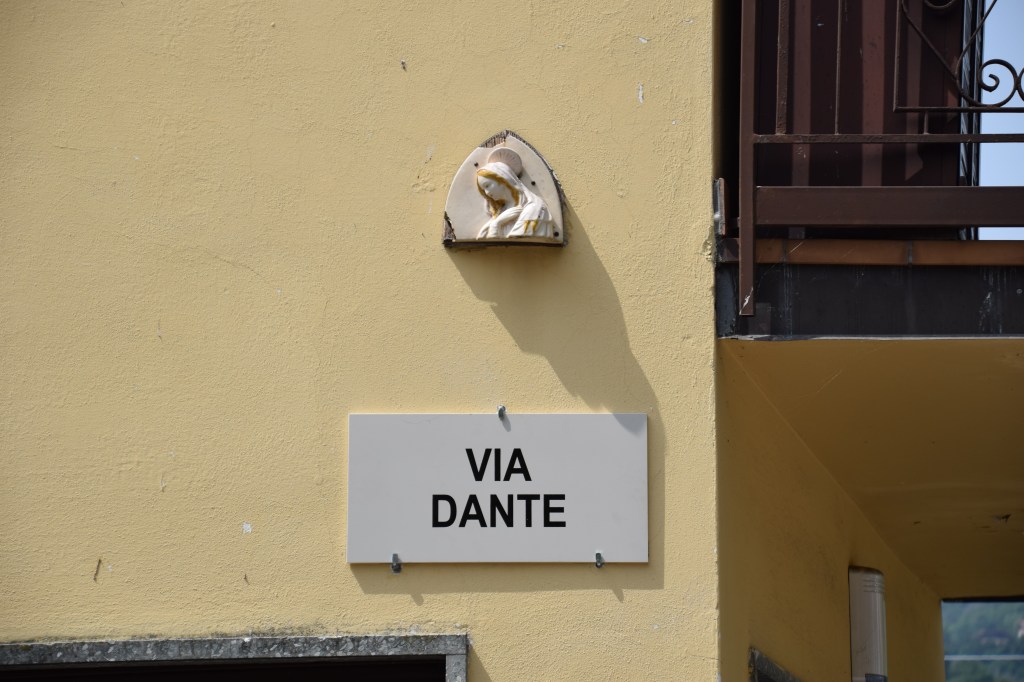
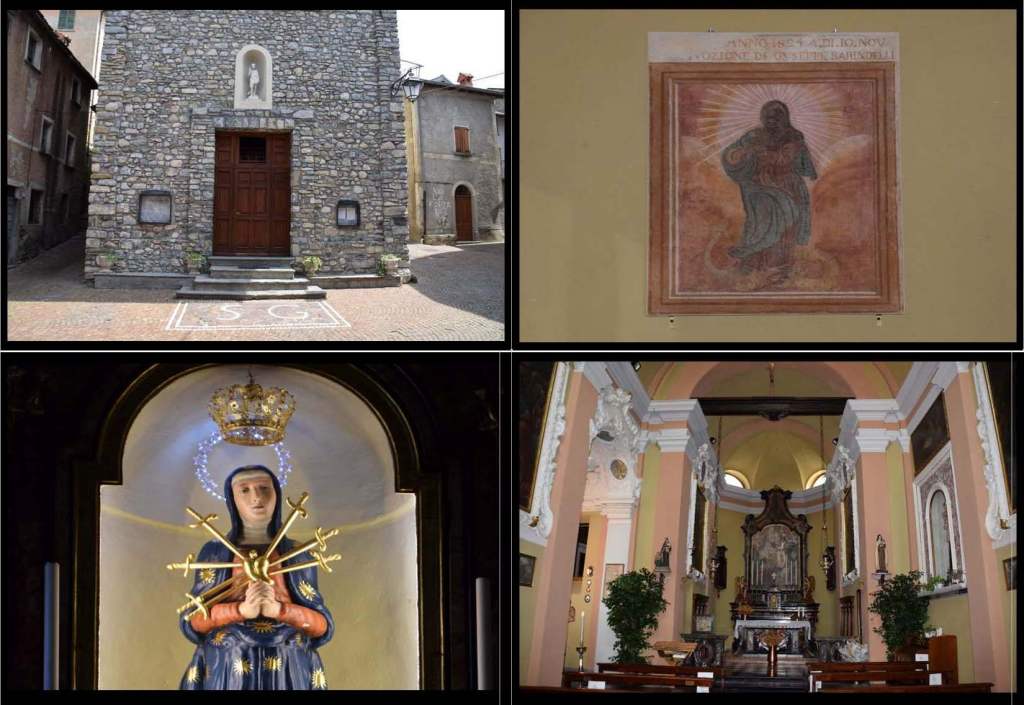
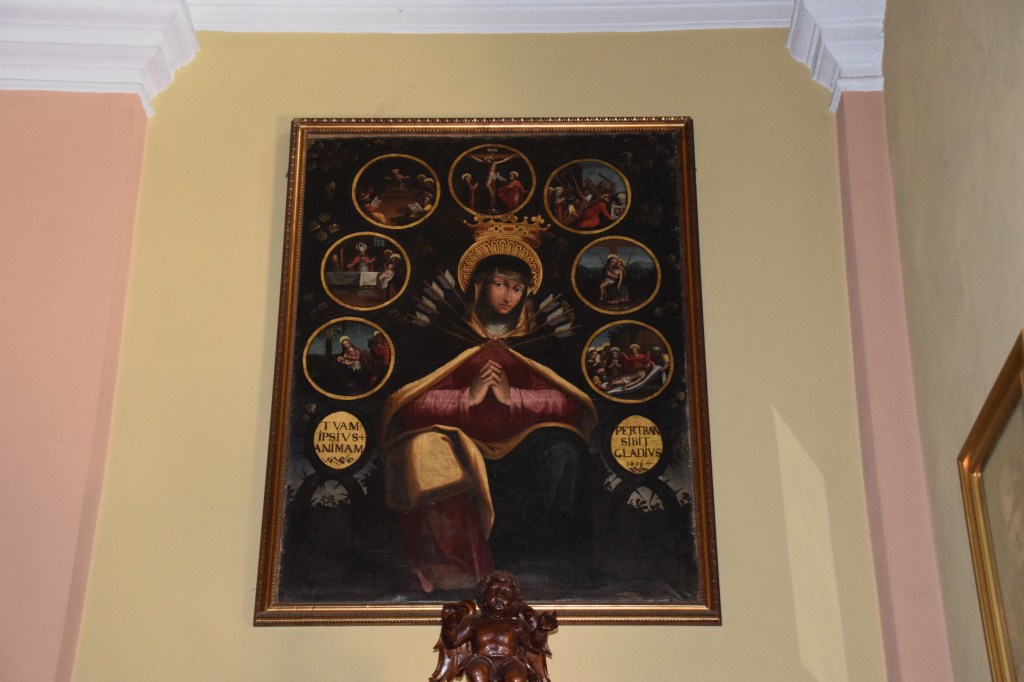
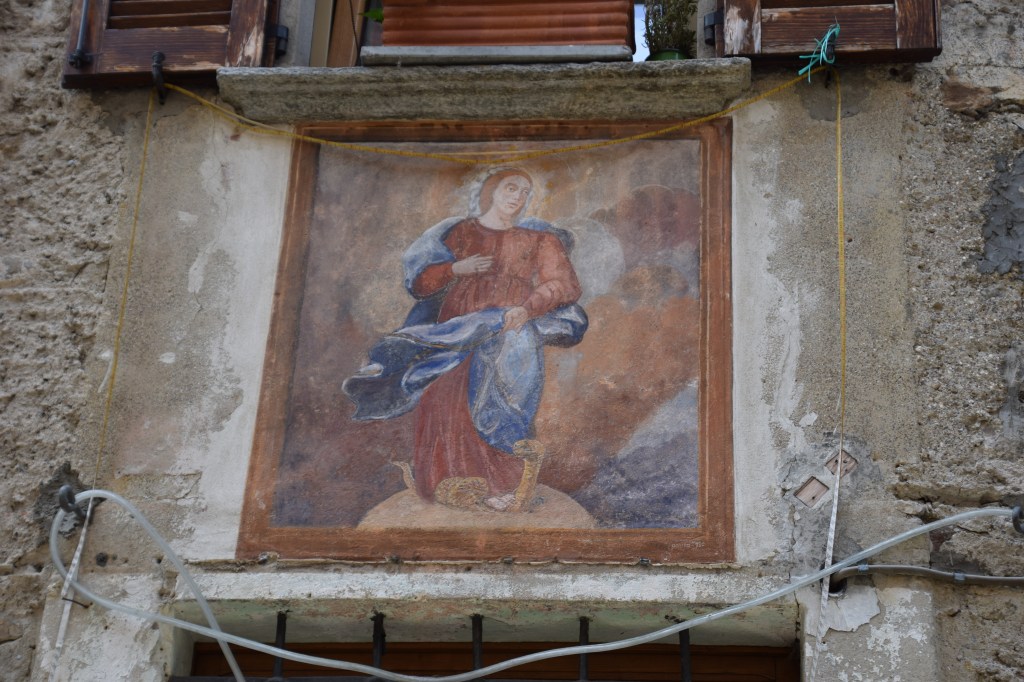
ESINO LARIO INFERIORE – a view of the townESINO LARIO INFERIORE – Modern Wall Madonna ESINO LARIO INFERIORE – There are three churches in the village – two in lower Esino and one in upper Esino. This is the church in the historic center of town. Following via Dante – seen in the previouse photo – brings one here. This is the Chiesa di San Giovanni Batista built in 1565.The montage – Clockwise: Top left: Church façade, Top right: Fresco of Our Lady of Grace – painted November 10, 1824 and donated by Giuseppe Bardinelli for his devotion. The depiction of Mary shows her standing on a globe crushing a snake. The snake symbolizes evil of which Mary rids the world. According to the legend in 1410 Mary appeared to a local woman of Faenza to whom she promised an end to the plague. Faenza is in the province of Ravenna. Bottom right: The front altar with artwork from 1671 – two stucco angels, and a painting of the Sermon on the Mount. Bottom left: Our Lady of Sorrows in stucco and wood. I cannot date this but it is likely not older that late 17th-century.ESINO LARIO INFERIORE – Chiesa di San Giovanni, built 1565 – Madre Addolorata – Our Lady of Sorrows painted in 1606. The Latin inscription reads: TUAM IPSIUS ANIMAM PETRANSIBIT GLADIUS 1606 – A SWORD SHALL PIERCE THY OWN SOUL. This is a quote from St Jerome’s Latin Vulgate Bible: Luke 2:35, and quotes part of the profecy of Simeon which is one of the seven sorrows of Mary all of which are depinted in the tondos surrounding her kneeeling figure. The bible scene describes the event where Mary and Joseph have just presented the newborn Jesus in the Temple at Jerusalem and the priest-prophet Simeon tells them their child is destined to be a ‘special’. He then turns to Mary and foretells her broken heart at what will eventually happen to her son. The actual quote from the Vulgate is: et tuam ipsius animam pertransiet gladius ut (revelentur ex multis cordibus cogitations) Shall pierce through thine own soul a sword.... A fill text PDF version of the vulgate is available online. Here is the citation: p. 1526 in the text, page 1568 in the PDF document. Here is the link to the PDF file: http://self.gutenberg.org/wplbn0002827943-the-latin-vulgate-bible-by-saint-jerome.aspx?
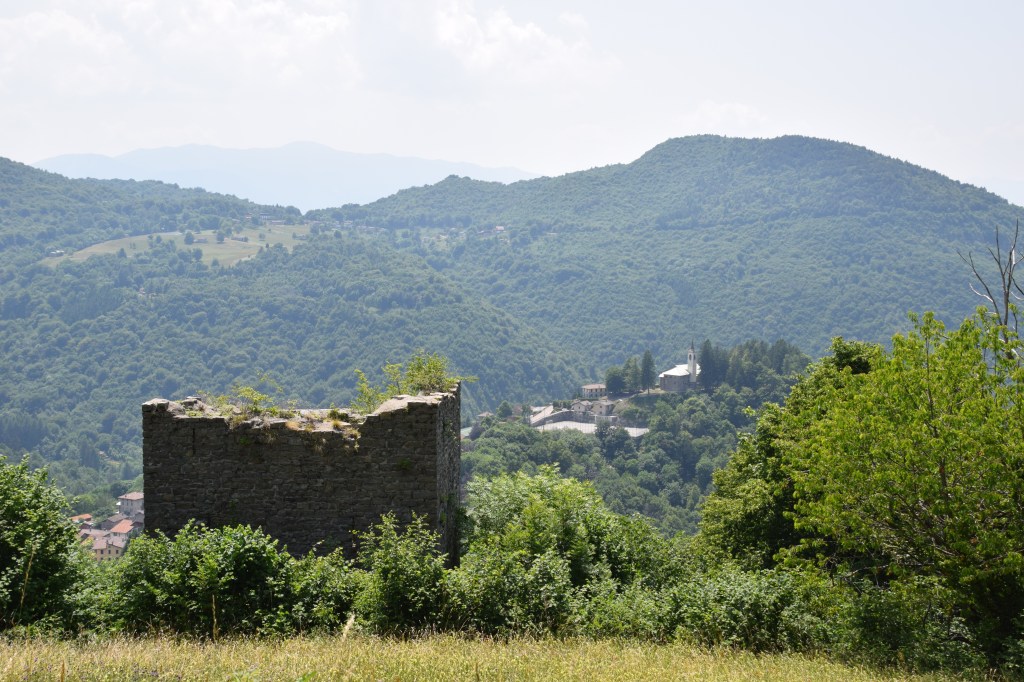
Although I am no expert, my feeling from my walk through both upper and lower Esino was that the upper village is older. And given that the 12th-century Castello is just a few meters above the town I think that my ‘feeling’ might be correct. All that is left of the Castello di Esino is the tower – but it is a very large and grand tower and with only scant imagination one can guess at the castle’s former size and splendor.
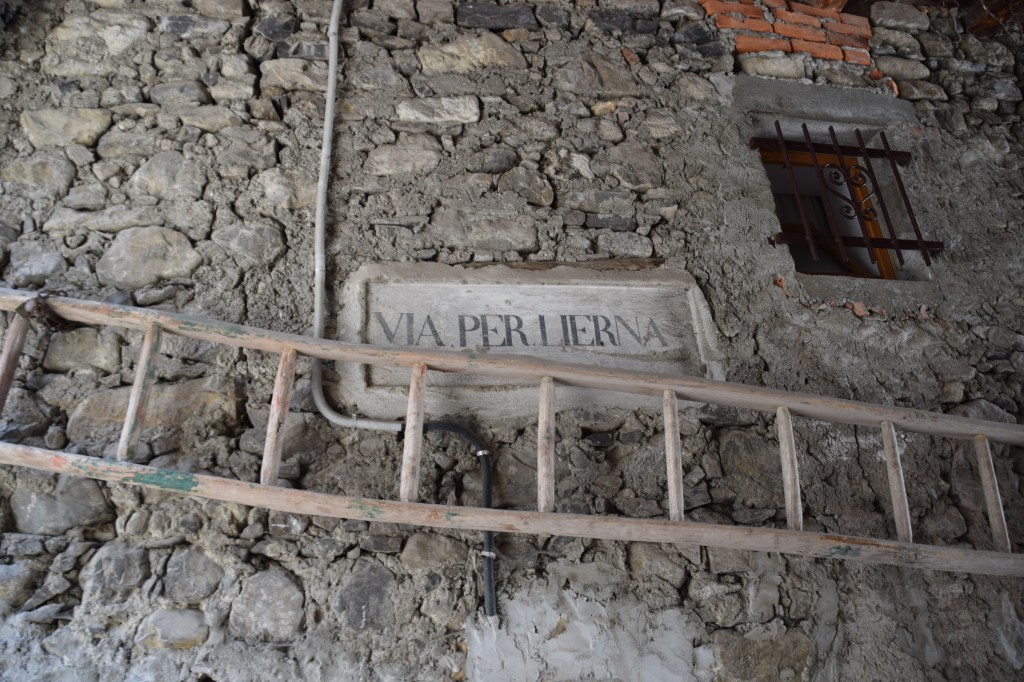
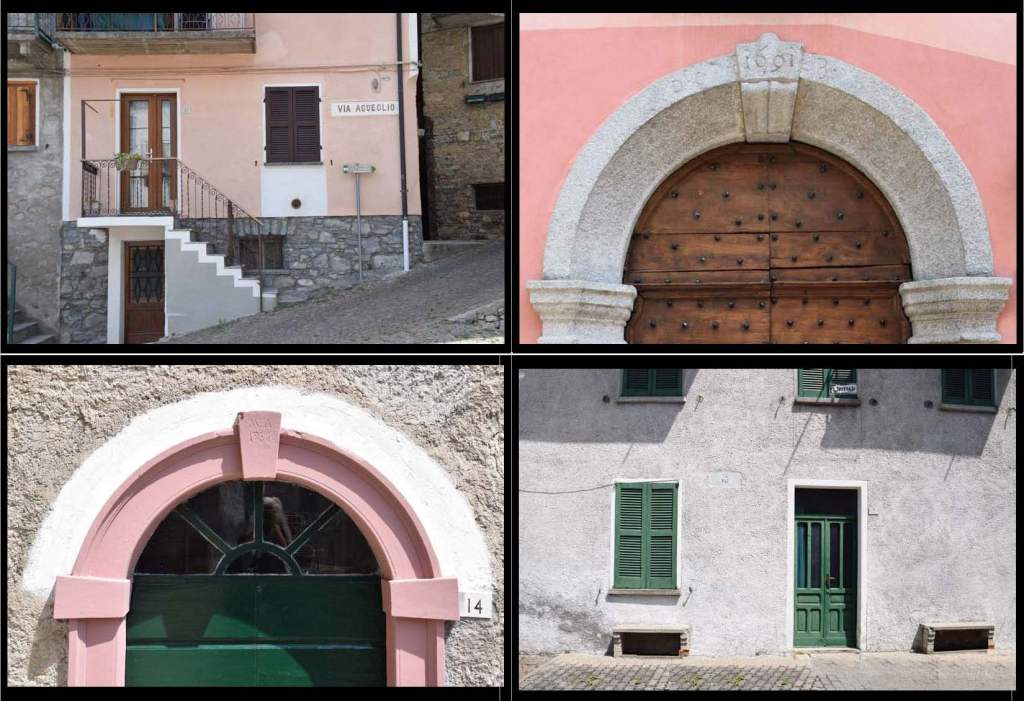
ESINO LARIO INFERIORE – Wall MadonnaESINO LARIO INFERIORE -Lierna is a town on shore of Lake Como. This sign was in a covered walkway between two old stone houses and led down to an old stone path into the woods. This was likely the old path down the mountain that led to Lierna. The mountains are cross-hatched with paved paths leading to the different towns and localita’sESINO LARIO SUPERIORE – door montae. The two partial doors display the construction data of the buildings 1691 and 1937
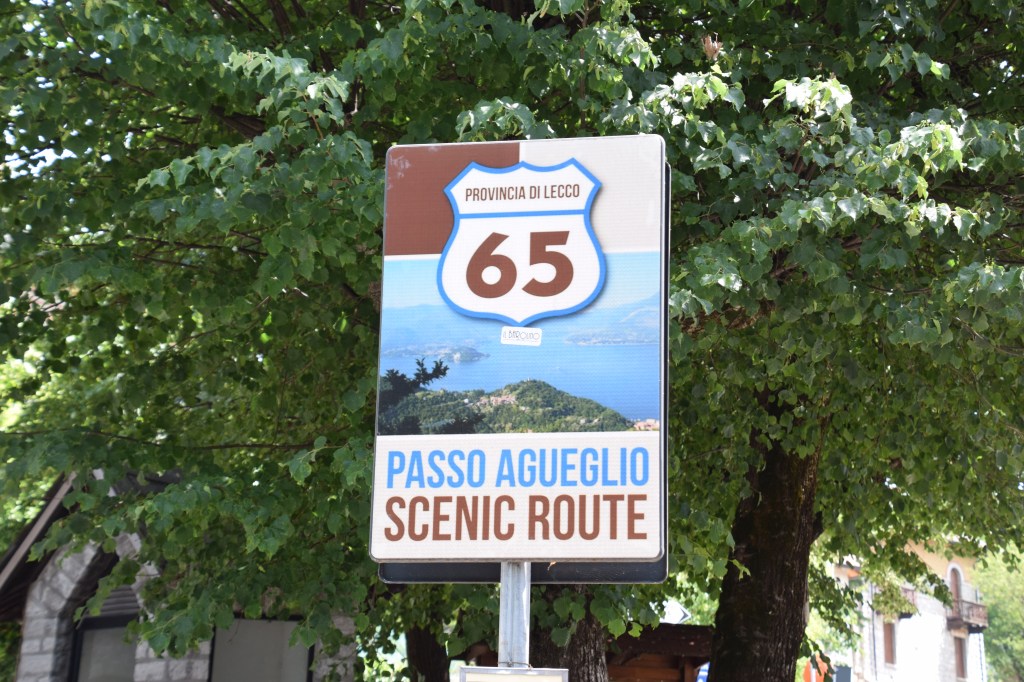
One reaches Esino Lario by SP65 – Strada Provinciale 65. Signs champion the road as a scenic route and along the way Italy has ingeniously carved out spaces to stop and view the lake and surrounding Alps. But overall, the ‘scenic’ aspect of the ‘route’ is well-hidden by the summer foliage and the possibility of crashing one’s car on the narrow road as one looks for a view of the lake and valley. With many tornante’s (more than 20!) and a very steep climb the drive increases one’s anticipation for the charm and historicity of a village so far from the flatlands as to imply successful escapes from past plagues and bandits.
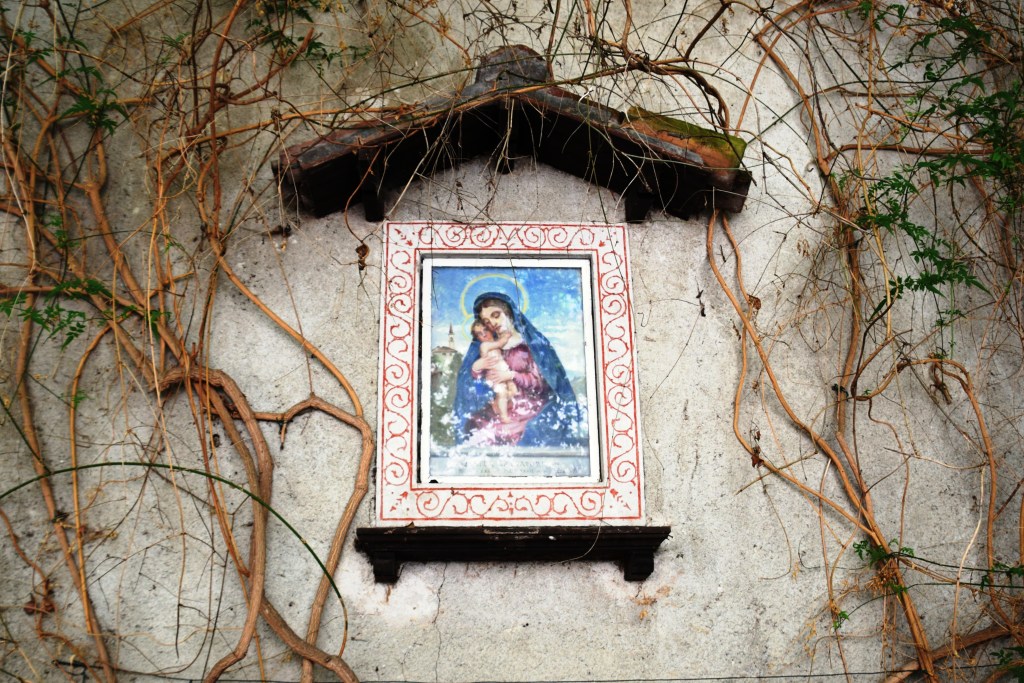
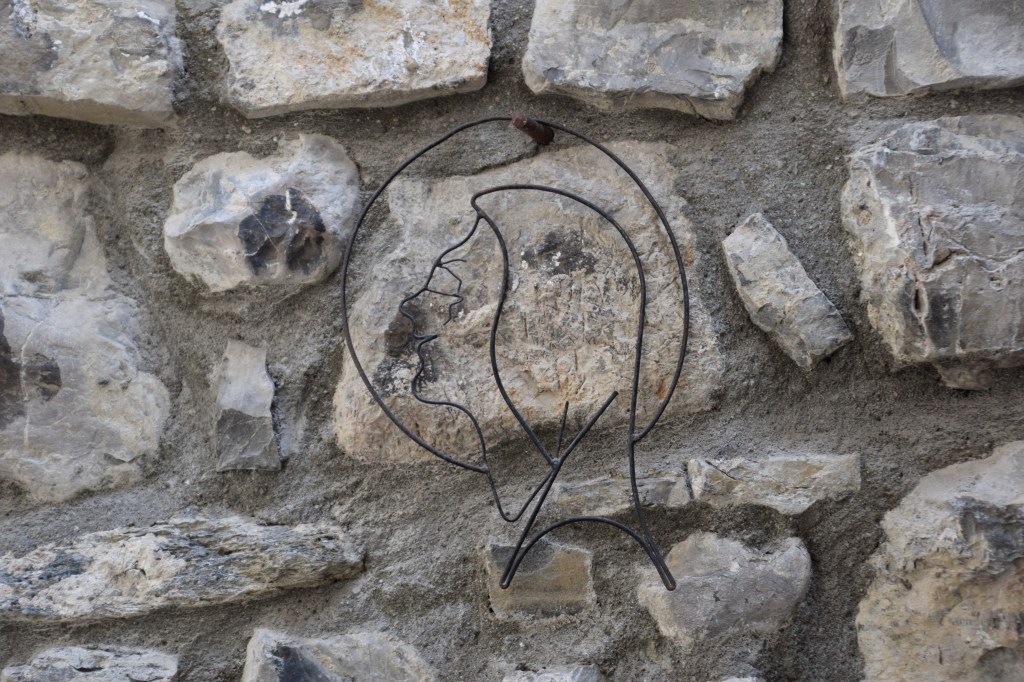
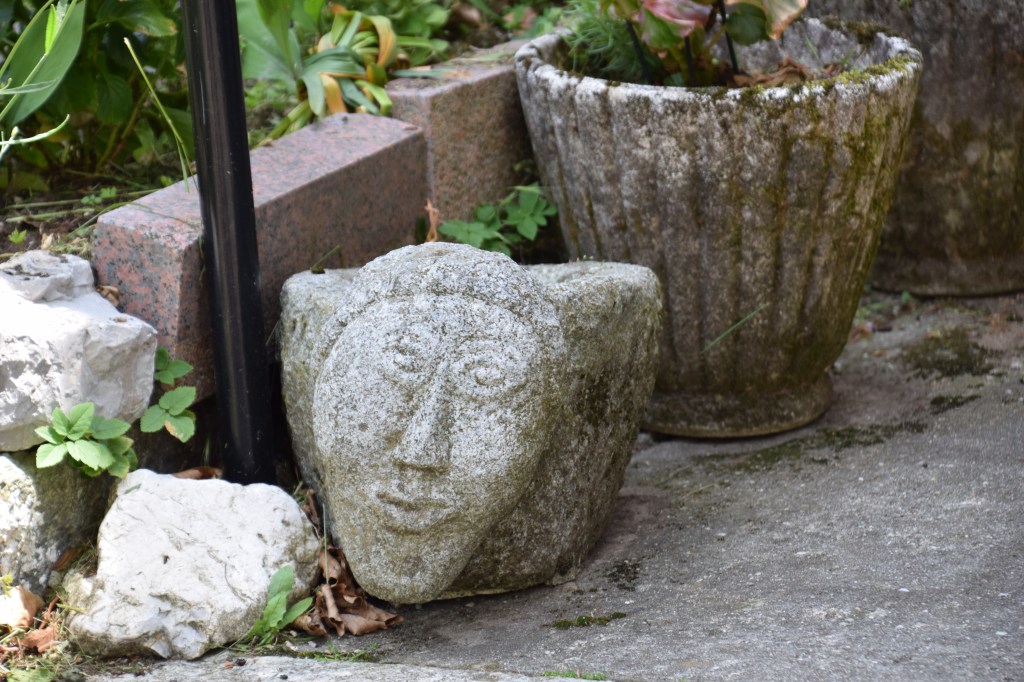
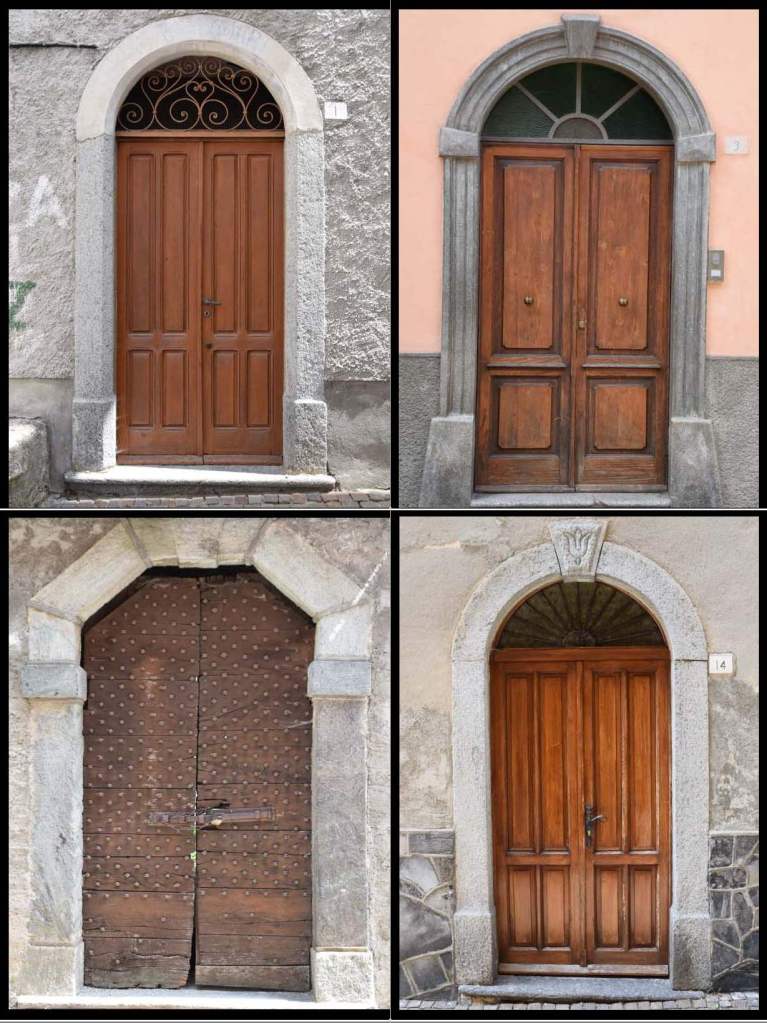
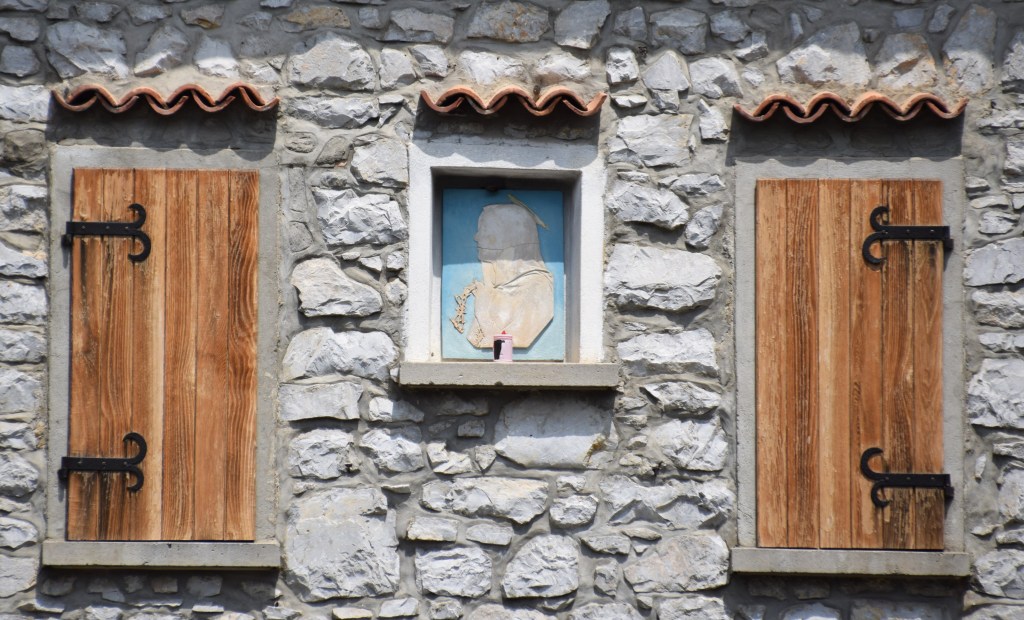
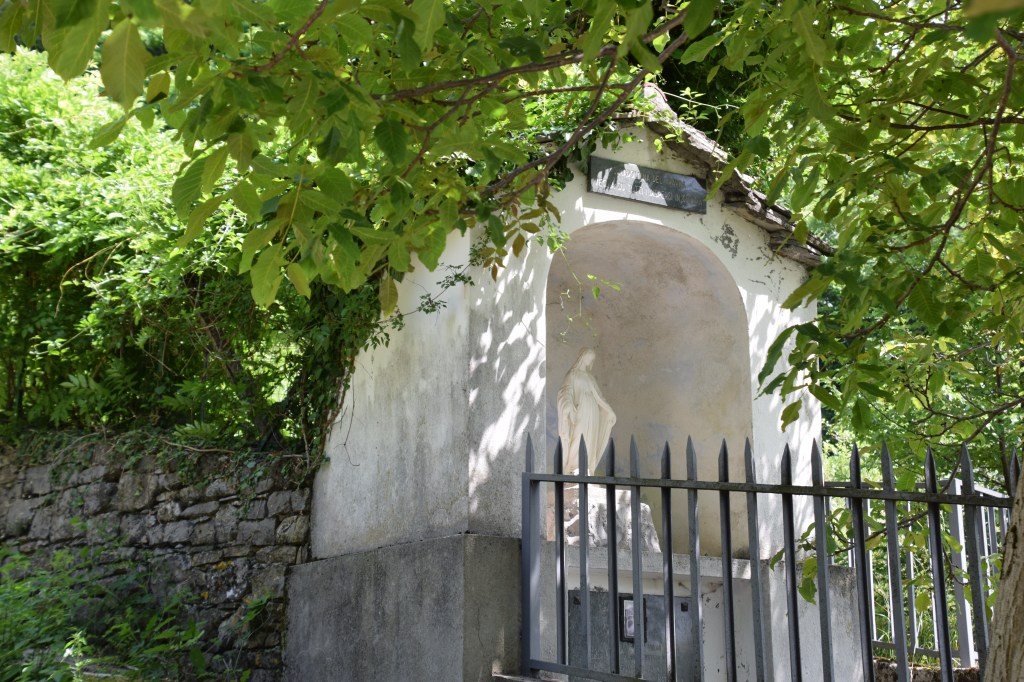
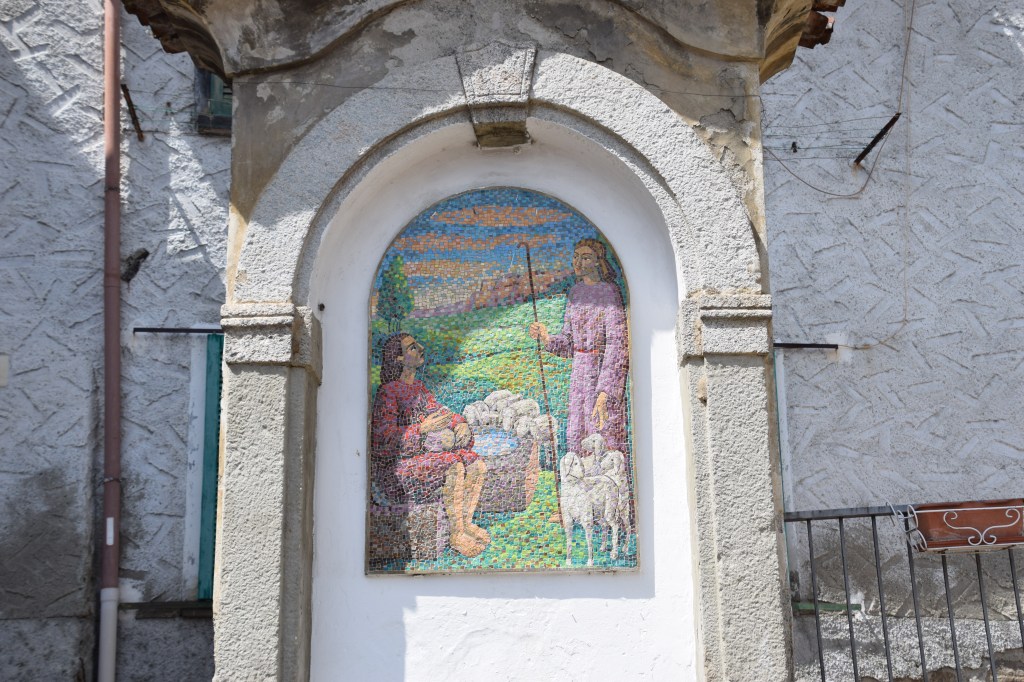
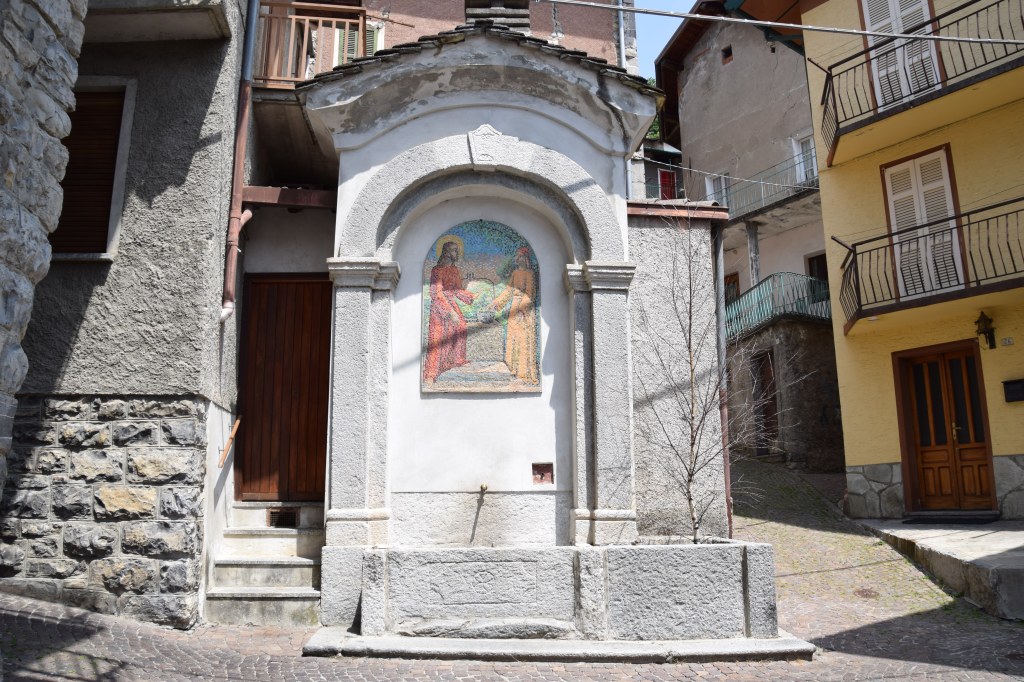
ESINO LARIO INFERIORE – Wall Madonna – a sculptural modern Wall Madonna with lots of charm!ESINO LARIO INFERIORE – the locals decorate the frontsof their homes. Here is a lovely carved stone plant urn made by a local artist. ESINO LARIO INFERIORE – door montage
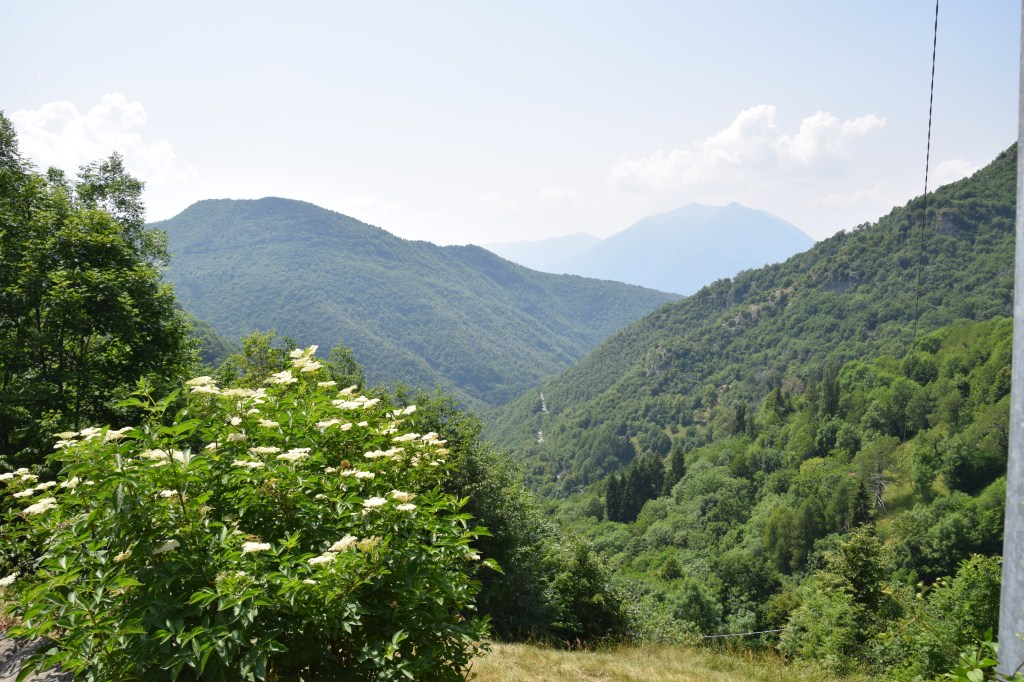
The air is clean and clear in Esino and the breezes cool but for a view one has to climb – and climb – and climb! Like nearby Tremenico, the lake is not easily visible. Rather, one has wonderful views of the rolling hills and mountain peaks of the Valsassina. Although one might think that not being able to be seen from the lakeshore would have kept the village safe from invaders – it did not. Esino Lario suffered intermittent domination throughout its history.
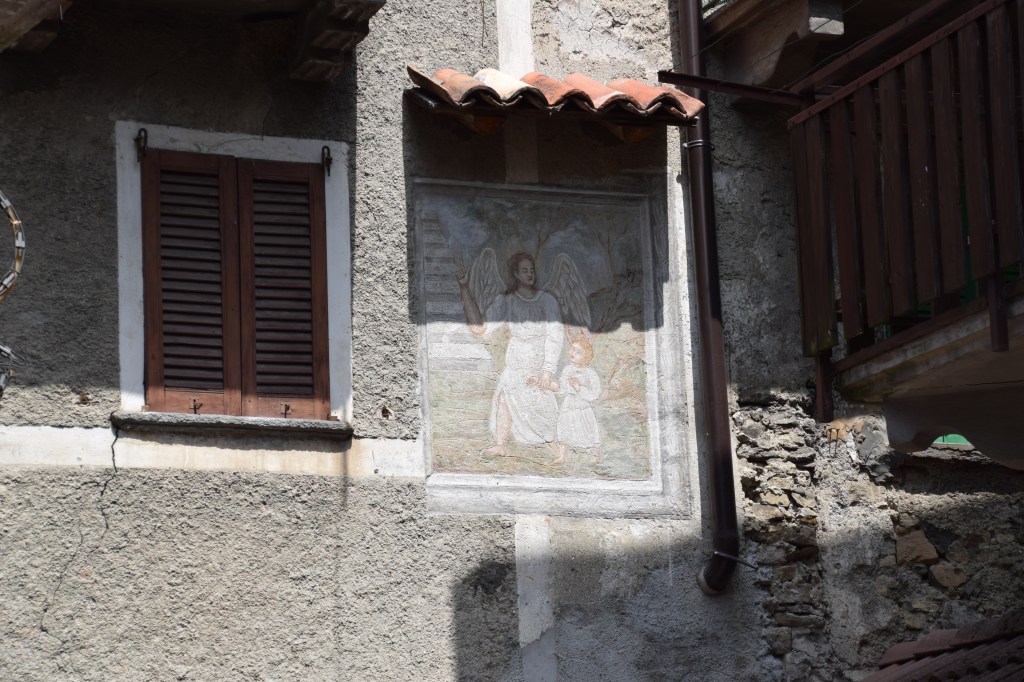
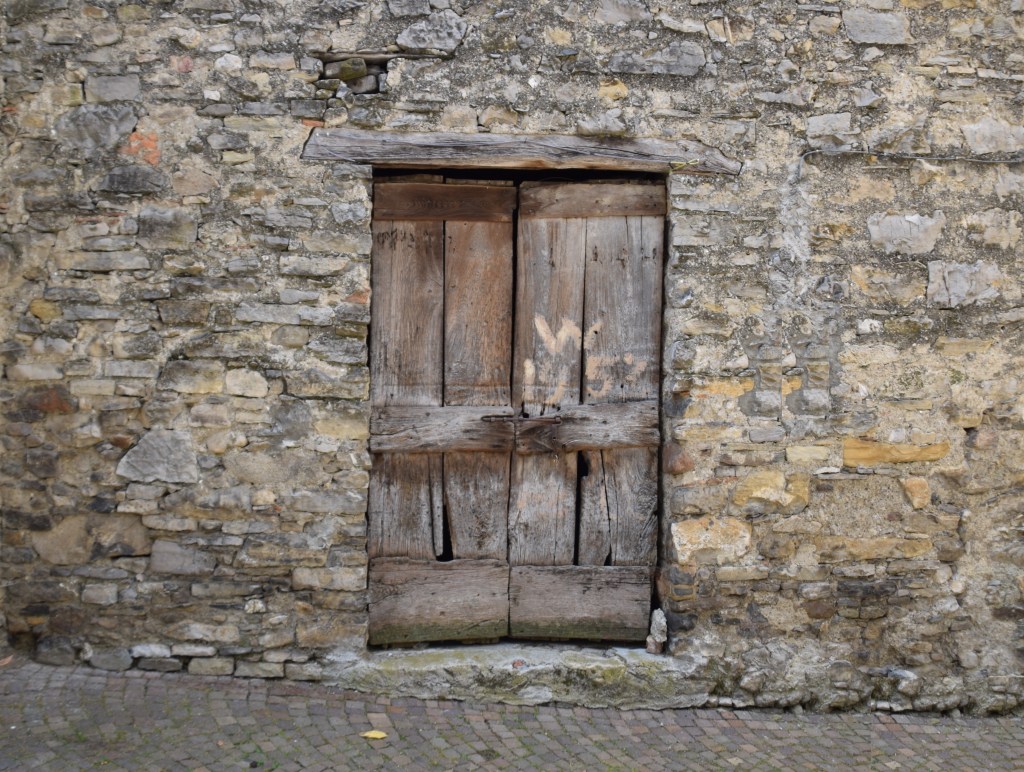
ESINO LARIO INFERIORE – Wall Madonna – Although hidden by shadow this beautiful fresco shows Tobias and the Archangel Raphael. The legend clams that young Tobias journeyed to kill the demon Asmodeus. The Archangel Raphael disguised himself as a human named Azarius – which means Yahweh helps – and accompanied Tobias to keep him safe. ESINO LARIO INFERIORE – door in the historic center of town
The ‘storia’ of Esino Lario is truly ancient and – after the glaciers killed the dinosaurs, moved the mountains, and deposited marine fossils in the limestone of the hills – the tale of Esino harkens to the Celts and the Romans. The 12th-century Torre Esino built on the Alto Lario remains of the Western Roman Empire is Roman and the earth of the Valsassina offers memories of the conquered shepherd-warrior Celts recalled in the artifacts found here in their tombs.
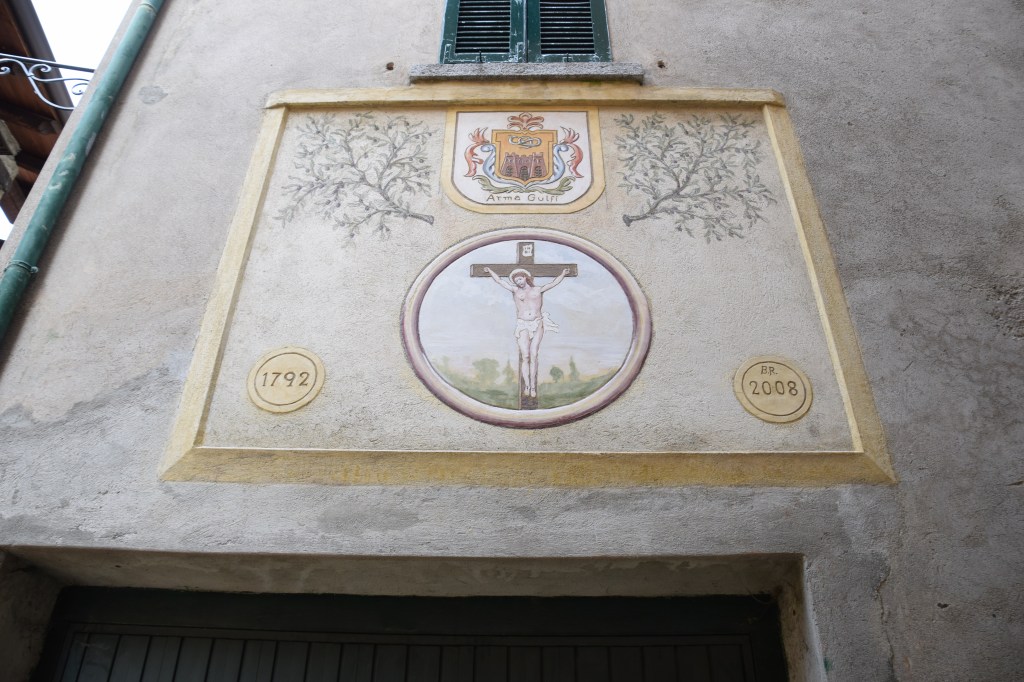
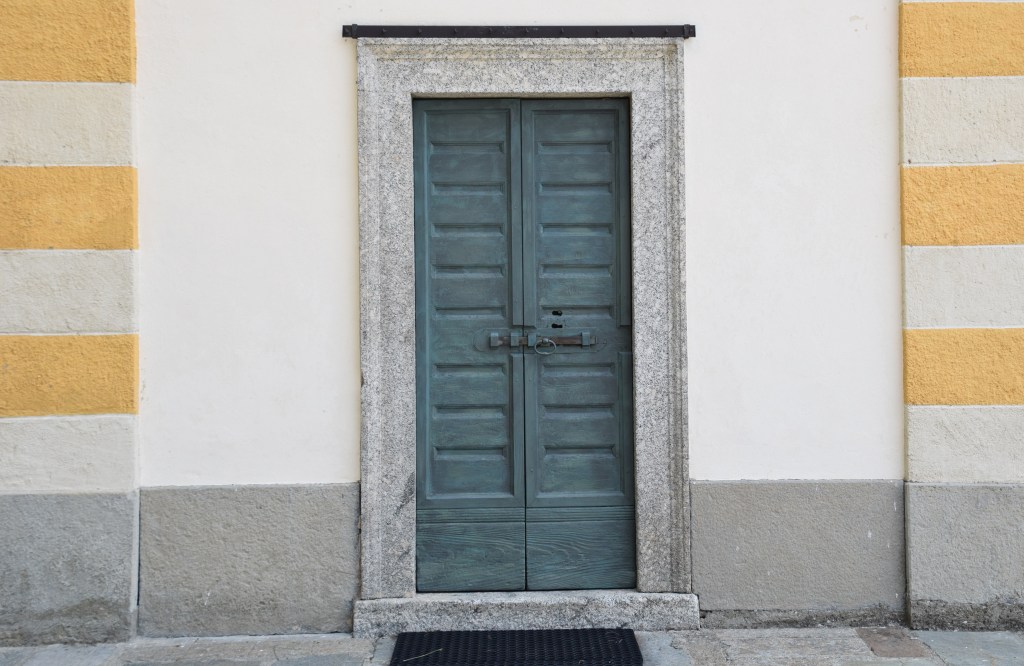
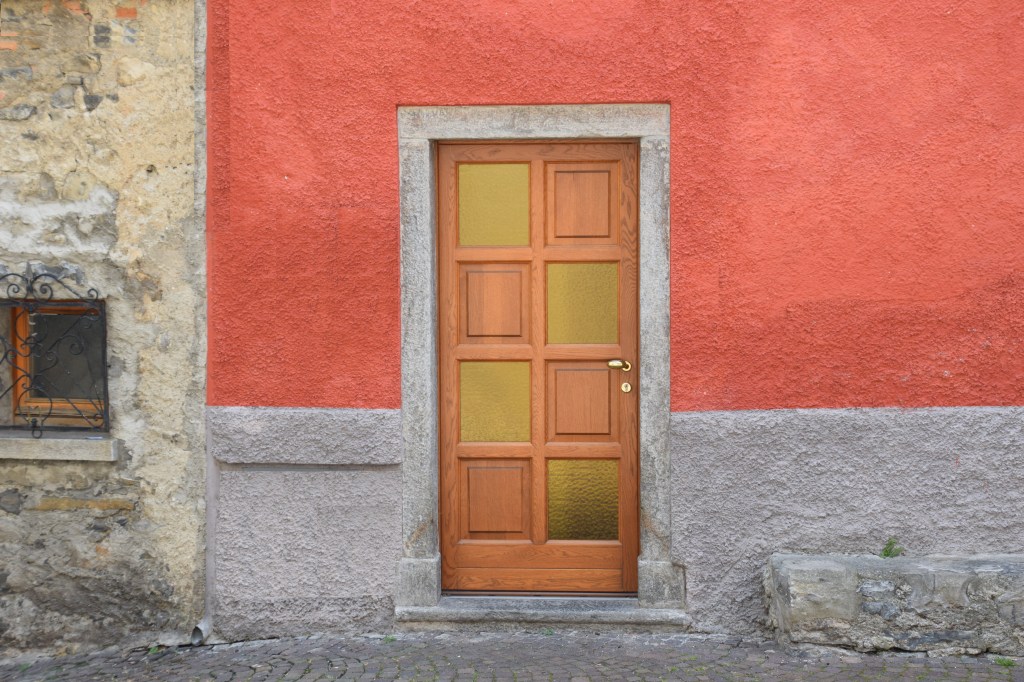
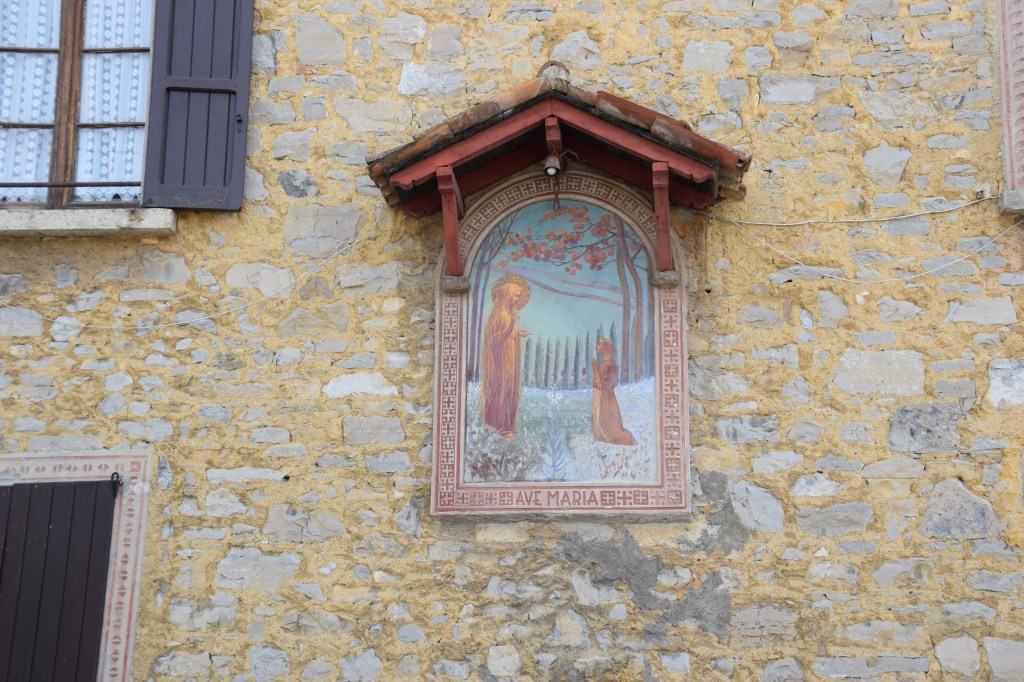
ESINO LARIO INFERIORE – Wall Madonna – an 18th-century fresco that both displays the coat-of-arms of the Arma Gulfi families and their devotion to the church. The fresco dates to 1792 and was restored in 2008. It is on a narrow side street in the historic center of town and easily missed. ESINO LARIO SUPERIORE – colorful doorESINO LARIO INFERIORE – Chiesa di San Vittore, 14th-century – the colorful and pretty side front entry door of the church.
Lying in the palm of the Val d’Esino – cupped by the fingers of the Alpine peaks – Esino was the site for Larion communications and commerce. Fires were lit atop the torre of Castello Esino to both warn of invasion and herald trade. The economy of the town was restricted and it lay mainly in what was taken from the hills rather than grown there. Thus, the surrounding forests were ravaged to make the charcoal needed for the production of iron – necessary metal for the utensils of life and death in the valleys.
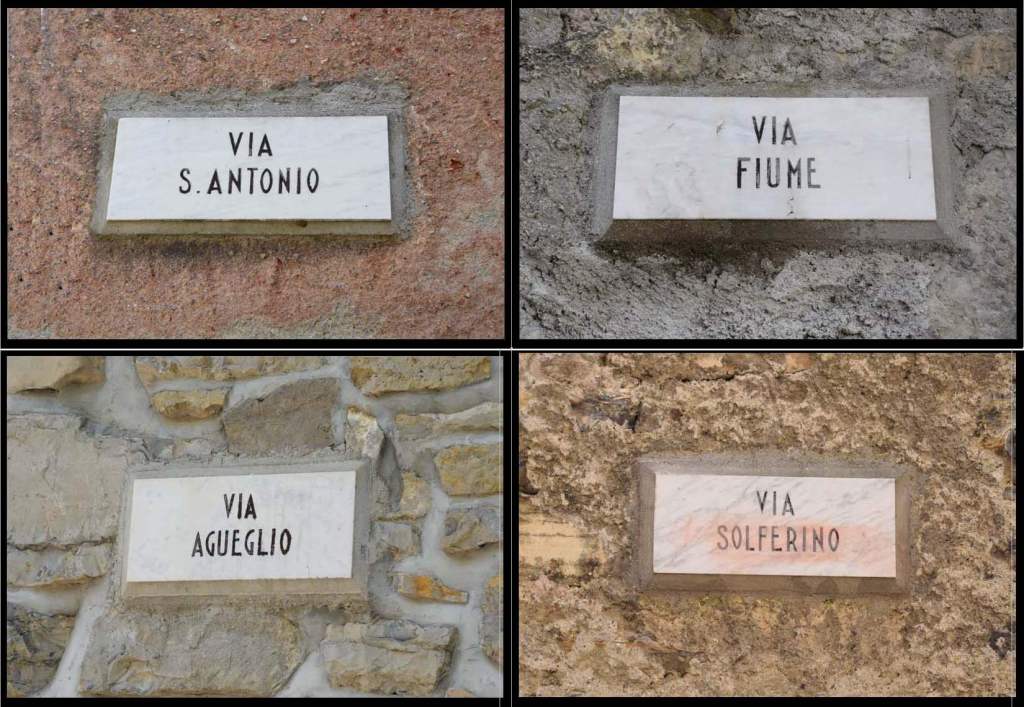
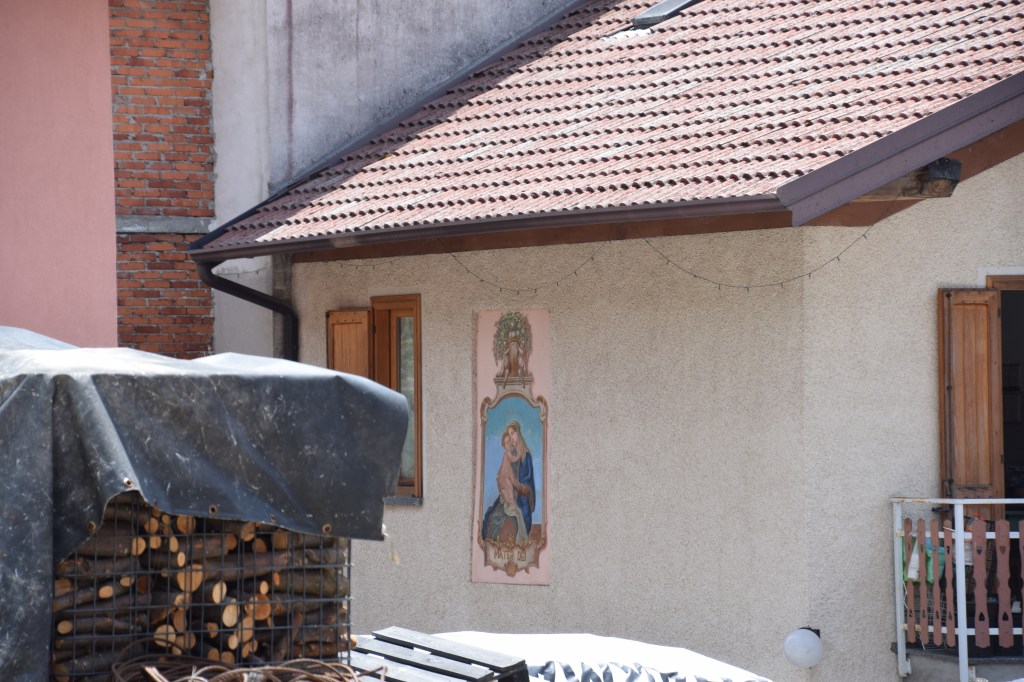
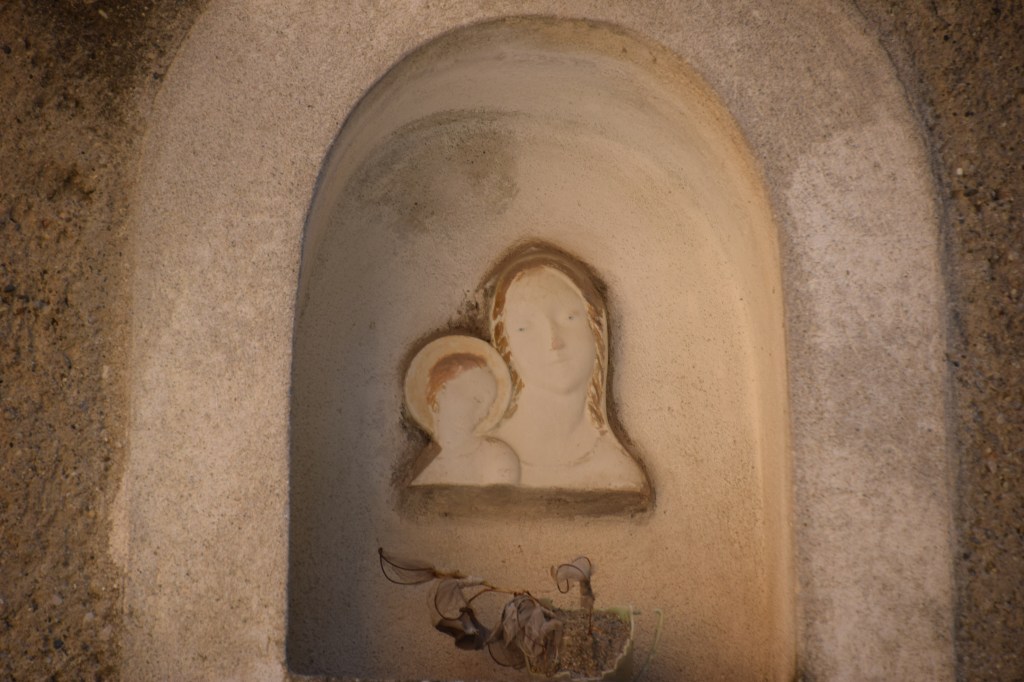
ESINO LARIO INFERIORE – streets signs are always attached to the houses. The streets are too narrow to waste space on signposts. ESINO LARIO INFERIORE – Wall Madonna – a modern ceramic Wall Madonna displayed artfully on a renovated old home.ESINO LARIO SUPERIORE – Colorful door
Life persisted – prosperity remained and its benefits meant that the people suffered plundering and domination from ‘stranieri’ – trespassers who sought all that the position of the town guaranteed in location, climate, and the natural resources fruited by the labor of the peasants.
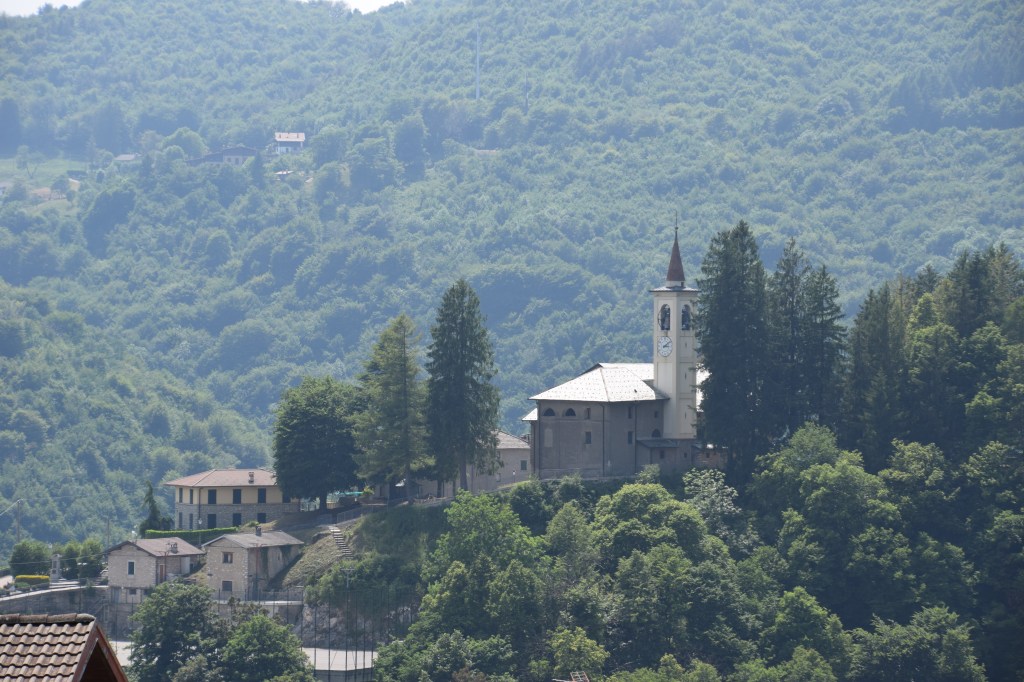
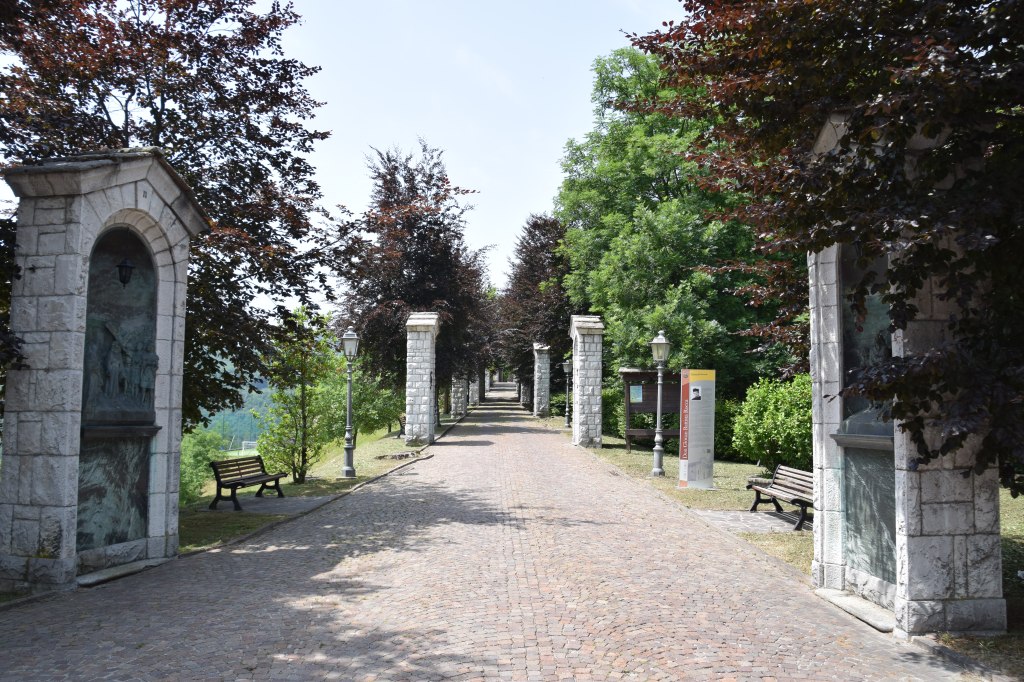
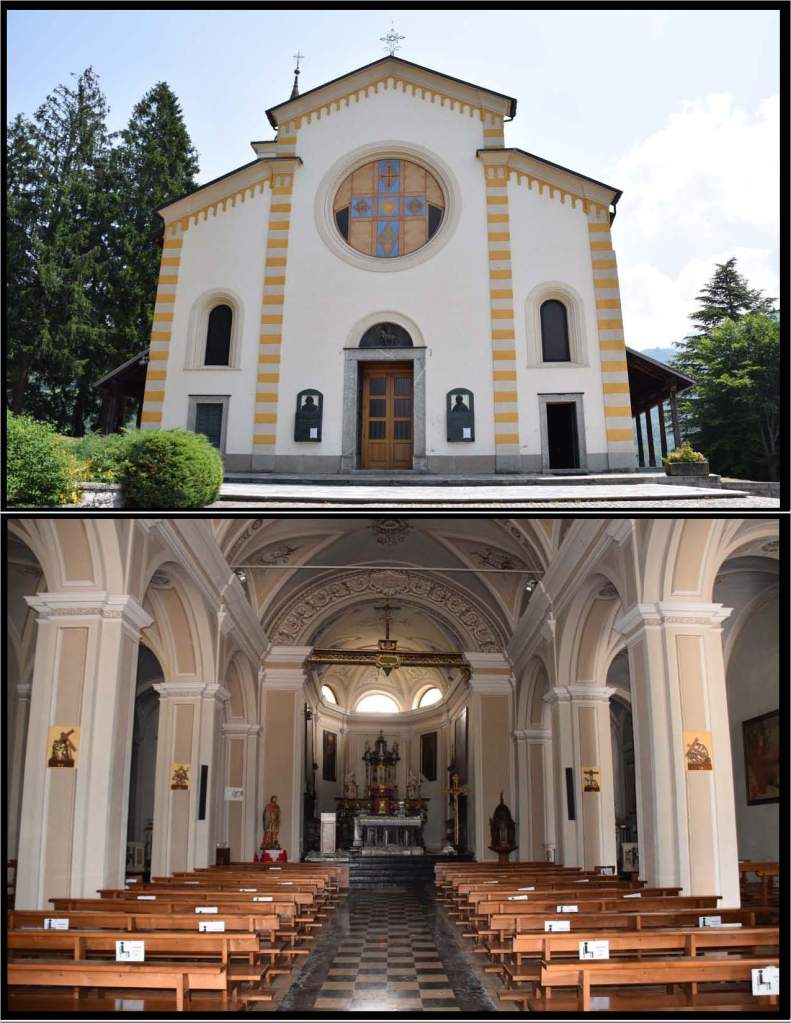
ESINO LARIO INFERIORE – Wall Madonna – a relatively modern Wall Madonna depicting Our Lady of Lourdes. The legend claims that the Great Virgin appeared before 14-year old Bernadette Soubirous in a cave in the vicinity of Lourdes, France. This Marian apparition occurred in 1858.ESINO LARIO INFERIORE – The parish church dating to the 13th-century – Chiesa di San Vittore. The church is on a small hill on the edge of the village. An elegant street leads to the church and the ‘boulevard’ leading to San Vittore is named via Crucis. Here the stations of the cross were scuplted by the Italian artist Michele Vedani (1874-1969)ESINO LARIO INFERIORE – via Crucis. The elegant boulevard leading the San Vittore. The stations of the cross were scuplted by the Italian artist Michele Vedani (1874-1969)ESINO LARIO INFERIORE – The parish church dating to the 13th-century – Chiesa di San Vittore. The montage shows the facade which was updated in the 18th-century and recently restored and the interior front altar viewed from the entry doors. The artwork inside dates from the 18th, 19th, and 20th-centuries.
Today the only ‘stranieri’ in Esino Lario are scholars and tourists – the former come to study the artifacts and fossils of the Grigne – the latter to enjoy all that life in the lands surrounding Lago di Como has to offer.
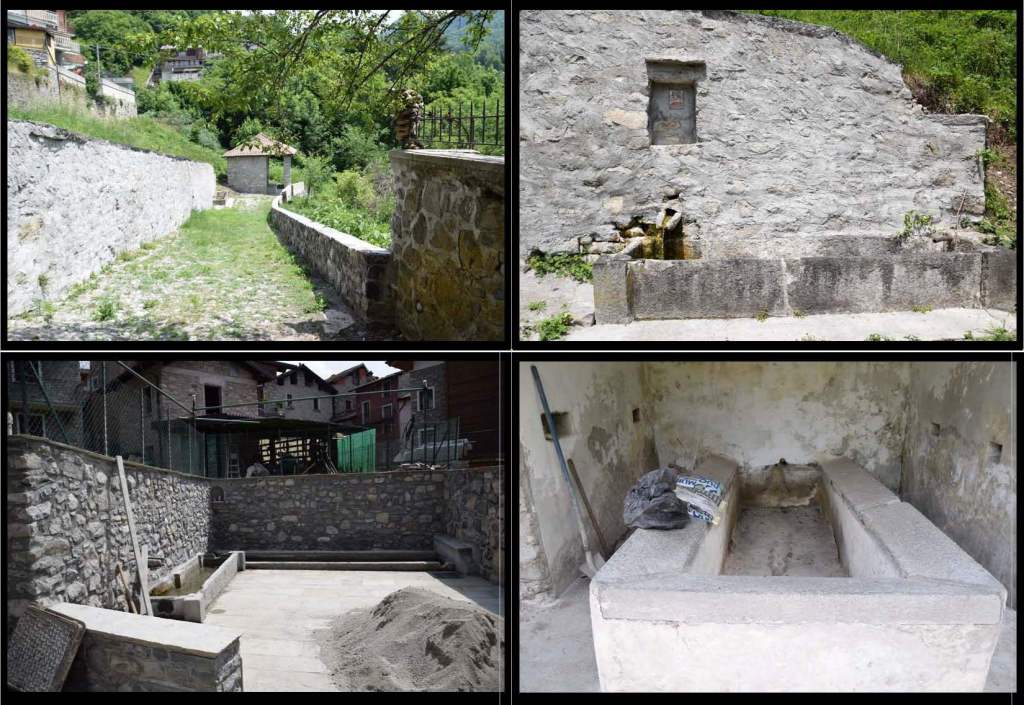
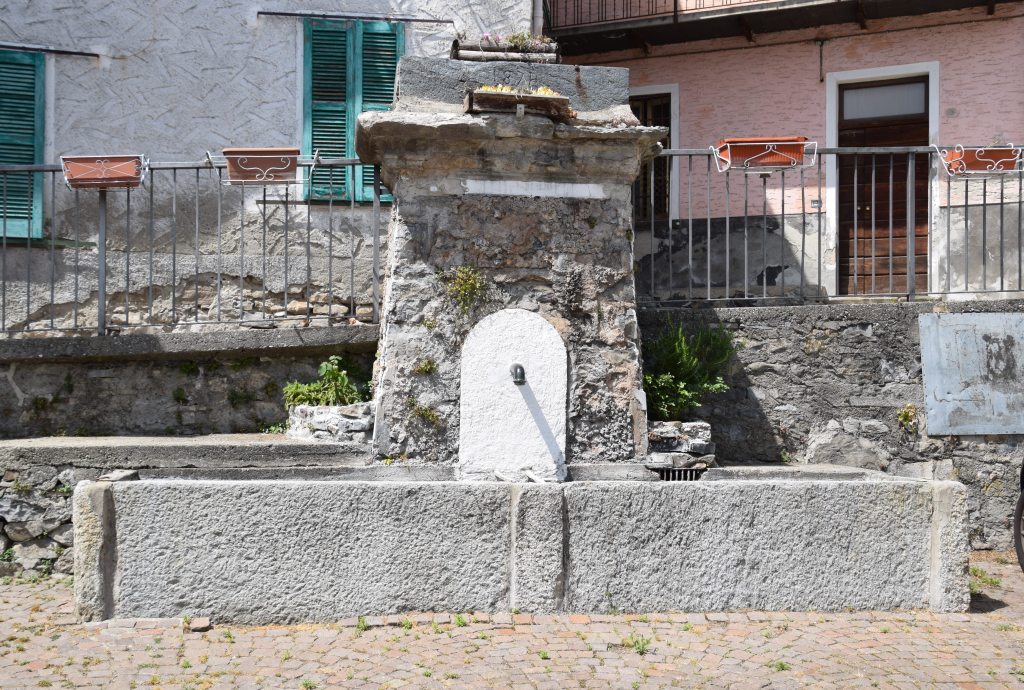
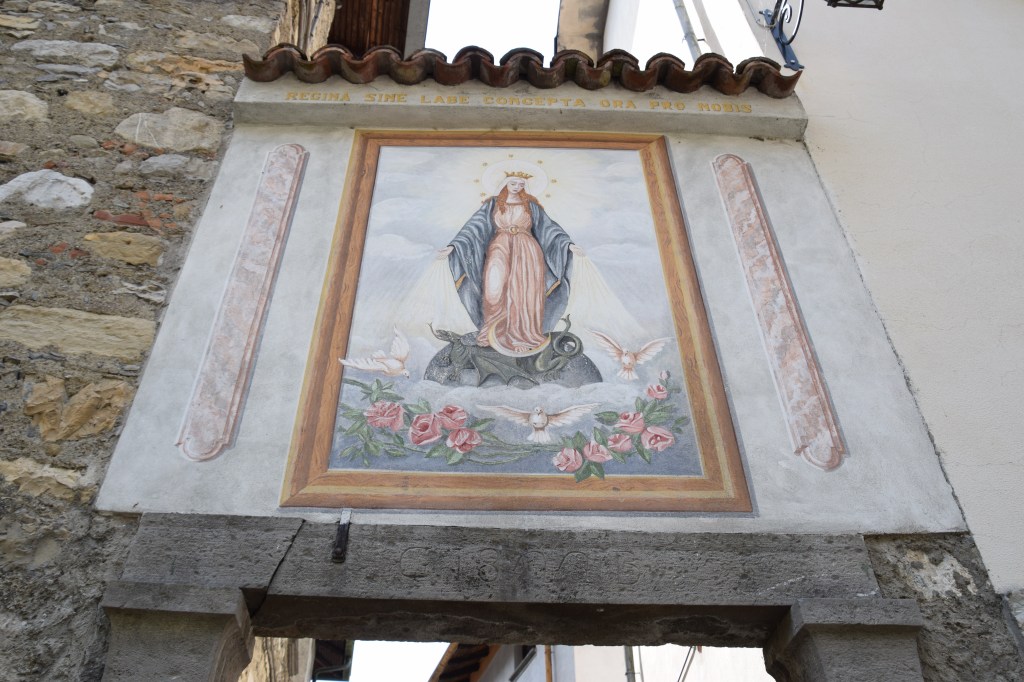
ESINO LARIO INFERIORE – these are two Lavatoio Comunale – communal wash houses. The montage shows the path to the largest of the laundries on the edge of the village. The laundry sits directly on a torrente that feeds the troughs. The top left, top right, and bottom right show the laundry house, the external fountain trough, and the internal luandry covered to protect against the weather. They are all being rebuilt. The bottom left shows an exposed laundry in the center of the village. It too is being renovated. The townsfolk make good use of these laundries and fountains. ESINO LARIO SUPERIORE – a beautiful large, fountain where animals could be watered, people could drink. and water could be gathered for public and private use. ESINO LARIO INFERIORE – Wall Madonna – The depiction of Mary shows her standing on a globe crushing a snake. The snake symbolizes evil of which Mary rids the world. According to the legend in 1410 Mary appeared to a local woman of Faenza to whom she promised an end to the plague. Faenza is in the province of Ravenna.The inscription above the Virgin reads in Latin: REGINA SINE LABE CONCEPTA ORA PRO NOBIS – QUEEN CONCEIVED WITHOUT SIN PRAY FOR US
Life persists and prosperity remains. Arboriculture persists – albeit with different goals – and – innovatively – food production has been adapted to the soils and terrain. Here is grown the biancona – the Esino white potato – crucial food product of the rocky landscape created 100 years ago by Padre Giovanni Battista Rocca – the parish priest. With intellect driven by need and love he brought the people sustenance in a landscape not suited to the crops of traditional agriculture.
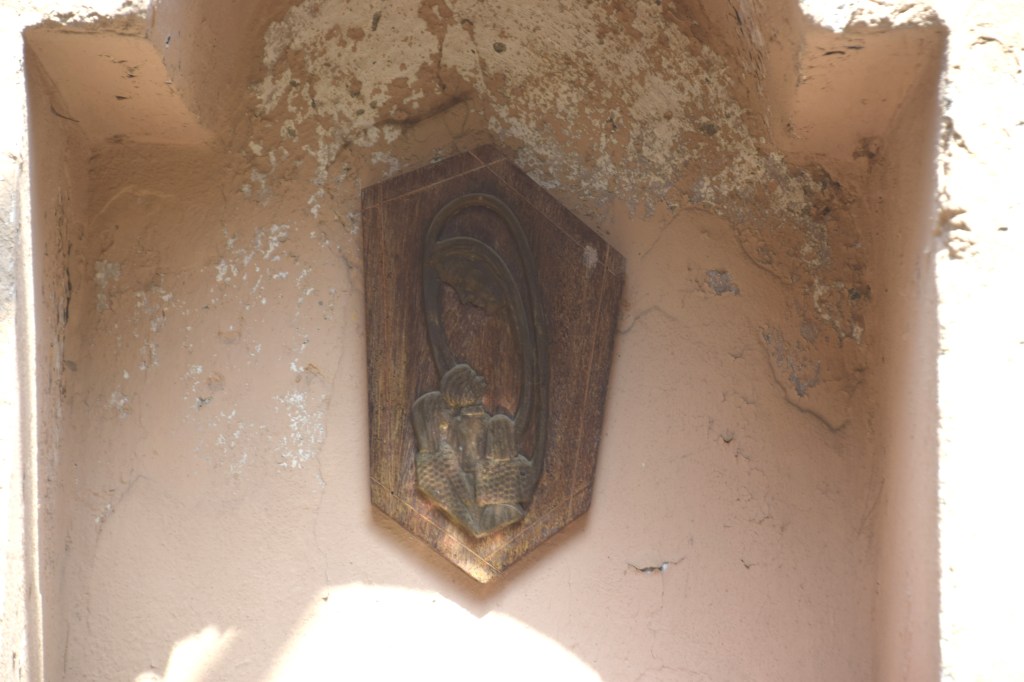
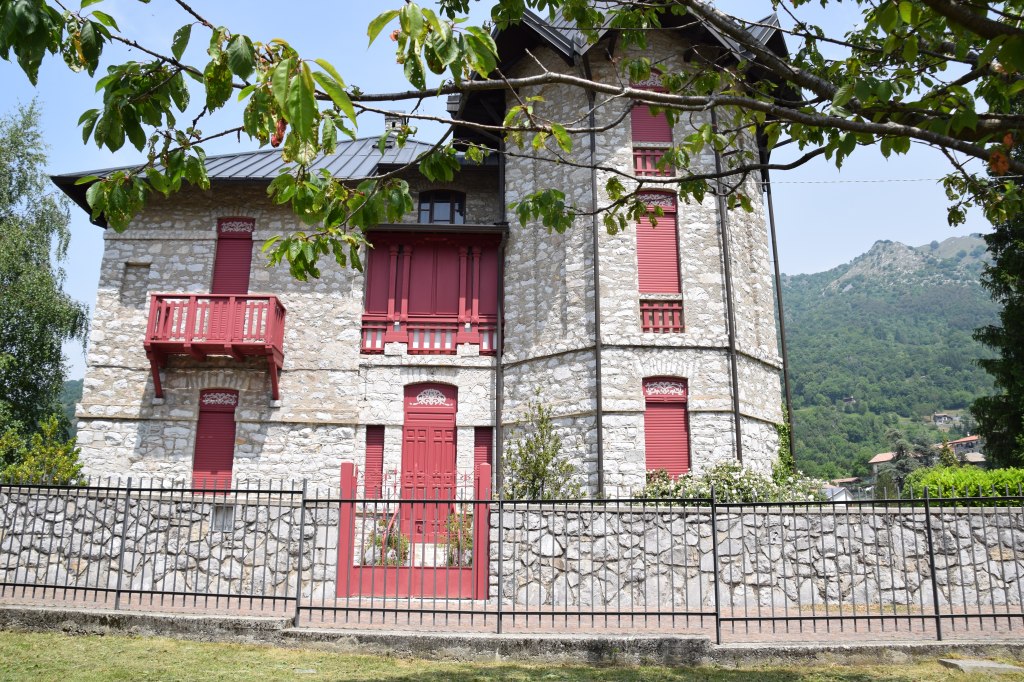
ESINO LARIO INFERIORE – the historic center. This street was drivable.ESINO LARIO INFERIORE – Wall Madonna – although difficult to see because of shadow and medium, this is a really lovely carved wood Wall Madonna with the Virgin looking down at admiring children, ESINO LARIO INFERIORE – This is the Villa Marcelline – an important home in the town very near the ancient parish church of San Vittore. I could not find any information on the family – only numerous sourcesthat called it an important villa.
Because charcoal production no longer needs rob the landscape of trees to burn – stealing forever from the people the beauties and goods of their wood – Esino cultivates its forests of beech (faggio) and hornbeam (carpino) for the commonweal. The woodlands are owned by the comune but shared by the residents who use them by hereditary right. Beech provides fuel for the ‘stufe a legno’ that warm the kitchens of the locals. Beech aids in the production of Lombardian beers offering a floor on which the yeast can grow and – burned – provides flavor for the malt. Hornbeam figures walk the squares of chessboards. Also called ‘ironwood’ – hornbeam provides planks for durable floors, and its wood ensures the integrity of tool handles, the longevity of piano actions, and reliability for the gears of traditional rotating machinery.
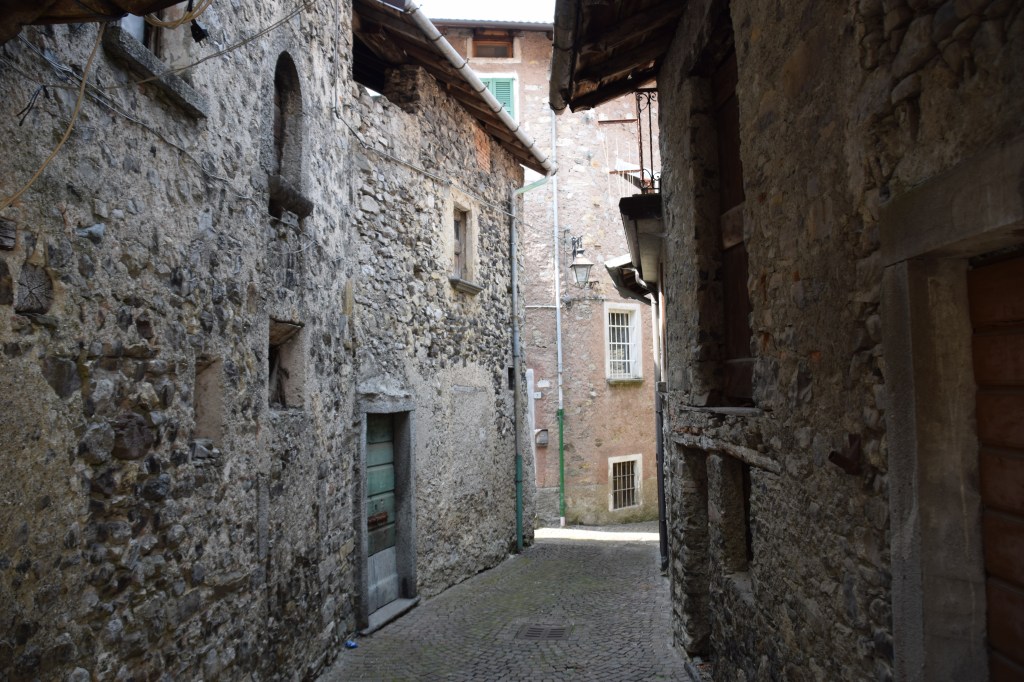
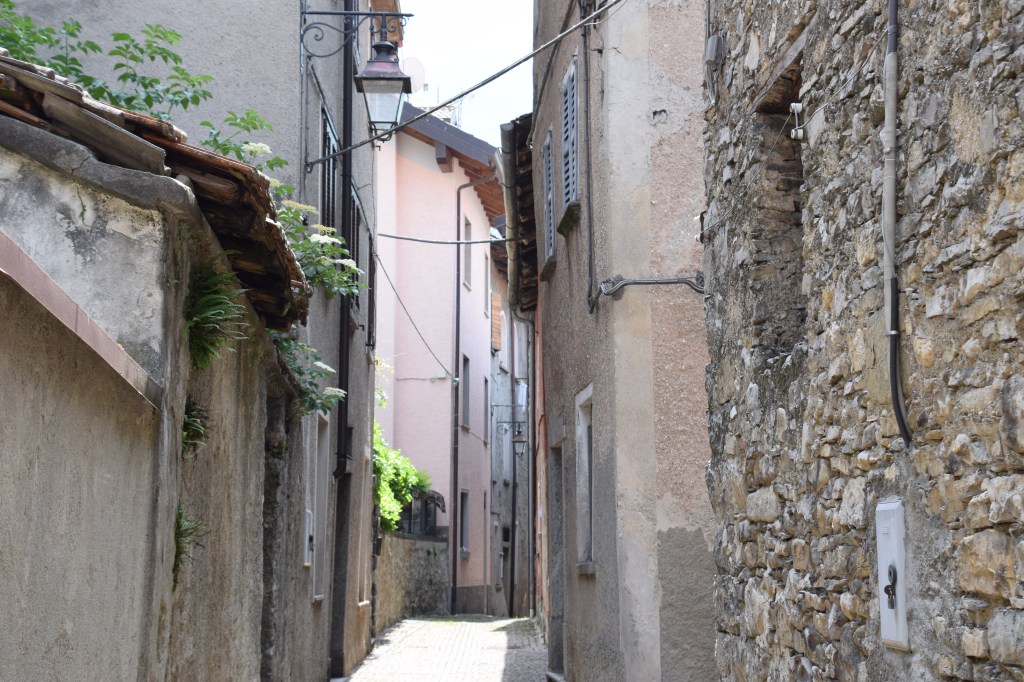
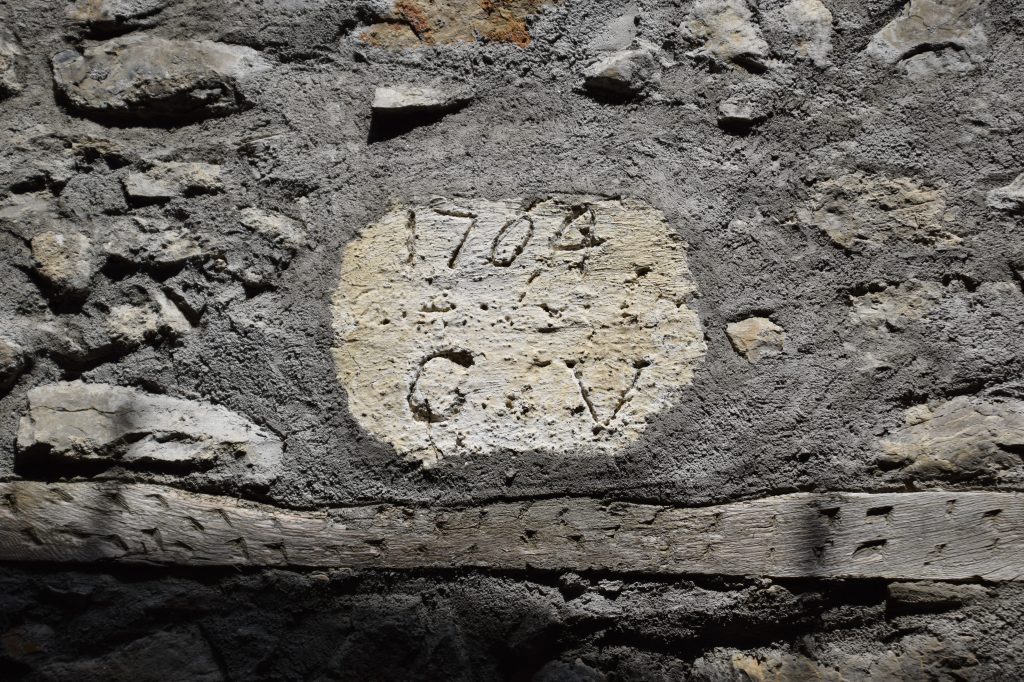
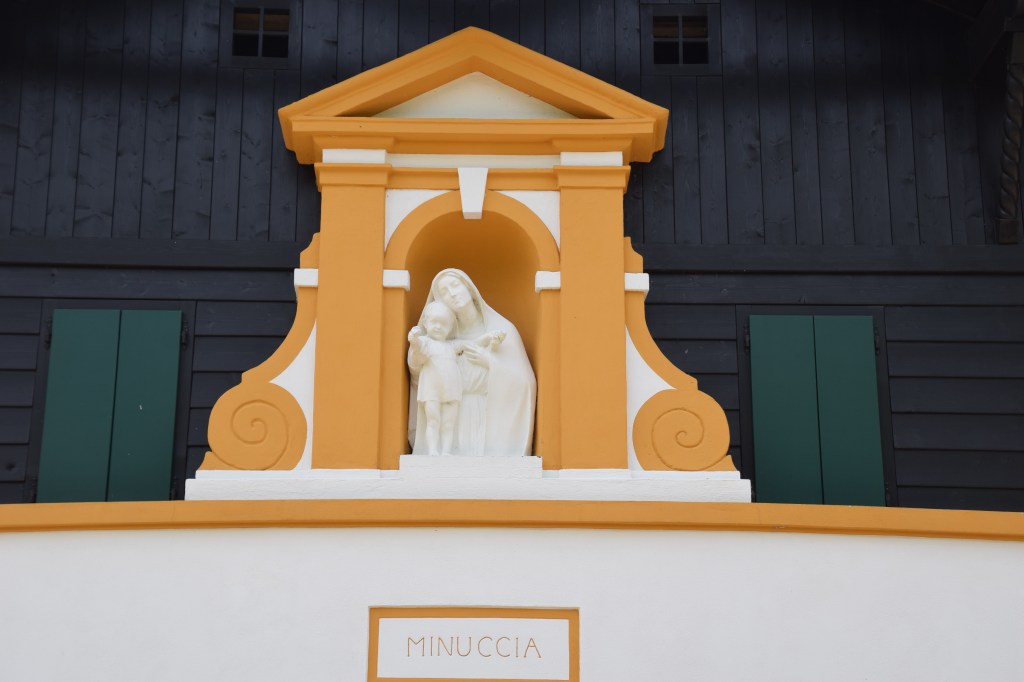
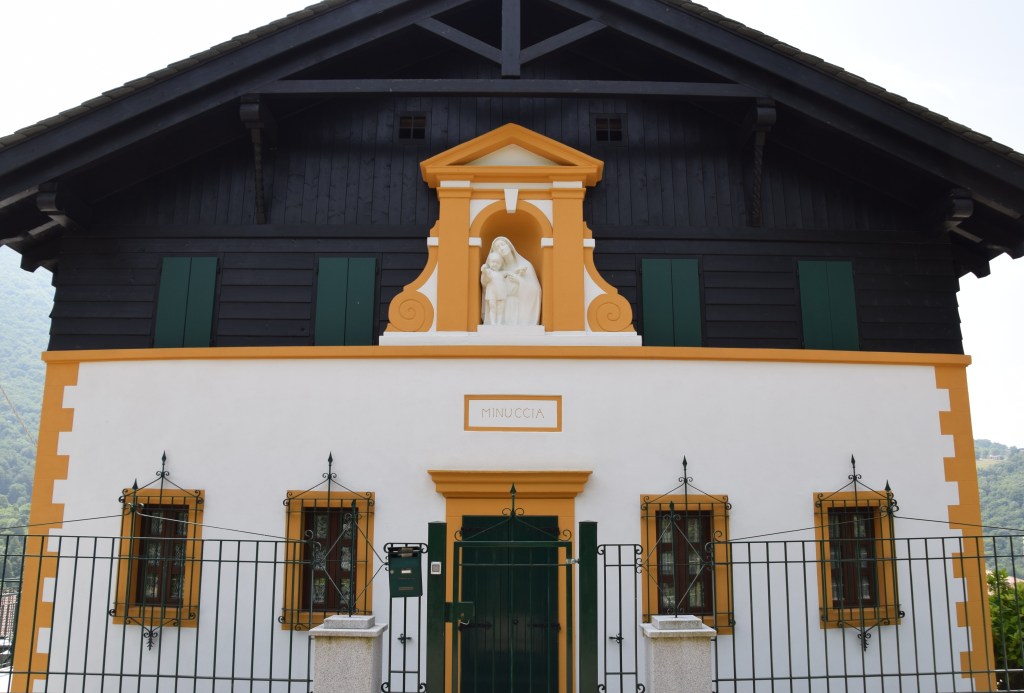
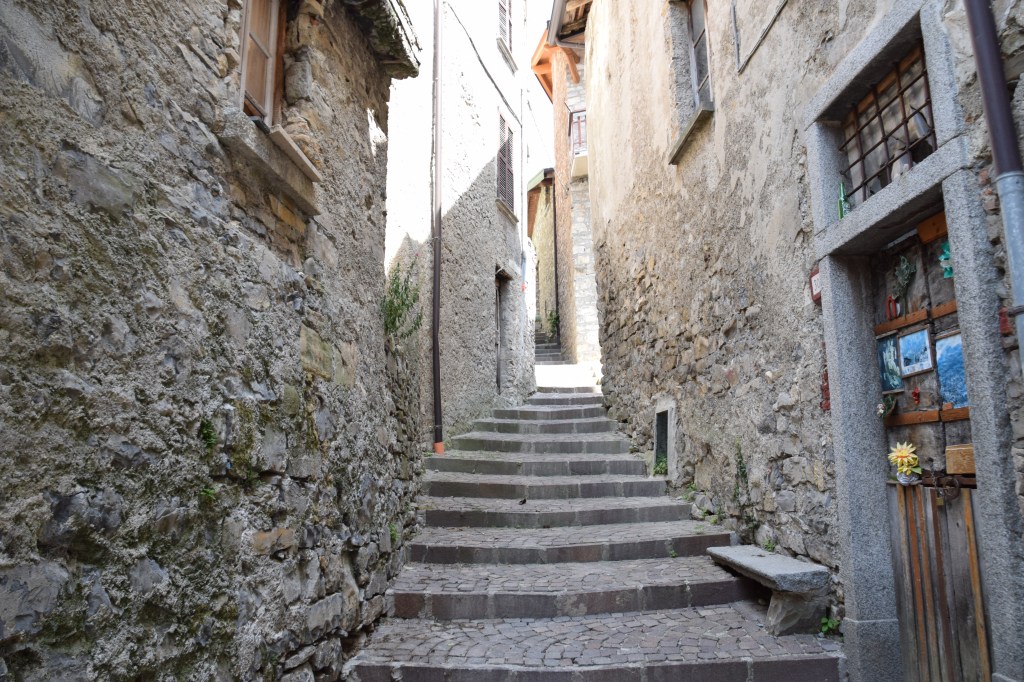
ESINO LARIO INFERIORE – narrow streets and old stone housesESINO LARIO INFERIORE – often when homes are renovated, the old plaque attesting the age year of construction of the home is retained. This house belongin to a man with the initials G.V. was built in 1704. ESINO LARIO INFERIORE – this astonishing, large sculptural Virgin and Child adorns the facade of a grand villa belonging to the Minuccia family ESINO LARIO INFERIORE – Wall Madonna – the renovated villa with its spectacular sculpture
I had a wonderful day in Esino Lario. With plenty of free parking, open bars, and public toilets a long day here was a simple pleasure. The two historical centers offered me many streets to explore for Wall Madonna’s and the old wooden doors that I love.
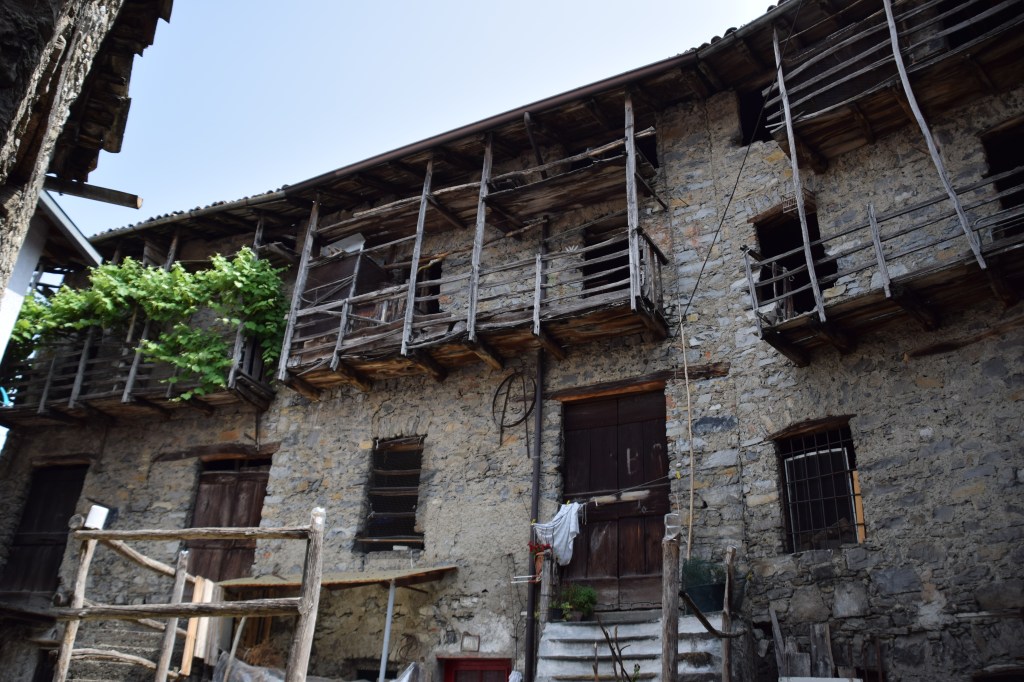
ESINO LARIO INFERIORE – historical house in the old center of the villageESINO LARIO INFERIORE – A ‘For Rent’ sign on an old home that did not look very ‘modern’. ESINO LARIO INFERIORE – Wall Madonna – I found this fresco as I walked up the hill to Esino Lario Superiore. It was on the face of a home that was in a double row of houses. I tried deperately to find an access way but there was none. The alleyway between this row of homes was no gated as what was once the via of the old street between the homes was now the backyard. Carriage roads exist on the outside of both rows of homes. Where the new roads are is where the yards of the old homes once were. The inscription reads in Latin: Mater Dei – Mother of God or God’s Mother.
What is now new but was once the ancient road through lower and upper Esino could still be identified by the shrines and fountains that were placed along it to quench the thirst of soul and body. When I was sure I had walked by every façade and traversed all available paths – for feet and cars – I endeavored to end my day with a visit to the ancient Torre Esino.
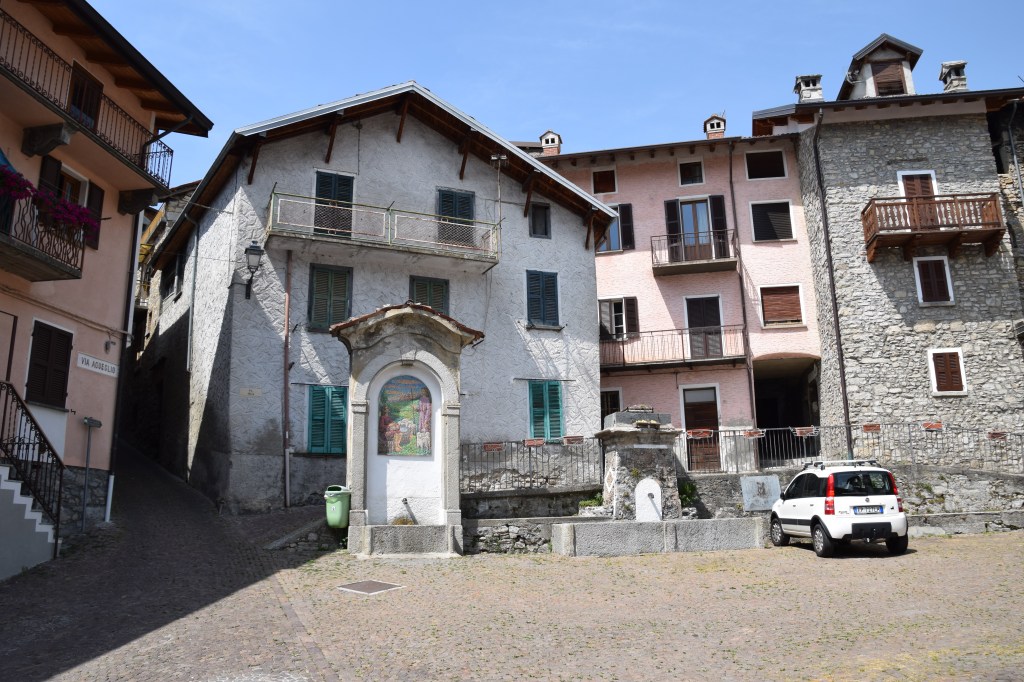
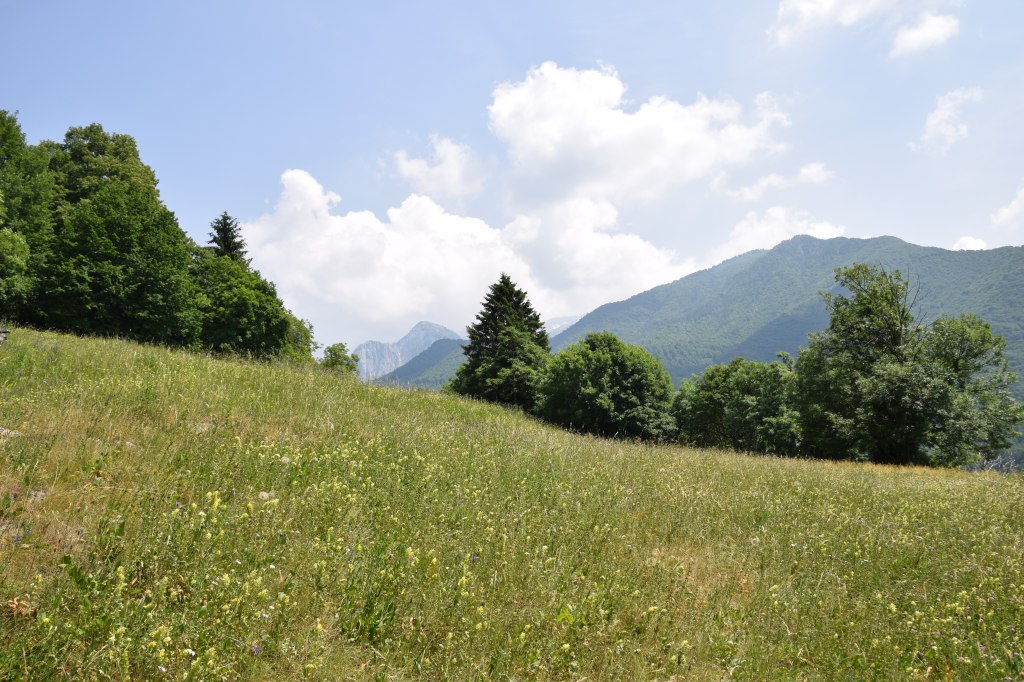
ESINO LARIO SUPERIORE – view of the valleyESINO LARIO SUPERIORE – Madonna Shrine found on the last house in the upper village on what was and shortly become the old mulatierra to Passo AgueglioESINO LARIO SUPERIORE – piazza with fountain and shrine
There is only one sign in town pointing the way to the remains of the Castello di Esino. Once past that sign the street – like all the streets in these old towns – multiplies – offering one a choice of directions all of which lead up in some curvaceous fashion with clear views obscured by the crush of old stone houses melded to the slopes and each other. But I managed to find the back of Esino Superiore by simply walking up until there were no more houses.
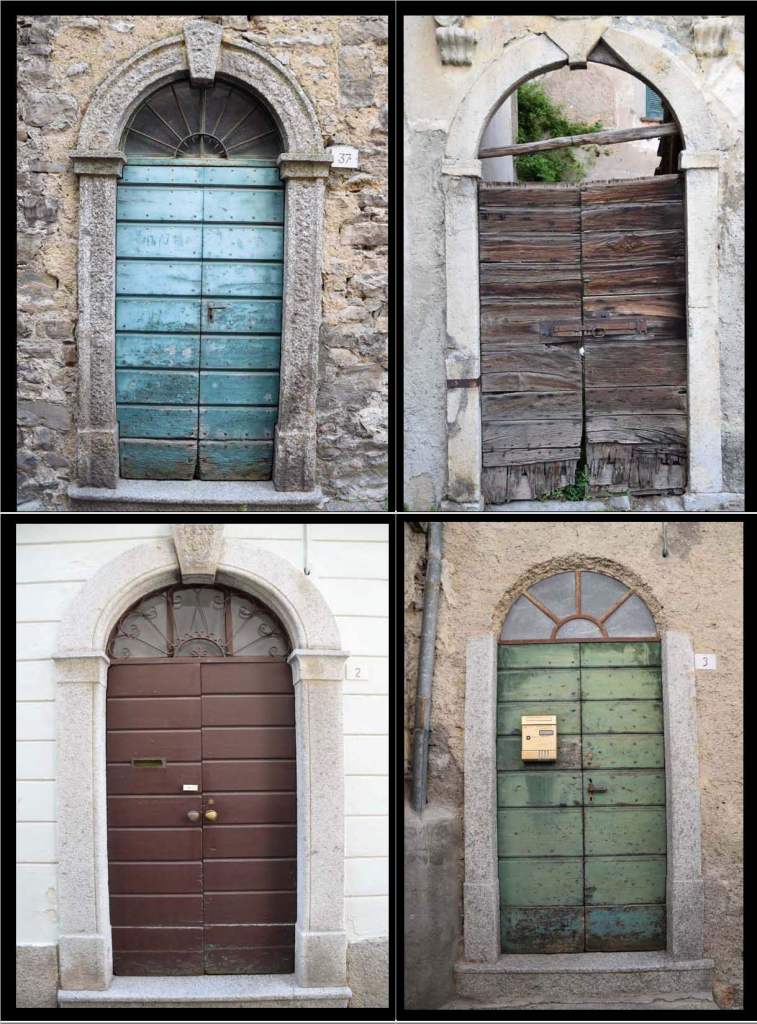
ESINO LARIO SUPERIORE – walking up the narrow, steep streets ESINO LARIO SUPERIORE – one of two fountain shrines that I found in the upper village. This one is in a small piazza on the via Agueglio – the road that leads into the mountains to the Agueglio Pass ESINO LARIO SUPERIORE – door montage
At the top – a cima – I was then faced with three paths – all promising a heart pounding climb. But fortune smiled on me and I saw an old farmer and inquired which road led to the torre. He was very helpful – pointed to the road, told me to go right at the ‘corte’ and walk the sentiero. When he said ‘sentiero’ my desire to find the ancient castle drained straight out of the bottom of my old feet. Seeing what must have been a look of ‘Oh my God!!’ on my face, the signore quickly said ‘vicino – vicino’.
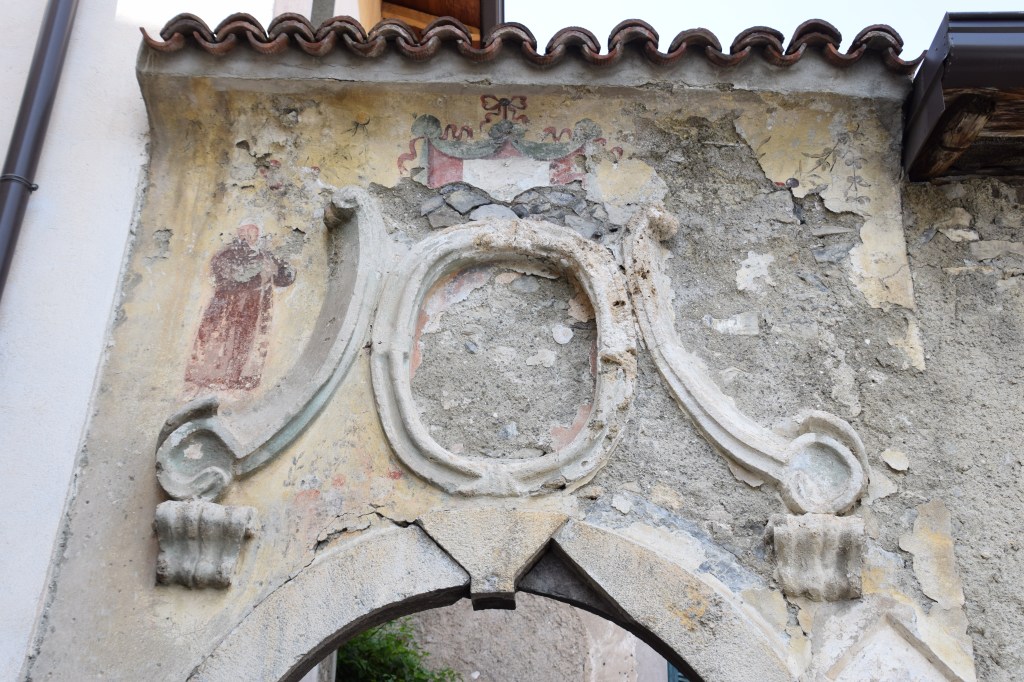
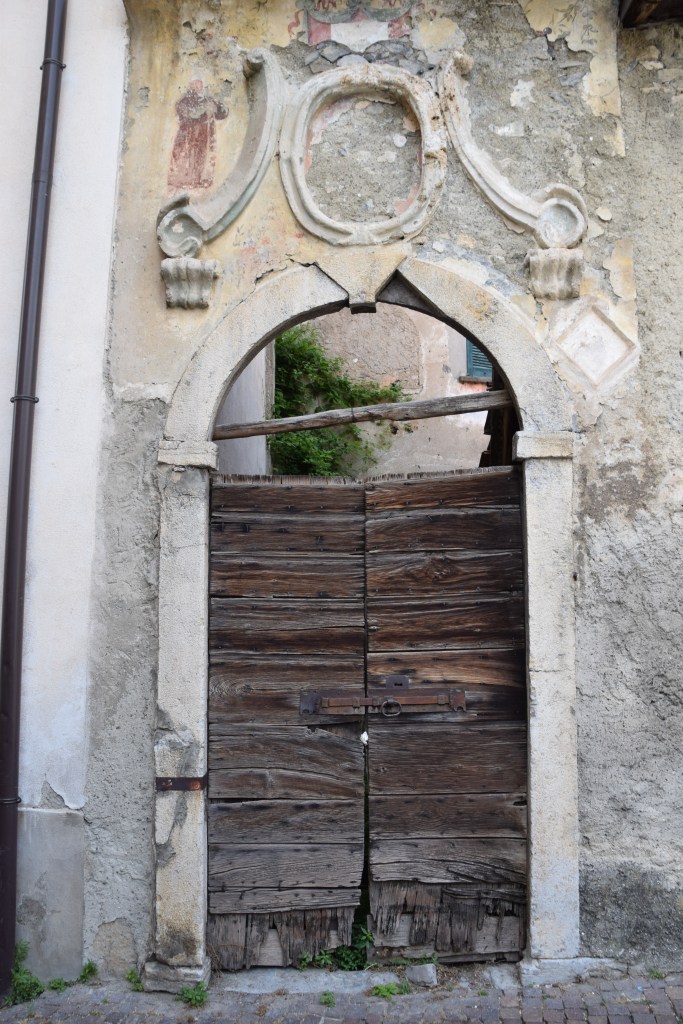
ESINO LARIO SUPERIORE – sentiero to the Torre EsinoESINO LARIO SUPERIORE – Wall Madonna – the remains of what was once a grand fresco with a Virgin in the center tondo and a saint to either side. This fresco adorns the entry to a large villa. and both the Wall Madonna and villa’s best days are long passed. The remaining saint looks to be female. But I cannot identify her. ESINO LARIO SUPERIORE – Wall Madonna – a full view of the entry door of the formerly grand villa and fresco from the previous photo. These are the remains of what was once a grand fresco with a Virgin in the center tondo and a saint to either side. This fresco adorns the entry to a large villa. and both the Wall Madonna and villa’s best days are long passed. The remaining saint looks to be female. But I cannot identify her.
I have heard this word before from locals – mostly senior citizens – whose lungs are like organ bellows and whose legs are made of iron from walking and working in these mountains. So I was not quick to trust how ‘nearby’ his impassioned ‘vicino’ actually was. Two years ago another old man told me that the fabulously frescoed,14th-century Chiesa di San Giorgio was a 10-minute walk from the center of Talamona. Ninety uphill- minutes later I stepped into the courtyard of the LOCKED church in the mountains high above the town – no frescoes – no ten-minute walk – and the beginnings of a growing skepticism for locals’ estimates of time and distance!
ESINO LARIO SUPERIORE– the field behind the torre that had the remains of walls and foundation from the ancient castello ESINO LARIO SUPERIORE – the second of two fountain shrines that I found in the upper village. This one is in a small piazza off via Aprile XXVESINO LARIO SUPERIORE – narrow, steep streetsESINO LARIO SUPERIORE – door montageNotice the door in the top right with the horseshoes turned down, As in the US, horseshooes are hung for luck But in the US they are hung pointed up – to keep the luck in – and in Italy they are pointed down to bring good fortune
But I was there and seeing the tower was my desire so I trusted the ‘vicino’ and walked the path. My new friend’s directions were true! A brief, steep walk on a very acceptable old mulatierra led to a meadow still scarred with what must have been the foundational boundaries of the castle. The view of Esino was worth the climb and I was happy to stand so near the remains of an era – the art of which I search for and really love!
ESINO LARIO SUPERIORE – Torre Esino – that is Chiesa di San Vittore in the distanceESINO LARIO SUPERIORE – view of Esino Lario Inferiore from the courtyard of the parish church – Chiesa di San Vittore ESINO LARIO SUPERIORE – Wall Madonna – a modern Madonna and Child
I hope you enjoyed these few photos of the Wall Madonna’s of Esino Lario and some of the views of the town. If you have time – it is fun to work one’s way to the Torre Esino beginning with a visit to Varenna and to the gardens of the 12th-century Cistercian convent – the Villa Monastero found there.
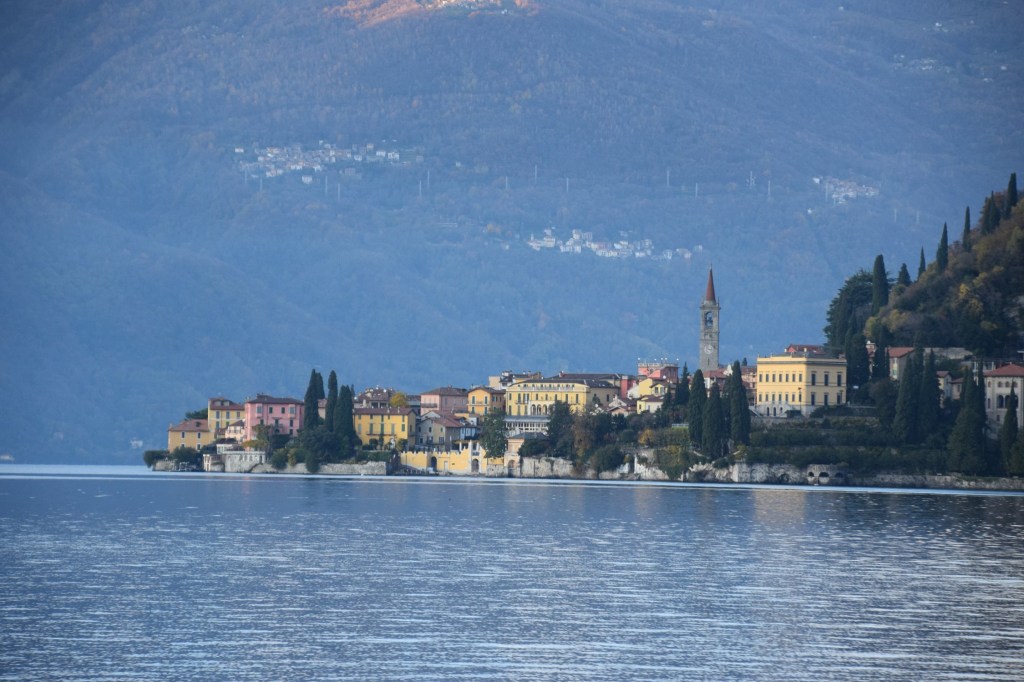
VARENNA – Villa Monastero – a view of Lake Como from the gardens of the villa.VARENNA – the town viewed from Fiumelatte. The Villa Monastero is on the far right – out of the picture and at the edge of the village.
Then one can either drive, or park and enjoy a walk up the hill to the remains of the Castello di Vezio where Queen Teodolinda passed her summers. Here one will find an open-air art gallery, an olive grove belonging to the castle, a falconry, an ancient church with fabulous frescoes, a lovely restaurant, and a craft shop that sells original jewelry and other items made by local artists. The castle features sculpted ‘ghosts’ who laze around the grounds and castle wallsand one can climb to the top of the restored Torre Vezio for fabulous views of Varenna, the surrounding towns, and Lake Como.
VEZIO – Castello di Vezio – the remains of the castle of Queen Teodolinda (570-627) – revered queen of the Lombards who Christianized northern Italy.
And with a journey on to the tiny nucleus of Perledo one will find a fabulous eroded Annunciation that has only the remains of the heralding Archangel holding a lily.
PERLEDO – an eroded Annunciation showing only the Archangel Gabriel extending his heralding hand and holding a lily – symbol of Mary’s purity of body and soul – according to the mythology – she is the Immaculate Conception – conceived without the stain of the sin of Adam and Eve and an unmarried virgin.
The remaining drive to Esino Lario along SP65 made long by the necessities of the 900 meter climb will not be regretted.
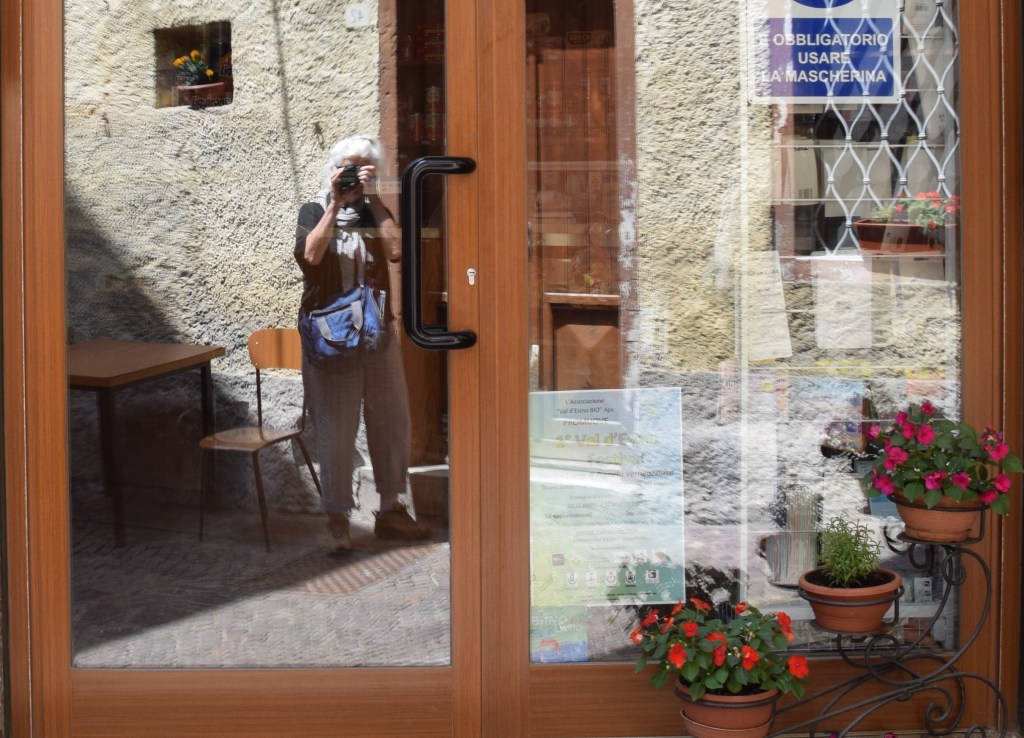
ESINO LARIO – sign for SP65ESINO LARIO SUPERIORE – selfie in a shop window.
I am a retired academic - a sociologist, sociolinguist, ethnographer, and photo-ethnographer. I am building this website and blog to share my passion for the public and private art of Italy. My main focus is on the Wall Madonna. The concept ‘Wall Madonna’ is my own. It is the name I give to the art found on the external walls of many of the homes of the locals which depicts Mary – the woman called Theotokos – God-bearer. I use Wall Madonna to refer to those images frescoed on the outside of homes and public buildings, or the paintings, carvings and statuary attached to the same. My intent is to examine Wall Madonna’s as a type of visual language and gesture in order to come to an understanding of their function and purpose in Italian social life.
In searching for Wall Madonna’s I try to present a broader harvest of my quest so that the towns and cities I visit are frescoed for the reader in my blogs. Therefore, I like to include streetscapes, doors – which have a language of their own, vistas, and the life of the people as reflected in the things one sees as one peruses a town.
Because my family is from the Valtellina and because the valley is lush and beautiful and steeped in history - and an abundance of Wall Madonna’s – I have a small home here. I love the Valtellina. I hope my photos capture your attention. There is no greater joy than sharing this art with others.
View more posts
2 thoughts on “ESINO LARIO – pretty mountain valley town above Lake Como”
Dear Sir,
I was very pleased to see all your pictures of Esino!
I am responsible for the Museo delle Grigne and would love to use some of your pictures.
Would you allow to do so?
We allow all the objects, pictures and books of the museum to be used freely thanks to the CC BY-SA license. What about you? Would your name suffice?
Thanks for the pleasure of seeing our village so well represented,
Dear Catherine – I am so sorry I did not see this comment. Yes – you may use my photos. If you still need them I will be happy to email them to you. vlmerlini@hotmail.com










Dear Sir,
I was very pleased to see all your pictures of Esino!
I am responsible for the Museo delle Grigne and would love to use some of your pictures.
Would you allow to do so?
We allow all the objects, pictures and books of the museum to be used freely thanks to the CC BY-SA license. What about you? Would your name suffice?
Thanks for the pleasure of seeing our village so well represented,
Best regards,
Catherine
LikeLike
Dear Catherine – I am so sorry I did not see this comment. Yes – you may use my photos. If you still need them I will be happy to email them to you. vlmerlini@hotmail.com
LikeLike