THIS IS AN UPDATE ON THIS POST: The fresco which I identified as a possible Trinità Trifronte – a three-faced Trinity is actually a Trinity of the newer type where God the Father is pictured with a crucified Jesus and the Holy Spirit represented as a dove. I was able to return to Caspano and take some better photos. I offer those photos below but encourage you to read the post for its information on these works of art.
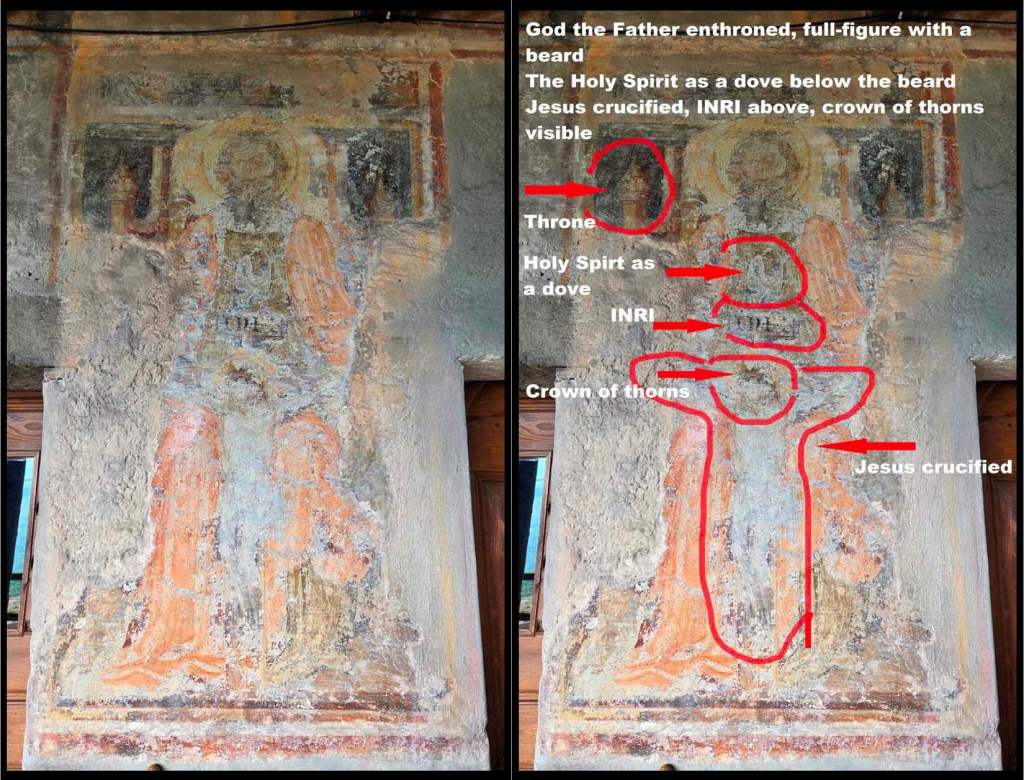
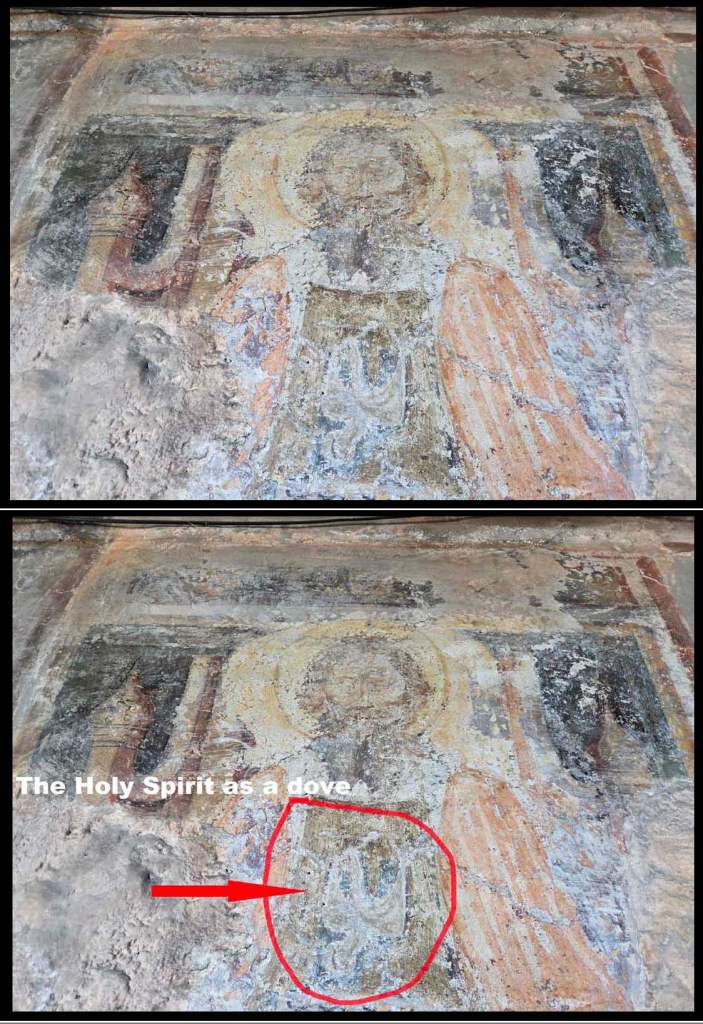
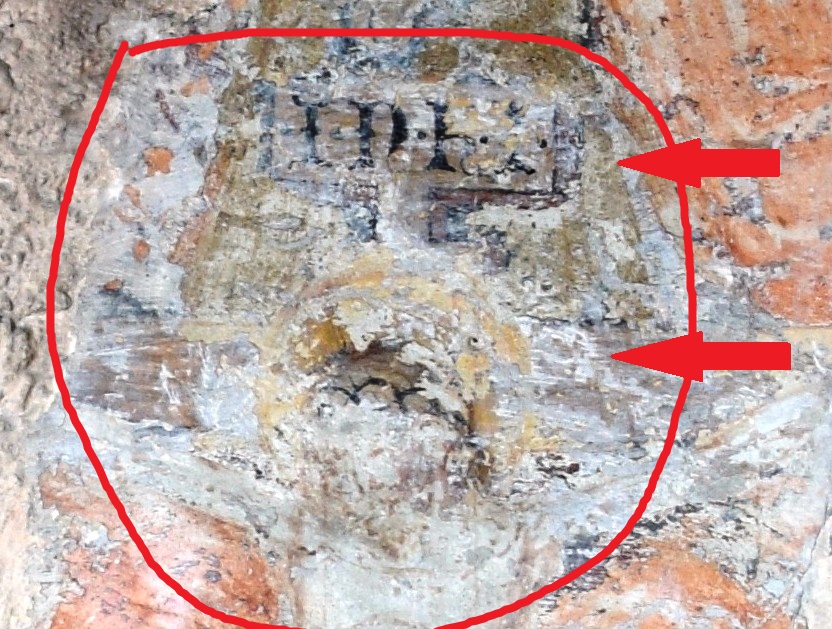
Above is a montage showing the fresco as it is found on the wall of the villa (left) and a detailed photo pointing out the components of the depiction of the Trinity. A close inspection shows a full-figure God-the-Father who is robed and enthroned. He is bearded and has a ‘plain’ gold halo. Below his beard at mid-chest is a dove which represents the Holy Spirit and below the dove in gothic script is the acronym INRI. And below this inscription is the crucified Jesus nailed to the cross.
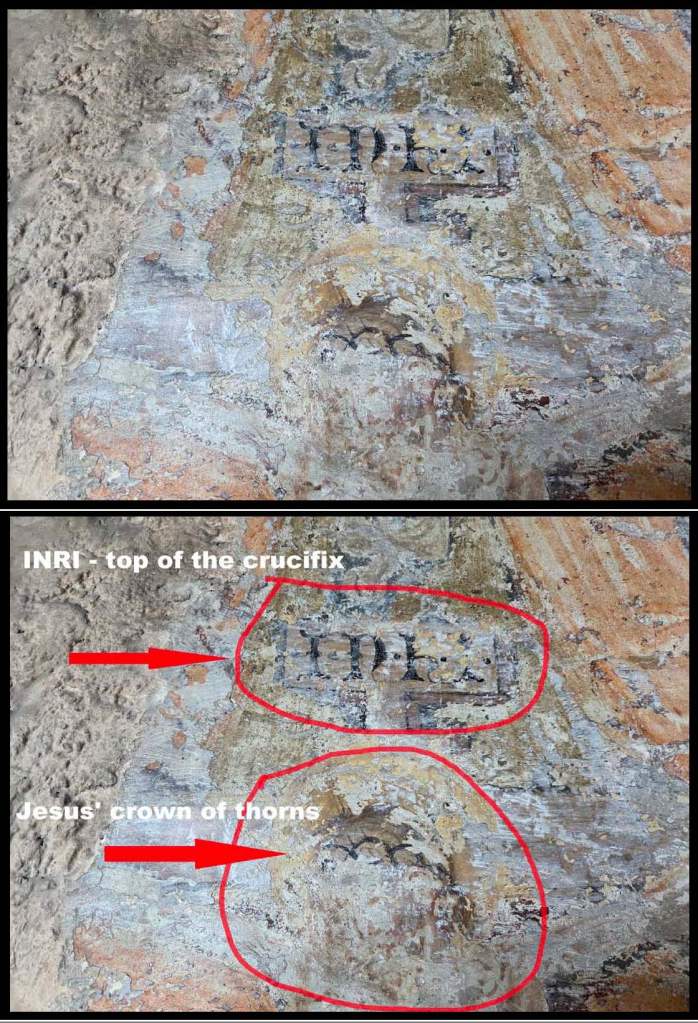
“INRI” is the Latin acronym for “Iesus Nazarenus Rex Iudaeorum” – Jesus of Nazareth King of the Jews. In Roman crucifixion the name of the condemned was placed on the cross above his head. According to historians, Pontius Pilate had this title placed on Jesus’ cross in three languages – Latin, Hebrew, and Greek. Below INRI one can see the head of Jesus with his crown of thorns.
I apologize for the error in the original post which was caused by the poor quality of the photos, the eroded state of the 500 year old fresco, and my excitement at finding what I thought was a very rare Trinità Trifronte – a three-faced Trinity. I have left the post in it’s original form below as it offers information about the frescoes I found in Caspano and others found in the Valtellina. The original post begins below the following heading.
THE ORIGINAL POST STARTS HERE AND CONTINUES BELOW:
This is a post dedicated to sharing some fabulous frescoes that I found in an Immobiliare advertisement listing an apartment for sale. In order to photograph the frescoes, which were on the interior wall of the second-story belvedere of an ancient home accessed through a locked courtyard, I viewed the small apartment that was advertised with the listing real estate agent.

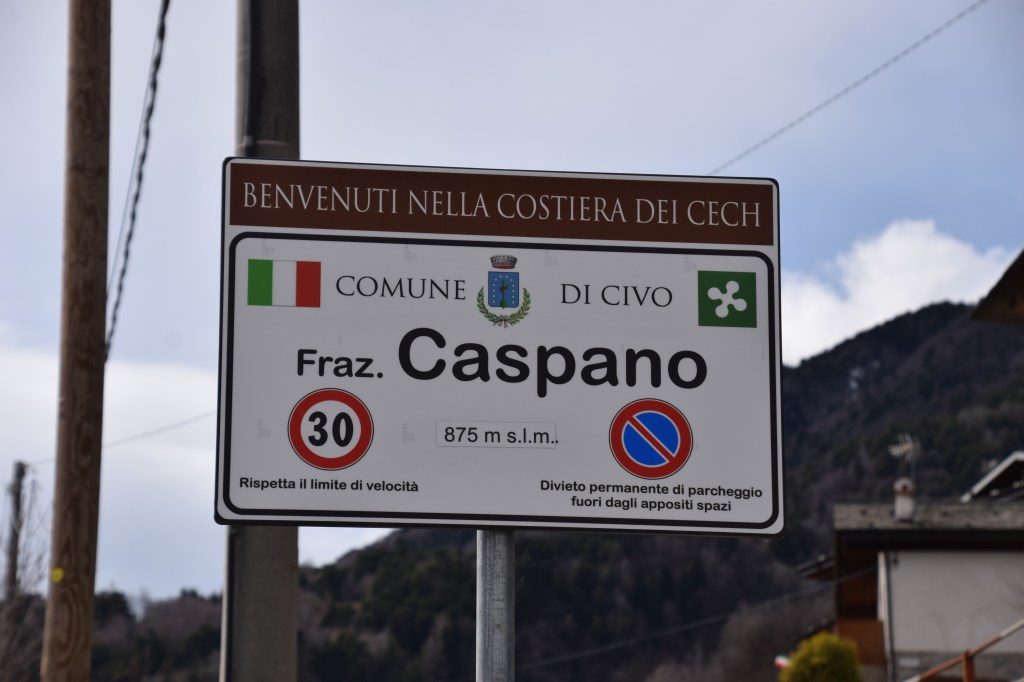
Caspano is a frazione that is part of the mountain community of Civo. It lies outside of Morbegno at 900 meters above the Valtellina. The village was founded in 1250 by a Milan nobleman – Domenico Paravicini – who fled the city to escape the war between the Guelphs and Ghibellines. The Paravicini descendants flourished and nurtured the mountain and valley communities leaving their influence and stemma wherever they went.
Caspano is just a gorgeous medieval village! I love to look at real estate listings and sometimes find frescoes scanning the photos of the available properties in the older districts of the Valtellina towns and villages. I was delighted to find more in Caspano!
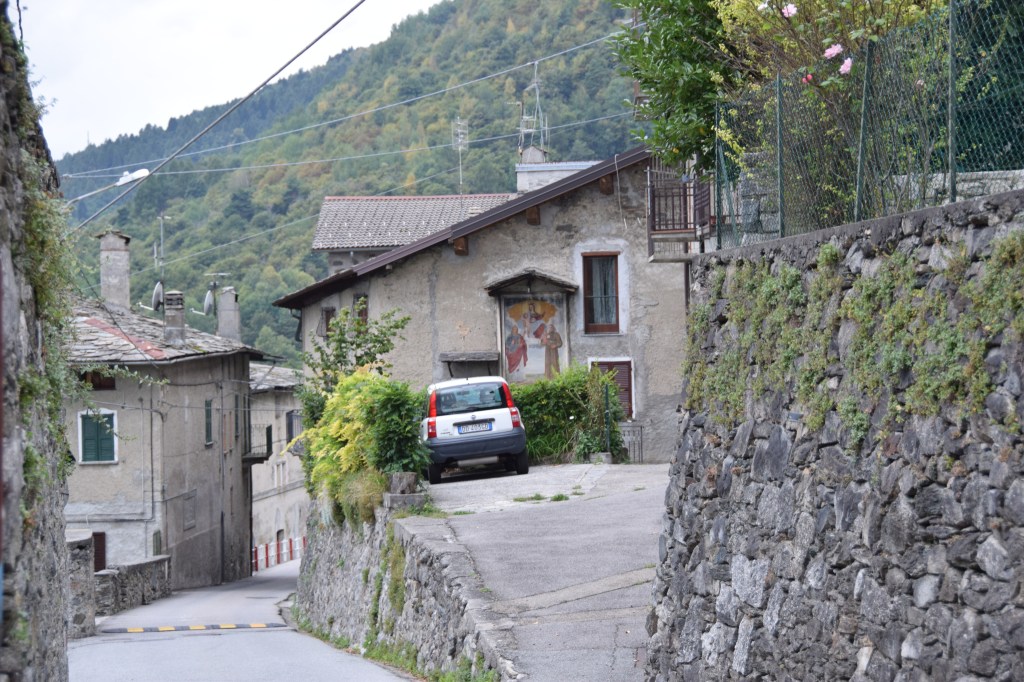
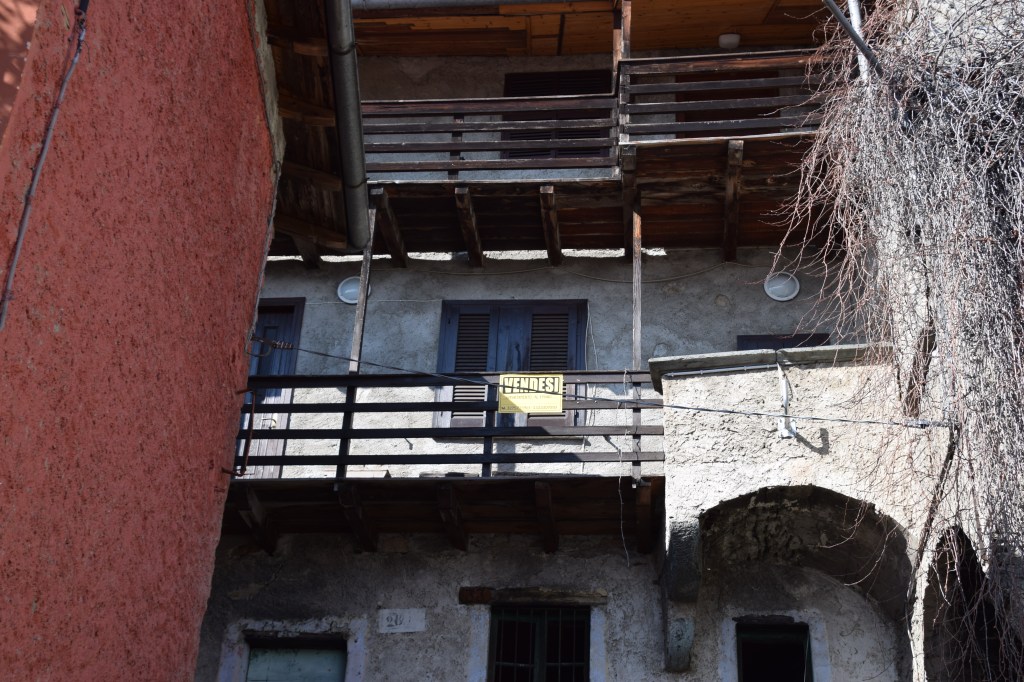
The apartment for sale was in an old three-story home connected to an ancient villa once owned by the Paravicini family. The villa had frescoes on the belvedere that date circa the 15th to 16th century. To access the apartment one must enter through the courtyard of the villa and climb the stairs that lead to its second and third stories.
Although eroded by time and weather, the remaining frescoes on a wall once completely adorned were astonishing. These sacred works of art are original! I could see no evidence of any restoration!!!

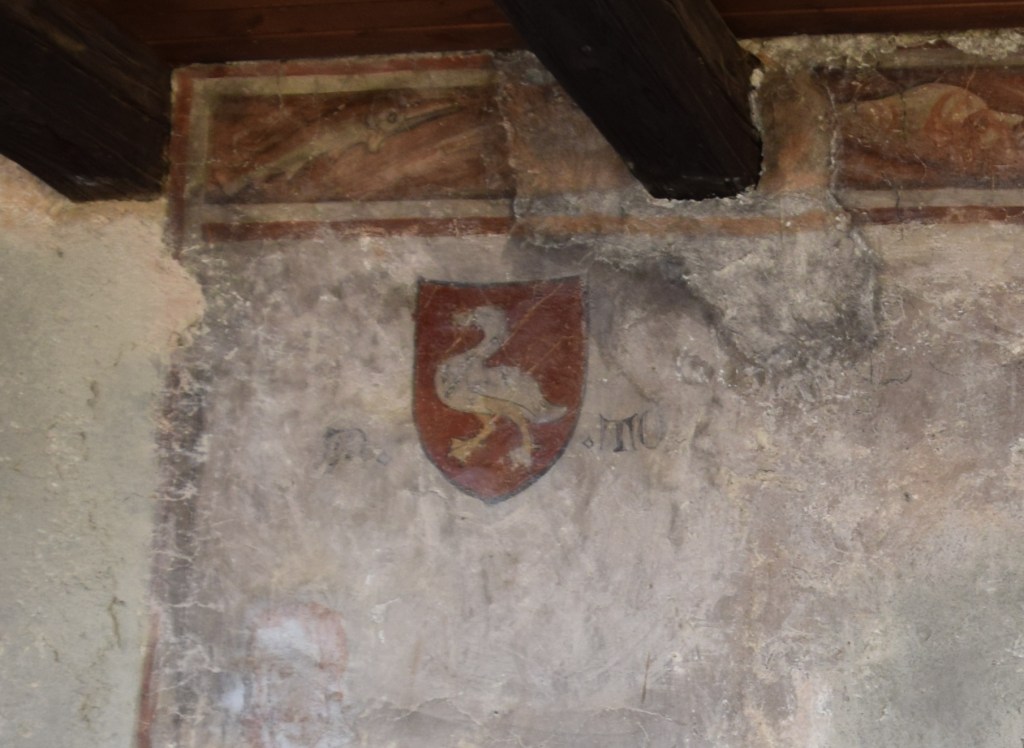
Across the top of the wall was an original decorative border interrupted by the beams of the belvedere floor above. This was the only image remaining in that border. It is a reclined figure wearing the head covering common for men in this time-period. The figure does not appear to be altered or restored in any way.

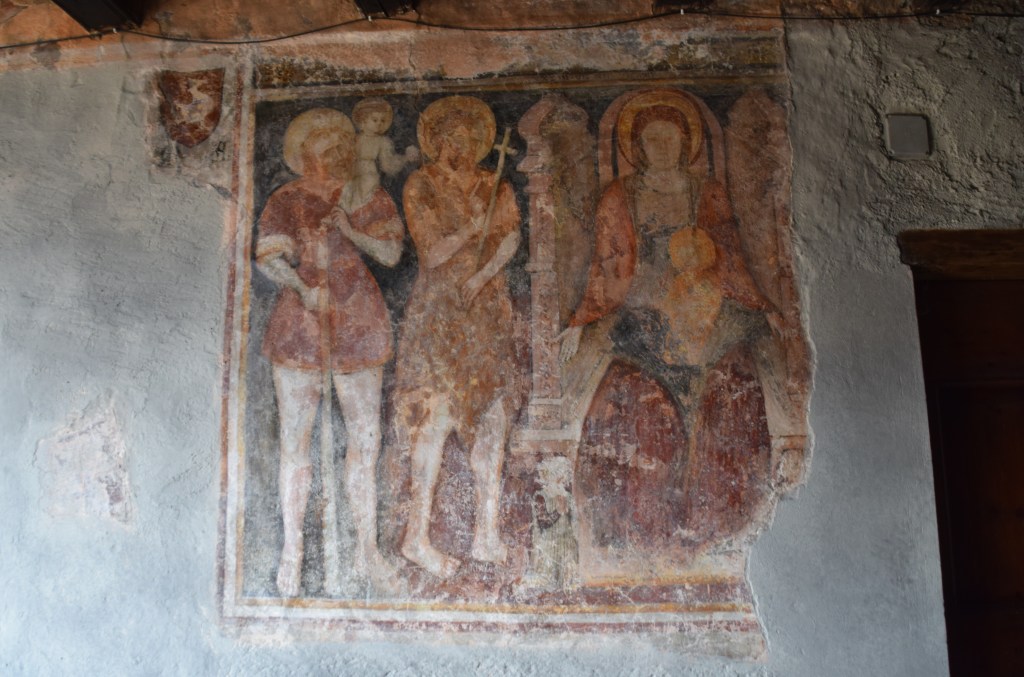
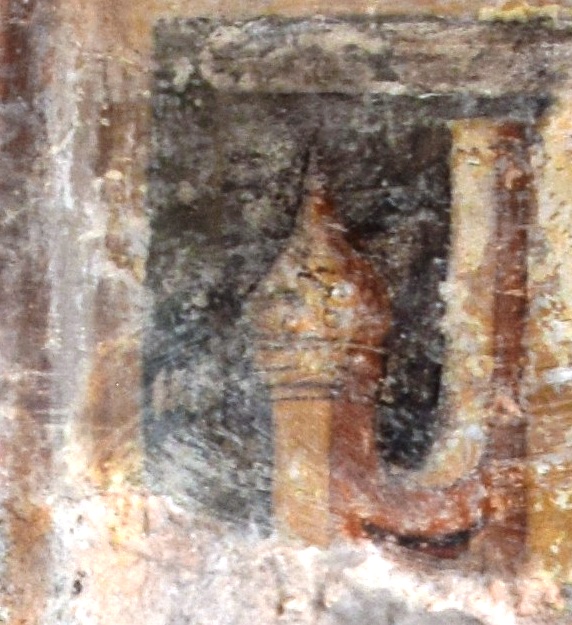
This is all that remains of what was once a surround for a fresco or perhaps an original door now cemented shut. Although I am not certain, I believe the attached building containing three small apartments, one of which I viewed, was not original and is not as old as the edifice with the frescoes. Also, it seems that the original wall with the frescoes was interrupted by the addition of one or more doors. There are currently four doors on the wall and they give access to different apartments in the building. The addition of one door – as seen in the photo below – destroyed the entire right half of the enthroned Madonna & Child of the title photo and seen below. What were surely two saints to Mary’s left were eliminated. Preserving these antique artworks over the need to make modern use of a building is not always a priority.
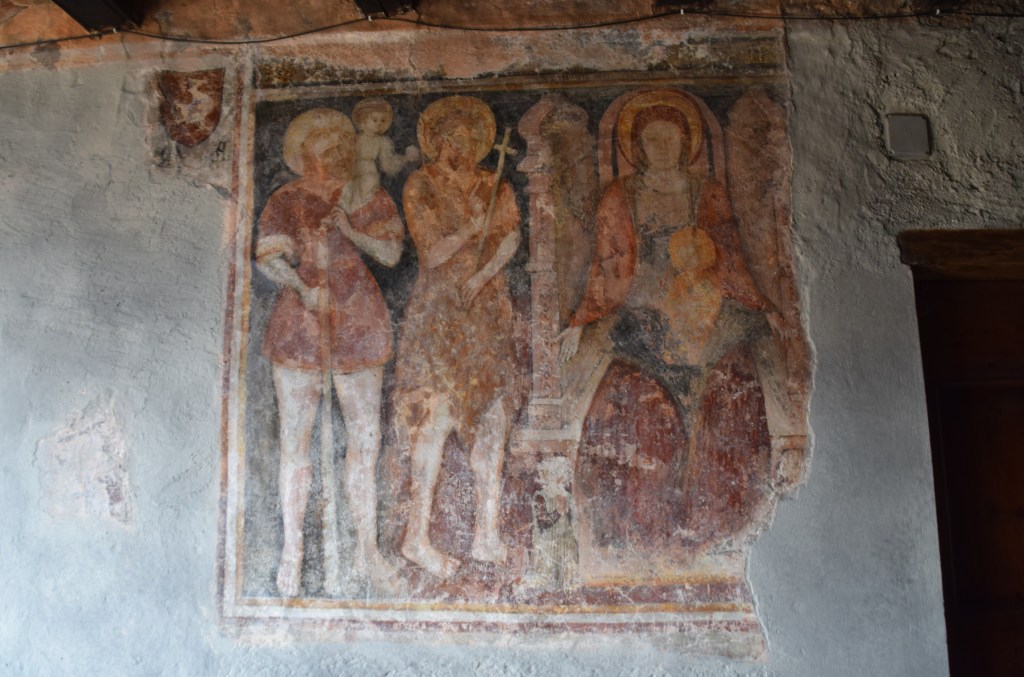
Above one sees the Madonna with outstretched arms presenting the infant Jesus who sits in her lap. Saint Christopher with a young Jesus on his shoulder and Saint John the Baptist are to Mary’s right. What would assuredly have been two other saints to make a complete and balanced image on Mary’s left are gone completely. Perhaps the history of the founding Paravicini patriarch could lend insight into the inclusion of Saint Christopher in this fresco. Domenico Paravicini undertook a dangerous journey to flee the warring factions of Milan. Perhaps he invoked the protection of Saint Christopher on his journey to the Costiera dei Cech.
The appearance in sacred art of Saint Christopher carrying a young Jesus on his shoulder became very popular during the 1300’s to 1500’s – the era of the noble Domenico. In fact, this imagery aids in dating the frescoes. A brief hagiography of the saint is thus: Christopher, after his conversion to Christianity, spent his time carrying travelers across a river. One day a young boy needed assistance crossing. Christopher helped the child by placing him on his shoulder and carrying him across the rushing waters. Upon reaching the other side and safety, the child revealed himself to the saint as Jesus. After his martyrdom in the 3rd century, Saint Christopher forever became the beloved patron saint of travelers.
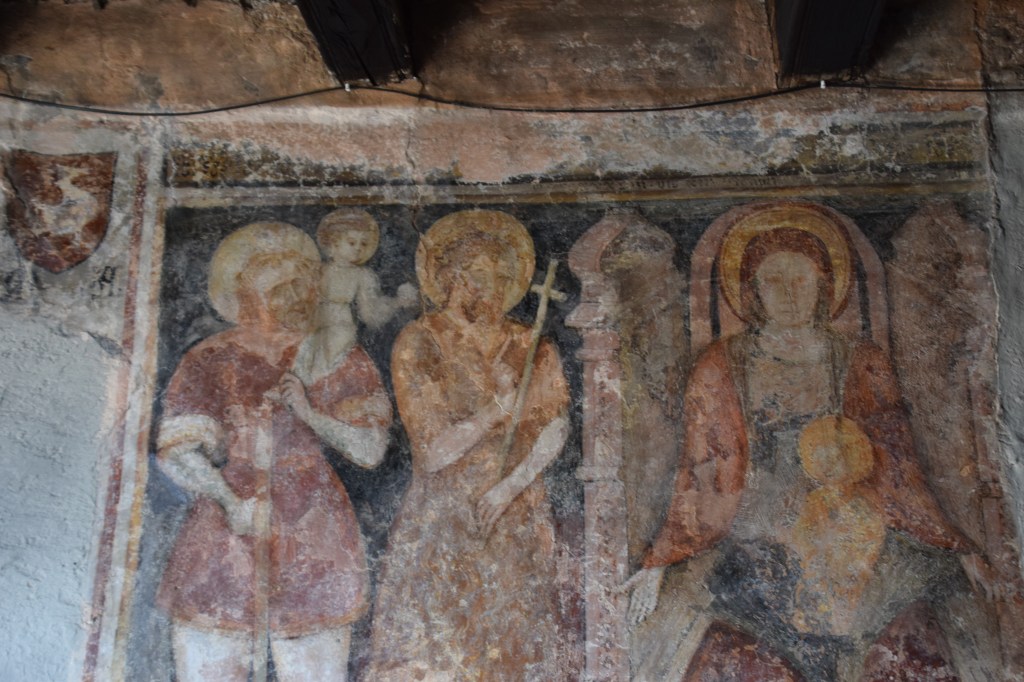
Although two of the flanking saints are missing, a point can be made concerning the saint imagery. These are frescoes on a private home belonging to the founding and affluent Paravicini family as attested to by the incorporation of the Paravicini coat-of-arms in multiple places on the frescoed wall. Given the era and the common practices associated with frescoes on private homes, one might suggest that the missing saints could have been those invoked for protection against illness and/or the saints might have been the name-saint of the donor or donors.
Fear of the plague, which affected many local areas because of trade in the Valtellina and Lake Como area, would engender the inclusion of San Rocco and/or San Sebastiano and, often, San’t Antonio Abate in a fresco with an enthroned Madonna & Child.
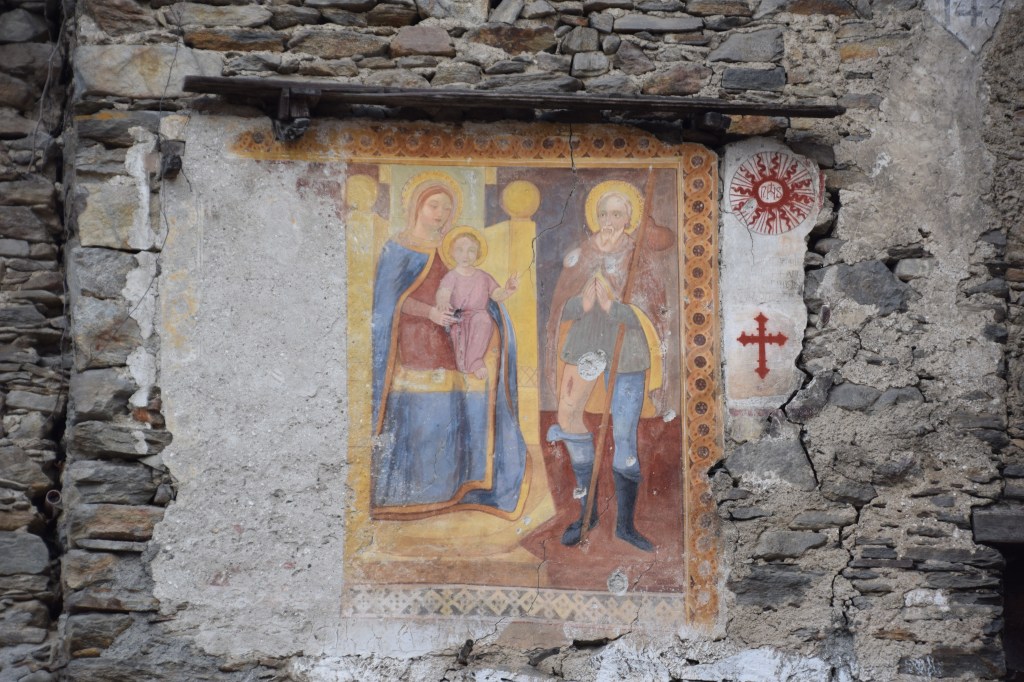
This is a 15th to early 16th century Plague Madonna found in the tiny località of Canleggia which is outside Morbegno in the Valgerola and on a road leading into the high altitude summer communities. Represented are the enthroned Madonna & Child and San Rocco – a saint commonly invoked against the plague. Although the left flanking saint is missing it would certainly have been an image of San Sebastiano.
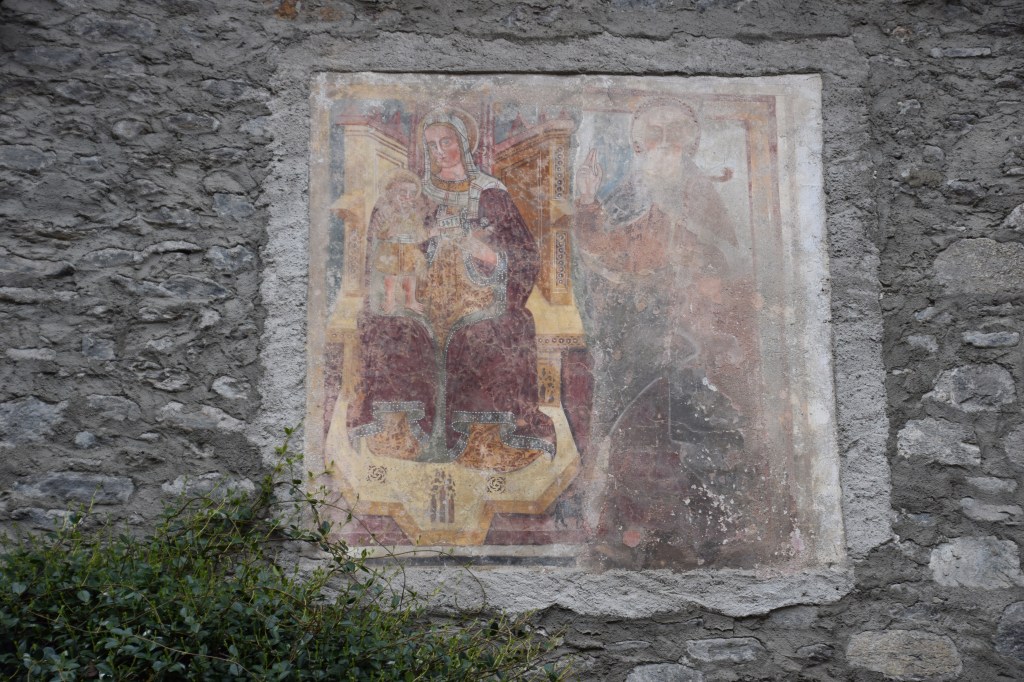
From the same time-period being discussed, this Plague Madonna is found in Rogolo in the Valtellina. Represented is an enthroned Madonna & Child with San’t Antonio Abate to Mary’s left. The literature available for this fresco and provided by the town, states that the two figures were frescoed at different times. This can be seen on inspection of the painted frame surrounding each figure and along the broken line of gesso separating the two firues. The enthroned Madonna & Child was frescoed over the older San’t Antonio. I suggest there might be or have been either a Madonna or a second saint beneath the current Madonna. Regardless of whether my guess is right or wrong, both the Madonna and San’t Antonio are used as intercessors against illness and protectors of both people and farm animals. This fresco was likely a plague talisman.
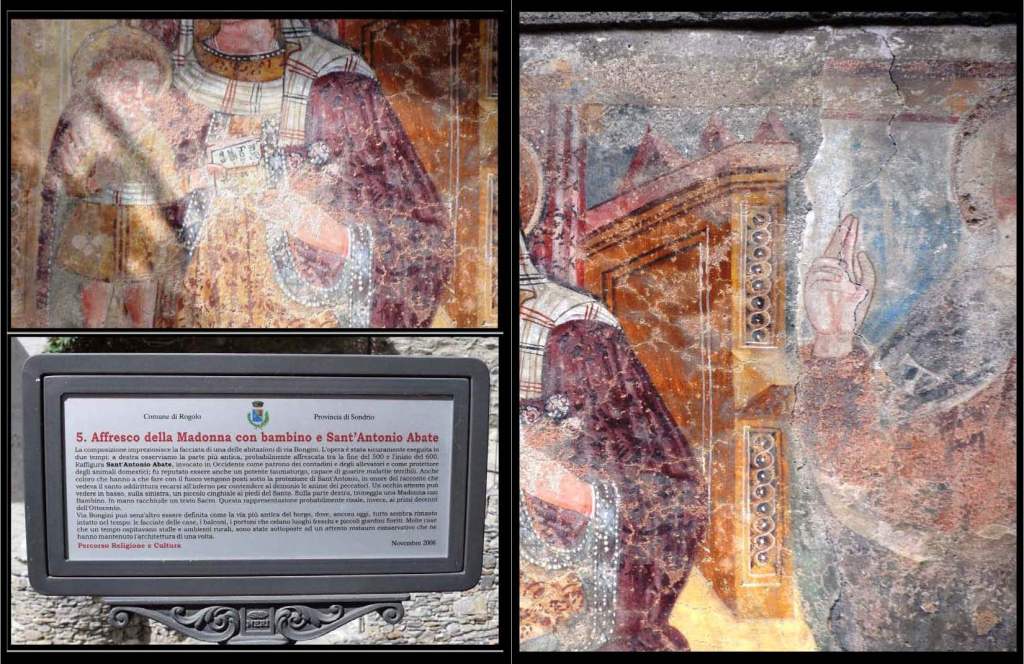
I note here for you (and shown in the photo above) that the plaque found in front of the fresco dates San’t Antonio to the 16th century and the Madonna to the 19th century. I believe the dating of the Madonna & Child is incorrect. There are errors in the description one of which is the claim that the Madonna holds a text. She does not. She holds roses and Jesus holds a text. Further, this not the style popular in the 19th century. This is a 15th and early to mid-16th century style. It could be that the original Madonna was damaged and it was replaced with a replica of the original. The period of the replacement is debatable but that the description was not done upon careful inspection of the works is obvious.

The above Plague Madonna is found in Talamona in the 15th century Chiesa di San Girolamo. This work was painted in 1577 by the local artists Francesco Guaita and Abbondio Baruta. With the enthroned Madonna & Child are San Rocco and San Sebastiano. The poor quality of the photo is caused by my having to photograph this art through the window because the church is always locked. However, I use it to support my point about frescoes of this era.

A final example is included from Foppa – a località of Rasura in the Valgerola. This gorgeous Plague Madonna portrays an enthroned Madonna & Child with San Rocco and San Sebastiano. The fresco was restored in the 19th century as indicated in the inscription above the images.
Furthering the discussion while considering that the original fresco likely had four saints, I suggest that one or more of the missing saints or even the remaining saints may have been the name-saint or saints of the donor or donors. When inscriptions remain viewable on these ancient frescoes where the donors’ names are included with a dedication to their faith or a deceased family member, it is often the case that the fresco is onomastic. In Italy, people celebrate the birthday of their name-saint – the saint after whom they were named. Hence, the inclusion of a name-saint for the Paravicini family member or members who donated these frescoes to their faith and the well-being of their family and community would have been more likely than not. Some fresco examples are offered below although not all datable to the relevant time-period.
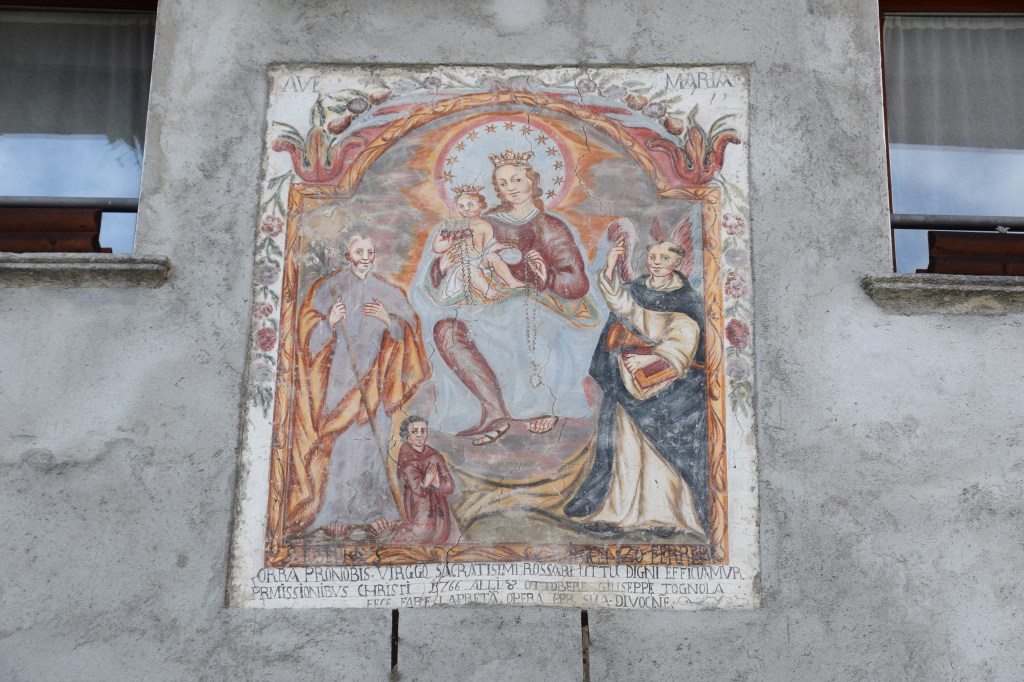
Here is a Wall Madonna from the frazione Burano above Lake Como. Depicted are the Madonna & Child enthroned with San Giuseppe on the left and San Vincenzo Ferrara on the right. The fresco is dated October 8, 1766 and the donor was Giuseppe Tognola making this sacred art a tribute to that donor’s name-saint and, hence, onomastic.

Above is an onomastic Wall Madonna dated 1926 depicting the Madonna & Child with San Giuseppe and San Martino. The donor was Giuseppe Spandrio and his wife Margherita Curtoni. As one can see, the name saint of the donor is represented. Interestingly, the term ‘console’ is used in this case rather than ‘moglie’ (wife). ‘Console’ is an honorific for “one who offers comfort to another” and could be used as a loving reference to one’s wife.

The Wall Madonna shown above is found in Cedrasco in the Valtellina near Colorina on the Orobic side of the valley and directly across the Adda River from Berbenno di Valtellina. The fresco is dated 1913 and depicts an enthroned Madonna & Child with San Tomaso and San Agostino. The donor is Agostino Masoia. Hence, here is seen another tribute to the donor’s name-saint.
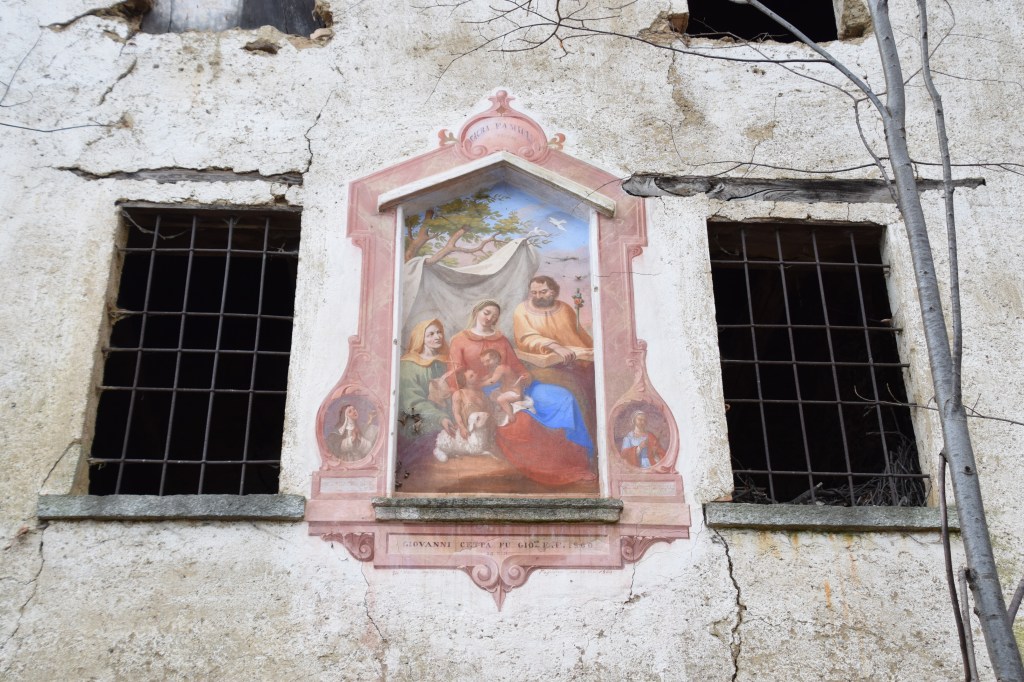
As a final example, this fresco – a Sacra Famiglia – is located in Cuccarella – a tiny località above Stazzona. It is on the now abandoned home of Giovanni Cetta (born 1808), who along with his brother Giuliano, commissioned the construction and frescoing of the Tre Cappelli di Sariva in 1867. The artist was Giovanni Maria Tagliaferri (1809-1879) from the acclaimed family of painters who hailed from Pagnona in the Valvarrone. The Sacra Famiglia features Mary, Jesus, and Joseph as well as Saint Ann and Saint John the Baptist. In the painted frame are Santa Rosalia of Lima and Santa Caterina di Siena. Cetta’s second wife was Rosa Bregazzi and his youngest daughter was named Rosa. The name-saints of both Giovanni Cetta and his wife and daughter – both Rosa’s – are depicted in the fresco making it a tribute to the family and to their name-saints and hence, onomastic.
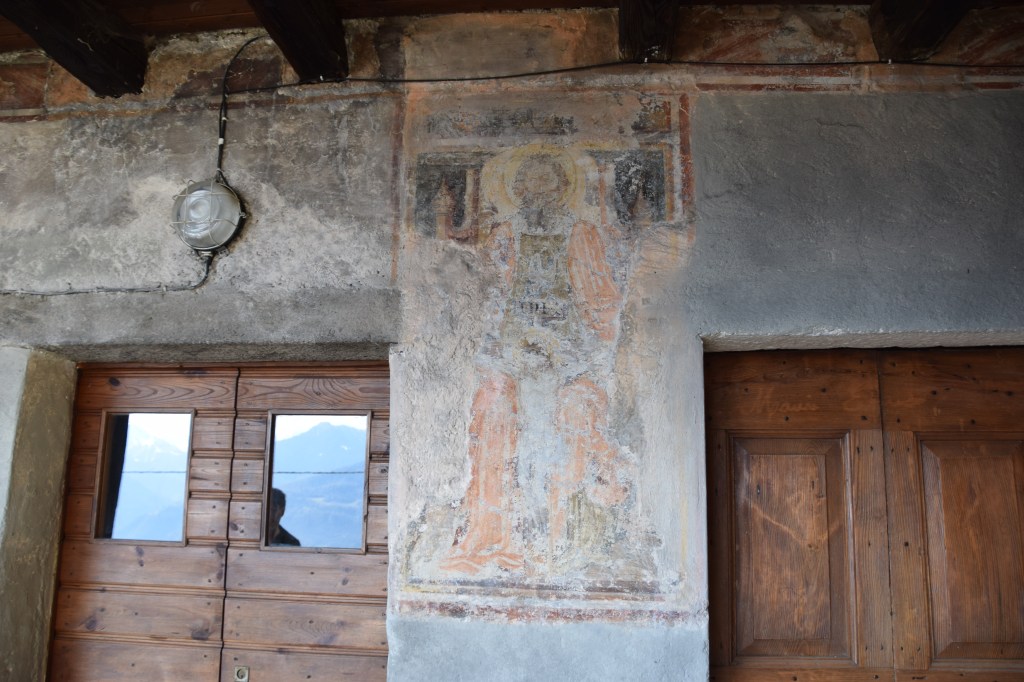
Of particular interest in these works of sacred art is what I believe to be a Trinità Trifronte – a three-faced Trinity. A popular depiction of the Trinity in the 15th century, the merits and meaning of this particular portrayal were discussed in the Council of Trent in 1545 in particular because there existed similar depictions of a tricephalic Satan. There was additional objection in the Council as to what was considered to be an unnatural visage of a body with three faces (or three heads). Many considered that such a representation presented the Trinity as a “monster”.
Additionally, the argument was made that because Satan, also, was depicted as having three faces this caused a confluence of the goodness of Christ with the evil of the Devil. However, it took another century before the Catholic Church officially and formally outlawed this representation of the Trinity. In 1628 Pope Urban VIII condemned the tricephalic characterization and ordered that all existing images be destroyed. Hence, these depictions are a rare find and can further aid in dating the frescoes.
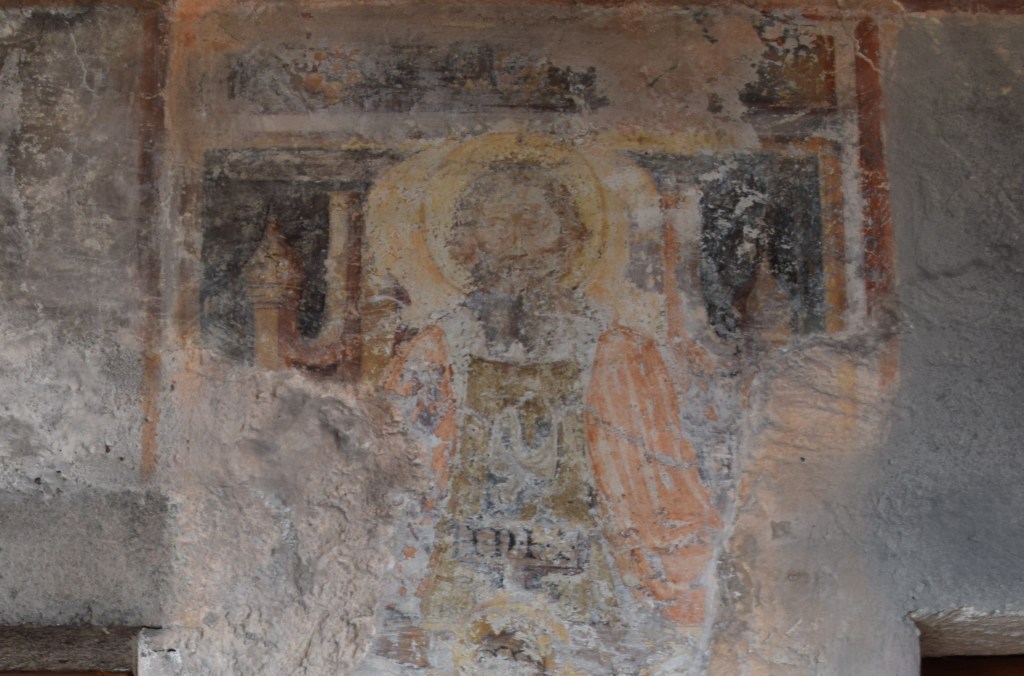
Unfortunately, since my visit to these frescoes was the result of asking to view an apartment and taking photos reflecting that goal, I could not spend the time necessary and make the needed effort to capture more ‘readable’ imagery. Hence, the details of this eroded fresco are less discernable because of those realities. However, a careful inspection of the fresco reveals multiple viewable indicators that support my theory that this is a three-faced Trinity. To iterate:
In sacred art, there is a halo the structure of which is only associated with the Christ as God. At the top of the head of the fresco and on the right side can be seen the remains of what was a tri-radiant design. As with the starry halo which is only used with the Madonna, the tri-radiant halo is only used with Jesus – the Catholic deity. Additionally, there are three beards viewable – two clearly viewable and one that has been eroded on the right side. I have cropped a photo and brightened the colors in the example below.

To continue, the male figure, as is easily seen, is seated on a throne the remains of which are visible on both sides of the head. Below is a detail from the left side of the fresco.
Further, as indicated by the draping of the robe, the figure is seated and holds a fully intact Globus Cruciger in his hands. The Globus Cruciger was a Christian symbol of authority from about the 5th to the 15th century. This object lends evidence to the age of the fresco and the identity of the sacred male in the work. The remains of Italian Gothic script (or Blackletter script) used in the 15th century can be seen below the breast of his underlying gown on the cruciform of the globe. Those letters read: INRI which is the abbreviation for the Latin phrase “(I)esus (N)azarenus (R)ex (I)udaeorum” (Jesus of Nazareth, King of the Jews). Again, I have cropped a photo and brightened the colors to exemplify.
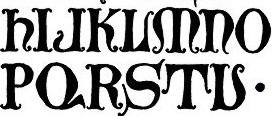
I offer an example of the Gothic capital letters used during this time-period below. Contained in the image are all the letters on the cruciform of the Globus Cruciger, namely INRI.
I make a final argument concerning the three faces which are eroded and not clearly visible. First, there should be no argument that, at the very least, this is an image of Christ. A common portrayal of Cristo Redentore – Christ the Redeemer – in paintings from this era shows Jesus holding a Globus Cruciger or a Book of Gospels in his left hand and gesturing with the sign of the Trinity with his right hand. Moreover, this, also, is how the three-faced Trinity is represented in sacred art.
In the Caspano fresco, one can see that the face of Christ is rather distorted. The cheekbone areas are overly broad and the ‘hair’ on both sides is decidedly ‘pointed’ or swelling from this area of the face. And there are clearly multiple beards. In fact, if this is not evident of multiple beards then the beard of Christ wraps around his entire neck. The shape of the head here with its unnatural broadness and pointed sides at about cheekbone height, and the broader than normal distance between the eyes can be compared to the Trinità Trifronte in the Chiesa di Sant’Agata in Perugia offered in the fifth photo below. That fresco has clearly visible features that allow comparison to the shape and details of this Caspano fresco.
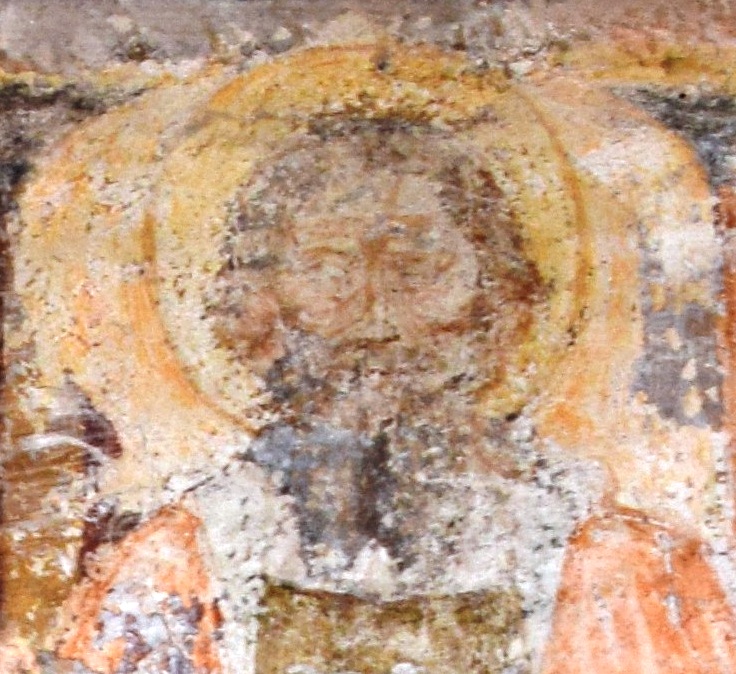
Beards in sacred art are generally shown as a unit not as a ‘style’ where the sainted figure looks like he intentionally waxed his beard into multiple points. This imagery clearly indicates three beard points with an eroded fourth to the right. To a possible argument that this is not a beard at all but some kind of “collar” I would point out that on the right side of the fresco face (the viewer’s left side) the beard extends up to the cheek and just below the cheekbone which is where a man’s beard would begin.
Additionally, neither the beard of Saint Christopher nor John the Baptist in the larger remaining fresco on the wall of this Paravicini villa are thus stylized. And I suggest that one can assume the same author painted the entire wall given that the decorations and Paravicini stemma which remain are consistent and do not show style changes. It is my position that given the remaining details, the secure and private location of the fresco which would impede the required destruction of the representation, and the era in which this sacred image was created, this is a Trinità Trifronte – a three-faced Trinity. And, in light of possible or probable disagreement with my analysis of the fresco as tricephalic, there is certainty that the seated figure is the Catholic deity – the Christ.
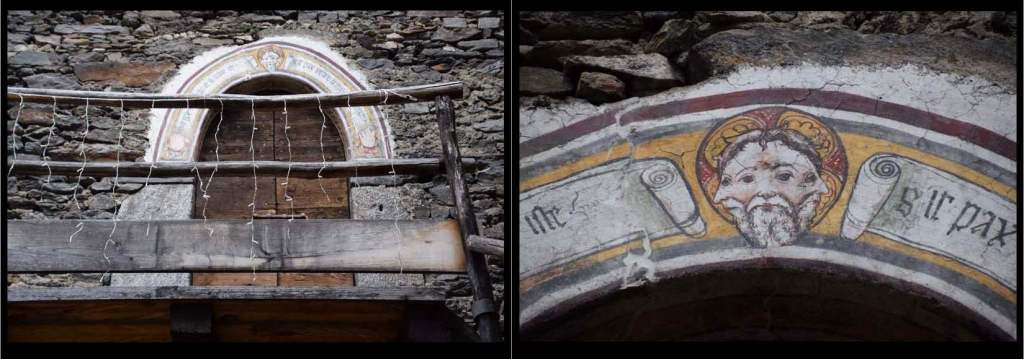
If I am correct in my identification, this three-faced Trinity in Caspano becomes one of only three that I have found in the Valtellina. Pictured above is the Trinità Trifronte found on the lintel or architrave of the Museo dell’Homo Salvadego (“Homo Salvadego” is Latin for “Man Saves” but I think in this case it means “Wild Man”). The building dates to the 15th century and was privately owned. The interior frescoes are dated May 18, 1464 and were painted by the local masters Batestinus and Simon. This villa is near the parish church and tucked into a narrow street crowded with ancient stone homes. Sacco lies in the mountains of the Valgerola at 500 meters. The style of the interior frescoes would imply that the architrave was painted by the same authors. Here is a link: https://www.valtellina.it/it/approfondimenti/musei/museo-homo-selvadego
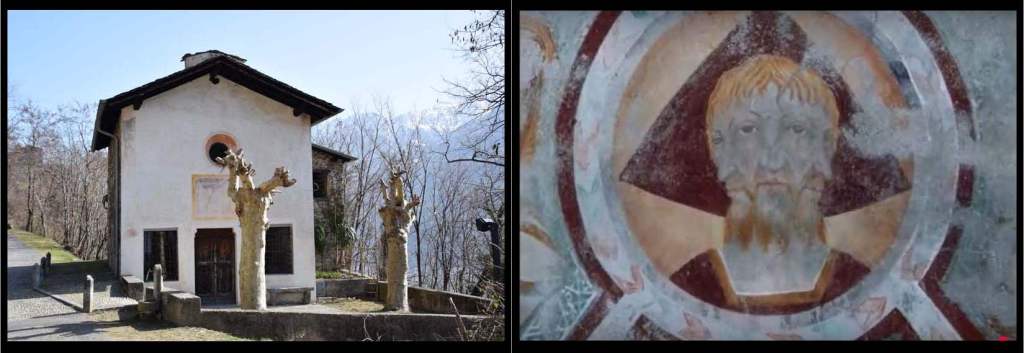
The above photos show the tiny, 15th century Chiesa di Santa Caterina in the località of Corlazzo (also spelled Corlazio). The Trinity is found in the vault of the presbytery of the small church. Corlazzo lies at 252 meters and is on a lateral road that travels from Traona, and splits to the left to Santa Croce and the right to Mello – both above at 518 and 681 meters respectively. This church is always closed and I took the photo of the Trinity from a Massimo Dei Cas YouTube video. The photos of the tree-faced Trinity begin at 08:53 and end at 09:17 in the YouTube video. Here is the link: https://www.youtube.com/watch?v=jaKwiAfp_J8
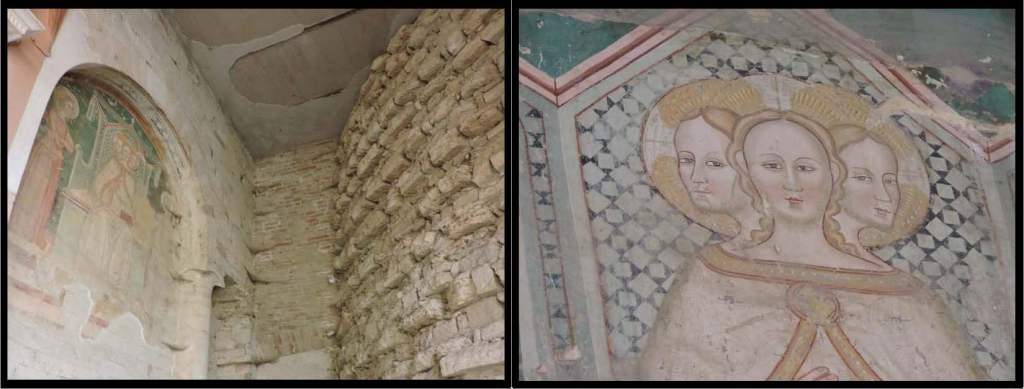
On a visit to Perugia, I found two tricephalic Trinities. Above is the fresco I found in the 10th century Abbazia e Basilica di San Pietro. The three-headed Christ between two angels was painted circa 1320 by the Maestro Ironico who was active in Perugia from 1320 to 1350. The fresco is located on an external wall between two walls of the ancient portal. The left photo shows the cramped location which makes a full frontal photo difficult. One must look closely to see the very light beards of the three sacred heads. This Trinità Trifronte holds a book of gospels and gestures for the Trinity with his right hand. I point out that the tri-radiant halo in this fresco is of the same structure as the halo in the Caspano fresco.
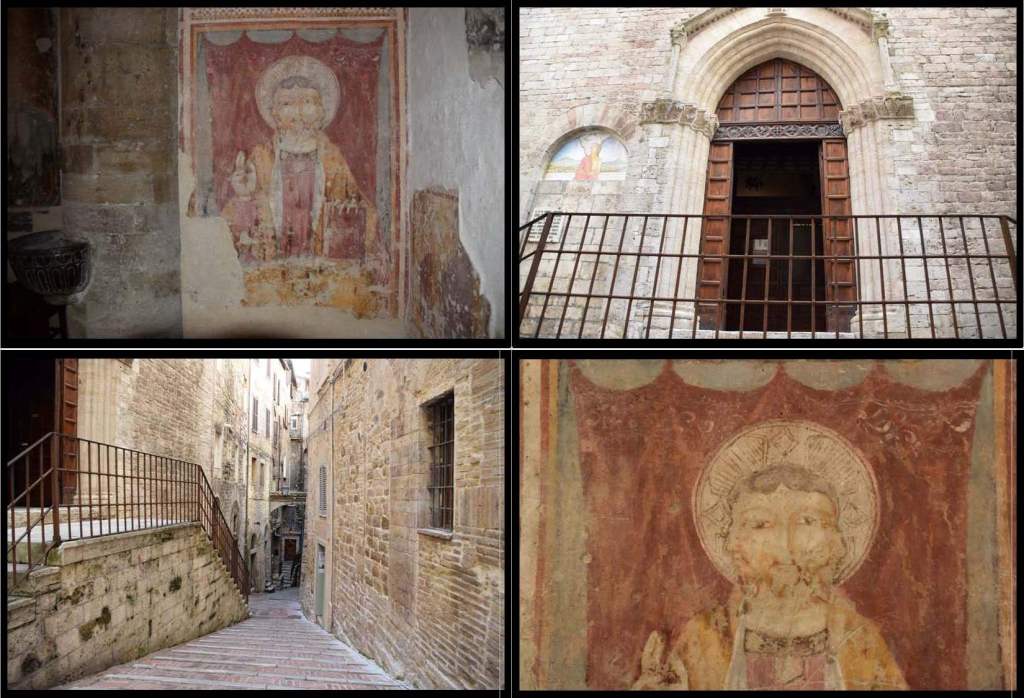
On a narrow and steep street in Perugia, the via Sant’Agata, is a tiny church of the same name. Inside the main entry doors there are interior doors offering entrance to the church. Behind the right side door, tucked into a corner on a wall behind a pillar is a fabulous three-faced Trinity. I only found this beautiful work because I search these churches thoroughly looking for forgotten frescoes. I closed the door and found the fresco. I offer a montage to better show the location of the church and the beautiful 15th century fresco. The halo is double tri-radiant with three rays in a cruciform position and three other rays only two of which are visible – the third is implied and would extend behind the heads of the Trinity. This deity is as the previous – with a book of gospels and a symbolic gesture. Also – if one compares the outline of this Trinità Trifronte and its broad set eyes and multiple pointed beard, one can see a similarity to the same details of the eroded Caspano fresco.
Surely the remote location of Caspano and the fact that the image is on the wall of a private home accessible only through a locked courtyard is why we have the pleasure of the fresco today. So too with the other four Trinità Trifronte that I had the good fortune to discover. Like the eight remaining ancient icons of the Virgin Mary that survived the Byzantine Iconoclasm where all sacred imagery was ordered destroyed, these five ‘abhorred’ representations of the Catholic deity may owe their long life to their obscure locations.

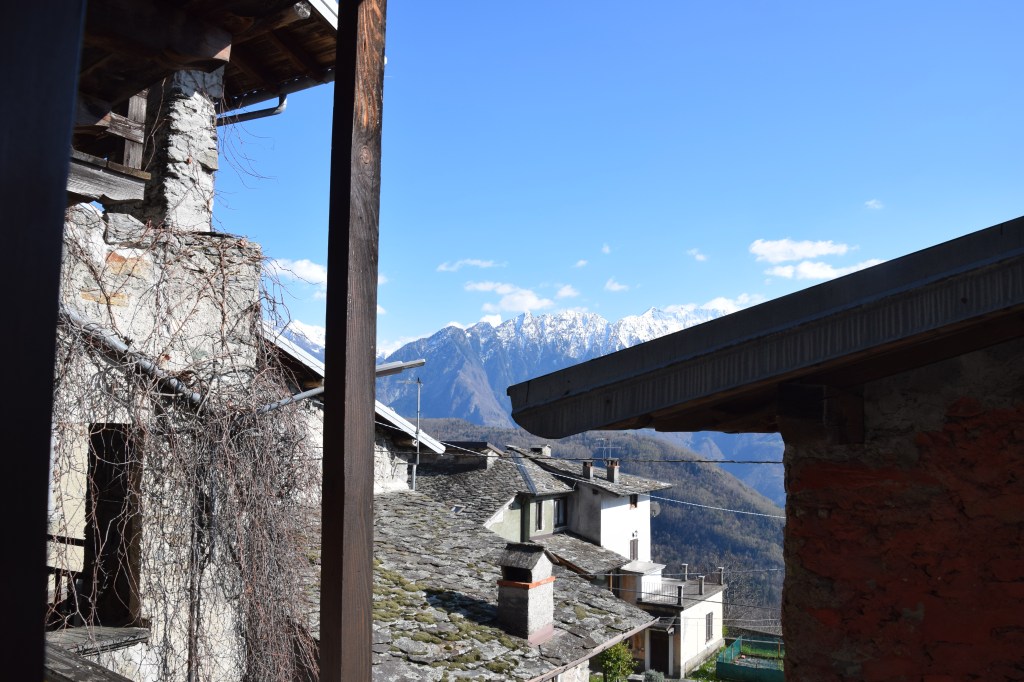
I looked at the tiny, 330m2 apartment solely in order to photograph the Wall Madonna’s of the Paravicini villa. The frescoes were a surprising and astonishing find but I, also, absolutely adored the apartment. I hope to purchase it. Inside the bedroom of the cozy apartment was a photograph of the original owners with a woman’s and a man’s bathrobe hanging below. The charm of the apartment was and is compelling. With a balcony that has a view of the Alps and the frescoes on the interior wall of the communal belvedere where I can sit and look at them for as long as I desire the tiny abode would be perfect for weekends and for contemplation and writing!
I hope that you find these frescoes as compelling as I do. The Valtellina and Lake Como areas are unique in their beautiful and ancient sacred art. I leave you with a montage of the Paravicini villa and a photo showing how hidden this villa now is.
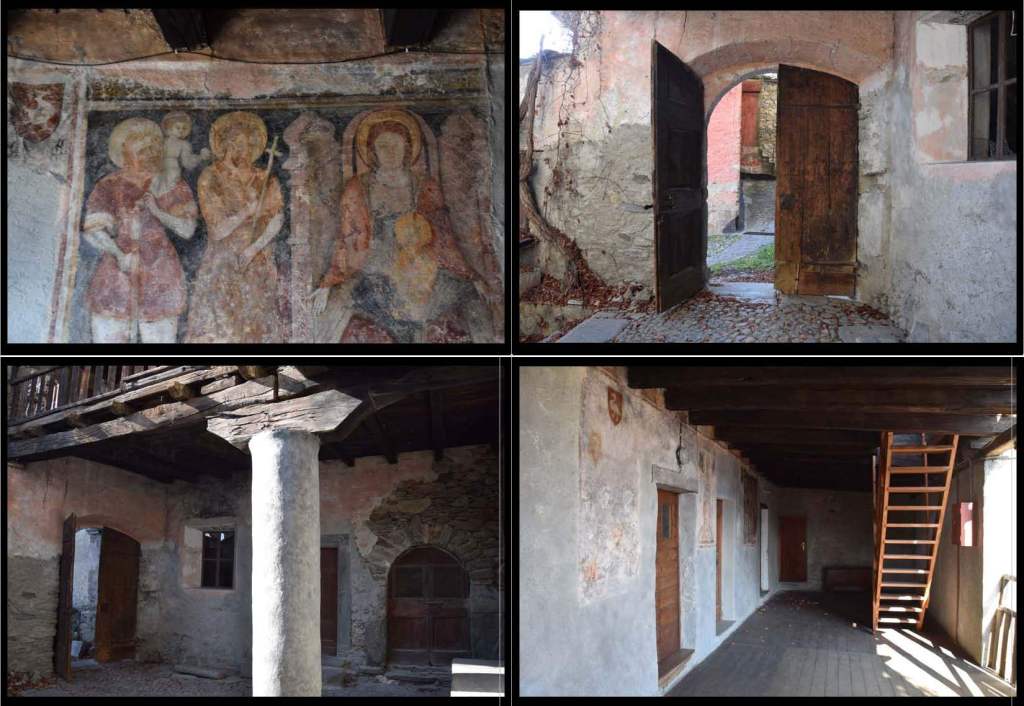
In the above montage from the top left and going clockwise are: the beautiful Enthroned Madonna & Child with San Cristoforo and San Giovanni Battista and the Paravicini coat-of-arms; the entry doors to the villa looking out from inside the private courtyard; the belvedere with the formerly fully frescoed wall; the interior courtyard showing an ancient stone pillar and – to the right with the curved stone architrave – what I believe were the original entry doors to the villa.

In this photo the middle arrow points up to the apartment for sale (a small yellow sign can be seen on the railing of the balcony); above the sign the top arrow points right to the belvedere of the Paravicini villa which must be traversed to reach the apartment; the bottom arrow points right to the (unviewable) entry doors to the courtyard of the villa. The villa is now fronted by a “newer” building. The Paravicini villa cannot be seen from the street at all.
Come to Italy and the Valtellina! Enjoy your day!
 Wall Madonna's of the Valtellina