
MUSSO! I have not spent much time looking for Wall Madonna’s in lakeside towns. Musso – a brief 20-minute drive – offered a number of old frazioni and a long road into the mountains that, in the distant past, hosted year-round settlements – the most likely sources of frescoes as opposed to summer ‘baite’ where families – or solo men – lived while tending their animals as they grazed on lush mountain pastures.

The now defunct quarries in the mountains above the village provided a source of beautiful white marble to Lombardy for many centuries. The profitable excavation of marble ensured a continuous permanent population in the mountains and on the lakefront. For these reasons, I hoped to find a few artful remnants from the time when Wall Madonna’s blessed home fronts as testaments to faith and talismans for good fortune.
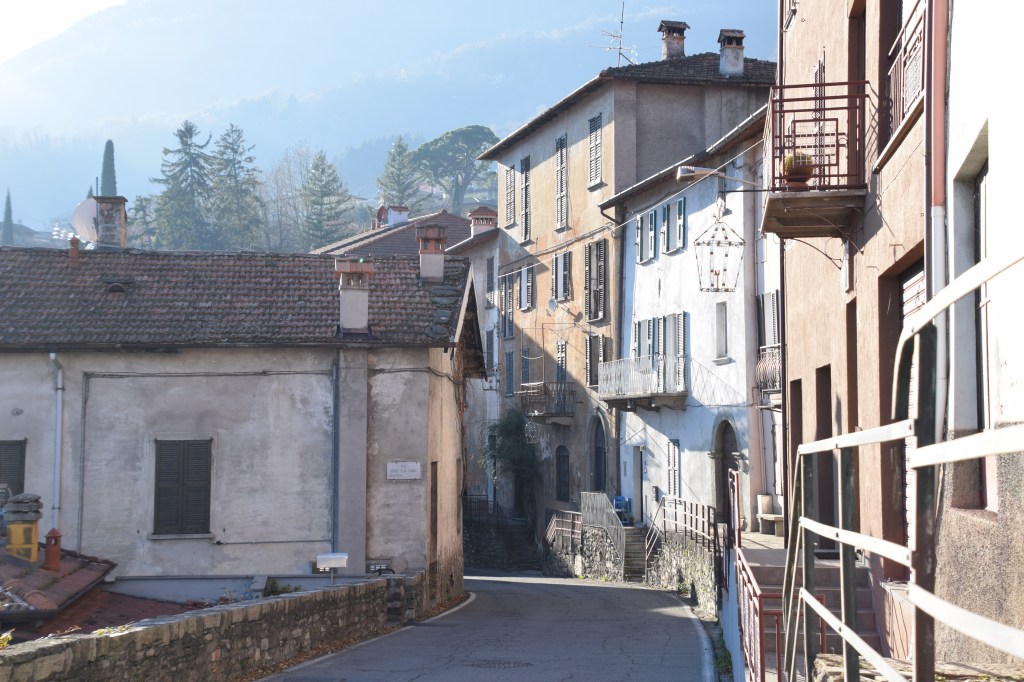
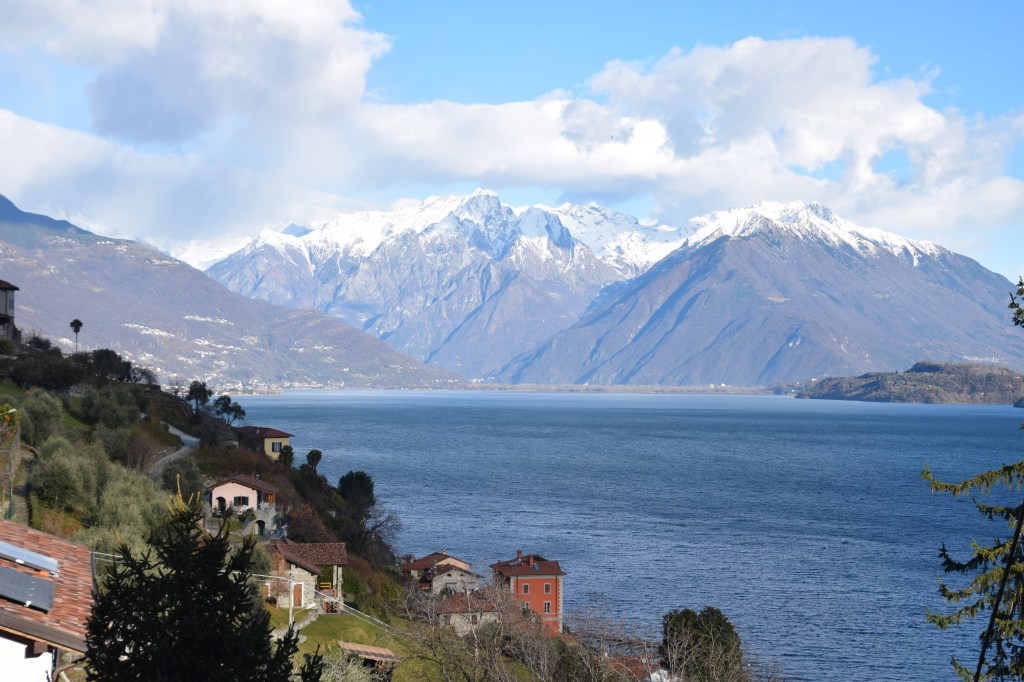
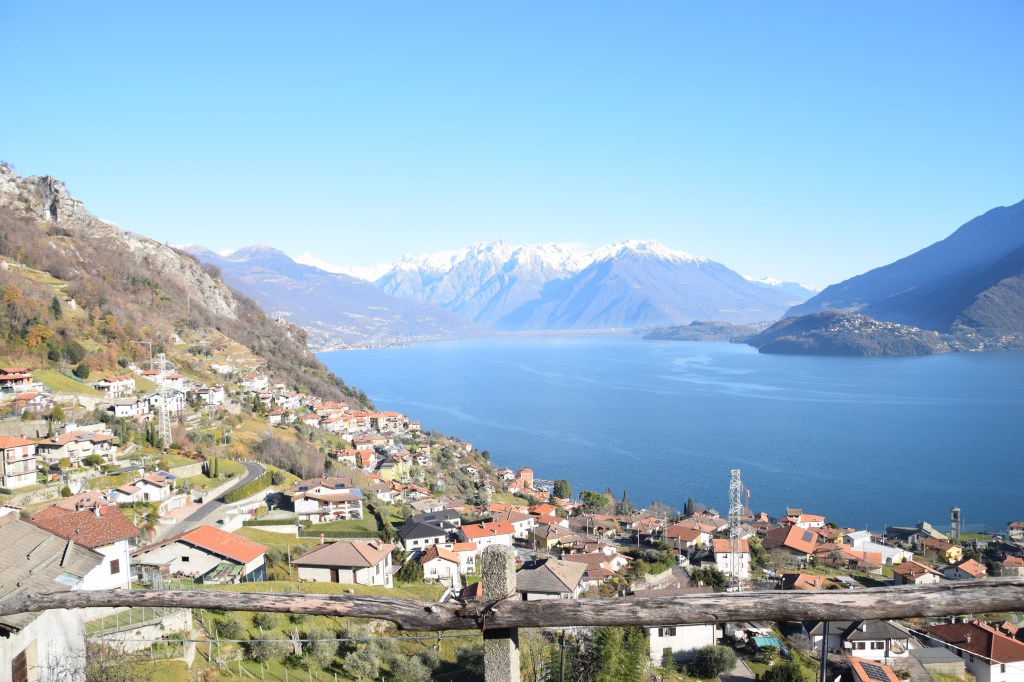
Musso is not a pretty town and because winter has denuded the village of greenery and the gardens of flowers, my photos show its least pretty face. But the hills of Musso offer expansive views of lovely Lake Como no matter the season. And the walk lungolago is pleasant and breathtakingly beautiful even in winter.
As with all towns in Catholic Italy, churches speak the history of life and tastes across the eras of a town. Used as hostels, hospitals, and community centers as well as places of worship one must look to them with questions and inquiring eyes. Musso offers three lakeside churches for pensive reflection.
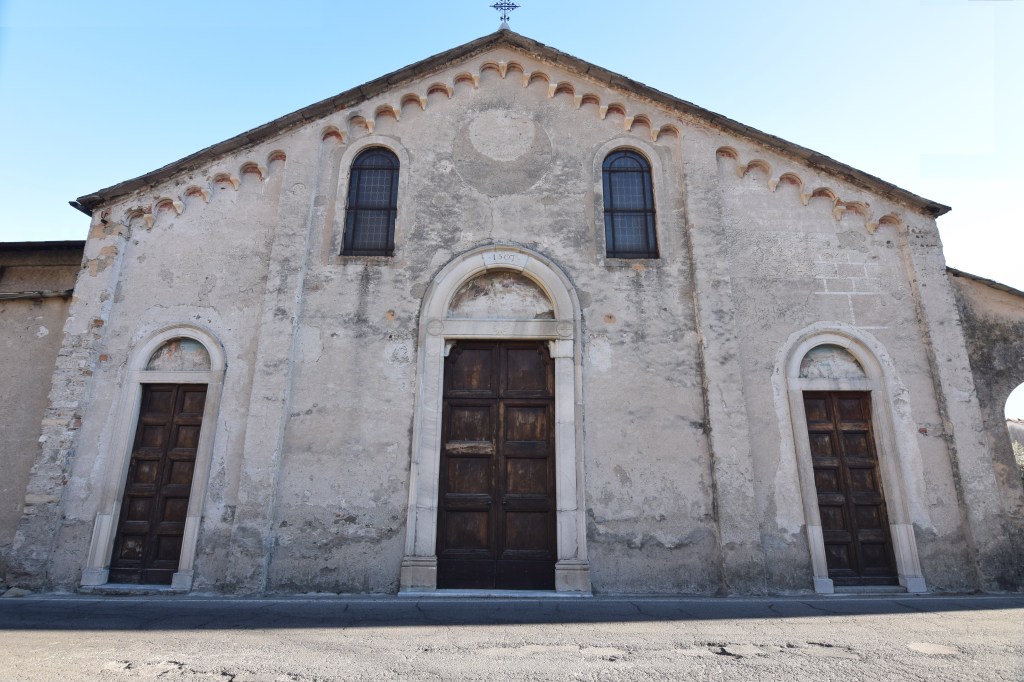
There is a lovely, old 12th-century church – the Chiesa di San Biagio – sitting on the lakefront. High above the town and built on an ancient pagan site of worship – the common ploy used by Christianity to convert and assimilate the unbeliever – is a 17th-century church – the Chiesa di Sant’Eufemia. Located on a promontory at 1,600 feet above the lake, embraced by forest, with a background of snow-capped mountains and overlooking Lake Como – Sant’Eufemia is unendingly and delightfully photogenic.
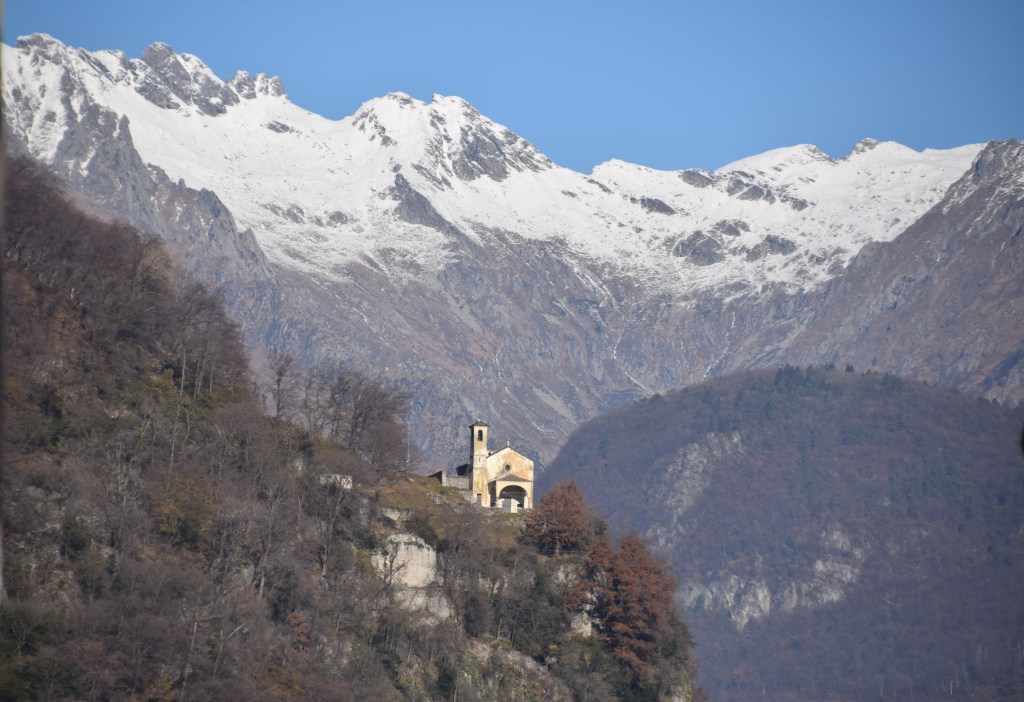
And the walk to the church is easy – only a short hike up a staired-percorso since the paved roads leading to the abutting frazione – Genico – gobble up most of the 500 meter climb.


In the historic center of the frazione Campagnana is a tiny, pink church dedicated to Saints Rocco, Sebastiano, and Rosalia. Built in 1639 to beg the intervention of these saints against a pestilence that with velocity and disregard swept life from Musso, this plague church remains on guard against misfortune but closed to visitors except for festivals and weekly masses.

And the lakefront, parish church – San Biagio – the renovations of which destroyed almost all of the original sacred art – has an 11th-century baptismal font in its courtyard and retains two fabulous frescoes painted in 1502 by a local artist Battista Malacrida da Musso (died 1515) – a family also associated with Morbegno in the Valtellina.

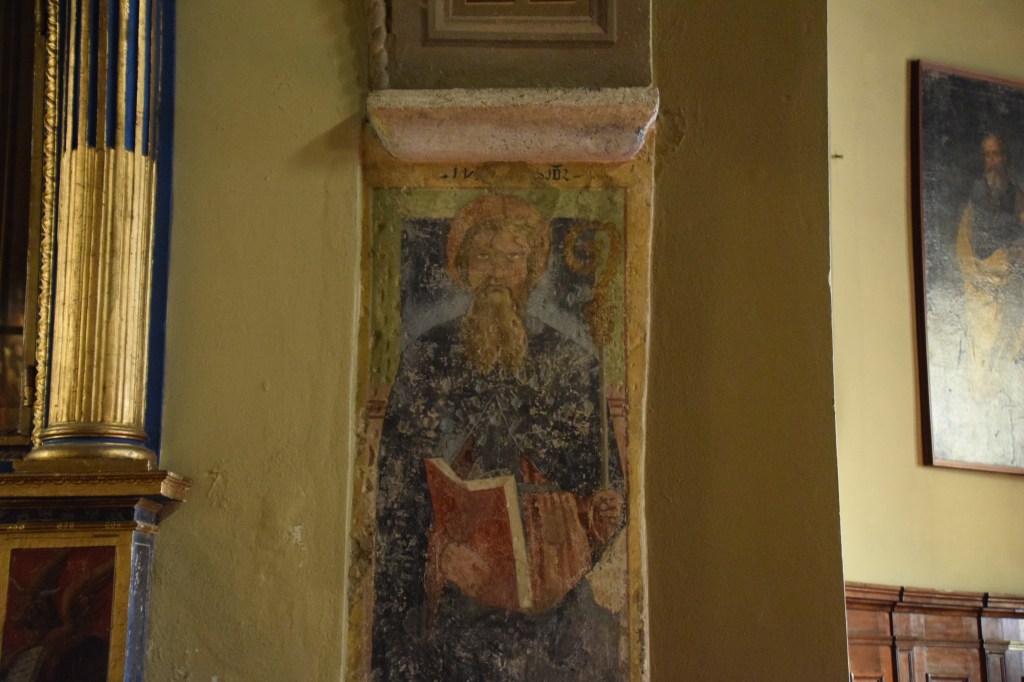
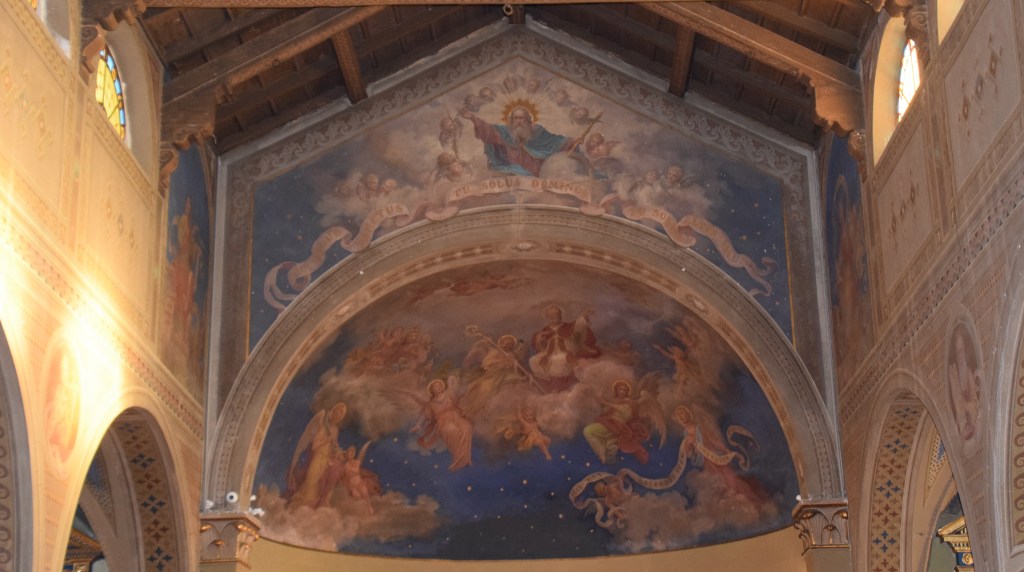
The newer 19th-century decorations were accomplished by another local artist – the talented Valvarrone master Luigi Tagliaferi of Pagnona. The original 12th-century patron saints of the church were Nazario & Celso – 1st-century Milanesi martyrs.
The beautiful and ancient octagonal baptismal font made of local stone sits outside the church as testament to an old Catholic conundrum that forbade entry into the consecrated Chiesa by those who were unbaptized but, also, required baptism to take place within the confines of the church proper.
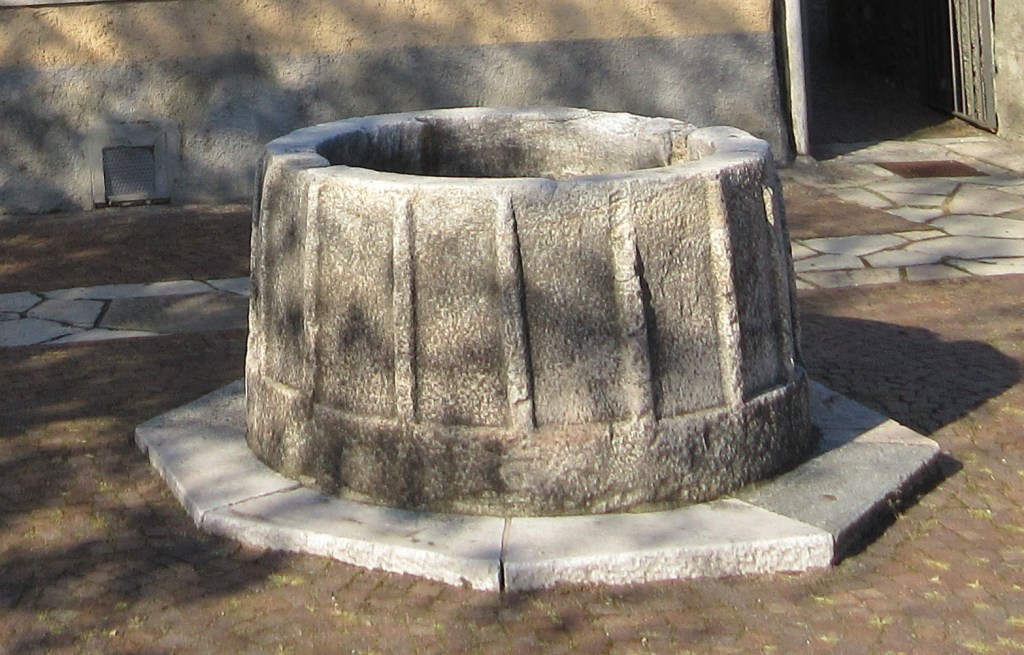
The clever solution seen here in the Chiesa di San Biago and more gloriously in the 4th-century courtyard of the Basilica di Sant’Ambrogio in Milan was to enclose a parish church with a wall making the resulting plaza or piazza part of the sacred edifice. Here, the new Christians – those newborn and those converted – could be baptized ‘within’ the church as was required but not profaning it with their entry as was forbidden.

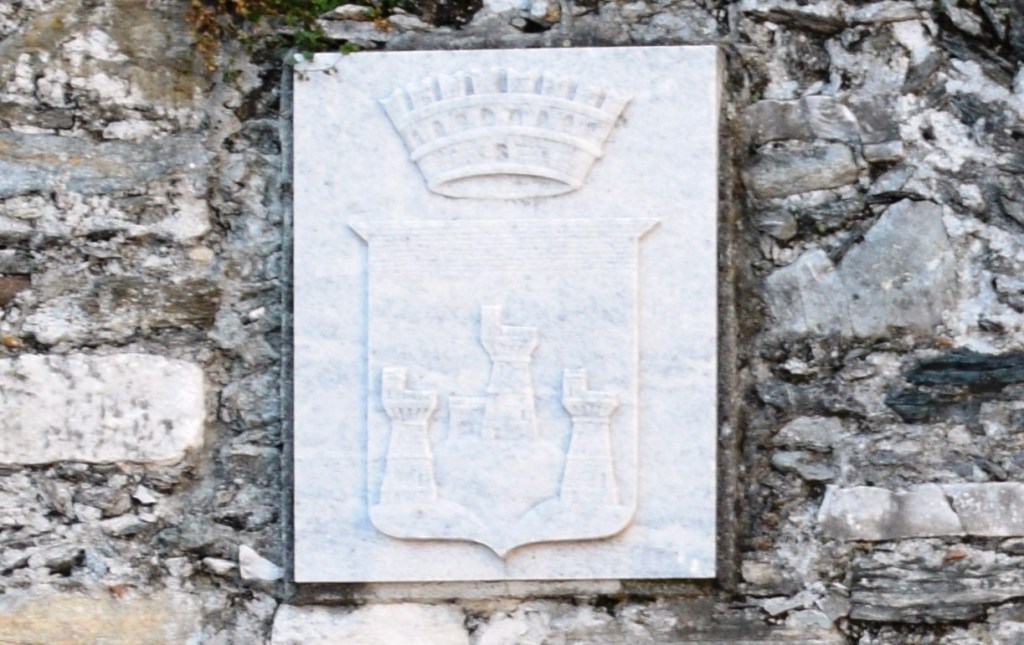
The church’s current namesake is the Armenian bishop/martyr Biagio di Sebaste – whose name testifies to the domination of the town – and its parish church – by the feudal lord Biagio Malacrida. The Chiesa’s pretty bell tower, built in 1730, hosts – in the famous white Musso marble – two stemma. On the left is the coat-of-arms of Musso – three castles beneath a crown:
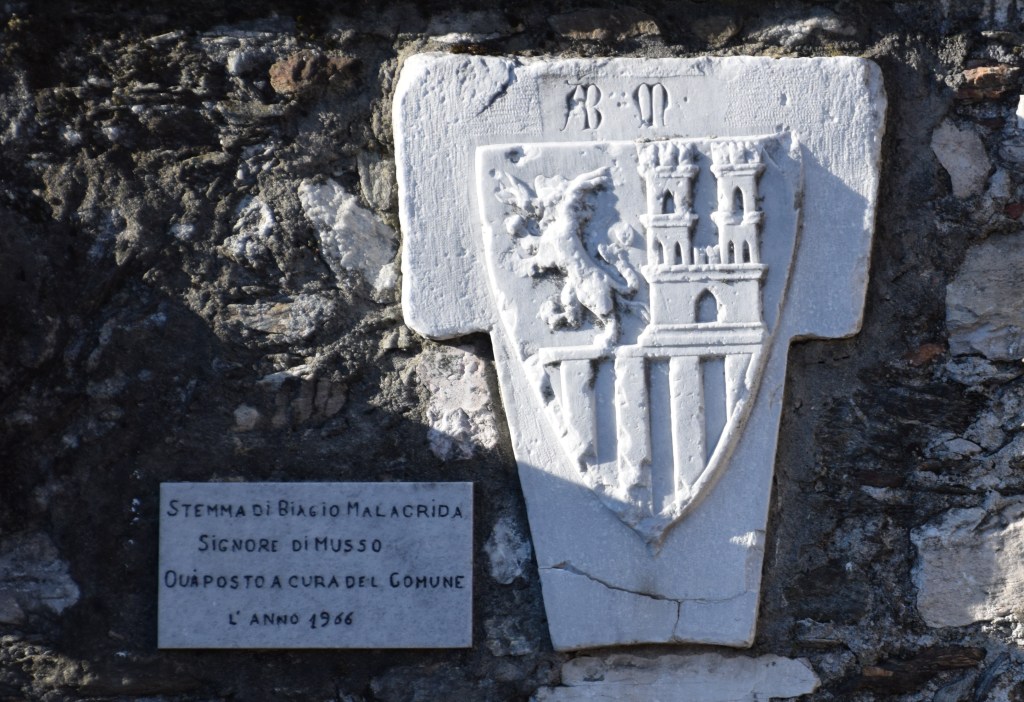
And on the right that of Biagio Malacrida – a lion next to a castle – symbolizing both Saint Mark and the Castello di Musso. It was this Malacrida son who inherited the rich family fiefdom that included Musso with its quarries, mountain pastures, and old castle, and the lands of Dongo to the north, and it was from him that these profitable lands were wrested by the Visconti and Sforza families of Milan.
Unlike the Chiesa di Sant’Eufemia, Musso proper is not very photogenic. Even its colorful renovated homes do not much inspire the admiration of a camera. And traversing the town is a perpetual stroll up and down steep hills on winding roads.
Lacking old stone homes or rehabbed homes that retain their ancient character, I found few tributes to the Madonna & Child that were not modern and none but those on the lakefront harkening back more than 100 years. My walk into the mountains was long and proved fresco-less.
However, my days in Musso offered stupendous views of Lago di Como with every step and turn of my head – albeit little else to please my art (and door) loving eyes.
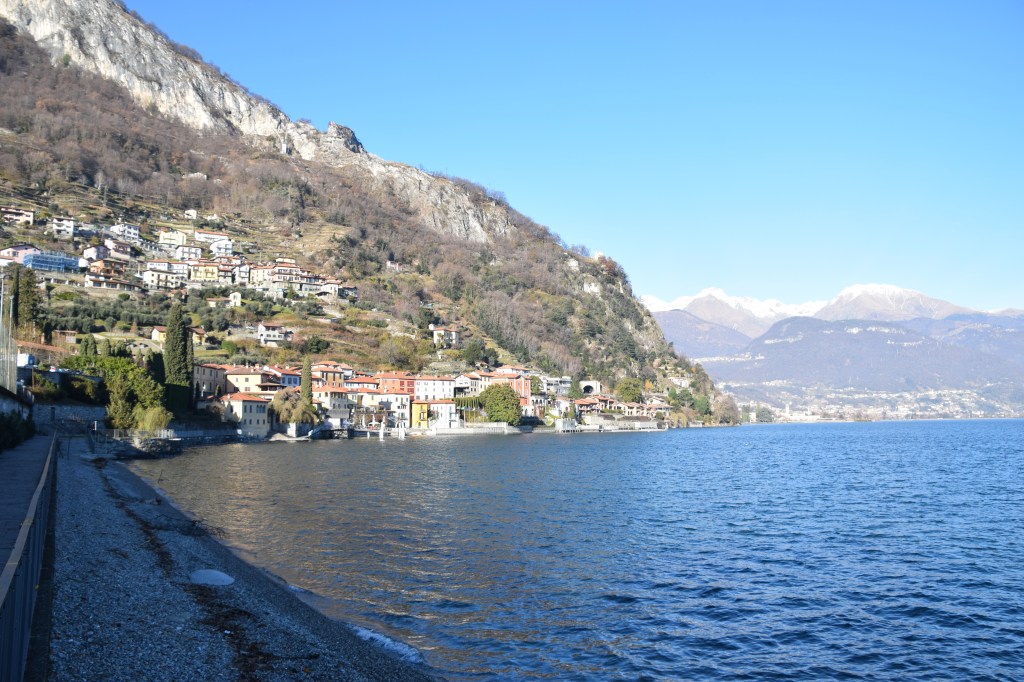
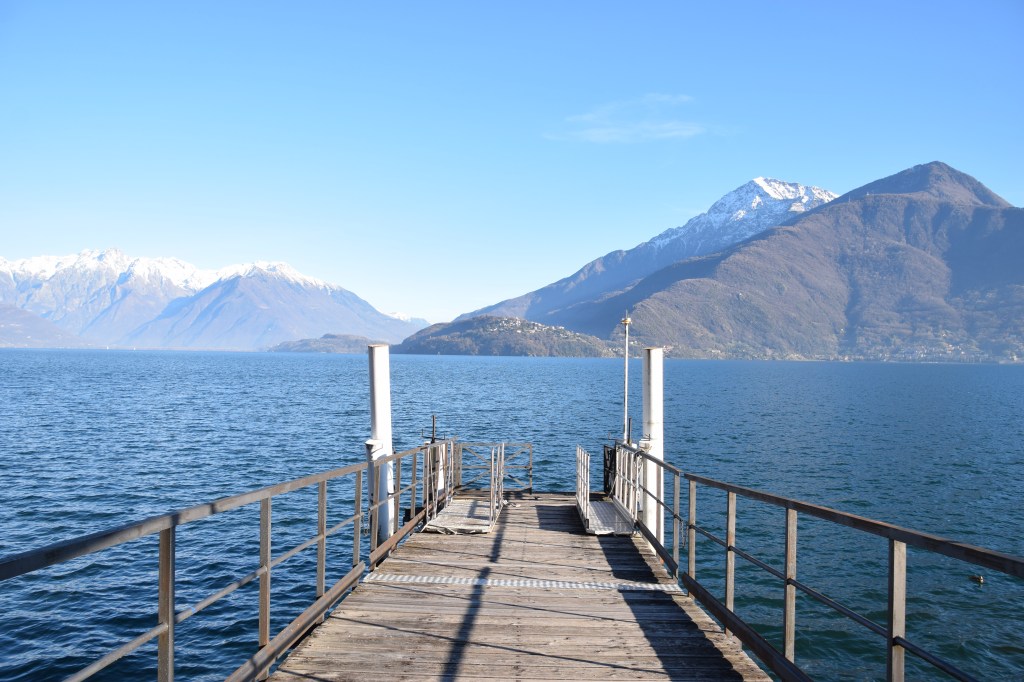
Even Croda – an ancient frazione of closely, clustered homes the access to which must be accomplished on foot along narrow alleys – gave up little but empty promises – and the stares of locals who surely did not understand why some odd, white-haired old woman was there taking pictures in December.
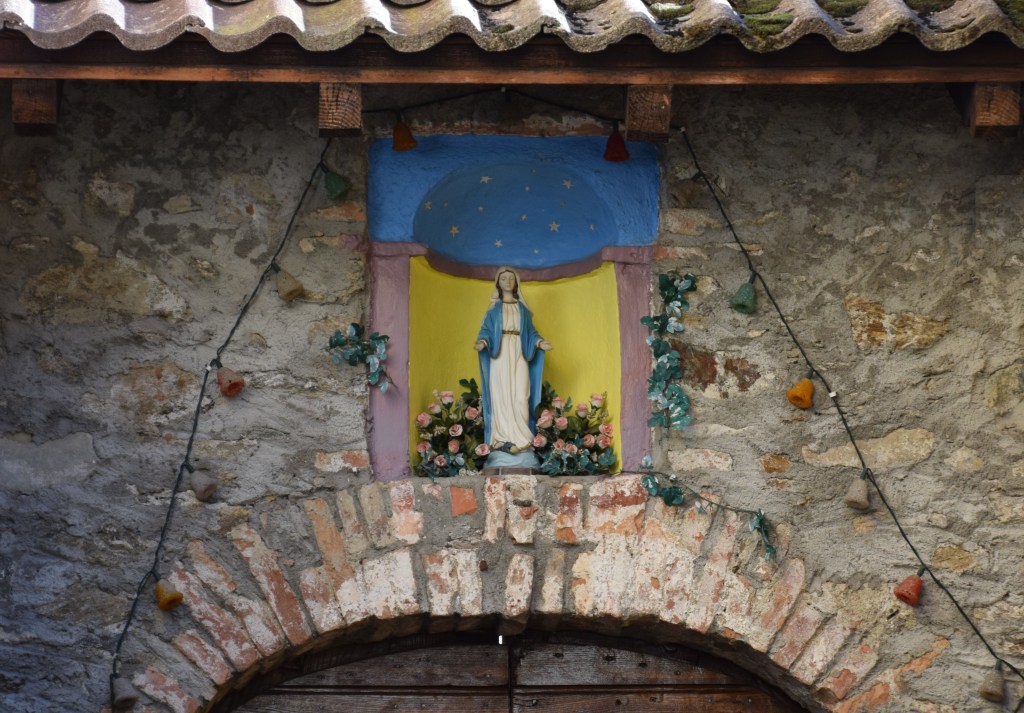
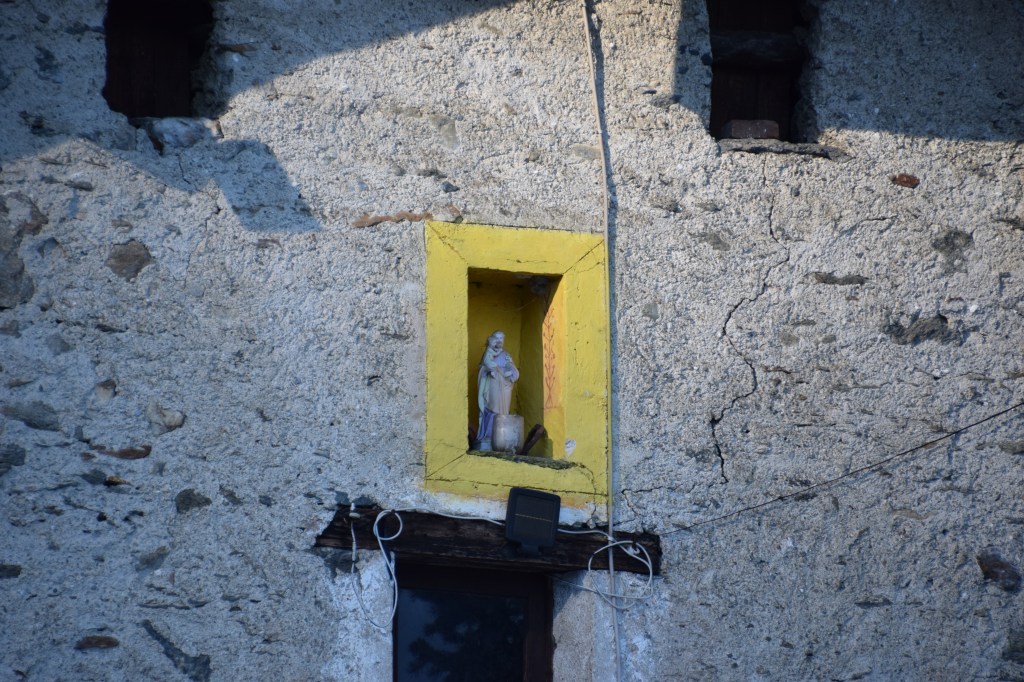
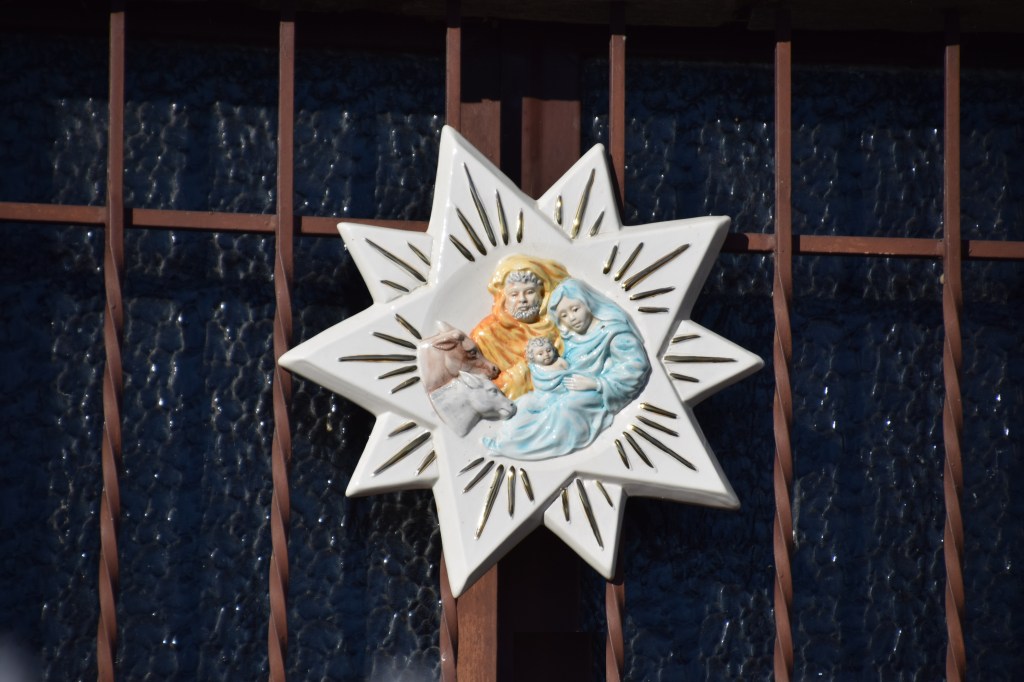
I found one Wall Madonna in this ancient frazione. I only found it by accident when I decided to walk down a very narrow alley that did not look promising. There was actually a large villa located at the end of the alley and this ‘modern’ Madonna was above the entry door. Although the statuary is modern and the niche colorfully restored, this space likely held an older work of art dated to the origin is the villa. I did find two additional ‘frescoes’ or wall art – not sacred but culturally relevant and a pretty – and tiny – ceramic dedication to the Holy Family
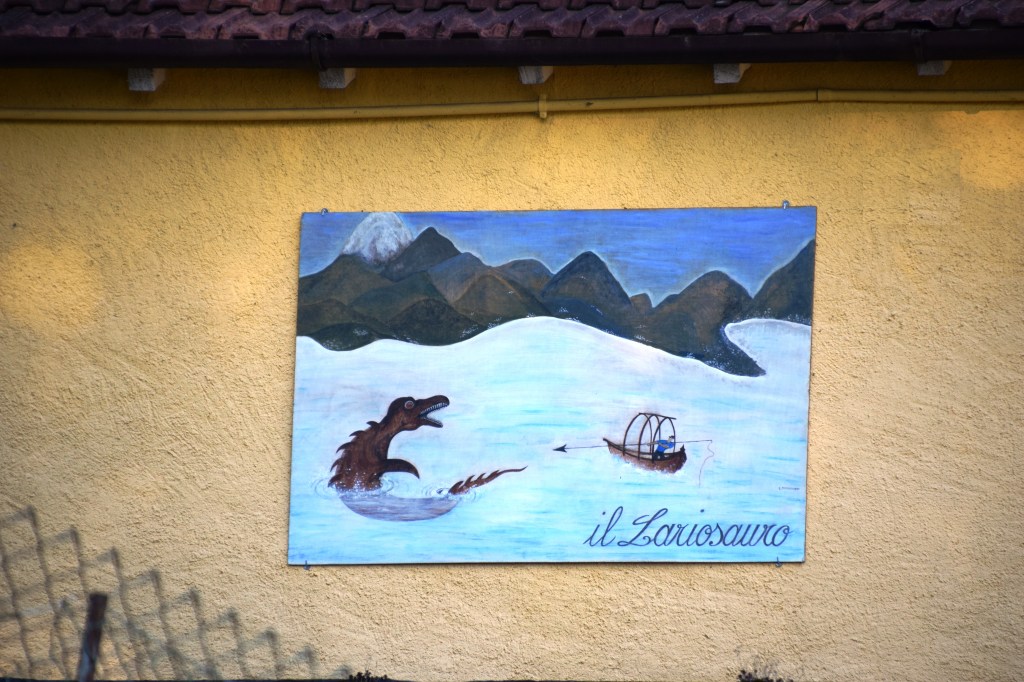
Although I know of no legends about any water-beast in Lago di Como, this fresco of ‘il Lariosauro’ offers a romantic fiction. The boat depicted was the traditional vehicle of the lake used for transporting goods and people – and hosting fishermen. The artwork below memorializes a war fought in Musso to unseat the Medeghino who held the town in thrall to his despotism and greed.

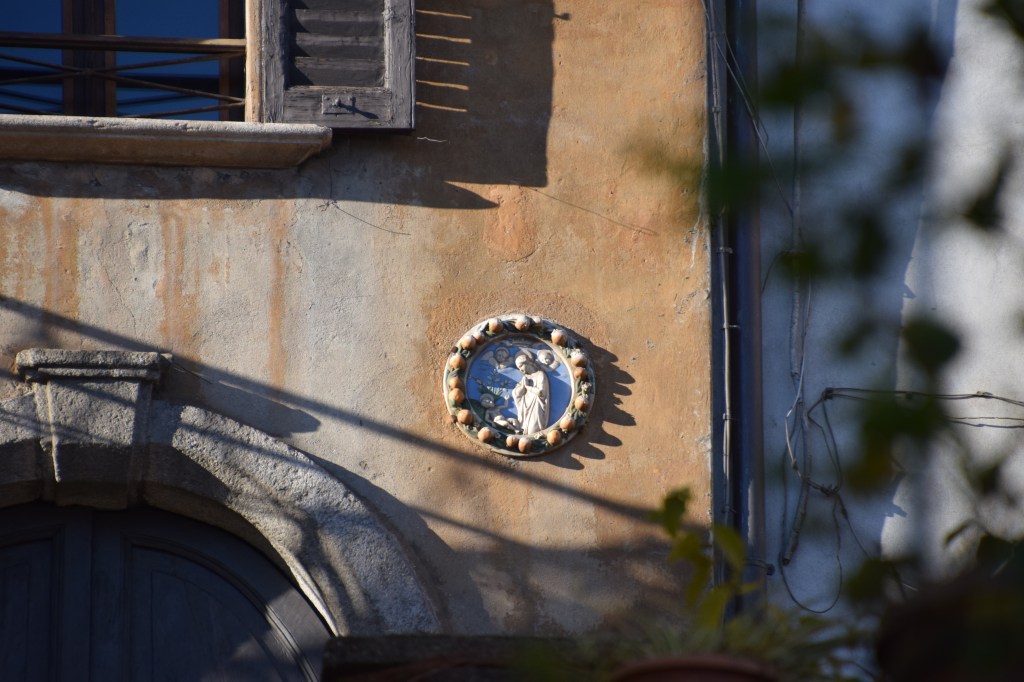
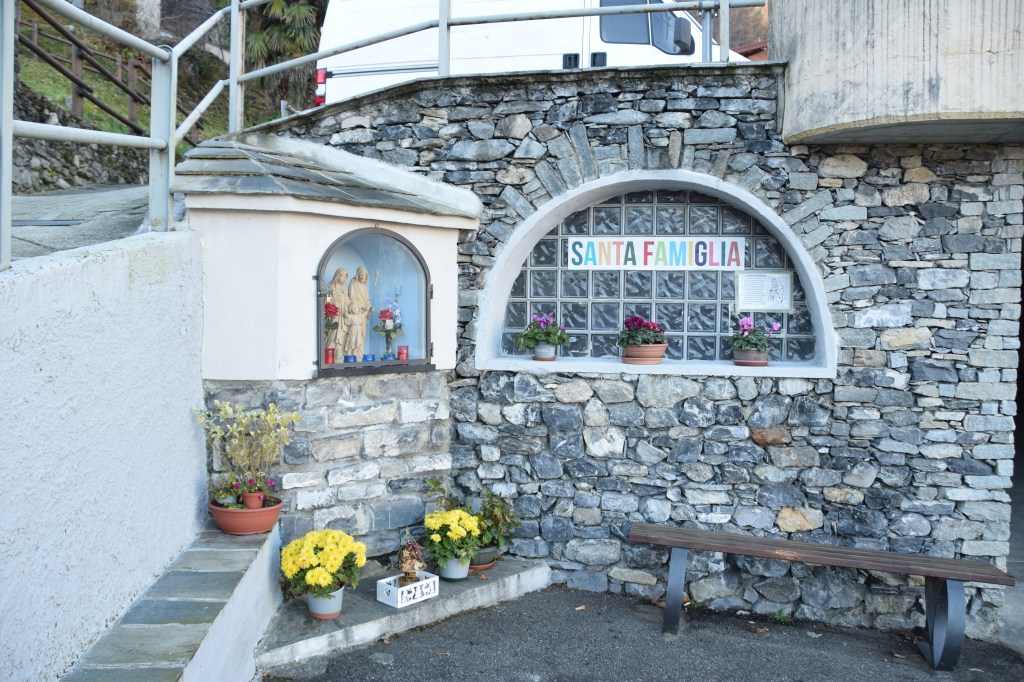
Although tiny, this very pretty ceramic sculpture is lovely and a telling choice for the only decoration of this old home.
Even being less than ideally successful in my search for historic frescoes neither I nor anyone could fail to be grateful for the many pleasures of Lake Como offered by life in Musso! I have assuaged my curiosity of Musso and look forward to the next town for exploration.
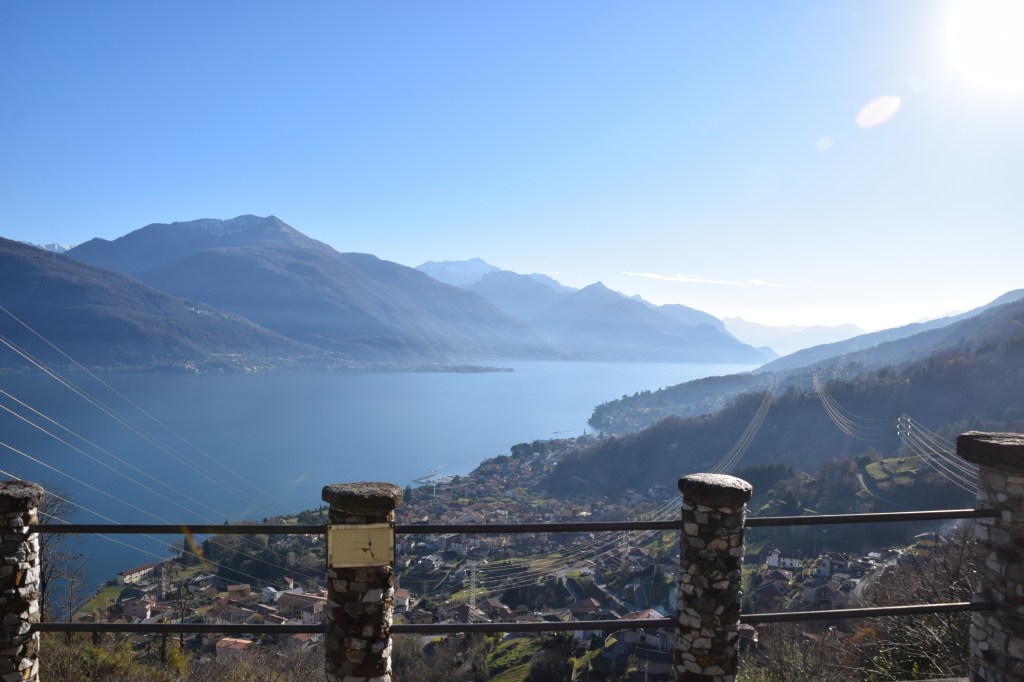
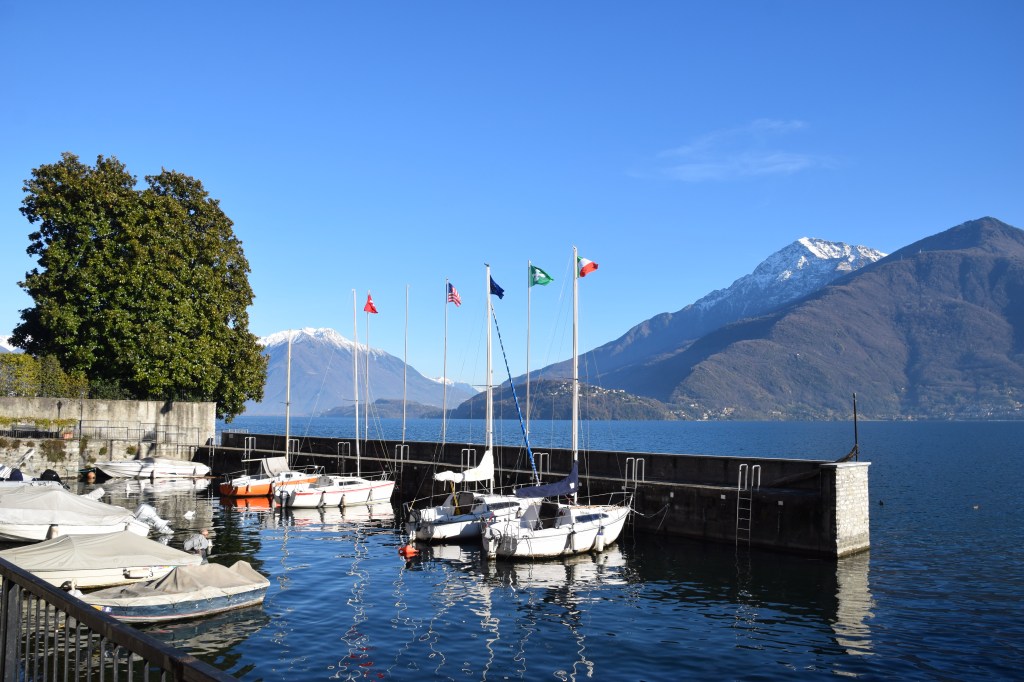
Please enjoy the following photos and the few Wall Madonna’s that I found and try to consider Musso as offering incomparable views of the lake from everywhere and a pleasant atmosphere well-suited for enjoying a beverage from one’s terrace while filling one’s eyes and heart with the richness of Italy.
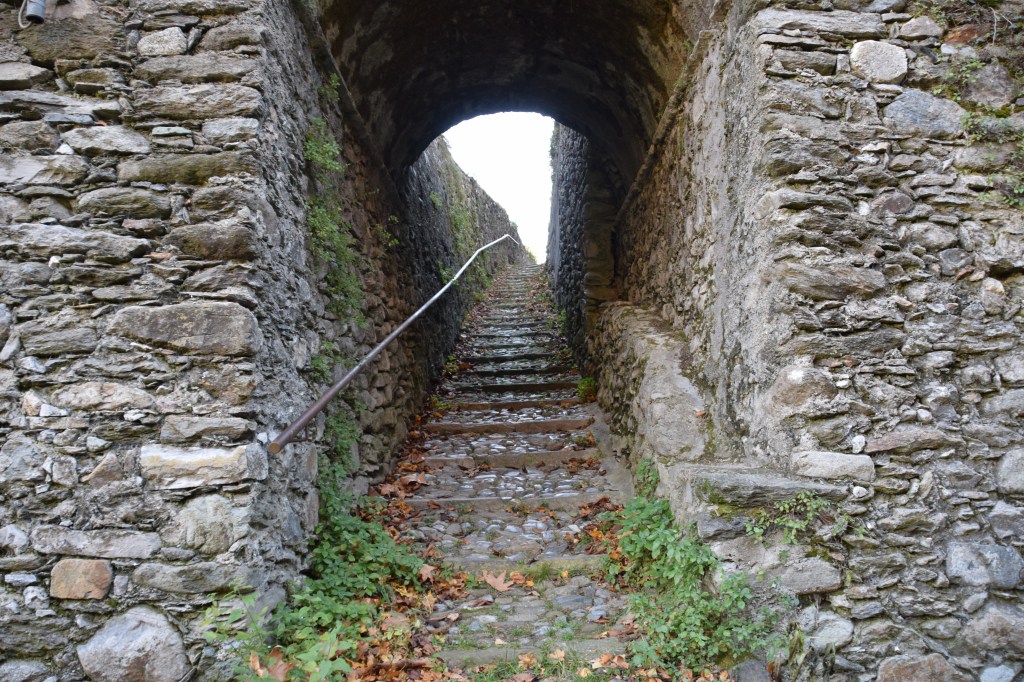
This cobblestone path leads begins at the lakefront and leads to the back of the homes on via Musso. The stairway continues to the frazione Terza. At the top, the sentiero is ‘paved’ and travels in multiple directions leading to all the frazioni including Croda which lies on the old via del Marmo – the road leading to the old marble quarries.
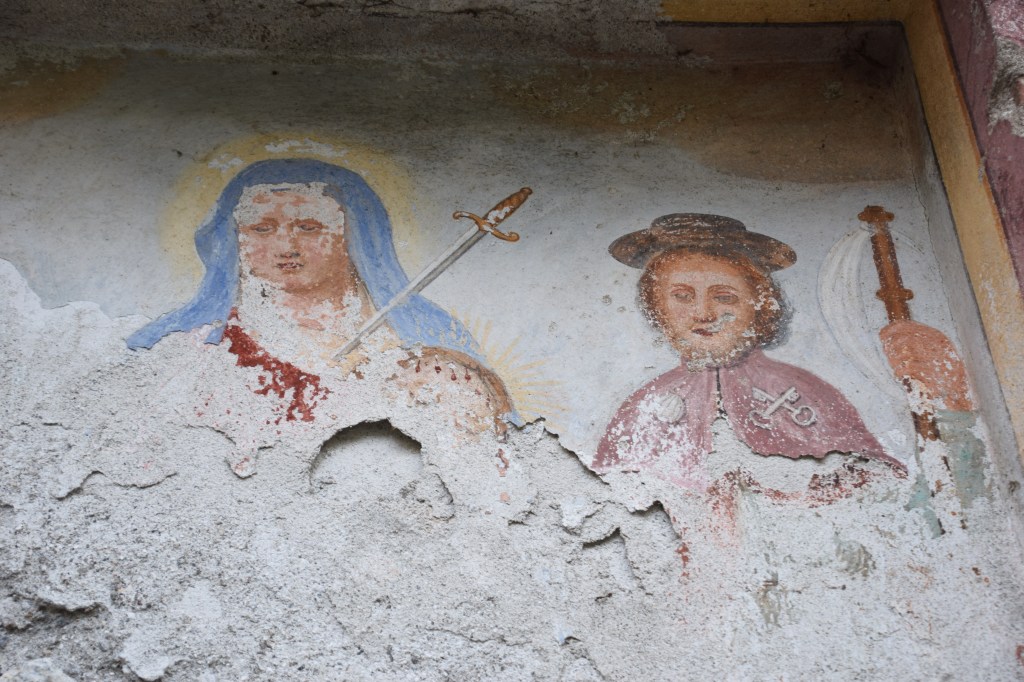
Frazione Terza – What is left of a once elaborate cappella – a Madonna shrine that blessed the sentiero leading from the lake through the village and into the mountains. The original works very likely dates to the early 18th-century. The shrine is on the cobblestone percorso that forks in multiple directions and, thus, leads to all the frazioni of the village. The cappella sits at a crossroads – to the left is Terza and the road to Croda and to the right is the road to Genico and the old marble quarries and castle.

I found a number of modern Wall Madonna’s in the frazione Terzo.
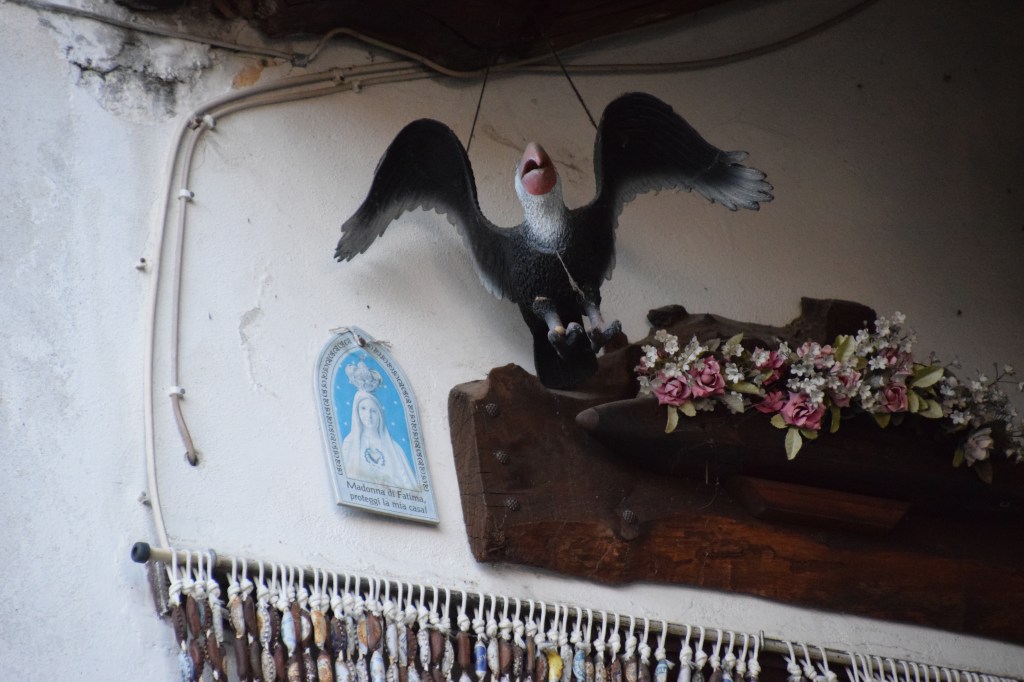
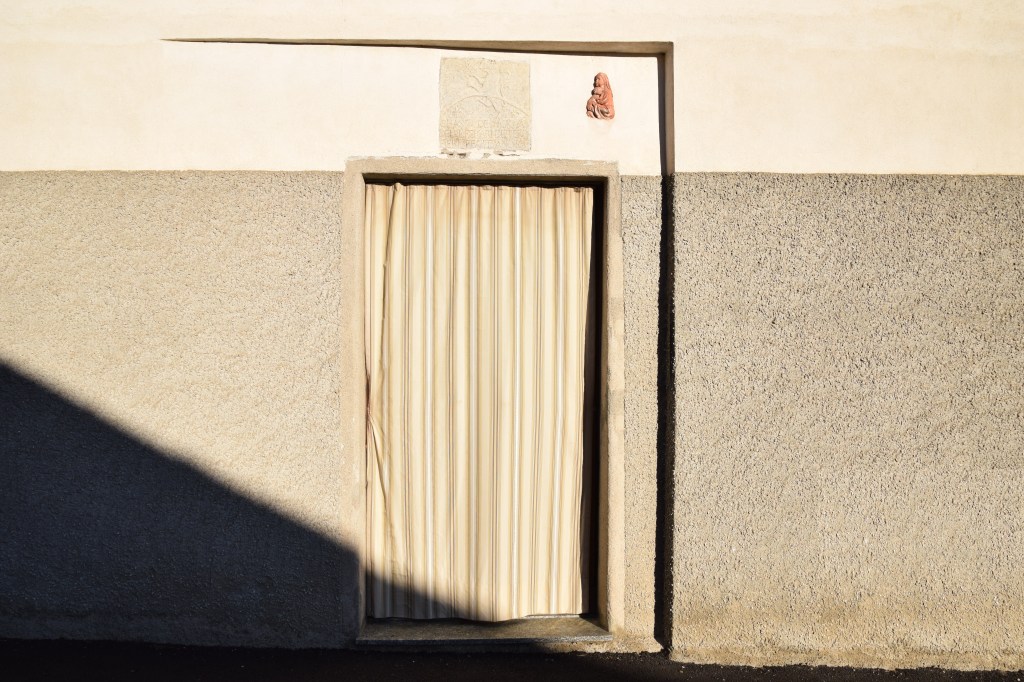

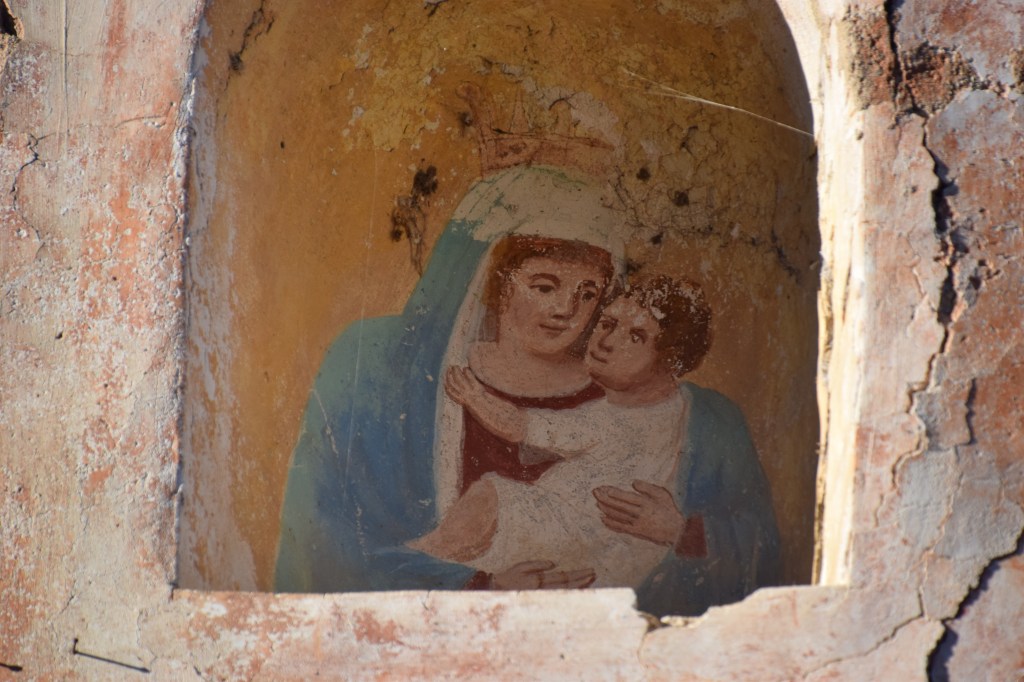
The frazione Campaccio had an ancient center of old stone homes clustered closely together and offering only access by foot. I found this lovely, early 19th-century Madonna & Child at the end of an alley on a rustico now being used as a barn.
Musso is built around two torrents – the Torrente Valle della Chiesa and the Torrente Valle di Musso. The frazione Campaccio lies on the south side of the Torrente Valle di Musso and must be reached by crossing a footbridge on an old cobbled sentiero. As one enters the frazione, one is greeted by a cappella dedicated to San Rocco – the popular saint who is invoked against the plague.
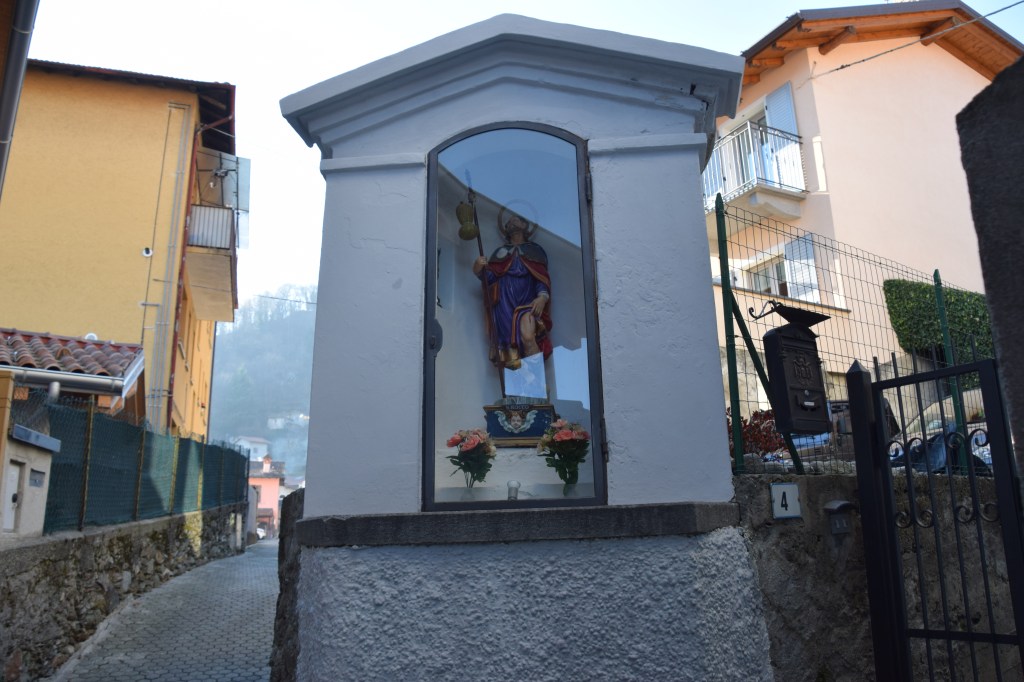
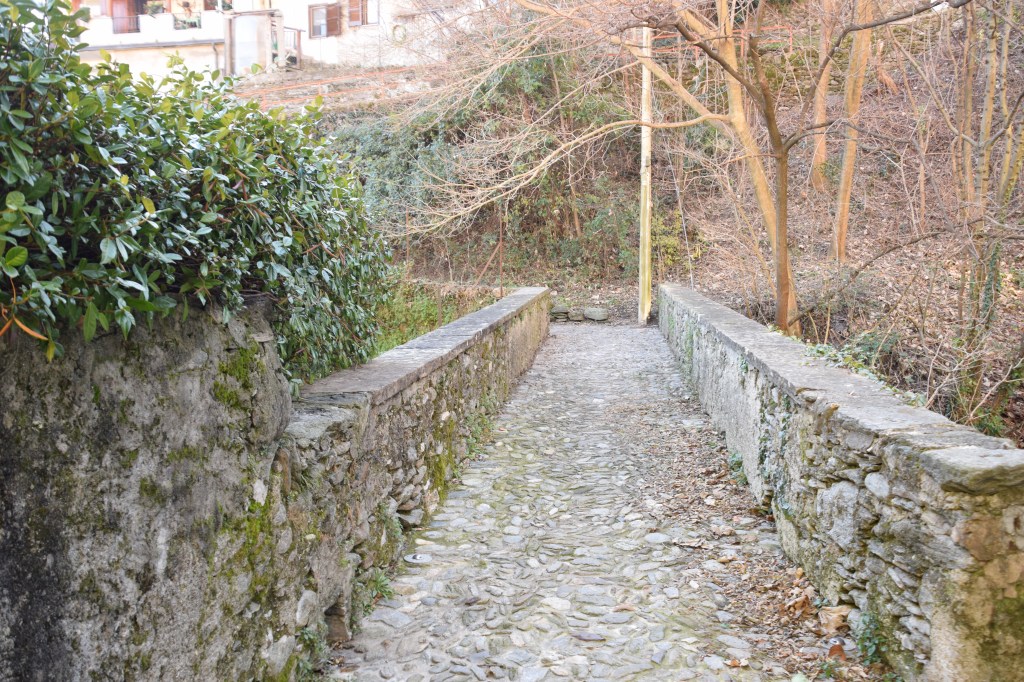
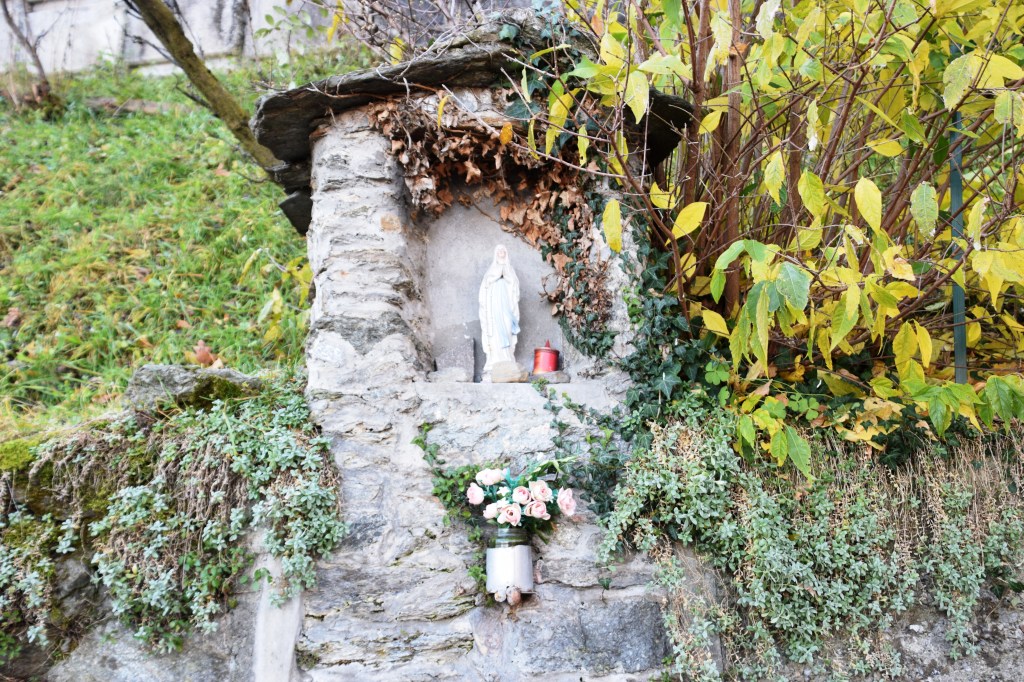
The frazione Campagnana is next to Campaccio and is the borgo through which one must walk to reach Campaccio. Campagnana’s centro storico is cobblestone alleys with a small piazza in which is found the 17th-century Chiesa di San Rocco. I found only modern Wall Madonna’s here.
The Castello of Musso that was home to the various lords of Musso, is no more having been destroyed by the Swiss mercenaries – the Grisons – when they defeated Gian Giacomo de Medici – the Medeghino – in 1532. This Medici son – unrelated to the prestigious banking family Medici of Florence – had terrorized Musso and the surrounding lake area for ten years. Regardless of his infamy, the peace treaty he signed allowed him to live out his life in splendor in a castle just outside Milan as the Marquis of Melegnano. The skeletal remains of the Rocca di Musso are still a goal of the bravest of hikers!
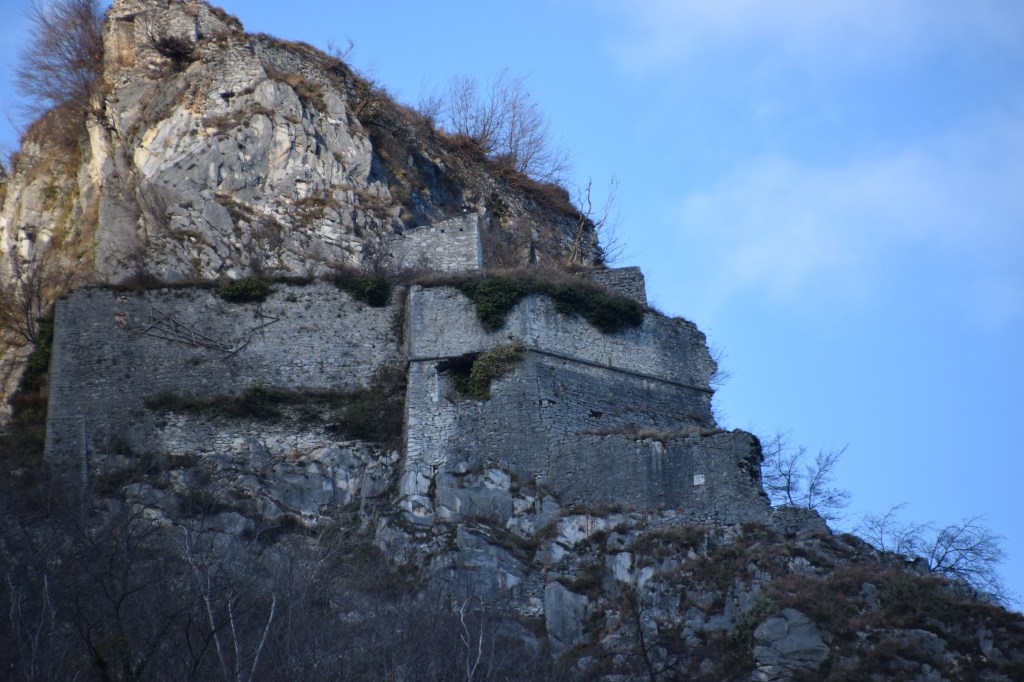
The old fortifications of the castle began at the lake and encompassed the Chiesa di Sant’Eufemia. The church was unharmed by the actions of the Grisons. It remains a testament to the respect for the faith of the people that was not even sundered by war. And there is no way to take a ‘bad’ photo of this church in its marvelous location overlooking the lake.

Walking to Sant’Eufemia through the frazione Genico leads one past old farms where descendants of the original contadini still tend kitchen gardens and their few sheep and donkeys.
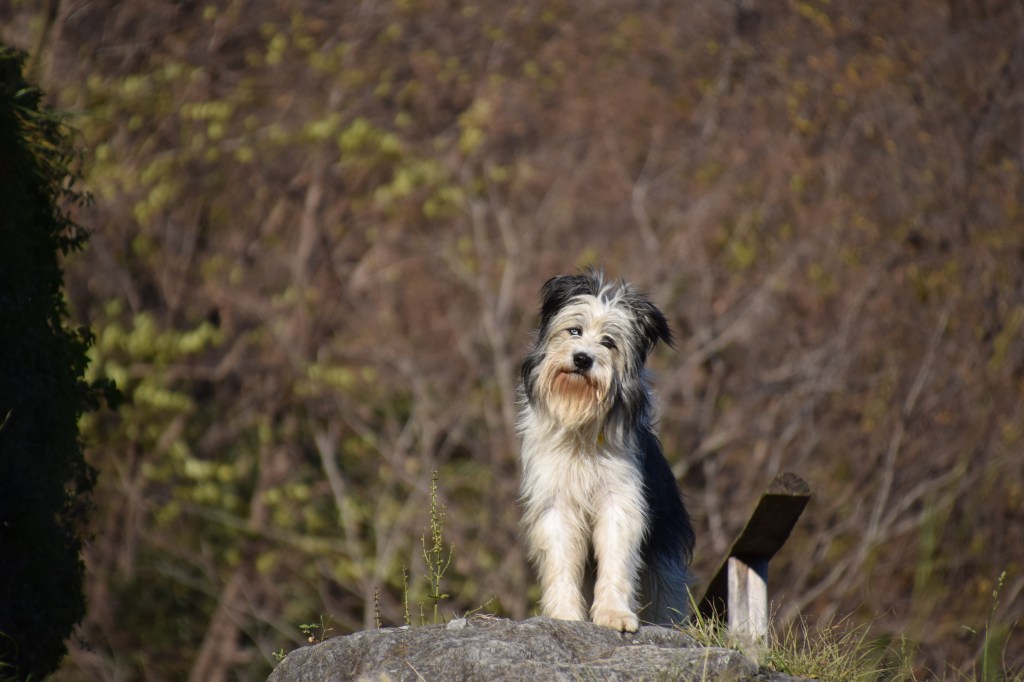
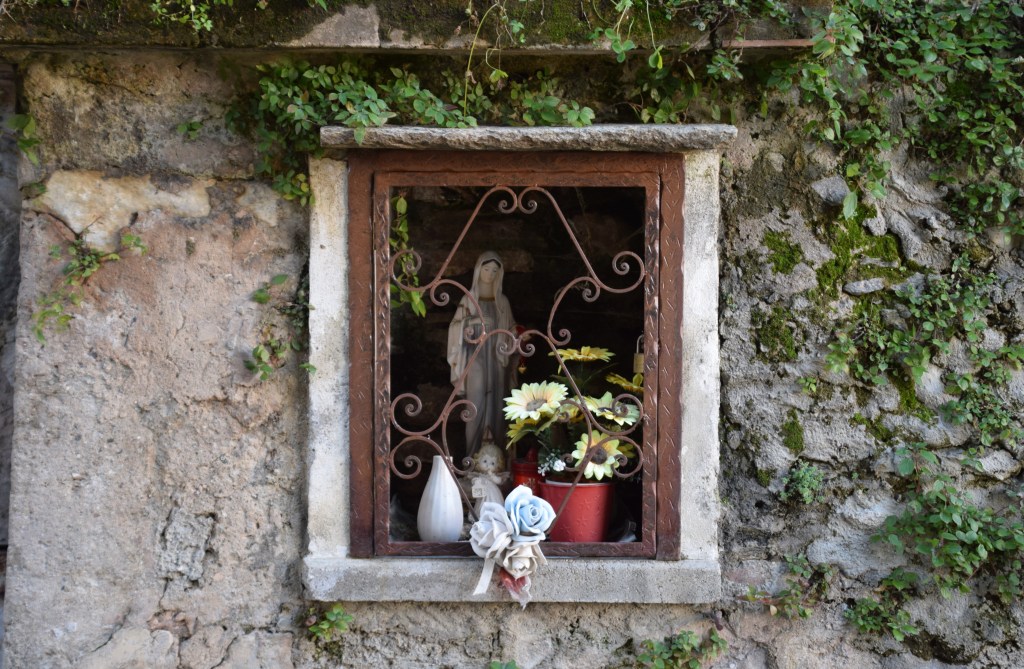
In the past the old homes, between which one must traverse narrow stone alleyways to reach the church, each had some sacred art to bless their homes. One can still see this tradition at work in the preservation of the sacred space.
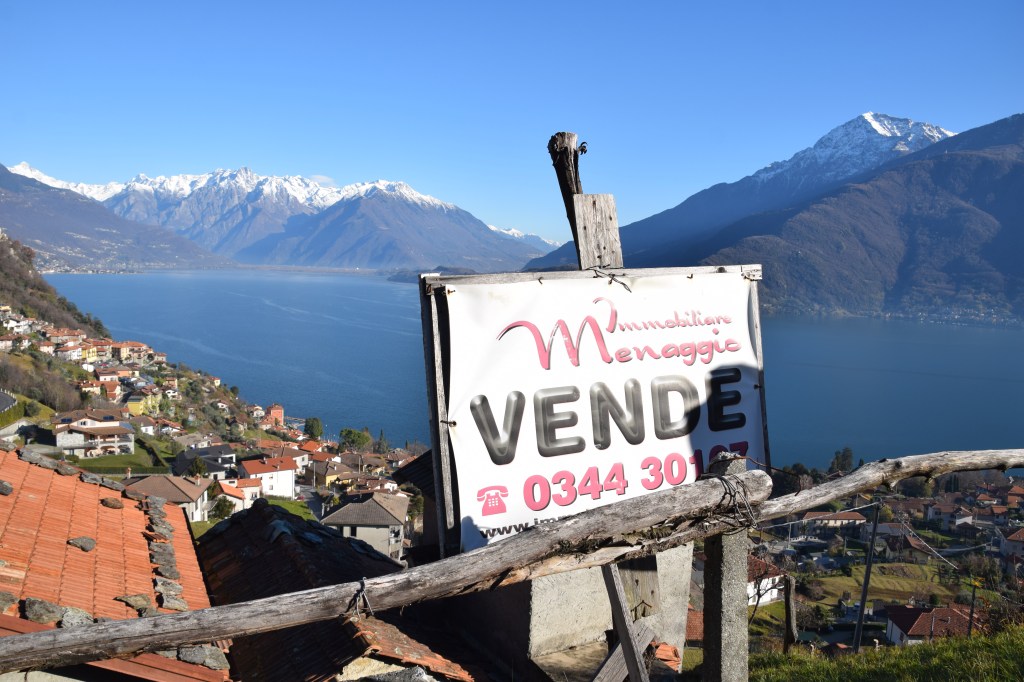
Many of the old homesteads that cling to the hills of Musso are for sale. However, those that do not offer the possibility of a parking space often sit on the market for years. The lakeside towns are crowded and space – especially space for cars – is not always conveniently available.
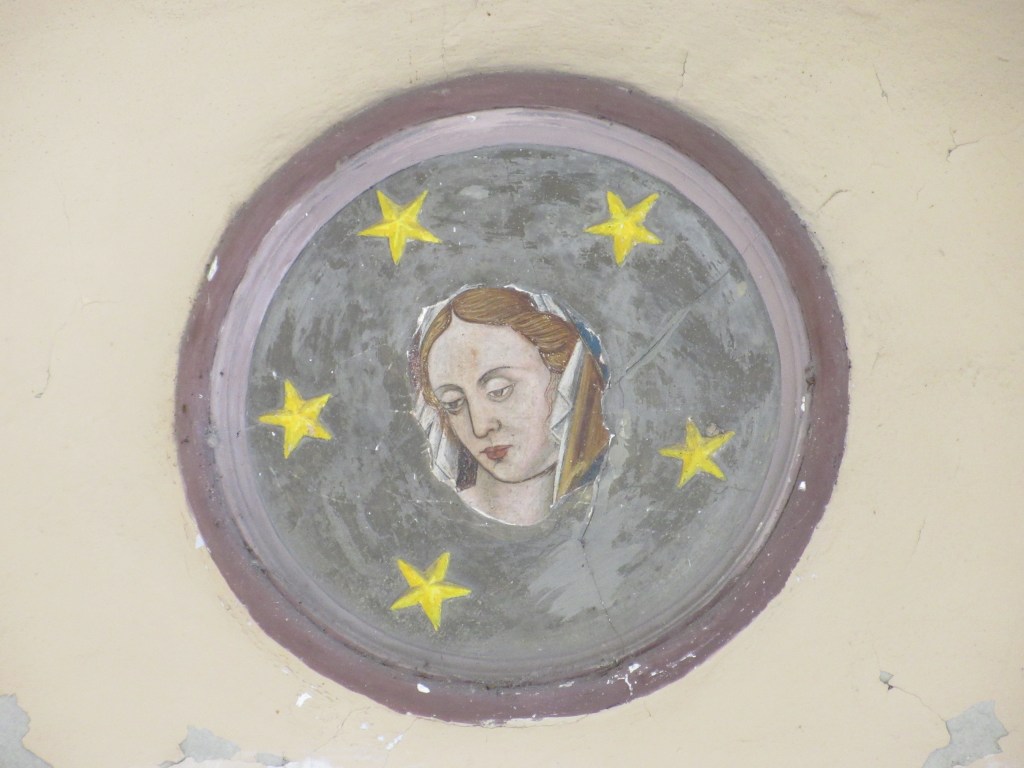
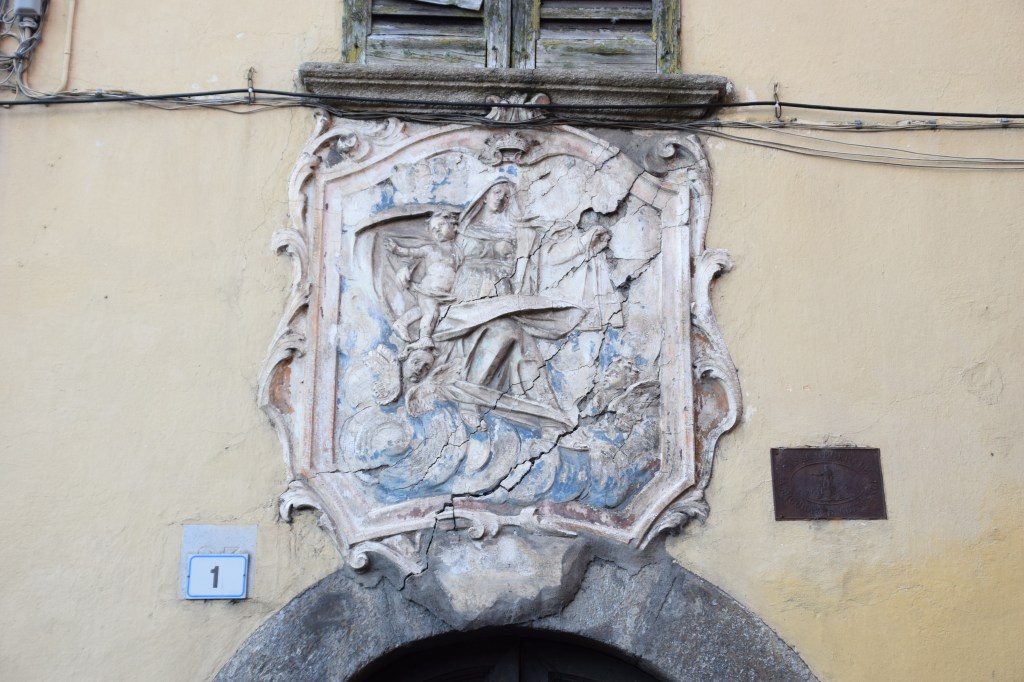
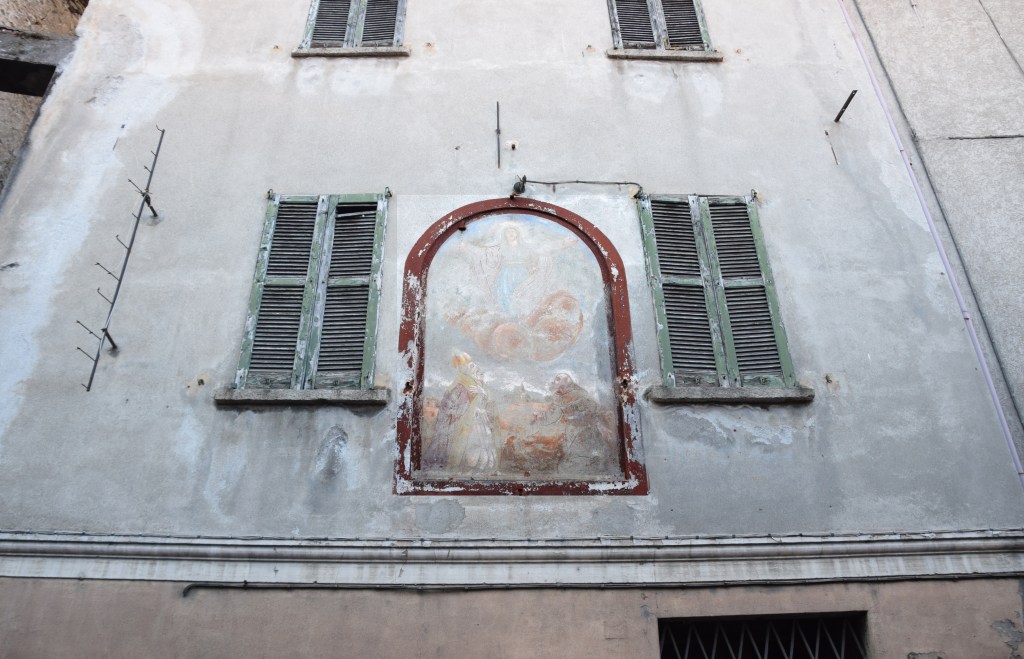
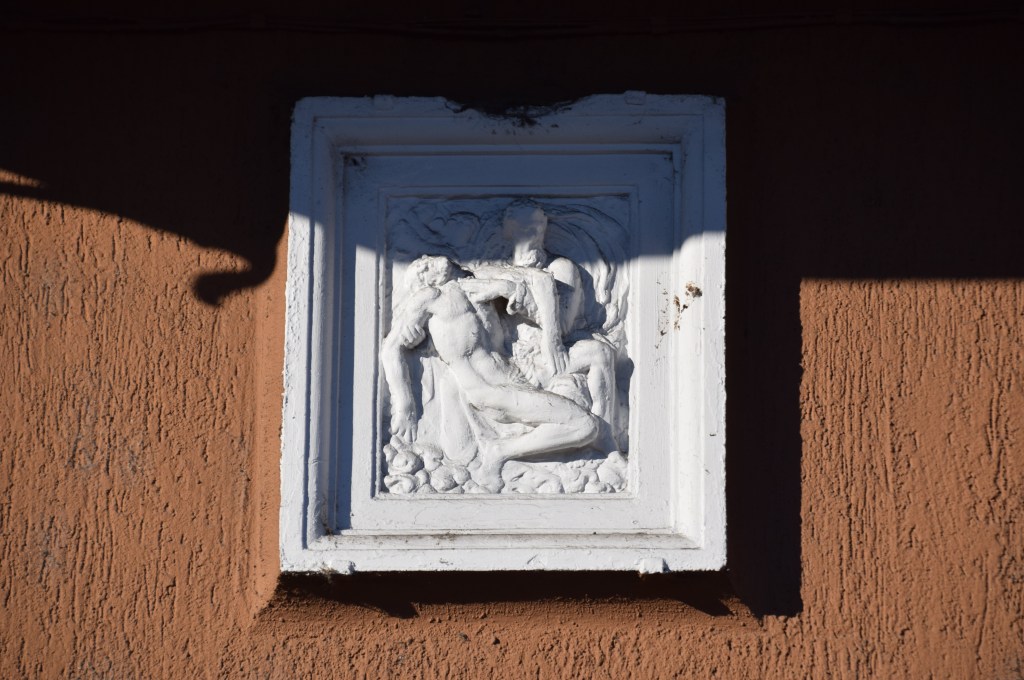
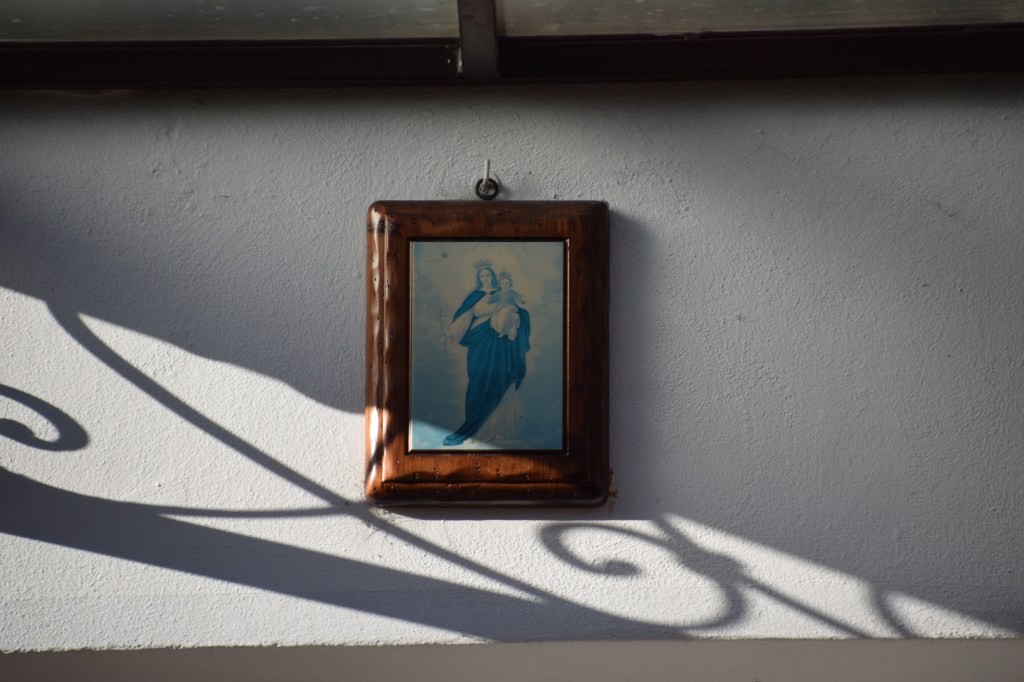
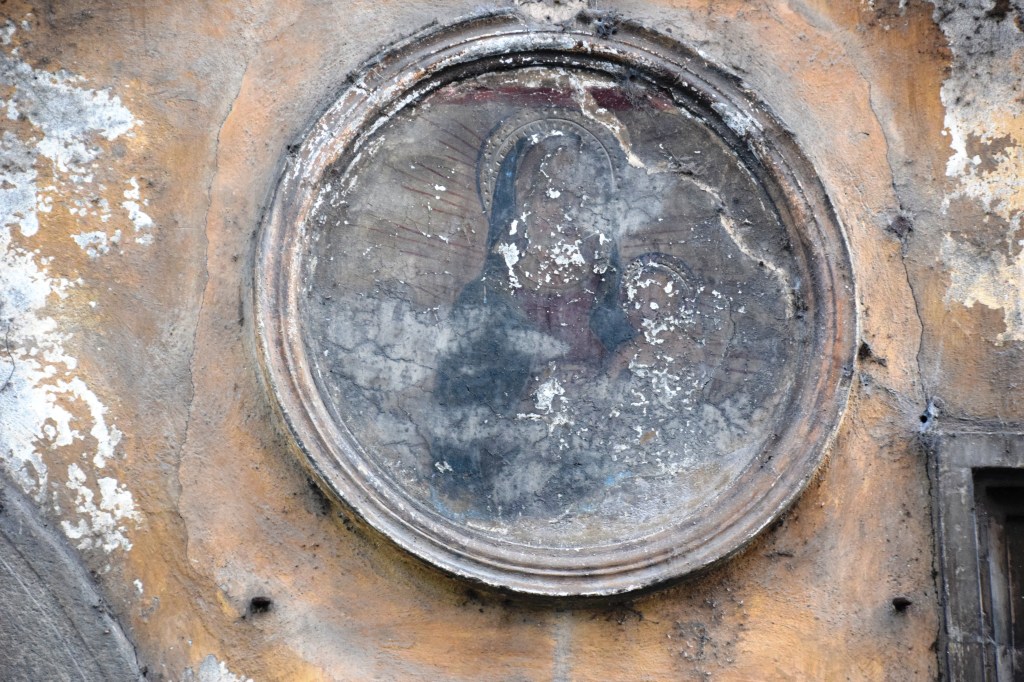
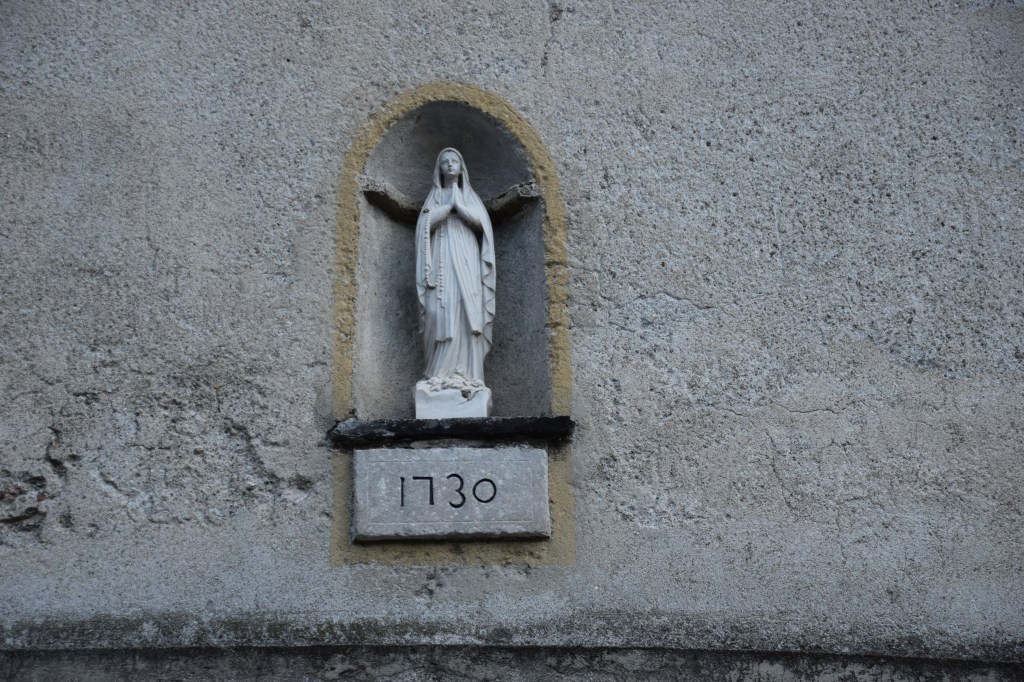
These final works of sacred art are all found on the via Regina – the road that hugs the lake and passes through all the lakeside towns. As the via Regina meanders on its way to Como at the southern end – and west leg – of the lake through a village, its name changes for the scant kilometers that one must travel to cross the borders of a comune. Hence, these Madonna’s all lie on the via Musso!


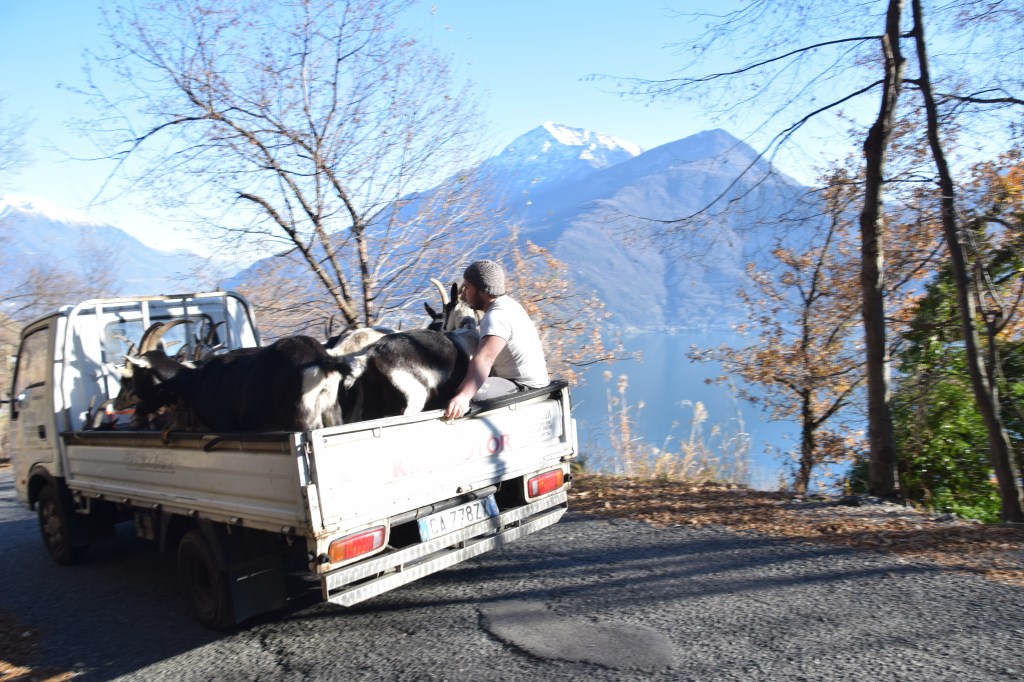
When I walked into the mountains searching for Wall Madonna’s a truck filled with goats passed me. This is the best photo I could manage. I am always amazed at farmers who put their livestock in an open truck-bed. Certainly, there must be some risk of an animal jumping out! Perhaps that is why the young man road in the bed with the goats! However, since the cab had two men in it, I think this was just the only available space.
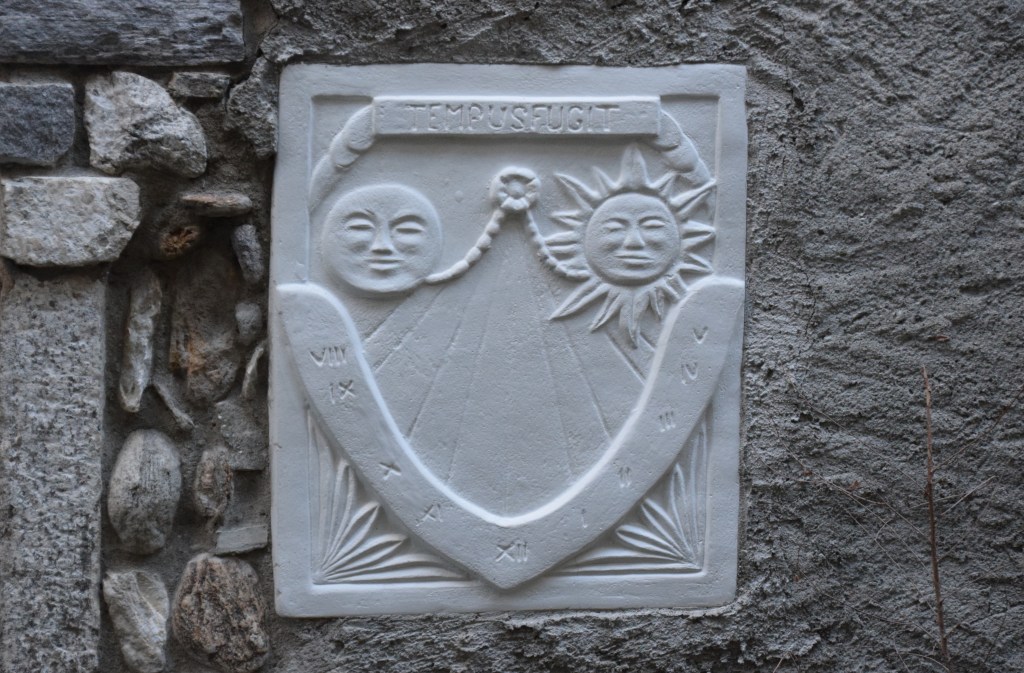
I end this narration with a photo that spoke to me on the first of my three days in Musso. A walk in Musso was my birthday gift to myself. And on that day – when I left the easy paths through the village to stalk the old stone sentiero – I found this wonderful sundial.
 Wall Madonna's of the Valtellina