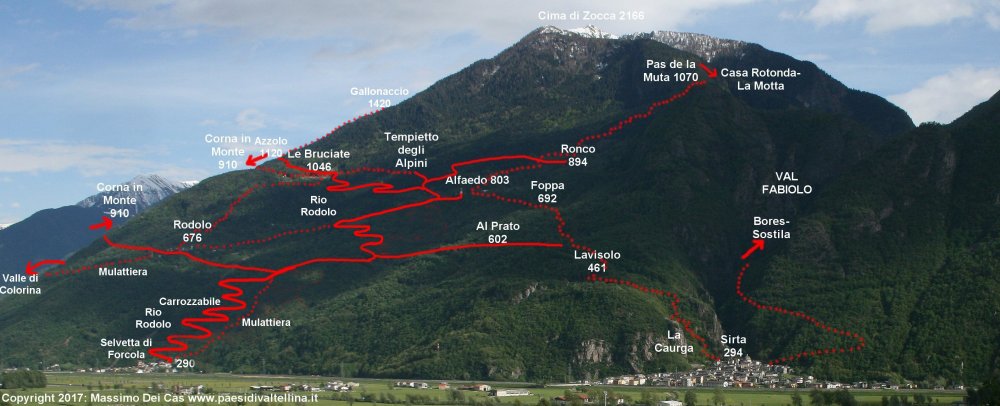
Forcola is a comune that encompasses a number of municipalities on the Orobic side of the Valtellina. The nucleus of the area is the villages of Sirta and Selvetta – both on the plain of the Adda River.
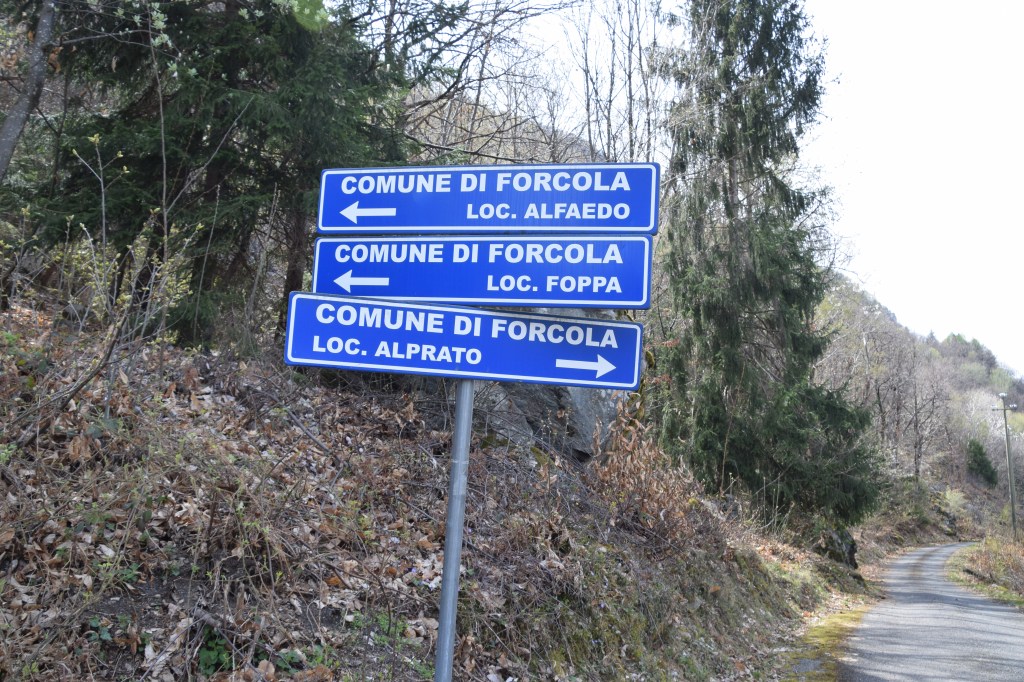
The comune stretches into the mountains and occupies the area between Val Tartano and Val Madre. Besides the modern carriage road – mostly Class IV (a minimum width of 1.8 meters or 5.9 feet) – there are many old mulatierre and sentieri that lead from the valley floor in Sirta and Selvetta up into the mountains and the localita’ where, once, year-round living was the norm.
This long-time inhabitance is evidenced by the existence of services in mid-altitude mountain villages such as Alfaedo (803 meters) and Sostila (821 meters). There are still some year-round inhabited areas – such as Rodolo (676 meters) – but, in general, the homes are used only in the warm season.
Historically, documents attest to the mountainside being occupied since the early 14th-century while the permanent settlement of the river plain dates only to the 19th-century. Of course there has been trade through the valley and use of the river for many centuries. But family life was lived in the mountains and not amidst the malarial swamps and bandit ridden areas of the river valley.

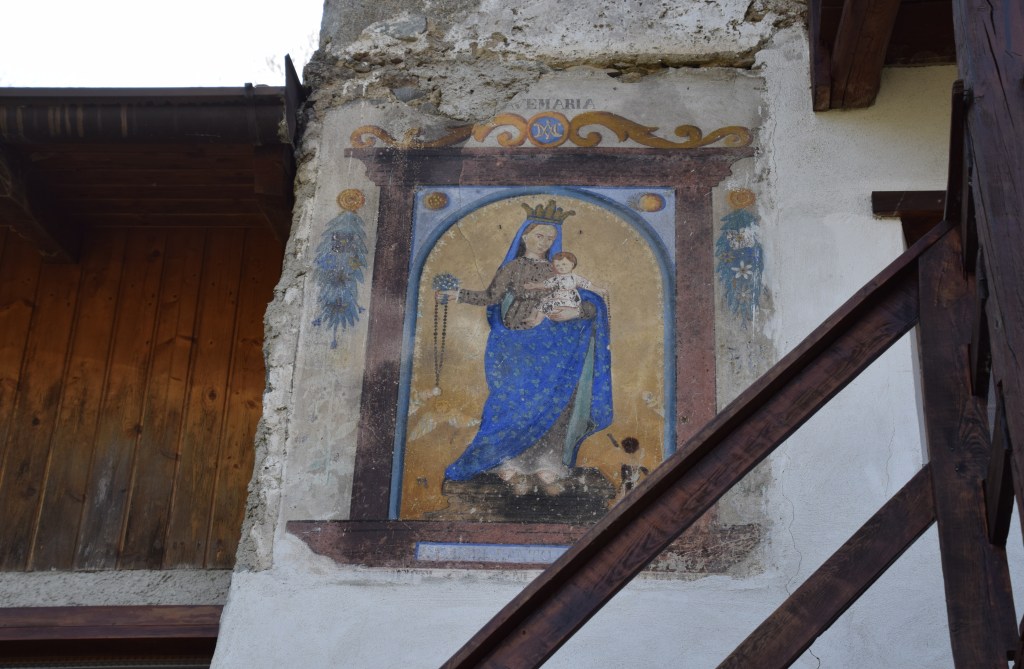
In general, Madonna shrines – small votive chapels – are found along the old sentieri and mulatierra – blessing the journey through the mountains and giving the traveler an opportunity for prayer, reflection, and thanks.

Wall Madonna’s – the elaborate frescoes on which I focus – are most often found in villages that were inhabited year-round, and in high mountain pastoral areas that were well-settled in summers by local families who brought their children. The maggenghi – grazing areas located at about 1600 meters and higher – above the summer residences inhabited by families – might have small huts for shepherds but lack the permanence and accoutrements of ‘homes’. Hence, these areas are not the best hunting grounds for Wall Madonna’s where an artist who would need accommodations while working, would be less likely to wander looking for work.
The historicity of the comune and the reality of recent life there make the municipality of Forcola a fertile place for a Wall Madonna search. Acting on a comment from a reader of a previous blog about Alfaedo, I parked my car near the Selvetta cemetery and walked up the restricted use road to visit the localita’ between the valley floor and Alfaedo. My goal was to find an early 15th-century enthroned Madonna that I was told was in Alprato. I had previously spent time in Rodolo, Corna in Monte, Alfaedo, and Foppa – Alfaedo being the village with a wealth of frescoes. But I had not searched Lavizzolo, Acquazzo, Ganda, or Alprato.

I choose to walk these roads for two reasons: Walking allows me opportunity for fresco searches and Madonna Shrine photos not feasible if I drive the narrow roads that lack parking and guardrails. And – walking allows me the chance to search for parking for future visits, places to turn the car around, and the time to assess the characteristics and quality of the road.
For example, my walk to Piazzo above Andallo Valtellino proved prescient since not only was there no place to park near the localita’ – there was nowhere to turn the car around. About ½ mile before the tiny village there was a small parking area and the higher altitude localita’ of Avert has parking. But had I driven to Piazzo I would have had to travel all the way to Avert on a truly awful Class IV road just to turn around.

There are two ways to reach Alprato – the restricted-use road that climbs from the town cemetery and the public-use road – a very nice wide Class 1 and Class II road – that begins from the center of Selvetta and carries one to Rodolo or to Alfaedo with Class IV road branches that reach the different villages. If one travels from the public road and enters the frazione from the east one encounters a large water trough for animals on the mountainside on the left and a home with a very eroded ancient Wall Madonna on an old stone home on the valley side to the right. Entering the village from the west brings one right into the nucleus of the old town with homes and meadows and a large Lavatoio Comunale right in the center.

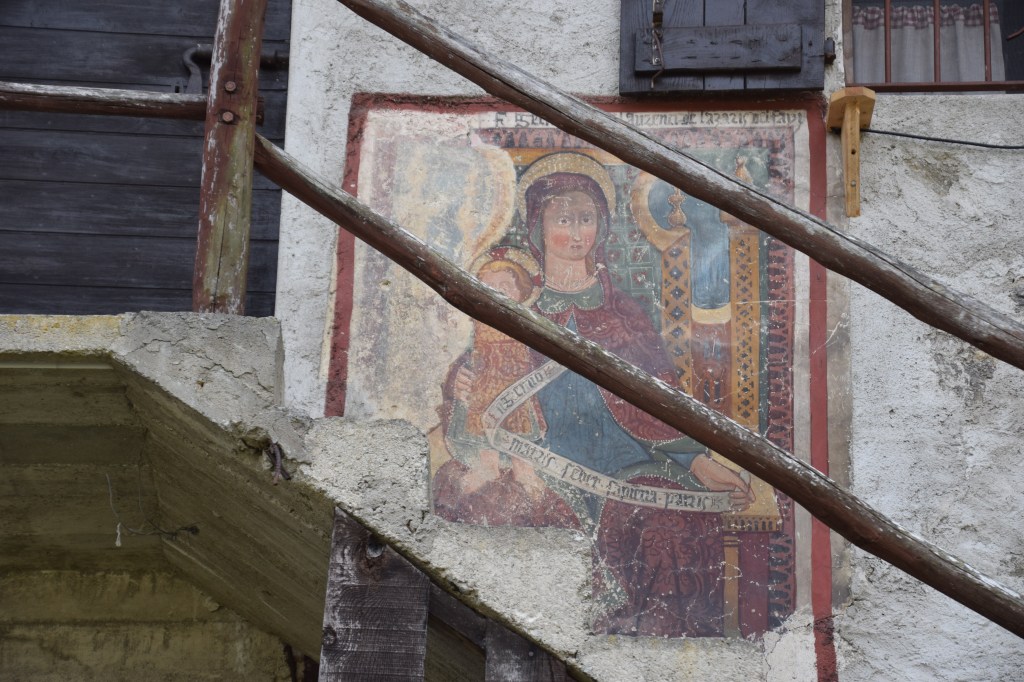
The Wall Madonna that I came in search of was located at the eastern end of Alprato midway between the first and the second story of the line of attached homes.
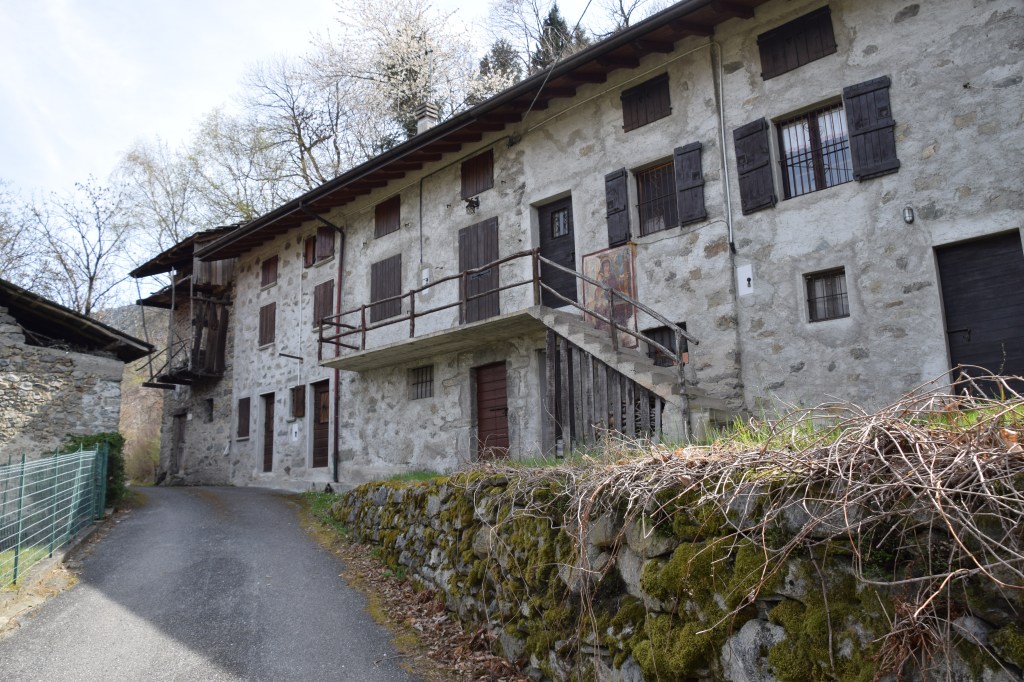
As is often the case, the modern conveyance of a staircase that likely replaced the ladder one used to reach the second story was placed in front of the fresco. However, the fresco has not been damaged as the staircase sits about an inch from the wall. Still, covering this wonderful art is a shame and one would have hoped that it was preserved whole for the admiring viewer.
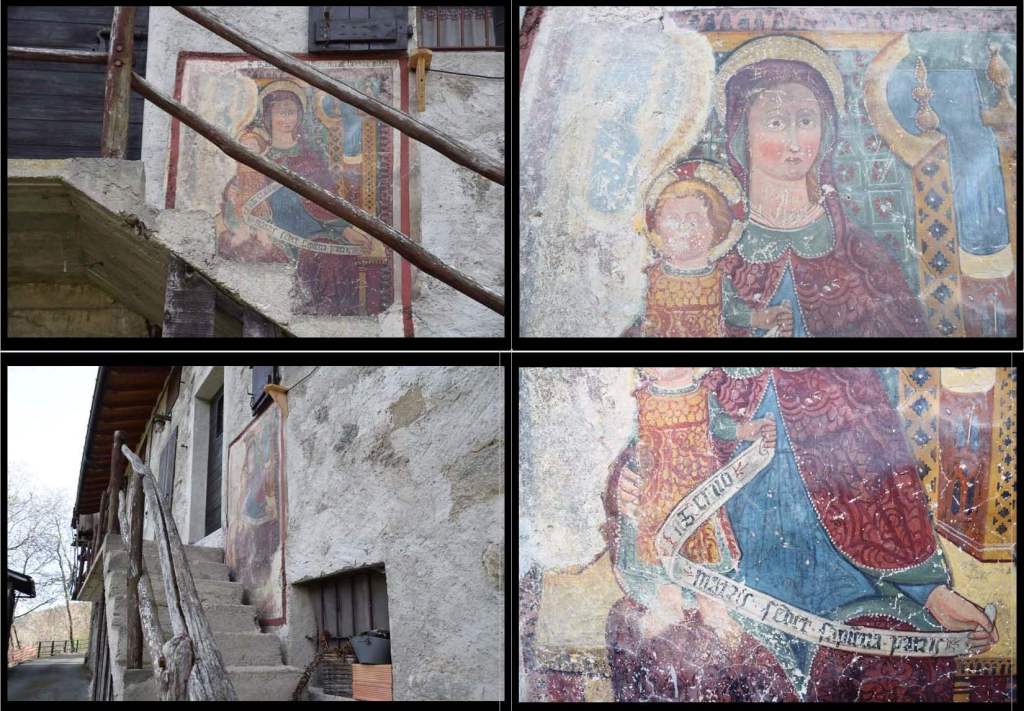
This wonderful fresco does not appear to have been restored and looks as if it has its original paints. The techniques used to create the fresco in the time period prior to the mid-16th-century are why these more ancient frescoes are better preserved than ones crafted later – even works made in the 19th and 20th-centuries. To prepare the wall for a fresco, three layers of gesso were used. The first two layers were allowed to dry completely. The third layer was mixed with marble dust. While it was still wet the artist executed the fresco. Hence, as the last layer of gesso dried the paint soaked into it and became amalgamated with the gesso-marble layer.
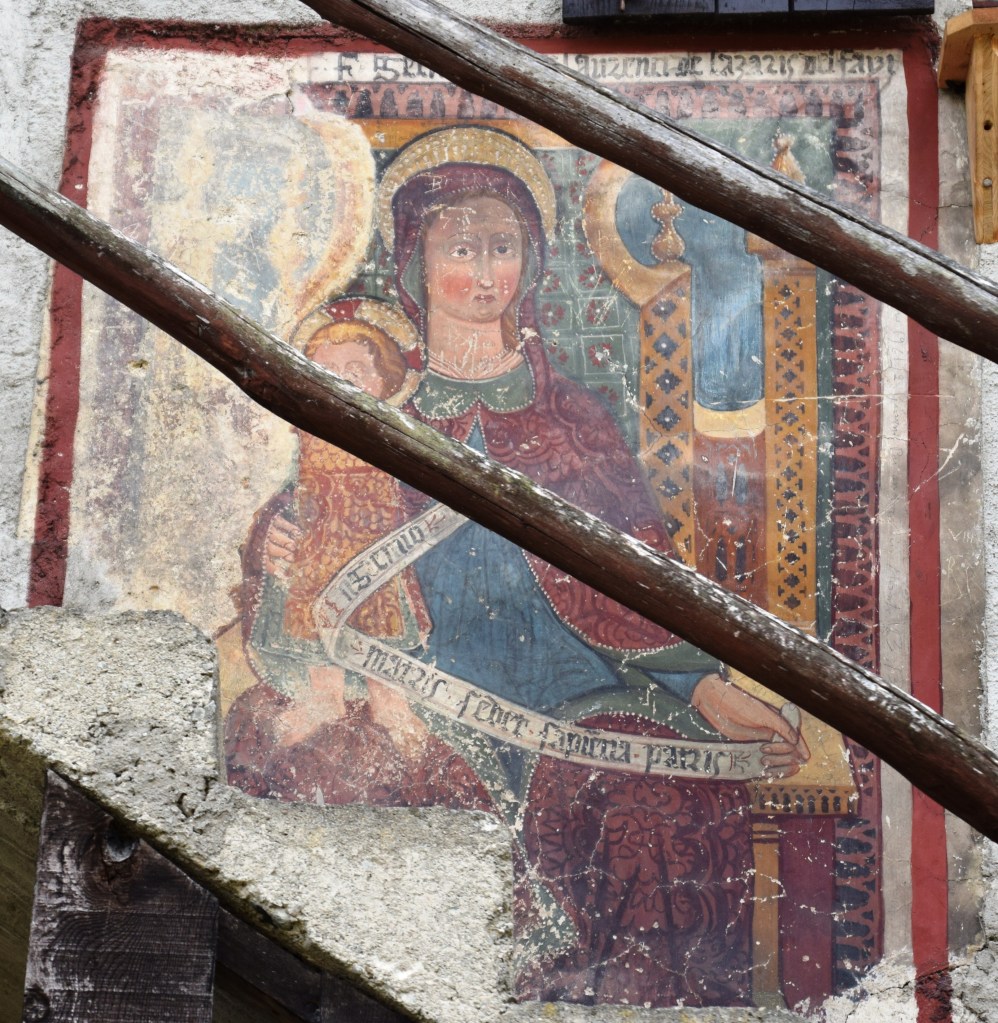
The paint of the images on frescoes created using this technique did not chip off. The merged fresco layers would need to be broken off for the fresco to ‘erode’. An artist using this technique had to be very skilled. There was no way to correct one’s work when painting in a wet layer of gesso. I have brightened the colors of the previous photo to show the details and to bring forward the banner held by the infant Jesus and Mary. The Gothic script offers a truly lovely metaphorical message in Latin: IN GREMIO MATRIS SEDET SAPIENTIA PATRIS. The English translation is thus: ON HIS MOTHER’S LAP SITS THE WISDOM OF THE FATHER.

Alprato has a melancholy feel and wonderful views of the Valtellina everywhere one looks. It is easy to imagine a vibrant village life here where pastoralism was central to a life of subsistence revolving around kitchen gardens, chestnut harvesting, hunting, logging, and hay gathering that kept families busy and content. Although there was no one in the frazione when I was there, the air was filled with the musical bells of goats left to graze the mountains and meadows.

This beautiful fresco was restored in August 2022 in memory of Delfina Raschetti who was born in Alprato in January 5, 1915. Births in the hamlet are evidence that Alprato was occupied year-round and was not simply a summer destination to pasture animals.
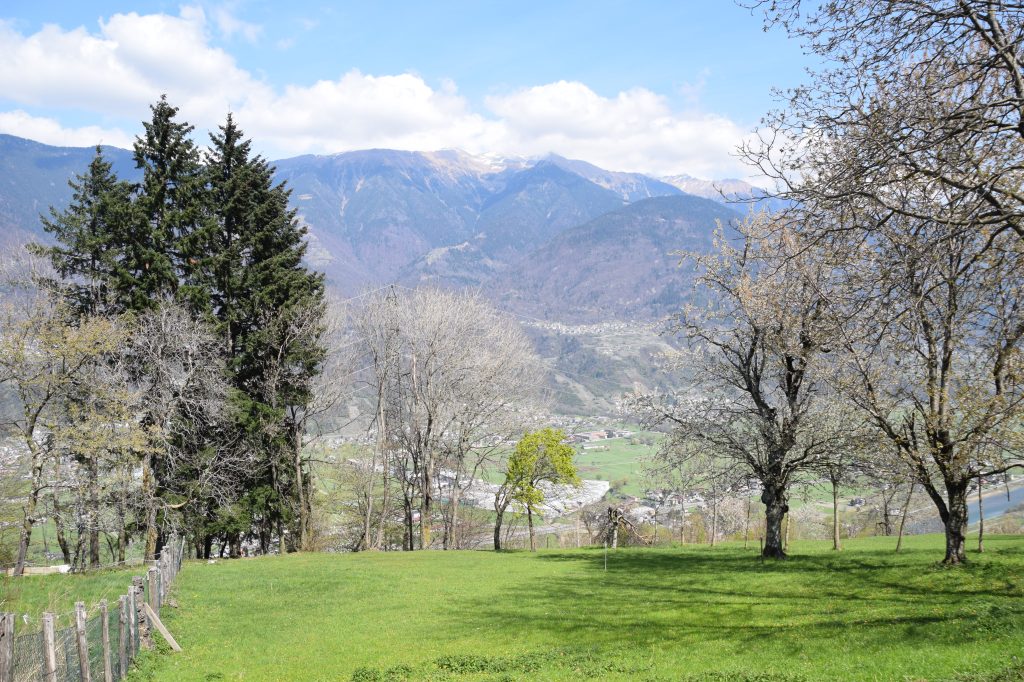
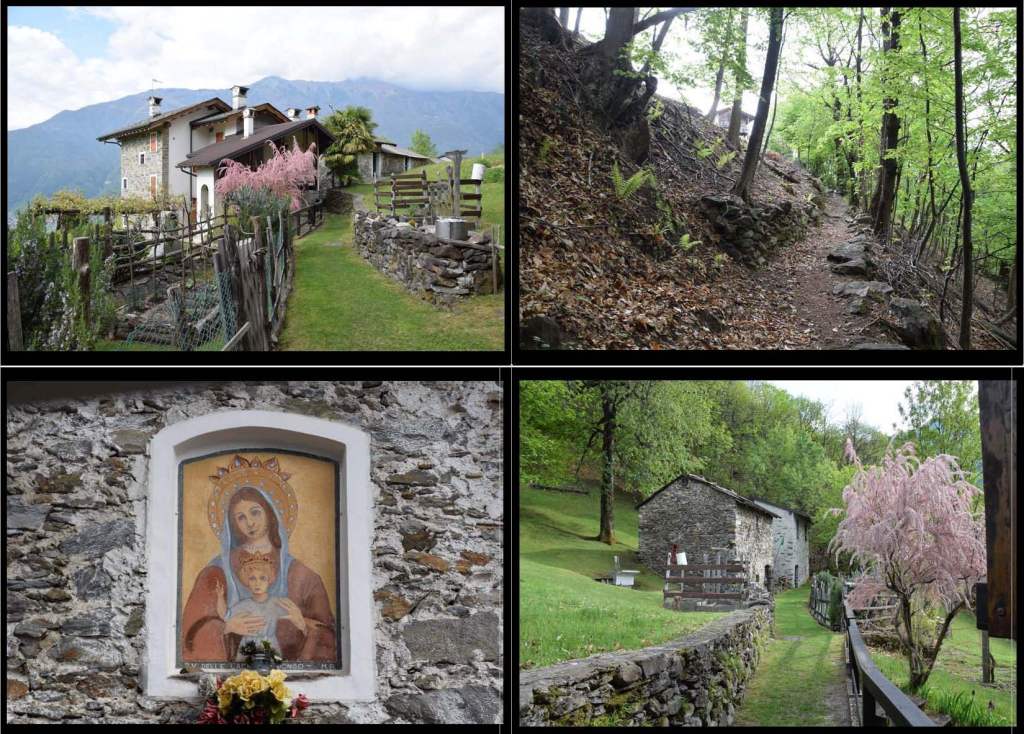
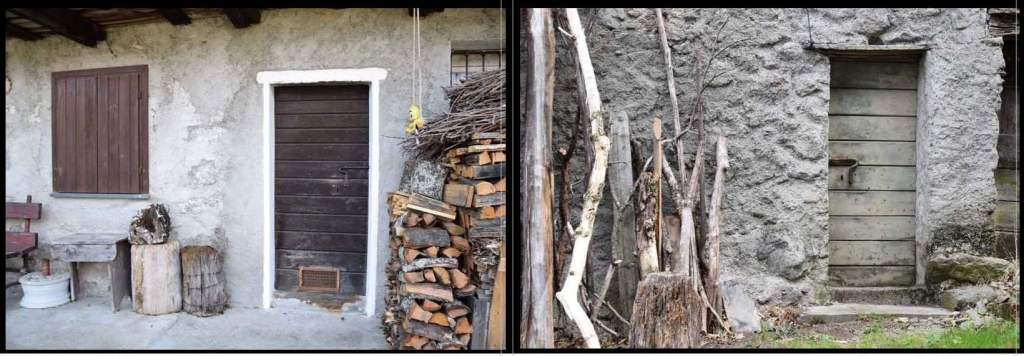
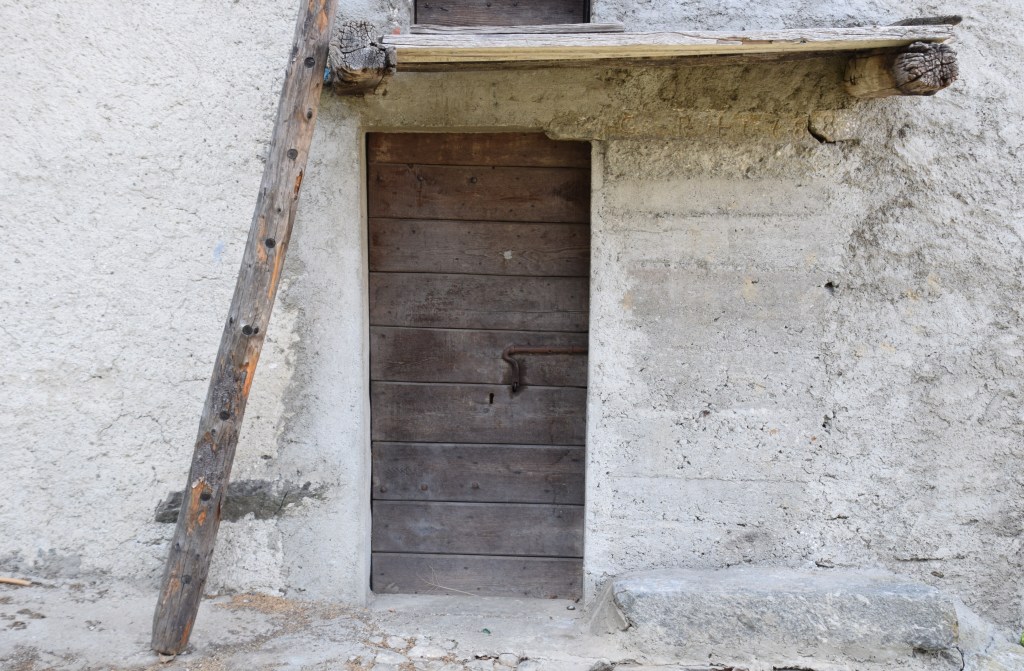
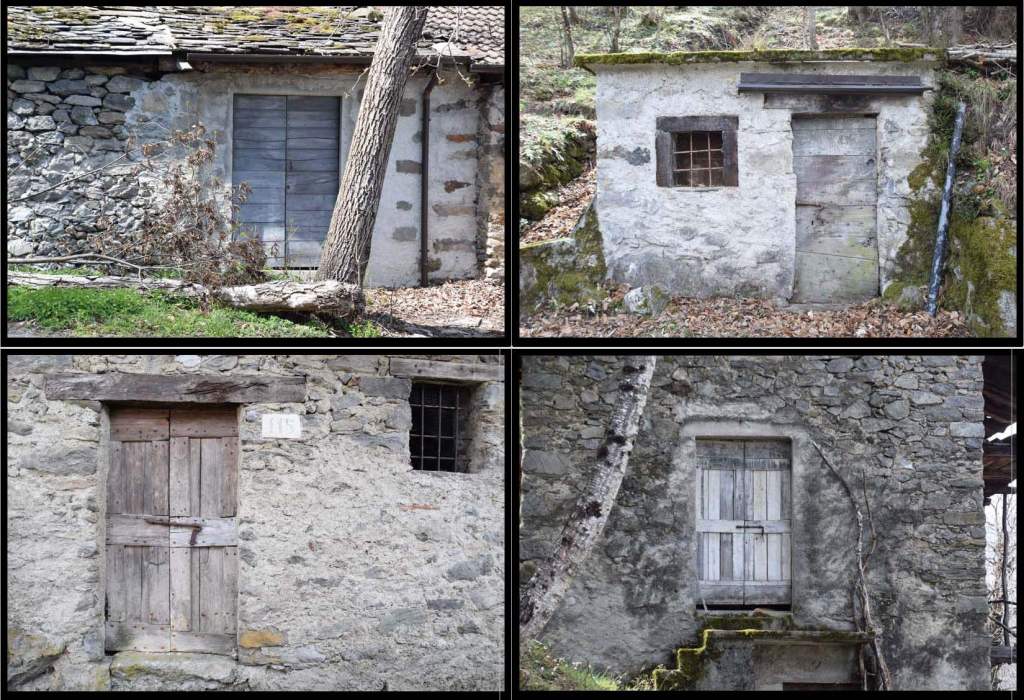
Here are some photos of my walk in Alprato with a strong focus on the Wall Madonna’s found there and the ancient wooden doors – functional, lacking the embellishment that one finds in towns such as Bergamo or Morbegno but beautiful nonetheless!
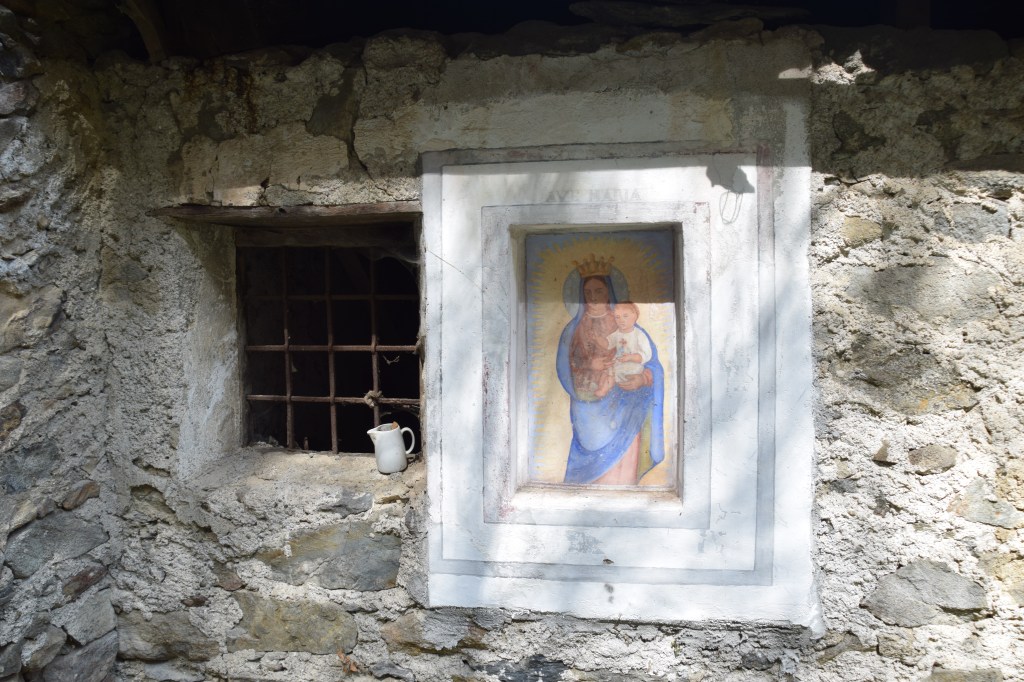
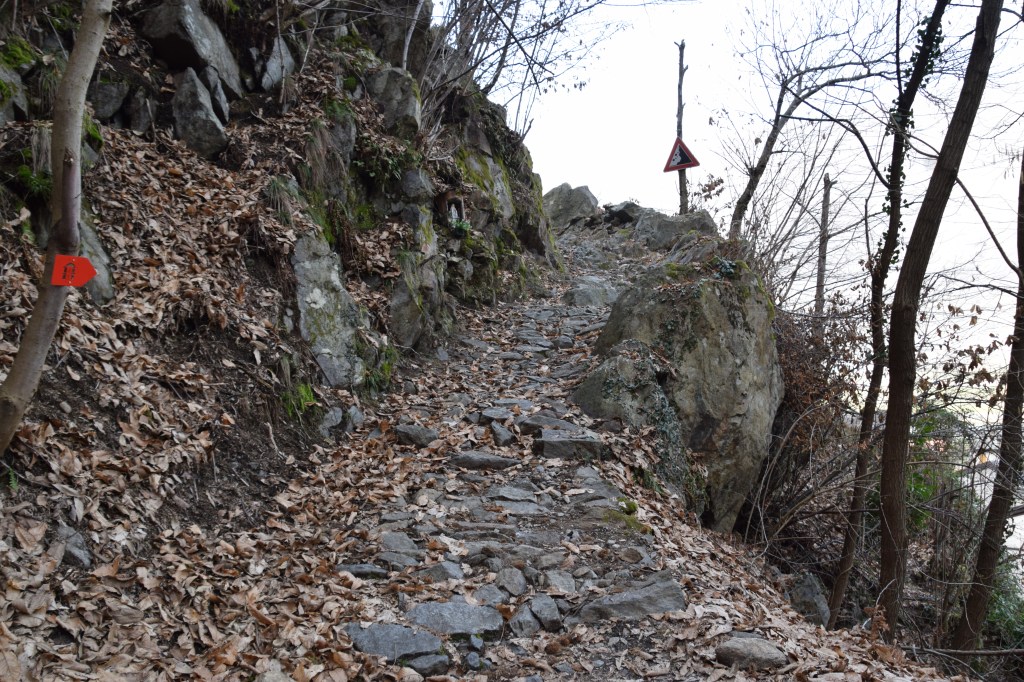
This beautiful small fresco is found on the path behind the homes that sit on the southern side of the village – the mountain face. The path leads down from the mountain villages above Alprato, across the back of the town, and on to the next localita’. When searching for Wall Madonna’s I make sure to check behind the homes where old footpaths linked the localita’s together. The sacred imagery of these frescoes – made holy by the benedictions of the local priest – was intended to bless the traveler’s journey and testify to the faith and devotion of the homeowners.
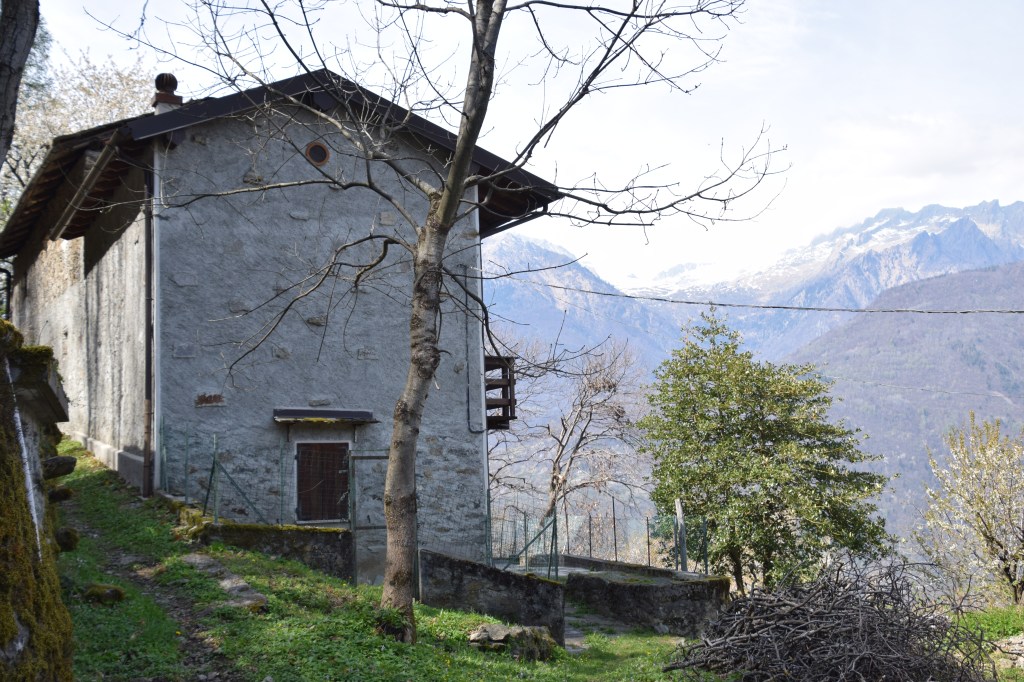
The previous photo shows the footpath behind the homes that sit with their backs to the mountain. The narrow path leads down from the mountains – across the back of the entire village and up to Alfaedo – 200 meters above Alprato. It was behind these homes that I found the small fresco posted previously in the blog.

The previous and following photos of village doors indicate a clear style. All the doors are made of solid wood structured with lateral slats. The door latches are of iron made during a time folks did not lock their homes. The doors are sleekly designed and unembellished.
The following fresco offers a wonderful Annunciation. Although the images are largely eroded indicating that the work likely dates to the 18th or 19th-century, the past glory of the painting is still evident. The Annunciation faces the traveler walking through the main street of the village – the current carriage road.

This fresco is large and located on the edge of a home facing the road through the center of town. It was placed midway between the second and third story of the home. There were two saints below the sacred event but all that remains are their feet. From the remnants, I would hazard a guess that the two saints are Paul and Peter.

This is a view of the full fresco showing the nearly complete erosion of the images and the once elaborate frame. This size of the fresco and elaborate imagery imply the prosperity of the owners who commissioned the artist. Notice that the renovation work done on the old home has not sundered the remains of the large fresco – even the wide, currently paintless ‘frame’. The space remains as it is and was – sacred.
Old homes often had no internal staircases and the entry to the second story was accomplished with a ladder. This is likely how the second story of the 15th-century home with the fresco that is the focus of this pictorial narration was structured. When homes are ‘modernized’ external staircases are often added. Also, as the old roads through the centers of villages are widened to accommodate motorized vehicles, front facing staircases may be turned sideways to run down the upper story walls rather than straight out from them. This alteration results in a fresco being covered by the staircase.

This montage shows three frescoes that have been covered by the addition of a staircase that runs along the wall of the home rather than out from it replacing either a ladder or front-facing staircase (more likely replacing a ladder given the ages of the frescoes). On the left is the focus of this narration – the early 15th-century fresco of Alprato. In the center is one of four 17th-century frescoes found in the Valtellina and painted by the Val Brembana artist Franceso Ambrosione born in Branzi in the early 17th-century. The fresco is found on the Orobic side of the Valtellina in Caiolo Alto. On the right is a late 15th or early 16th-century fresco found in Livo, an alto-Lario village above Gravedona on Lake Como.
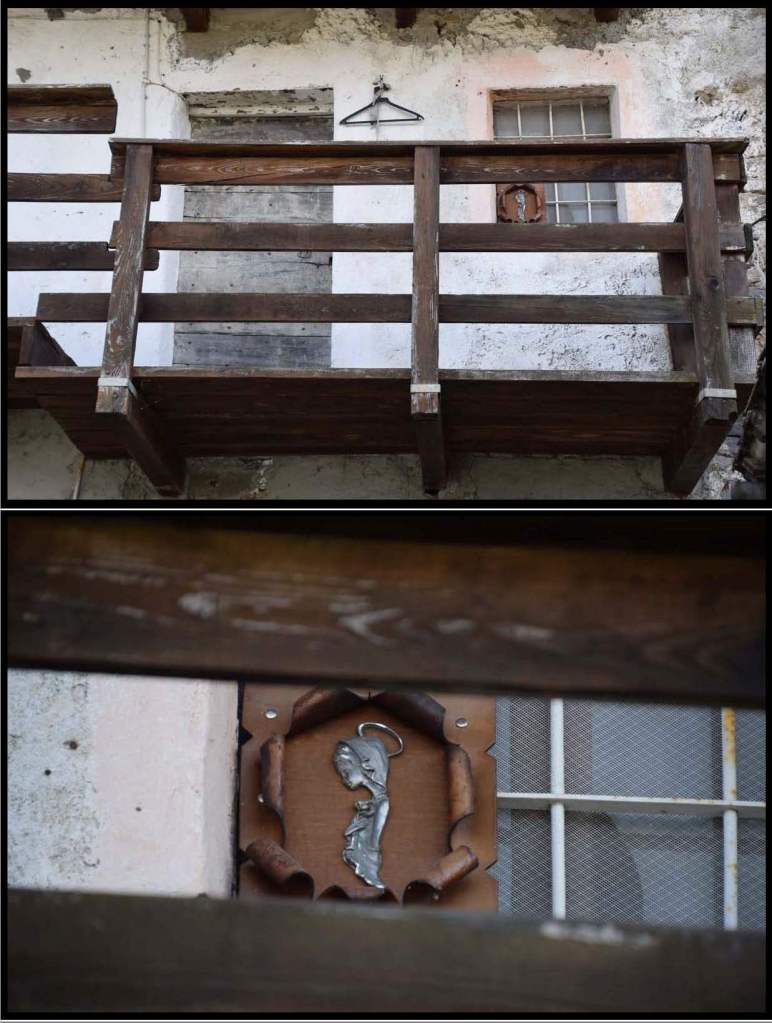
I love this modern sculpture. I was not sure what it was at first because it is so small. But my telephoto lens made the haloed Madonna clear. I think it is a pretty composition.
Sometimes the size of these homes makes it difficult to believe entire families lived in one or two rooms. On a recent walk in Avano in the Valvarrone, a gentleman showed me the oldest home in the village. It was tiny – two small rooms. He told me fifteen people lived in those two rooms! Perhaps that large family lived mostly outside engaged in the many labors of subsistence living and only slept in those two rooms!
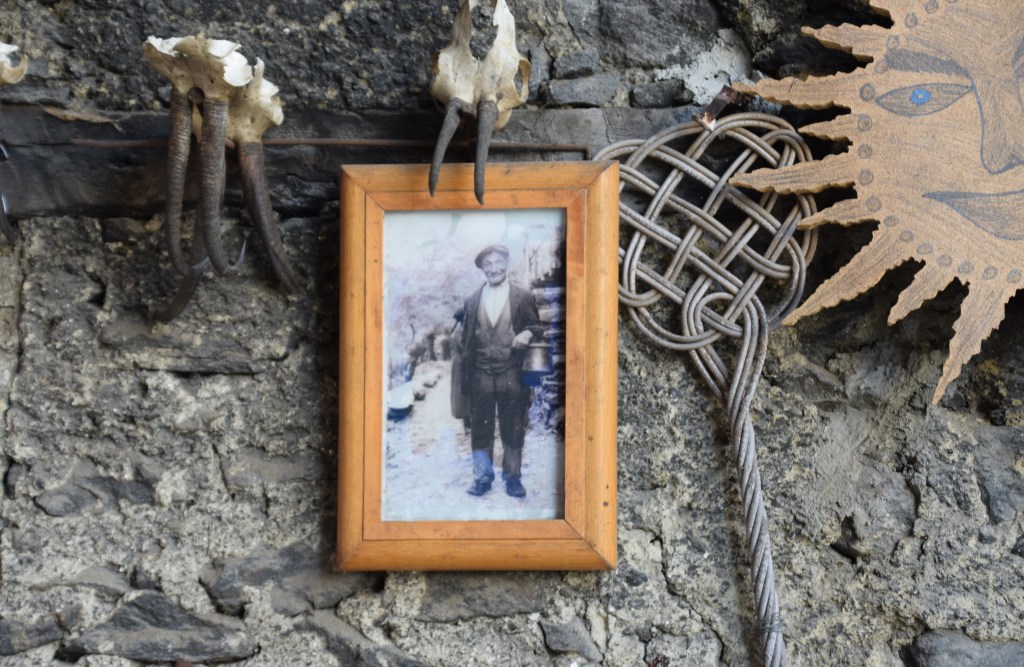
Seen above is a lovingly decorated wall next to the entry door of a still occupied home. The photo of the ancestor of the current owner of the home dressed in early 20th-century garb and holding a metal pail – filled with milk? – is charming and speaks to a nostalgia for life as it once was in the village.
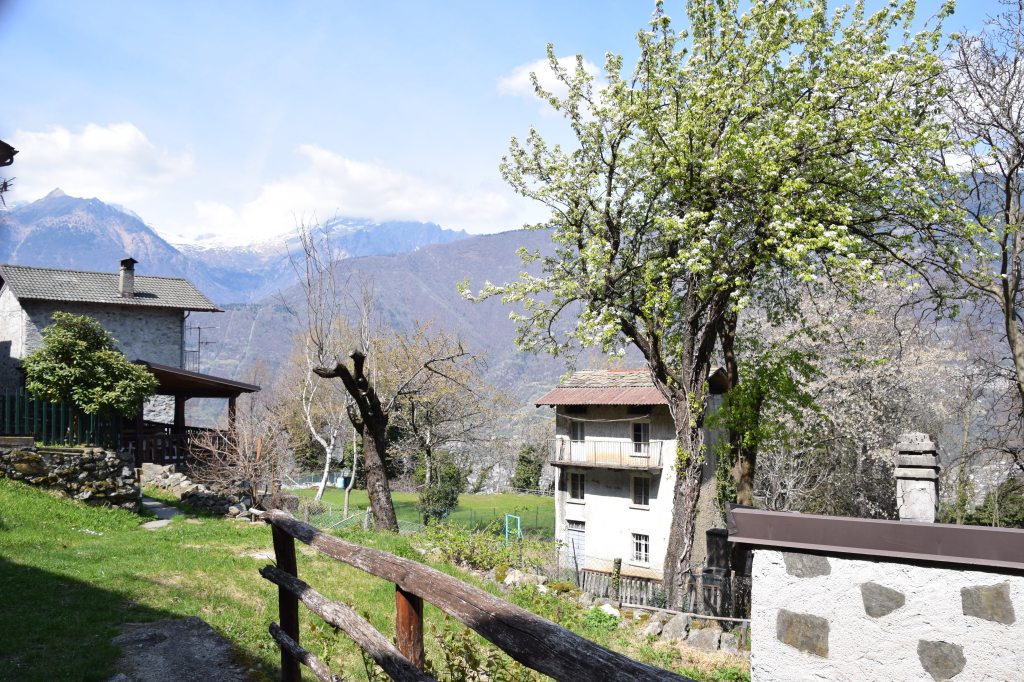
Alprato sits on the slope of the mountain but offers some nice expanses of relatively flat meadows that are used as gardens and grazing fields for livestock. The views of the pre-Alps and valley below are delicious and speak to a life here that offered glorious vistas in all directions – a reward for the colder, windier climate of this altitude.
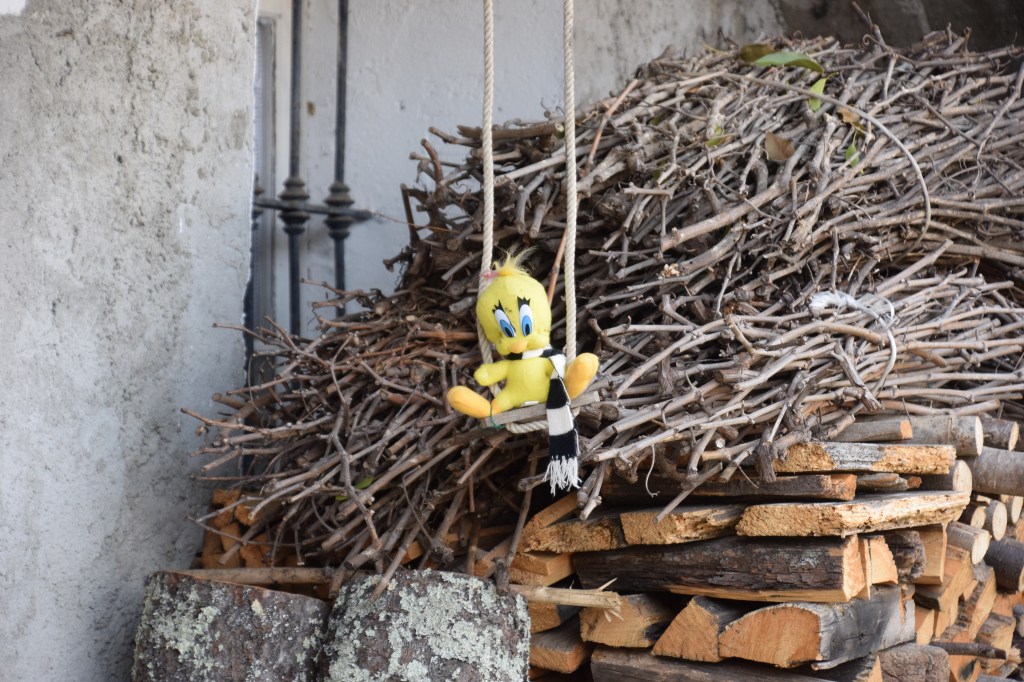
Who does not love Tweety Bird with his cute voice and speech impediment? The cartoon character was created in 1948 as a canary in constant danger from the house cat Sylvester. This is a cute and clever decoration!

I often avoid weekends and search for Wall Madonna’s in the colder seasons that keep people away from their mountain homes. This allows me to take my time and search all streets, alleyways, and ‘backyards’ without disturbing the residents and weekenders. The following photo offers a sideways glance of the Wall Madonna that lives on the facade of a home overlooking a private, shared courtyard.

The last Madonna I found was a modern sculpture placed inside a stone alcove. Lacking access to artists who made their living painting religious imagery and personages, people today create small shrines to Mary placing her inside a ‘shell’ in imitation of the almond-shaped scared mandorla in which she is found in older sacred artwork. One might make mention of the artistic images surrounding the birth of Venus where the Goddess is seen floating to shore inside a seashell – usually a scallop shell. The imagery could be seen to be similar – or not.

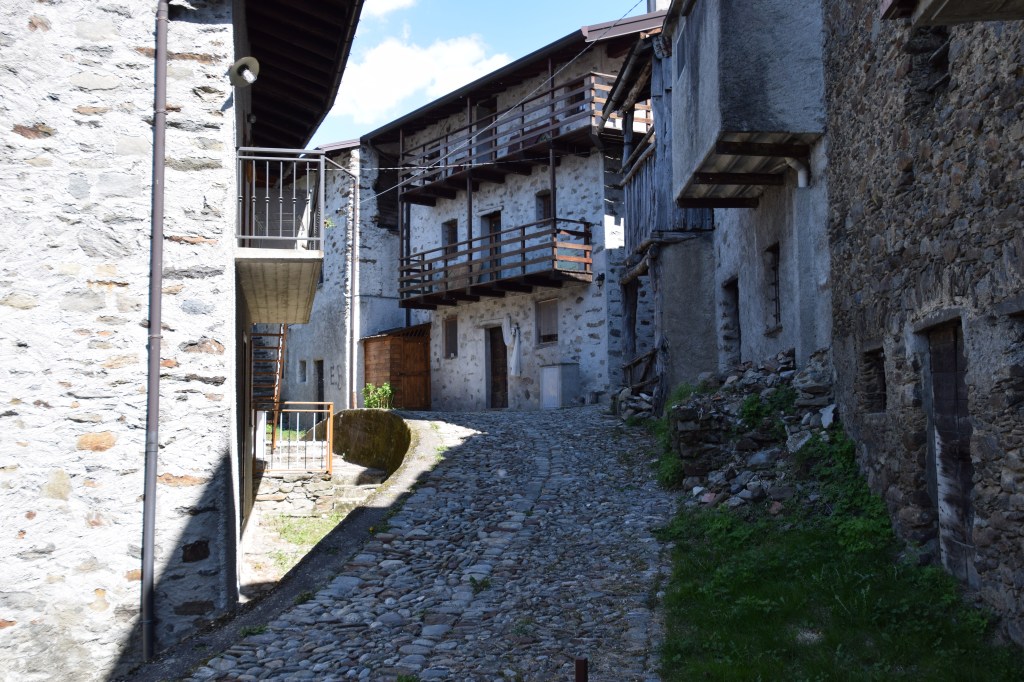
The village of Alprato is a cacophony of doors with balconies, external staircases, and ladders. Homes are rarely detached and exist in multi-level rows of narrow, attached, multi-story homes on both sides of the carriage road. Life was lived in the close proximity we often associated with large urban areas. Farming activities were cooperative and took place outside the village while family life was lived intimately among one’s neighbors.
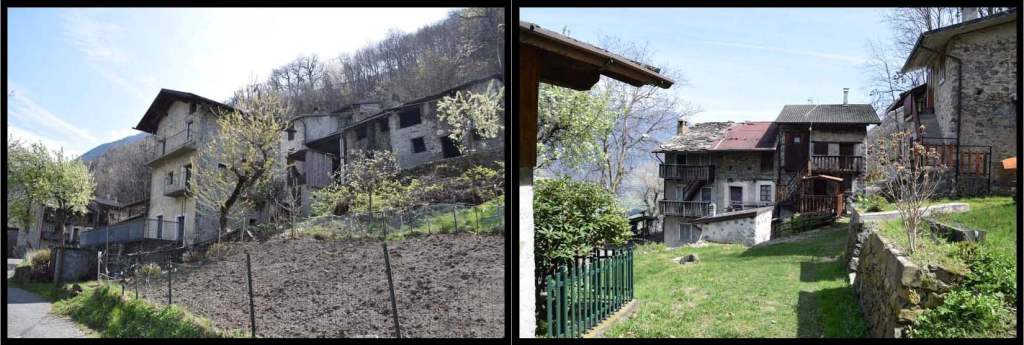
This narration ends with a map that shows the mid-altitude borgos that were once inhabited by families year-round and now – with the exception of Roldolo – are used only on weekends and for the summer months. I hope you enjoyed the tour of Alprato – a localita’ that offered a marvelous 15th-century fresco. My Wall Madonna search continues in these other mountain hamlets!
 Wall Madonna's of the Valtellina