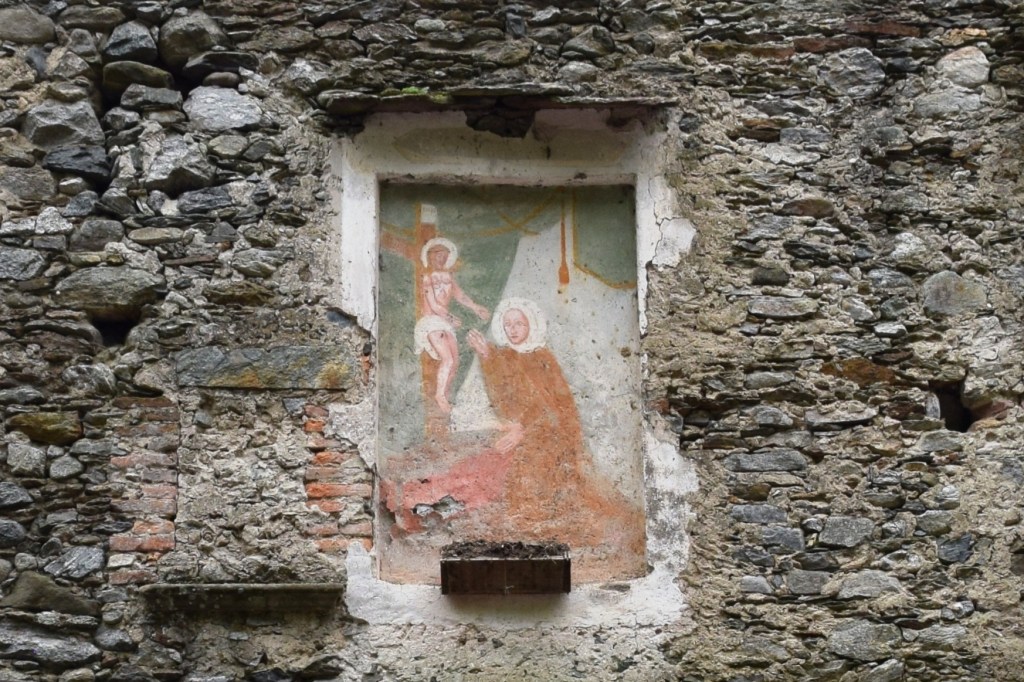
MULINI: This is an interesting fresco from the Localita’ Mulini just outside Dosso del Liro above Lake Como. It is a crucifixion scene interpreted by an artist whose imagination outstripped his talent. When Michelangelo sculpted his famous Pieta, he made Jesus much smaller than Mary in order that he could lay across her lap and poignantly render the scene. The artist here has done the same and indelibly fixed the ‘child’ Jesus in our minds as he reaches from the cross for the outstretched hands of his mother Mary. This fresco is as eroded as the home on which it lives but I really love it – the unique translation of the sacred scene, the bright colors that describe the dark event, the faith of the donor so clearly defined, and the pathos we must feel for the mother whose child dies before her eyes. In its imperfection it is perfection!
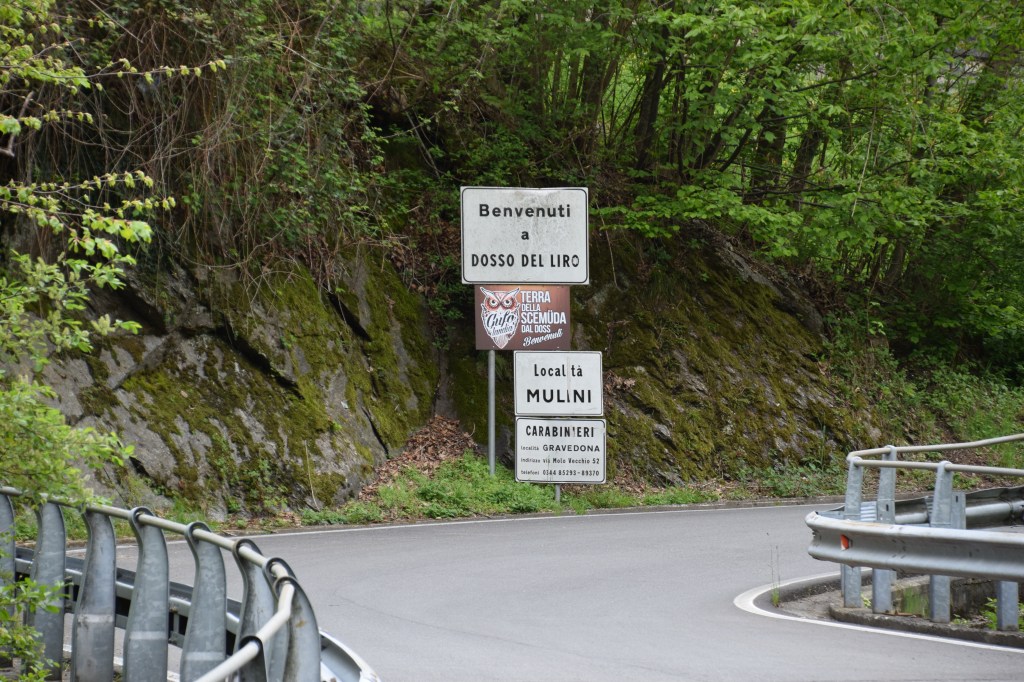
Mulini is a tiny frazione of Dosso del Liro with only 26 year-round residents. It lies at 490 meters above Lake Como on the western side – 160 meters below the larger village that claims it. There is not much here and the old mills that lent their name to the village are no longer in service.
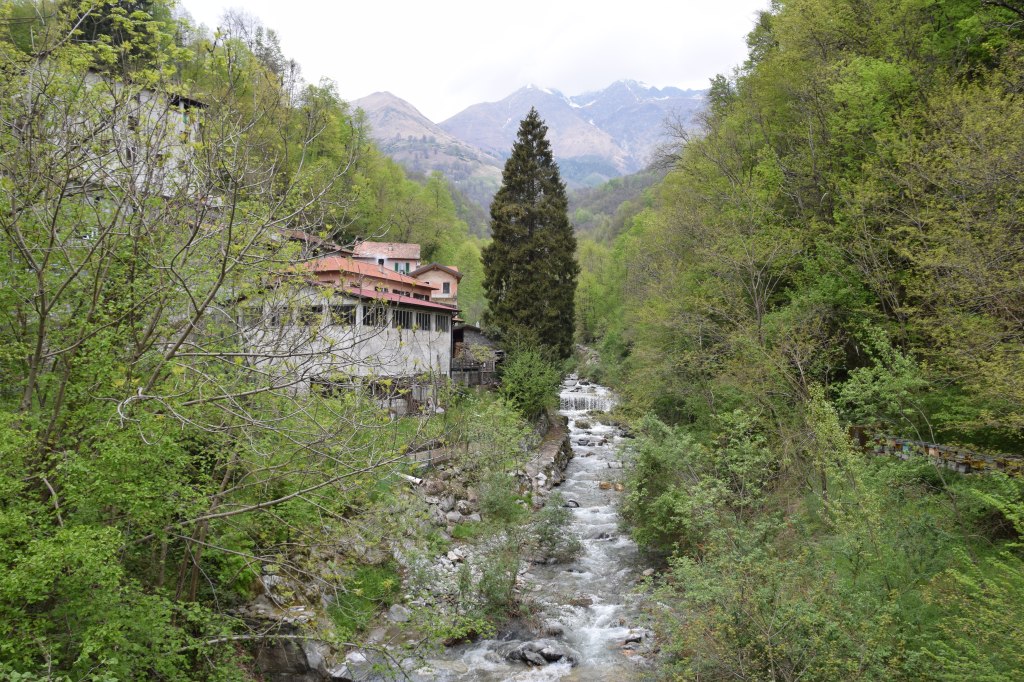
At the heart of Mulini lies an old mill. Although no longer functional, it remains perhaps waiting for a cultural renewal! The homes surrounding it are still occupied as this area has fresh air, mountain and lake views, and easy access to the services that make modern life easy.
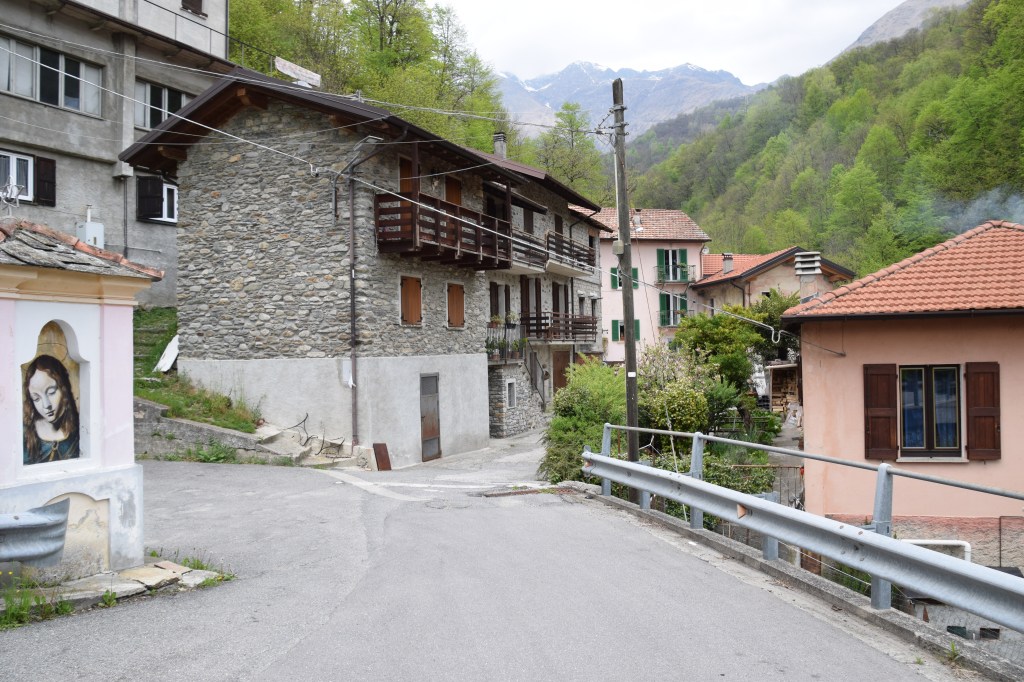
The tiny village has only one short road, mostly renovated homes, and a few public parking spaces. The lone Madonna shrine was restored, the original frescoes being lost to time and the weather.
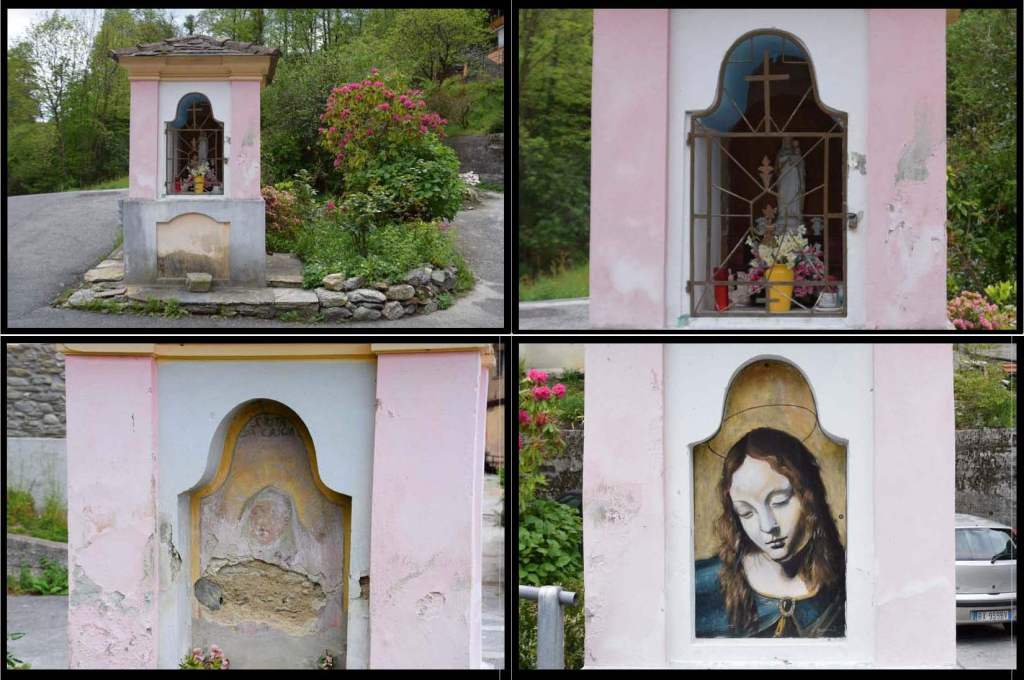
The roads through any village will have a shrine to bless your travels and offer you the respite of prayer. This is a montage of the Madonna shrine on the road leading to Mulini. It is common that the interior of a shrine presents the Madonna and child flanked by relevant saints – often those who guard against the plague or the patrons of the towns. To the interior right and left of the Madonna will be other important saints – Peter and Paul, Joseph and Antony Abbot, Catherine and Claire – are choices found throughout these mountains. Then the three outside walls, also, might be frescoed with a crucifixion on the rear of the shine being common. This shrine preserves the remaining image of Saint Rita, replaces a saint with a modern image of the virgin, and replaces the interior frescoes with a statue of Mary holding the infant Jesus.
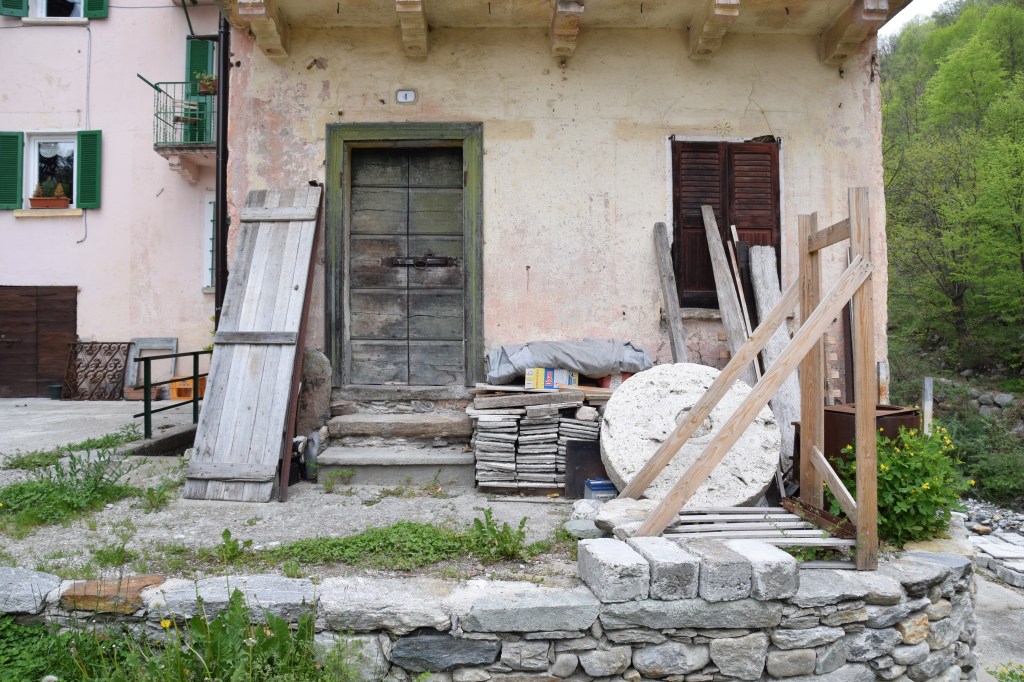
This previously renovated small home has a millstone lying in front and a lovely, old, wooden door – likely original to the home. These old stones are often preserved by the towns to speak to the former history and kept as part of the home by the families as testament to the professions of their ancestors.
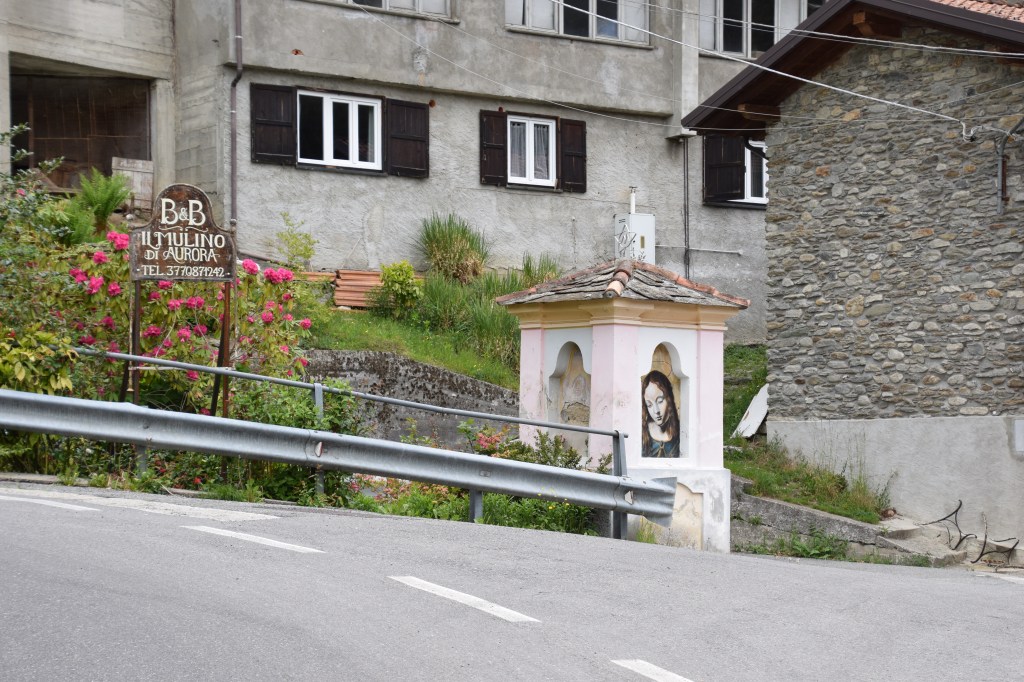
Tiny as it is, Mulini offers a pretty Bed & Breakfast – Aurora’s Mill. A B&B is a fabulous and affordable way to visit out-of-the-way places too small or not touristy enough to have hotels. Italy has many wonderful B&B’s, and Aurora’s Mill is situated where there are lovely walks and lots of history for those who cannot afford a hotel or might not want to stay amidst the crowds on the lake.
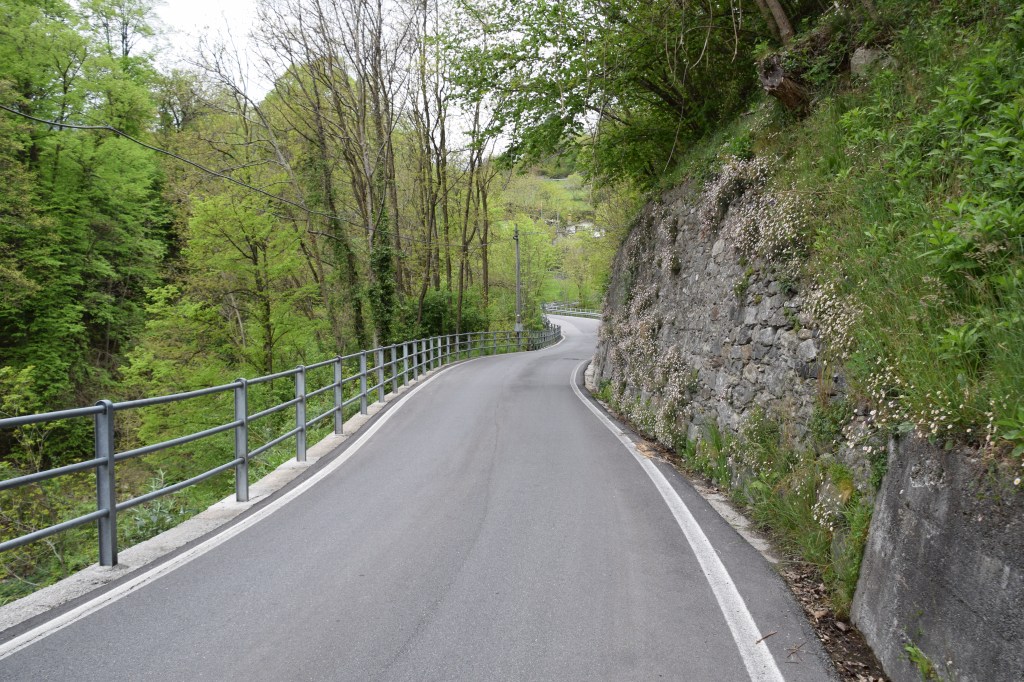
One reaches the villages above the lake by provincial roads. Some of these roads are narrow – a scant one car wide – and some – like this one – can host two cars going in opposite directions. This is Strada Provinciale 4 – SP4 – the road from Gravedona on Lake Como that leads to Mulini and whose two branches end at Dosso del Liro to the west and Livo to the east.
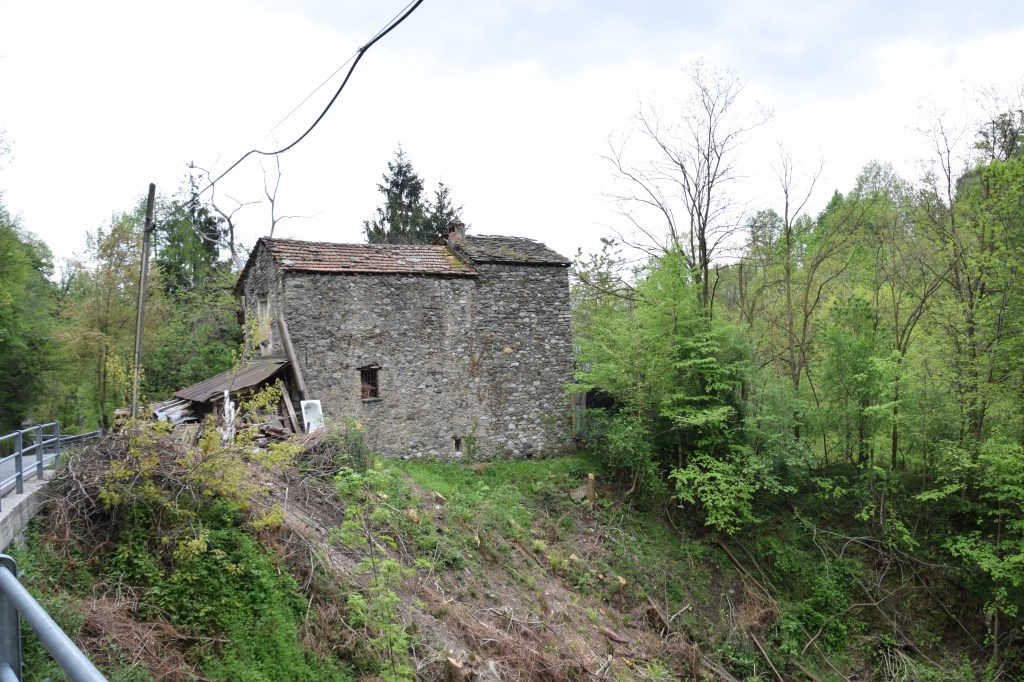
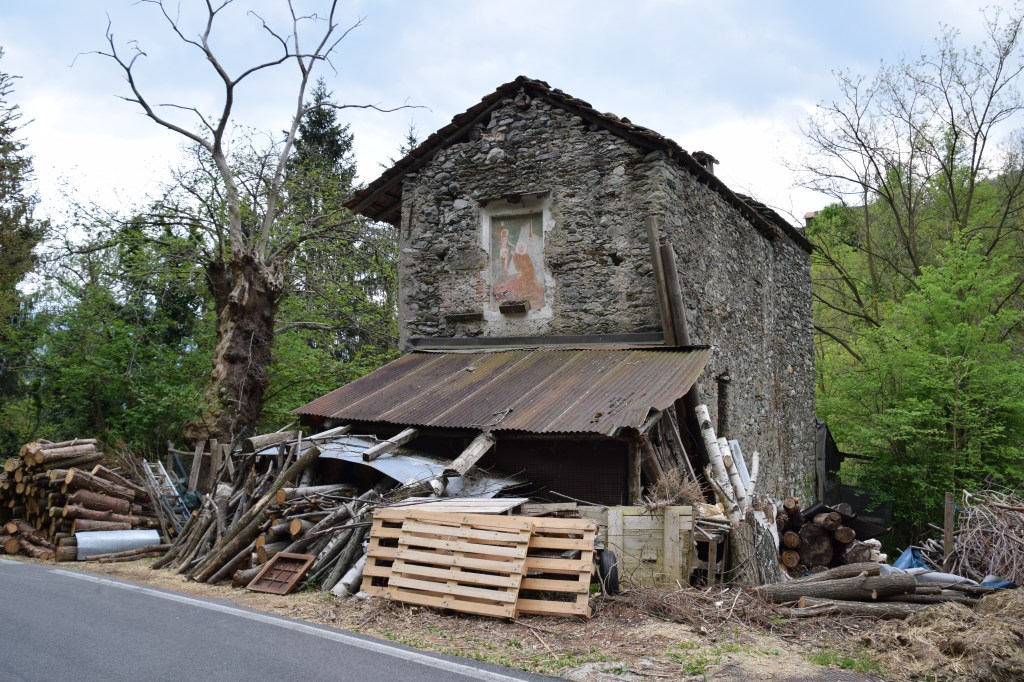
To close this brief narrative is a full, side-view of the home with the fresco featured in this post. Dating at least to the 18th-century, this home fronted the old road into the mountains. The new, wider road likely robbed this old home of its front yard. When SP4 ends in both Dosso del Liro at 690 meters and Livo at 675 meters both roads continue as Strade Agro-Silvo-Pastorale (Agricultural, Forestry, and Pastoral Roads) high into the mountains ending at tiny borgos used only in summers to pasture animals and lacking public utilities. These roads are maintained by the local communities and are narrow, not always paved, and lacking guardrails. They are not for public use but can be accessed by buying a ‘ticket’ that usually costs fewer than 5-euros.
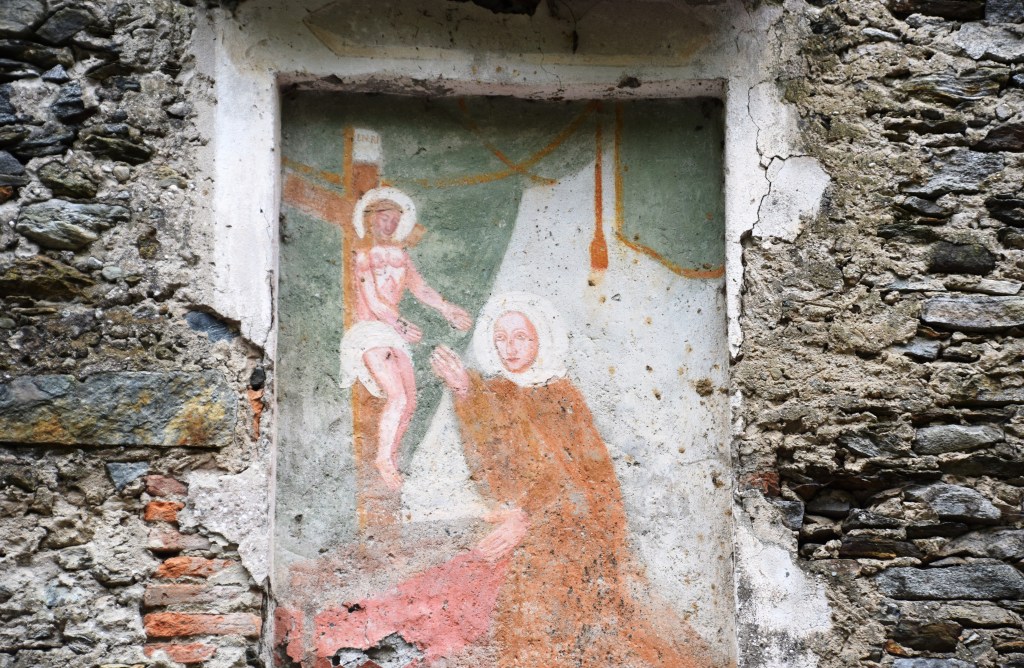
Mulini and this wonderful fresco are worthy of a visit.
 Wall Madonna's of the Valtellina