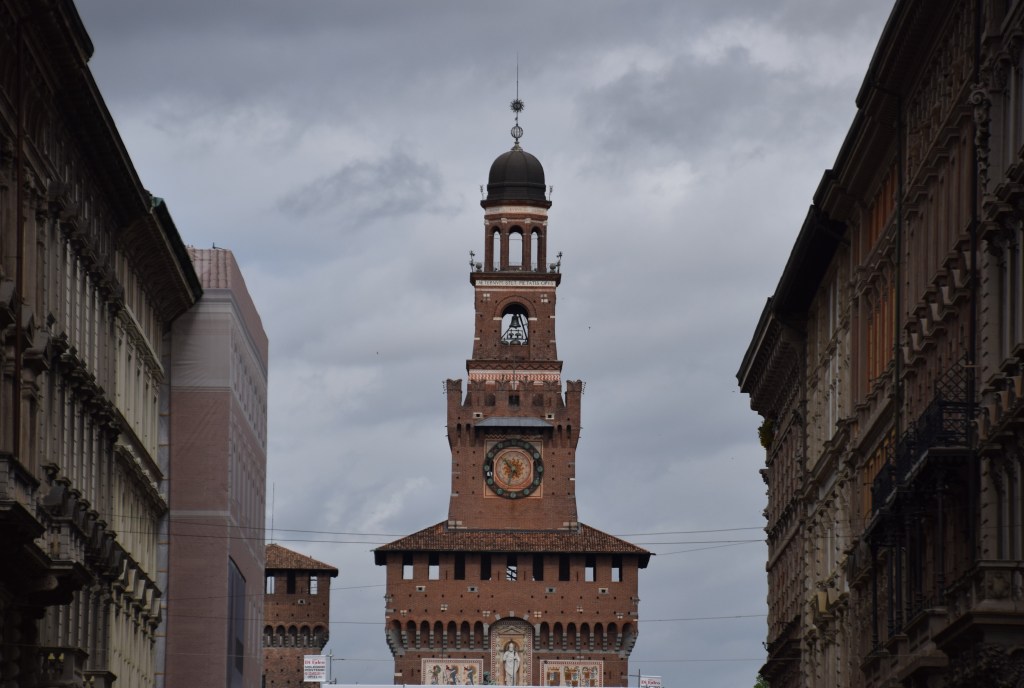
These are a few selections from the museums of the Castello Sforzesco. These museums offer a very diverse collection of art and they are worth spending a leisurely day perusing. This is a brief visual narrative not dedicated to my usual focus – the Madonna.
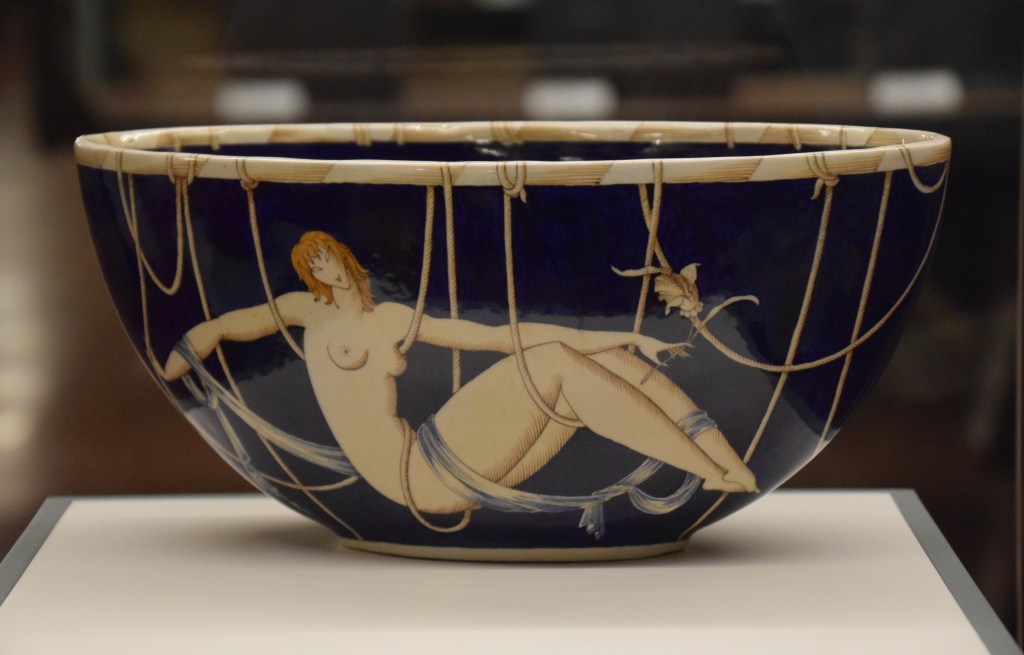
This exquisite bowl is testament to Ponti’s talent as an artist and decorative arts visionary. I love it and even in a display where it was not central to the eye, it catches one’s attention and draws one in. Gio Ponti – the artist – had many talents and worked as an architect, industrial designer, furniture designer, artist, teacher, writer and publisher. He designed over 100 buildings in Milan. The Pirelli Tower (1956) is his most famous. This 32-story skyscraper was built on the location of the 19th-century Pirelli Tire factory – the company’s first factory. Arturo Pirelli hired Ponti to realize his dream. Although I do not understand the meaning, this skyscraper is considered to be innovative and having added to the ‘language’ of skyscrapers since the structural design forwent the use of the block form using a curtain wall facade instead that carries no structural load and accommodates the sway of a very tall building. The World Trade Center was built with a curtain wall system which contributed to its collapse after a terrorist attack.
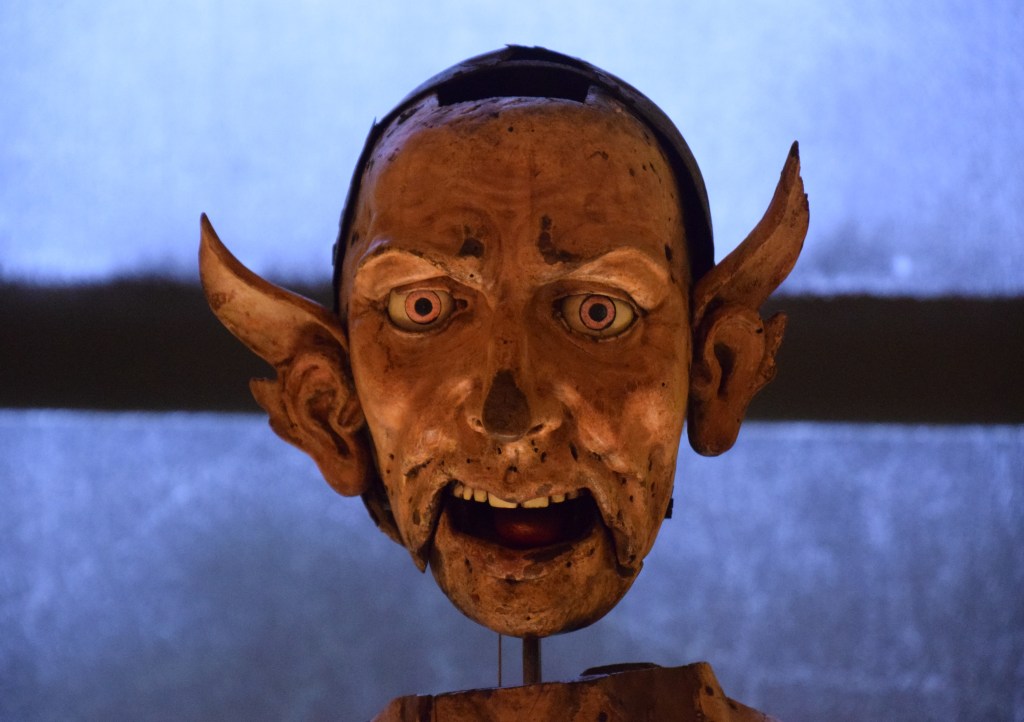
This is the very eerie looking head from a devil automaton built in 1600. A few glasses of wine, a candle lit room, and this animated head would make one believe in Satan!
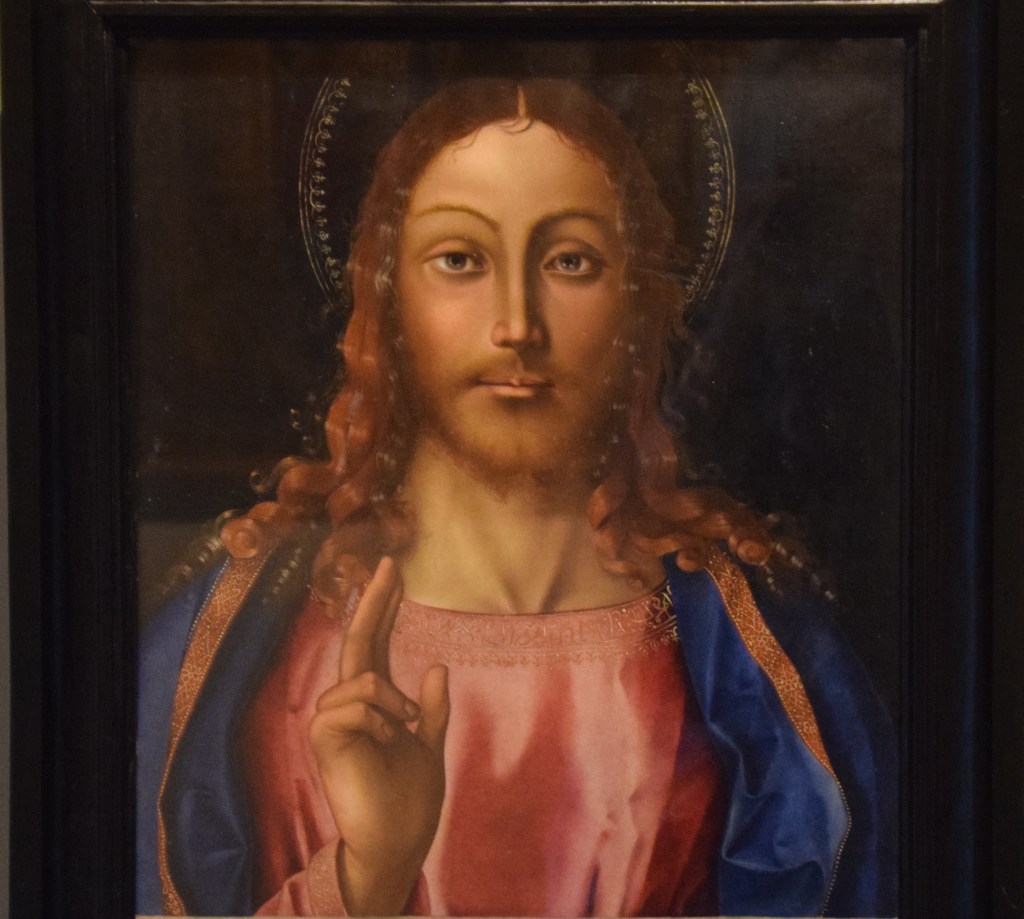
I really like this colorful Jesus – bright and almost happy looking. If one stands close enough, one can see that the painter carefully painted each strand of Jesus’ auburn hair. The techniques used to create this oil-on-wood painting come from the Flemish culture used from the 1400’s in Italy.
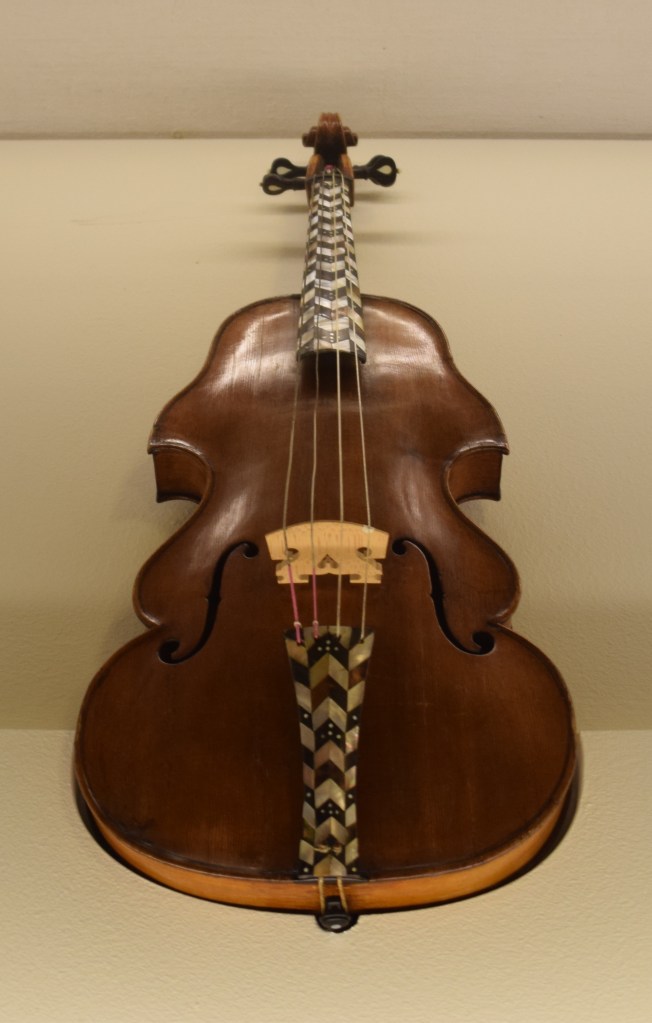
The museum has an astonishing collection of musical instruments. This viola is still played in important musical venues. Giovanni Grancini was born in Milan in 1637 to a family of musicians of which he was one. However, he extended his art to the profession of luthier. He was a traditionalist who resisted change and, hence, like its maker, this viola is considered a Milanese treasure that speaks to the historic Lombardian traditions lost to the ‘improvements’ of modernity that Grancino was certain would little ameliorate the voice of his creations.
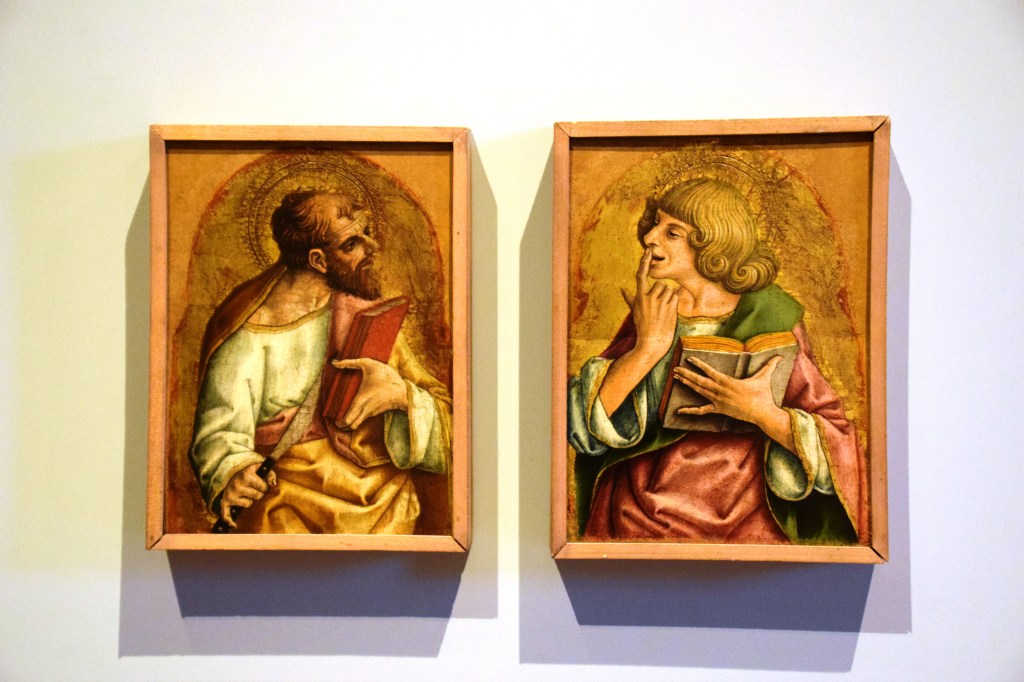
These two works were painted in 1472 by Carlo Crivelli. Carlo Crivelli (1435-1495) was a Venetian painter whose style is so distinctive as to make his paintings identifiable by someone like me – a casual consumer of Italian sacred art. Crivelli’s life was as distinctive as his style and, indelibly marked and altered by the six months in prison and banishment from his hometown of Venice that he endured for the crime of adultery with the wife of an absent sailor – a woman no one could call an Evangeline!
Privately owned until 1881 when they were donated to the city by Giuseppe Levis, I can imagine Senore Levis’ delighted gaze. Here is San Bartolomeo – holding the instrument of his martyrdom – the knife with which he was flayed! I think his emotive look says “You want to do what with this knife?!” And so too San Giovanni Evengelista – holding the gospel that bears his name! To me, he seems incredulous as if to say “I wrote this?!”
I like feeling as if I have learned something from all my excursions and when I correctly identify a Carlo Crivelli I am happy!

This beautiful work shows Saint Helena – holding the ‘true cross’ – the original cross of Christ which she is credited with finding in Jerusalem. Empress Helena was the mother of Constantine I who made Christianity ‘legal’ in the 4th-century. The legend of the true cross has Helena finding three crosses and bringing a dying woman to the site. The woman touched the first two crosses with no result. When she touched the third cross she immediately recovered. Queen Helena declared that this third cross must be the true cross of Christ. And – to add to the tale – Helena found the crosses as a result of ordering a pagan temple to Venus destroyed. As her workers began to excavate the site in order to build a Christian church they found the three crosses.
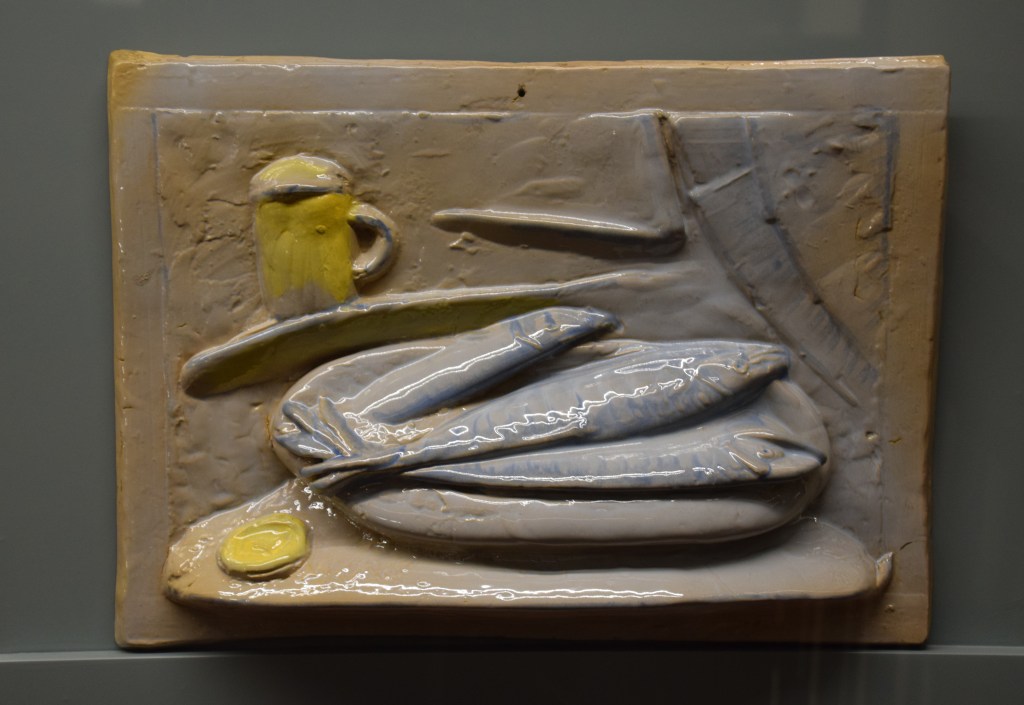
Arturo Martini was an important Italian sculptor between WWI and WWII. He is considered to have used two styles – Roman Classism and Modernism. One can find his work all over Milan. I really like his work!

I love this beautiful Orante and like to imagine it is an ancient image fo the Virgin although it is not identified as such. I am always awed that cloth with it bright dyes can survive the millennia.
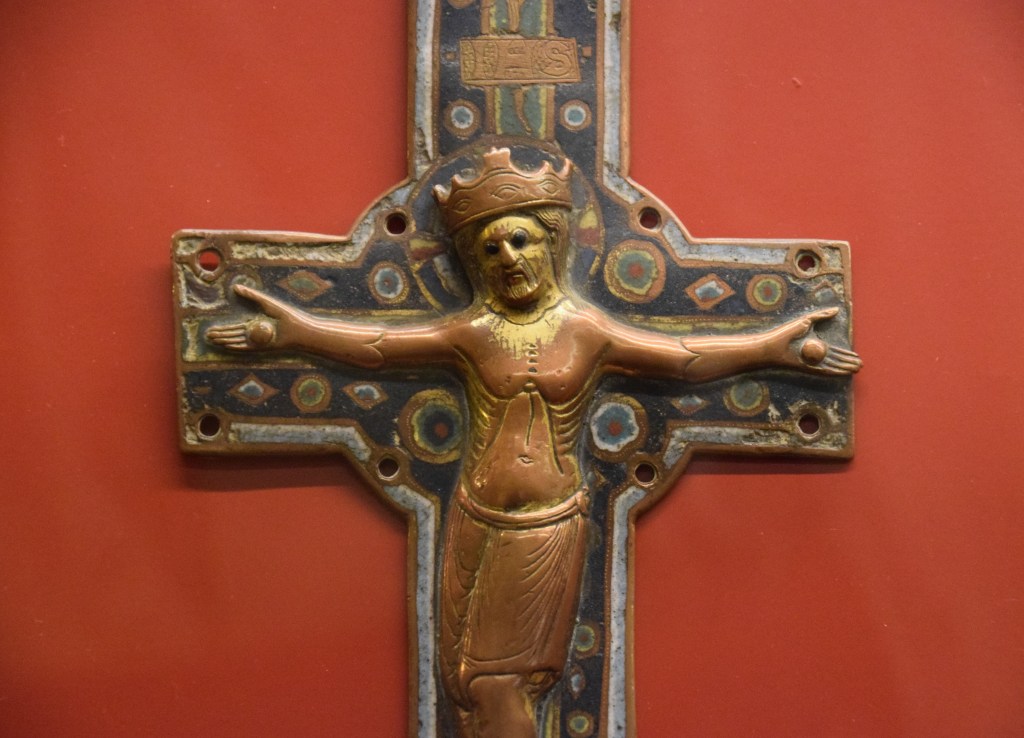
This wonderful crucifixion was made in France. The technique of creation is called ‘champlevé’ which is “enamelwork in which hollows made in a metal surface are filled with colored enamels.” I really like this beautiful work!

A fitting conclusion to this visual narrative is a beautiful art object heralding the family to whom we owe our thanks for the incredible Castello that houses these museums and the fabulous 95-acre public park that surrounds it. This is the merged coats-of-arms (stemmi) of the Visconti family (snake eating a man) and Sforza family (eagle) that was created when Bianca Maria Visconti (1425 –1468) married Francesco I Sforza (1401-1466).
Enjoy these wonderful works of art on your own with a visit to Milan!
 Wall Madonna's of the Valtellina