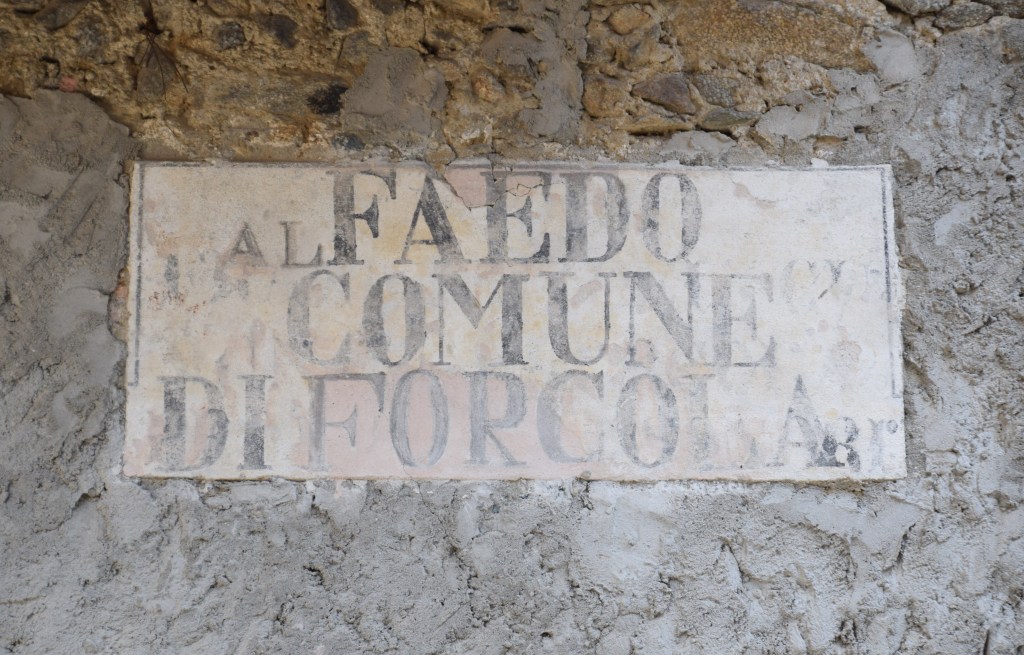
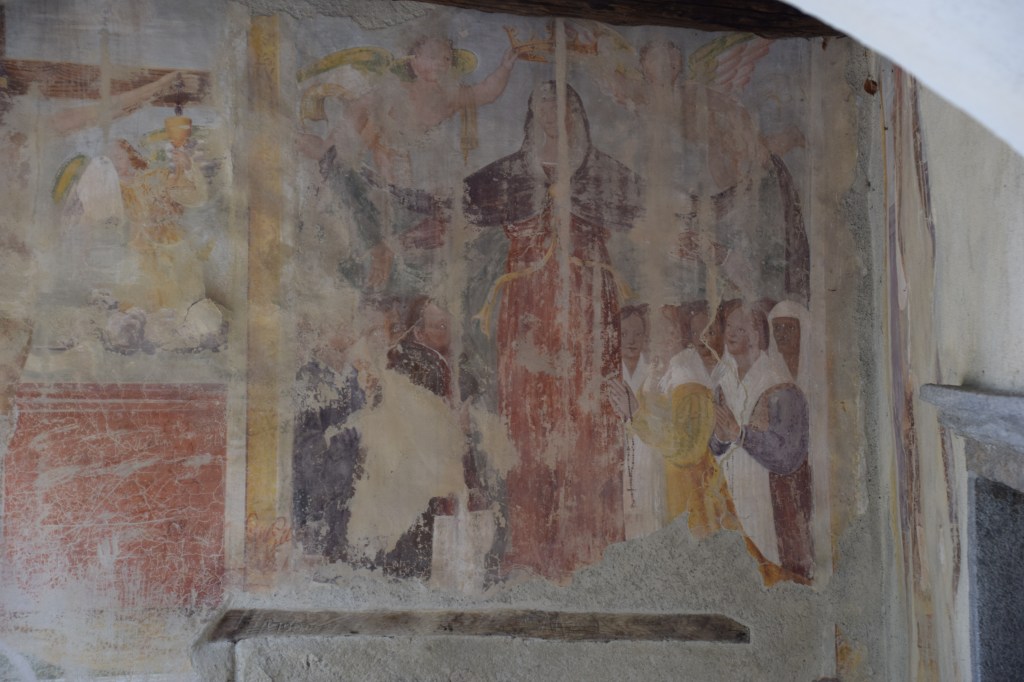
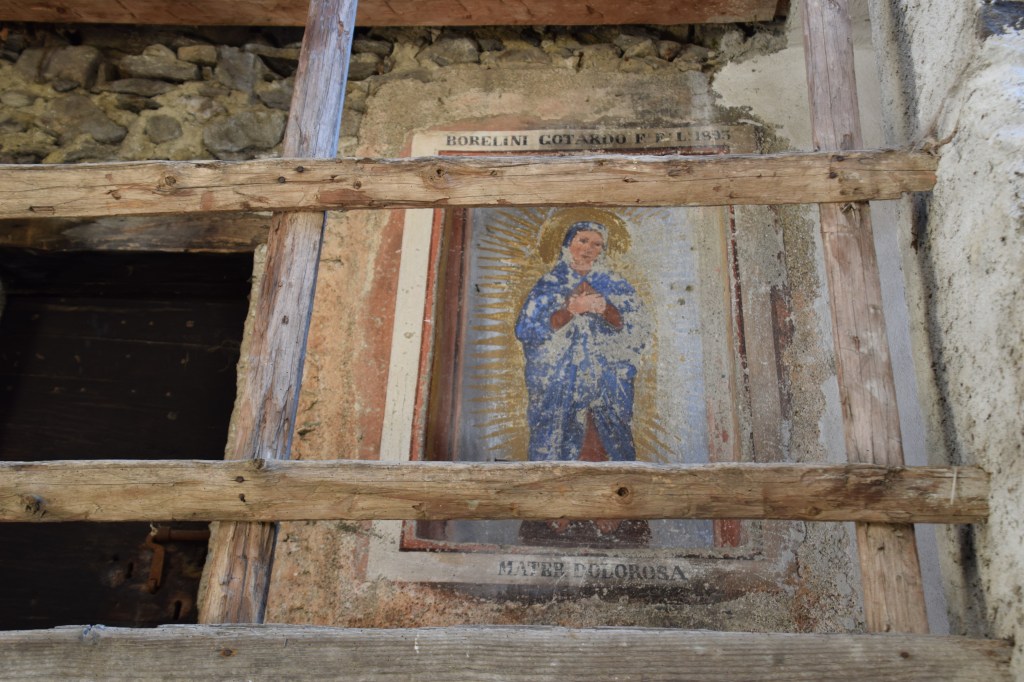
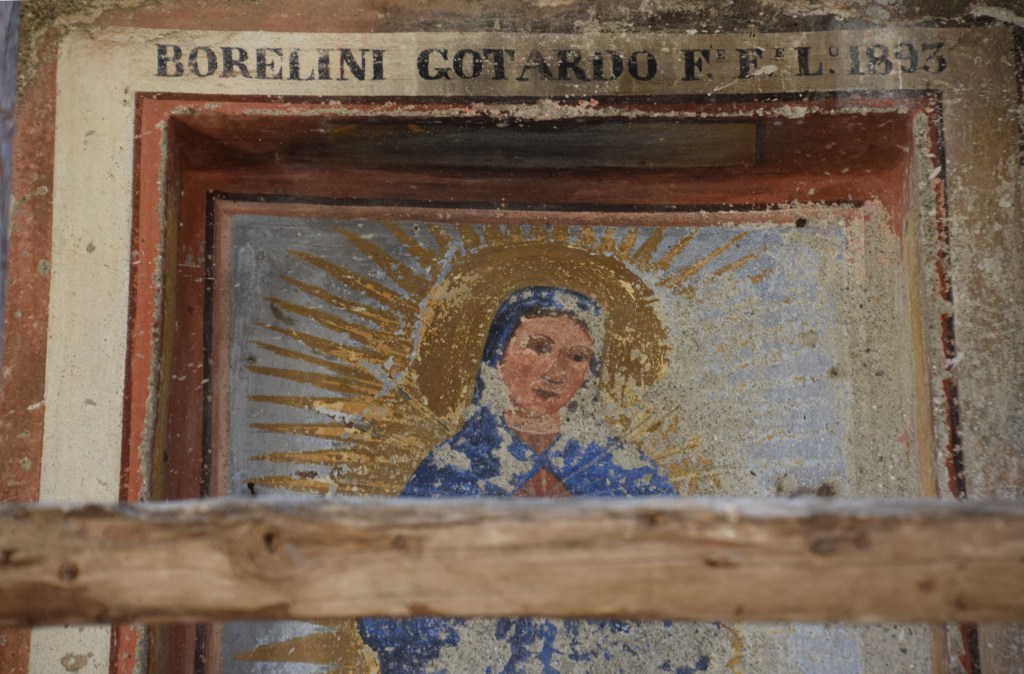
This blog is dedicated to the Wall Madonna’s of Alfaedo and to my research on the provenance of the Alfaedo Wall Madonna with a dedication naming ‘Gotardo Borelini’.
I returned to Alfaedo to visit the local cemeteries. I sought information on the Borellini family in order to understand the dedication on the Gotardo Borellini Wall Madonna that I previously featured in a narrative. Having a discernible provenance on a fresco is a rare treat and I was excited to take advantage of the opportunity to find more information about the family.
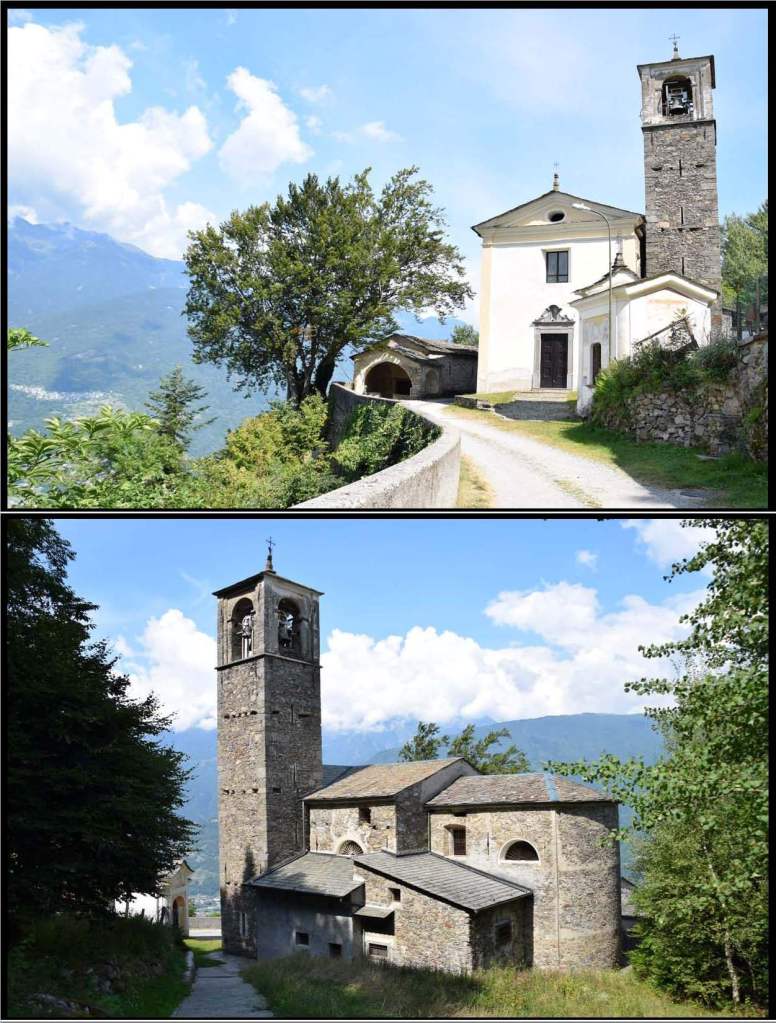
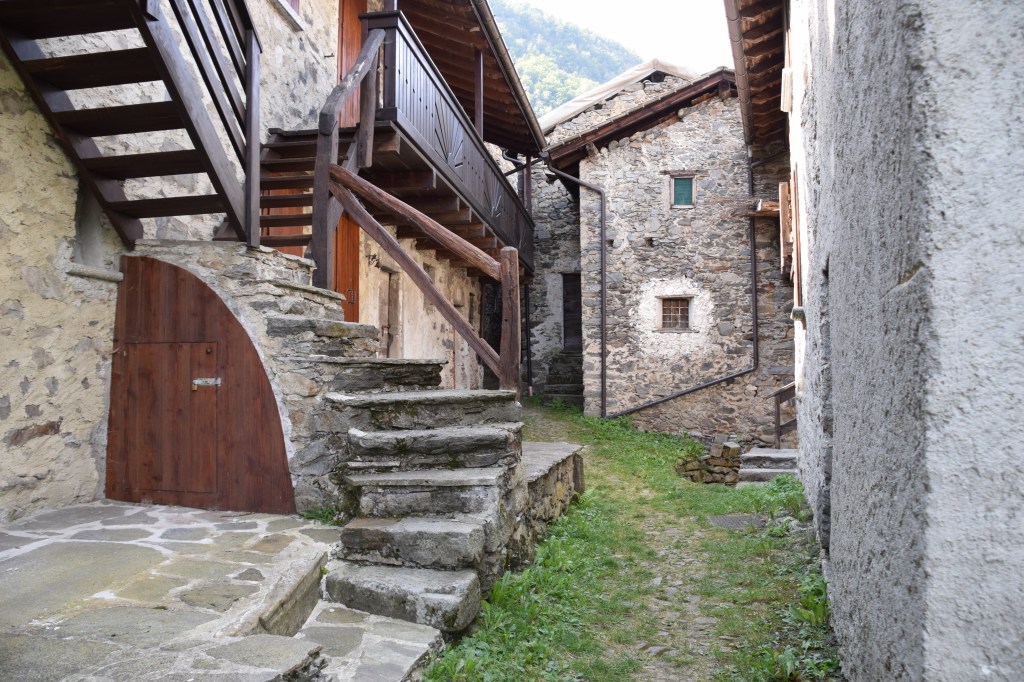
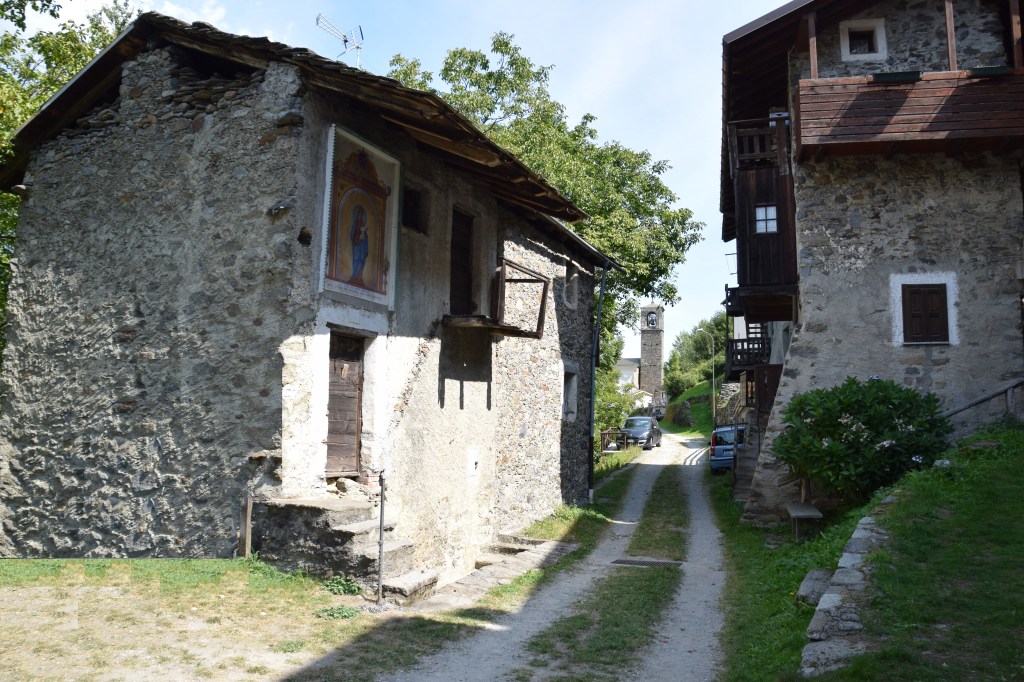
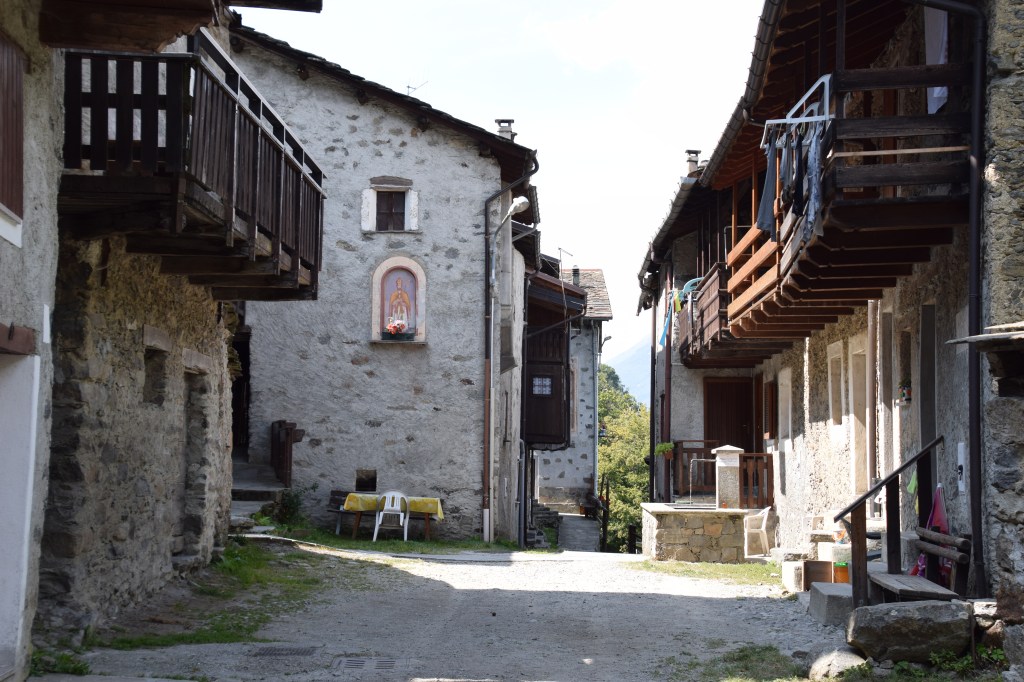
To refresh your memory, Alfaedo is reached from Selvetta on the Orobic side of the Valtellina. The village sits at 803 meters and belongs to the comune of Forcola. Once an important town populated year-round by many families, it is now a weekend and summer destination of those who inherited their homes there and others, who – seeking the fresh mountain climate – bought and rehabbed vended houses no longer used or wanted by their former owners. Because of the isolation of the mountain frazioni, località, and prati, and the lack of change brought to homes used as sole residences there, many of the original Wall Madonna’s still grace the outside walls of the – often crumbling – stone houses.
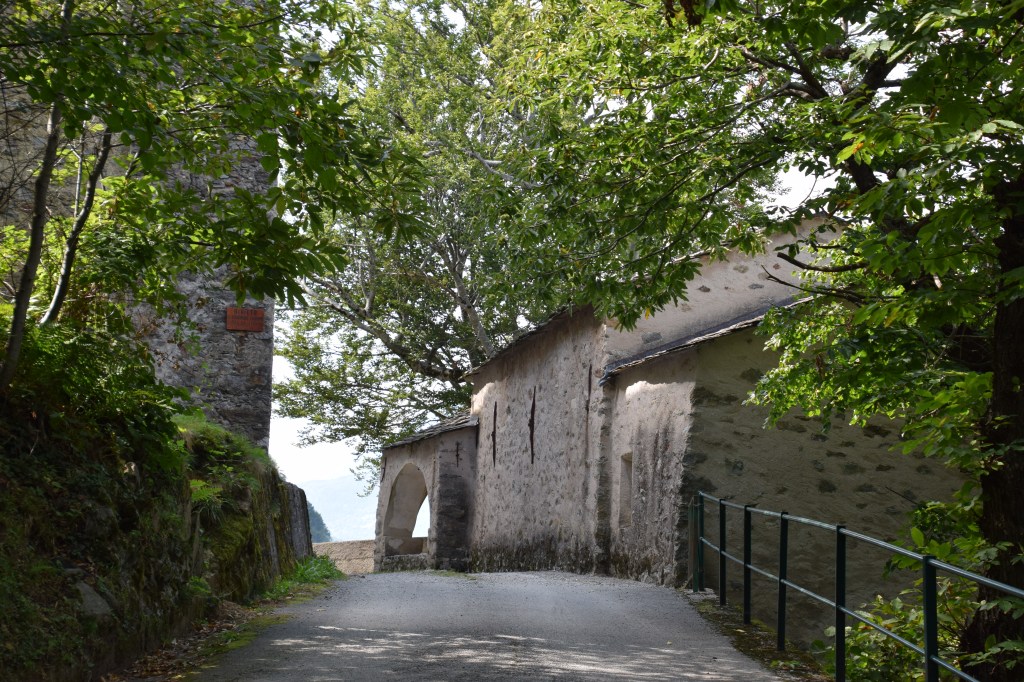
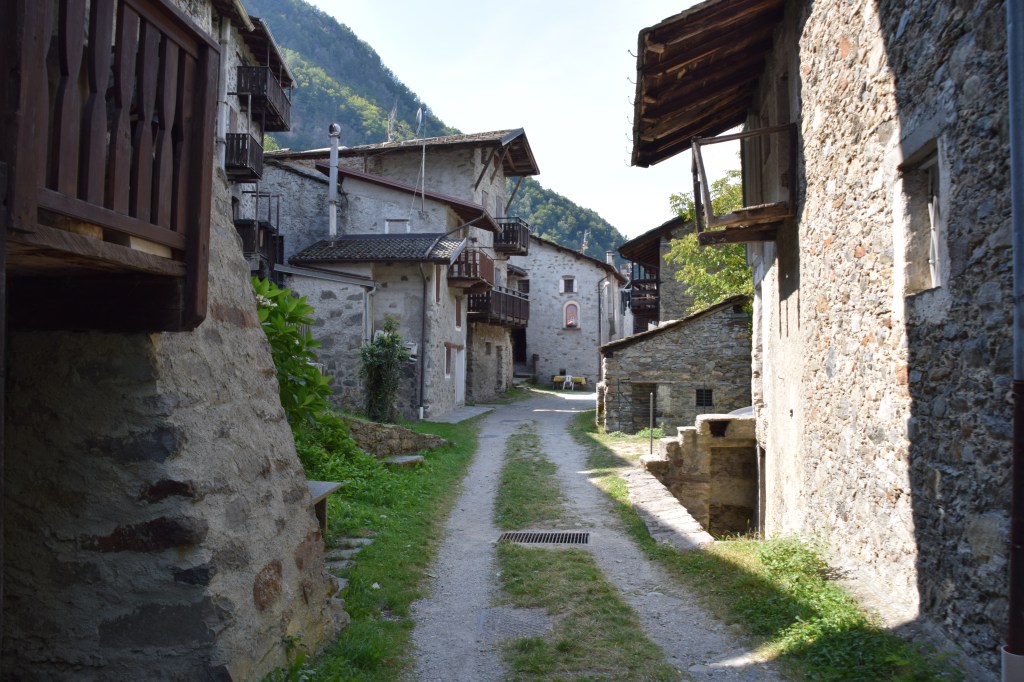
As I mentioned in my first gift of an Alfaedo fresco to my blog, I had not intended to visit the frazione but, “Fate and fresco passion intervened, and here I found 12 Wall Madonna’s and a village that felt important and lived in. Like comfortable clothes and cozy slippers, Alfaedo welcomed me. I really liked it here.”
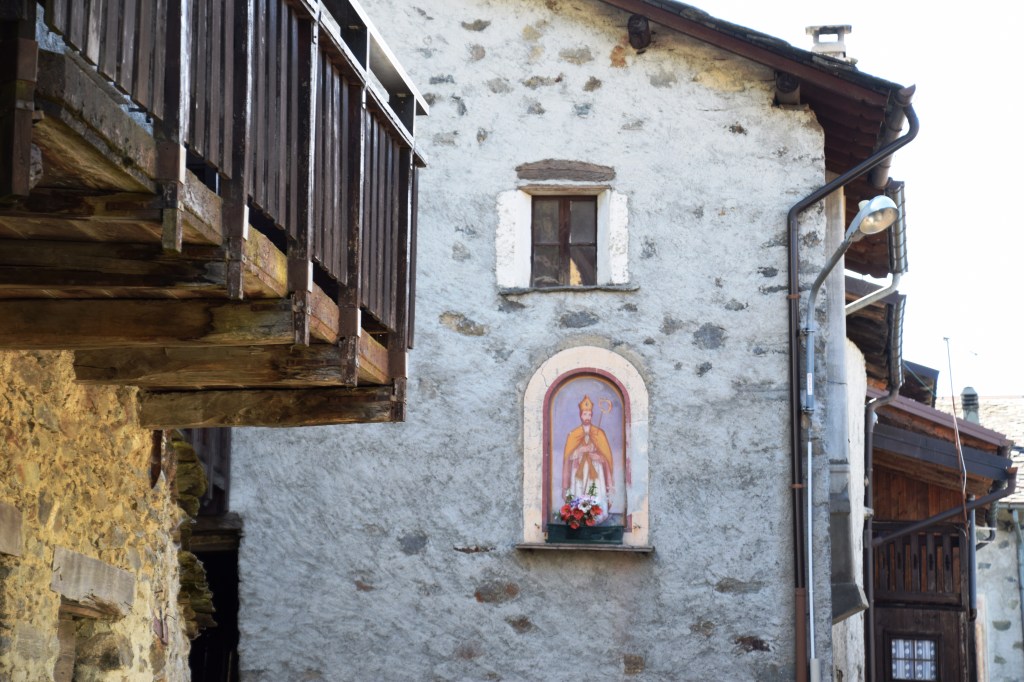
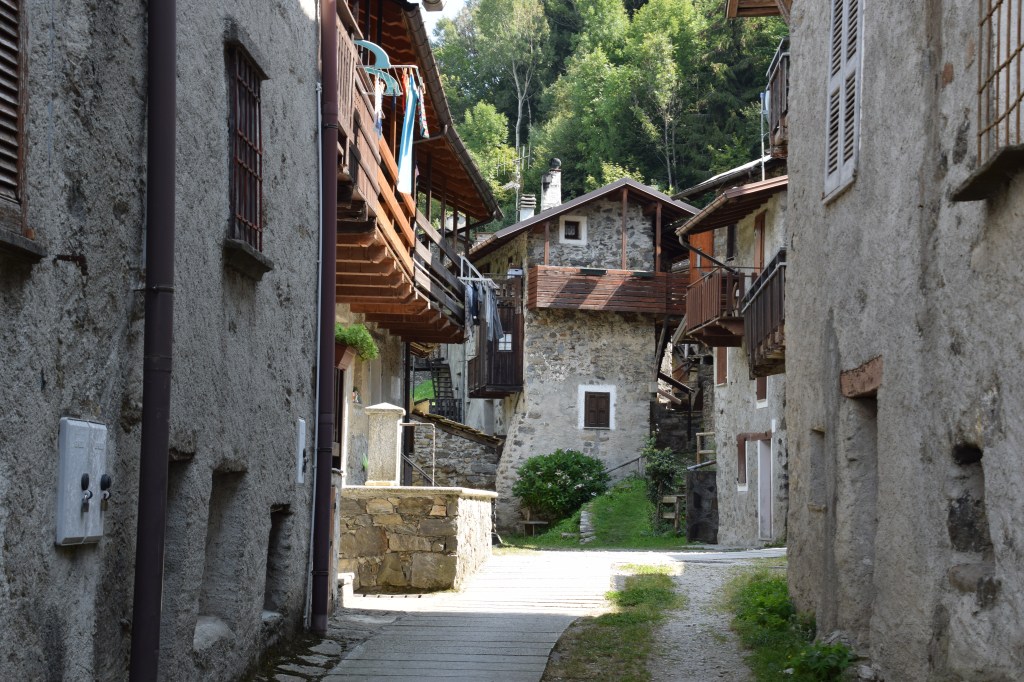
Hence, I was eager to return to see what I could find out about the Borellini’s of Alfaedo. Cemeteries are a great place to start one’s research as local inhabitants are generally buried locally and if not interred in the village in which they were born, they will commonly be mentioned in the cemetery with a cross bearing their name.
Identity is important to the families here and towns forever claim their natives no matter where they may have spent other years of their lives. That being said, burial practices in Italy restrict one’s ability to easily search the years before the 19th-century.
Prior to that people were buried in tombs in the floors of churches, or interred elsewhere until their bones could be dug up and placed in the large ossuary one often finds adjacent to the parish church in Italian towns. Records of whose bones were put where are part of the archives of the local churches. I have never found any cemetery in the Valtellina with a tombstone date that precedes the 19th-century. That does not mean such do not exist. It simply means I have never found one and it is my practice to visit the cemeteries associated with the towns that I visit.
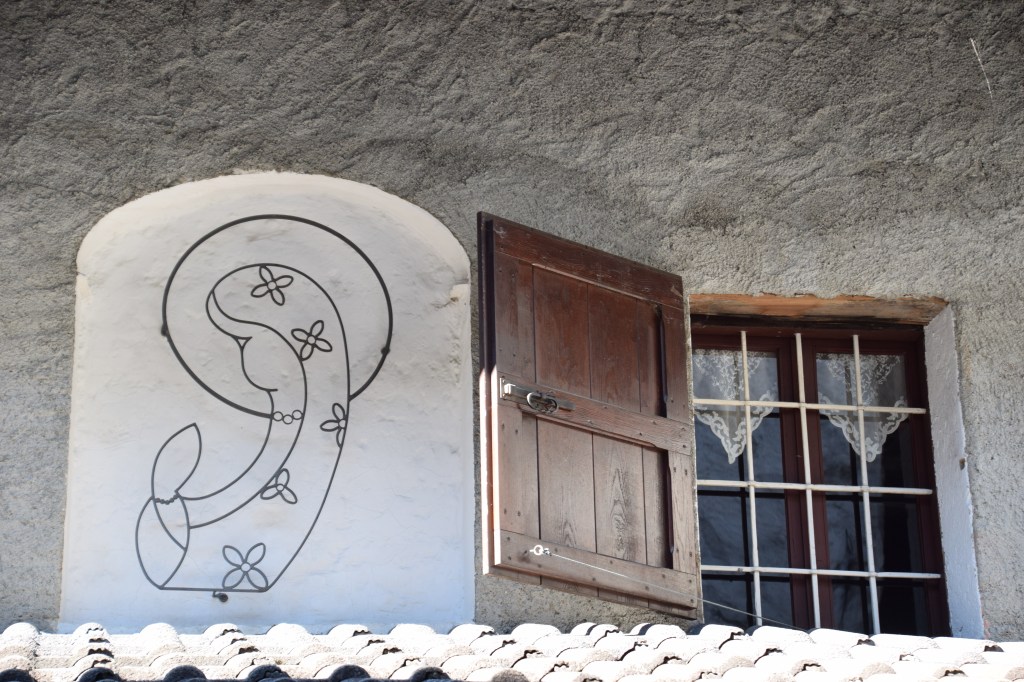
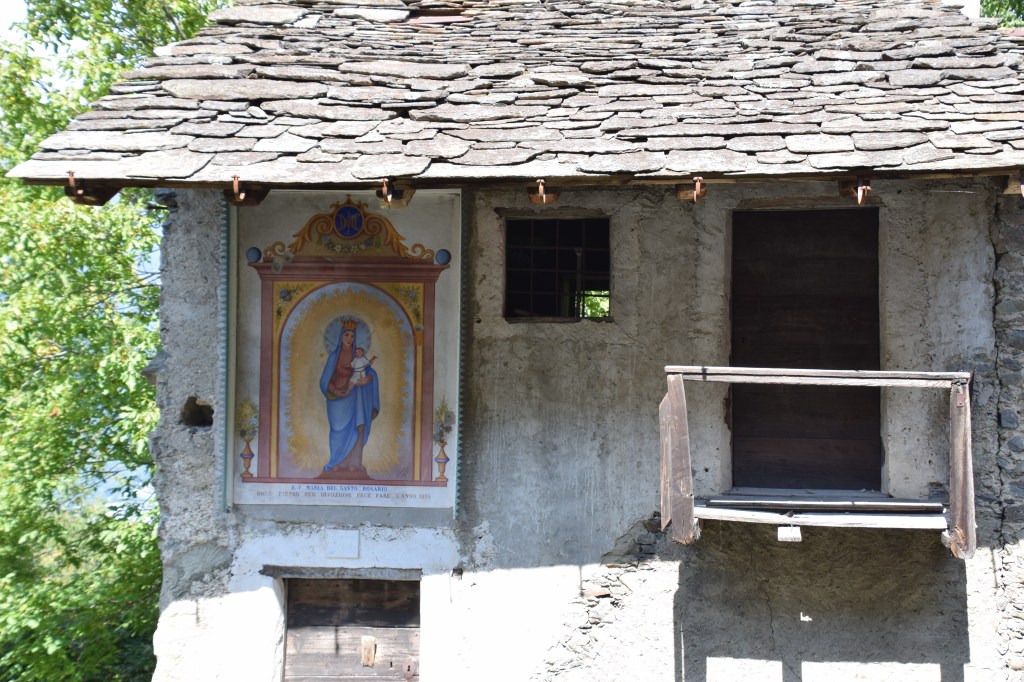
But Gotardo’s Wall Madonna was dated 1893 making the cemetery a good place to look for his family information. After three days of research – in five cemeteries and online – I discovered that Gotardo Borellini (the correct spelling) was born in 1888 and very likely died before or in 1893 – the year of the dedication. Thus, his parents may have had this Wall Madonna – a Mater Dolorosa – made to commemorate their grief and his short life. And that may be why the fresco is a Grieving Mother – Our Lady of Sorrow – who grieves for the death of her child.
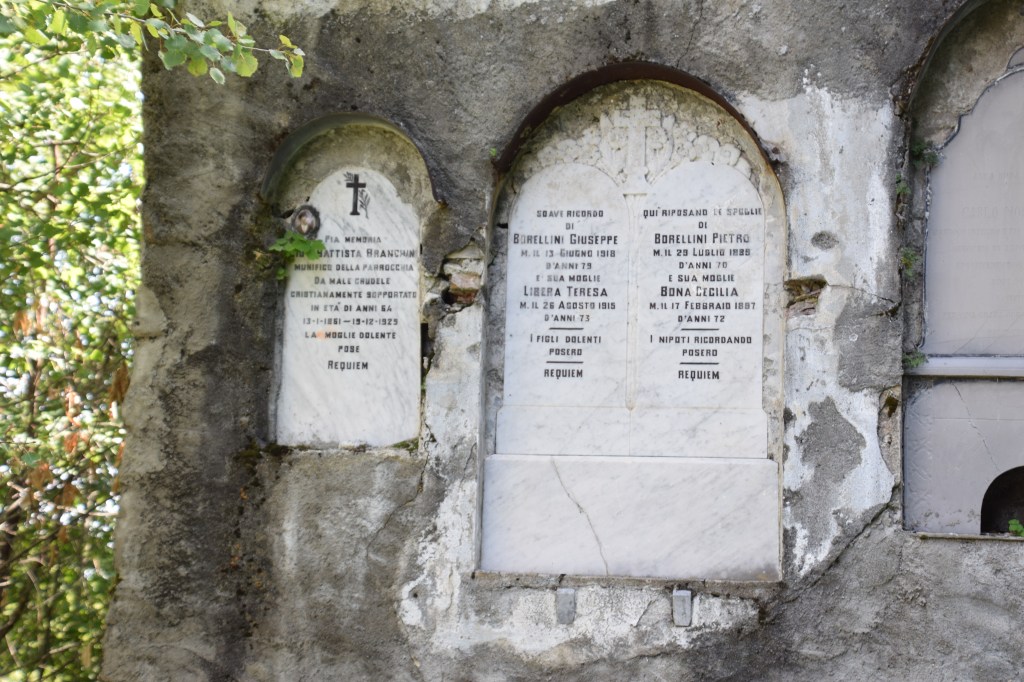
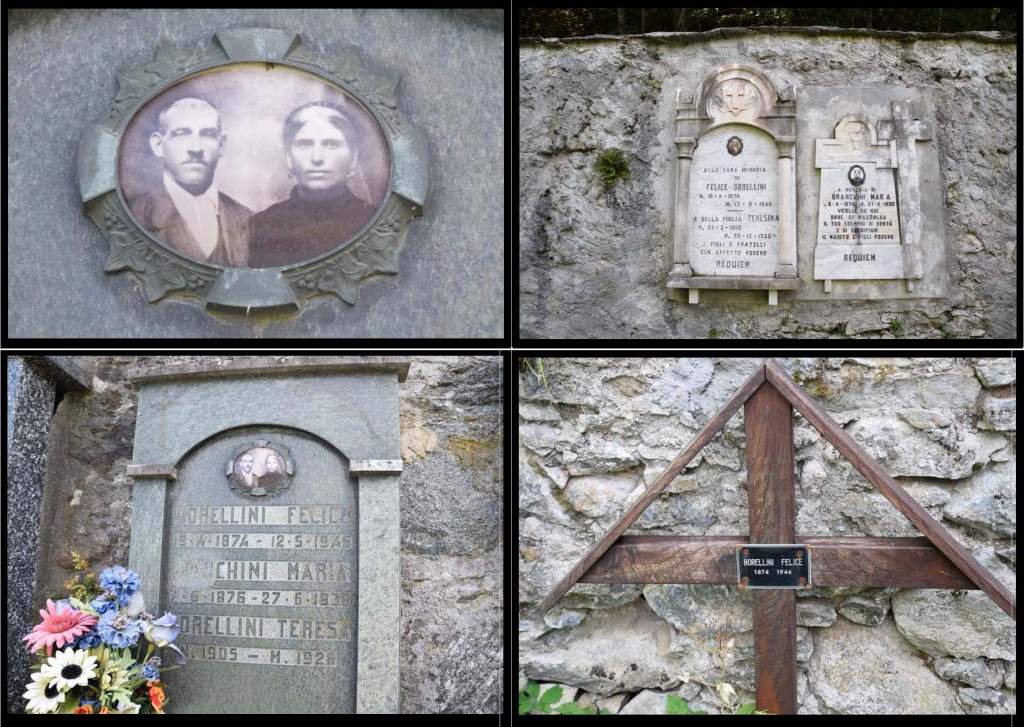
Gotardo Borellini (Alfaedo 1888-1893?) was the son of Giuseppe Borellini (Alfaedo 1840-1918) and Teresa Liberi (Al Prato 1842-1917). His siblings were Rosa Sabina Borellini (Alfaedo 1886-?) and Felice Borellini (Forcola 1874-1948). There were tombstones for Giuseppe, Teresa, and Felice but no stone or marker for Rosa Sabina or Gotardo in the Alfaedo cemetery.
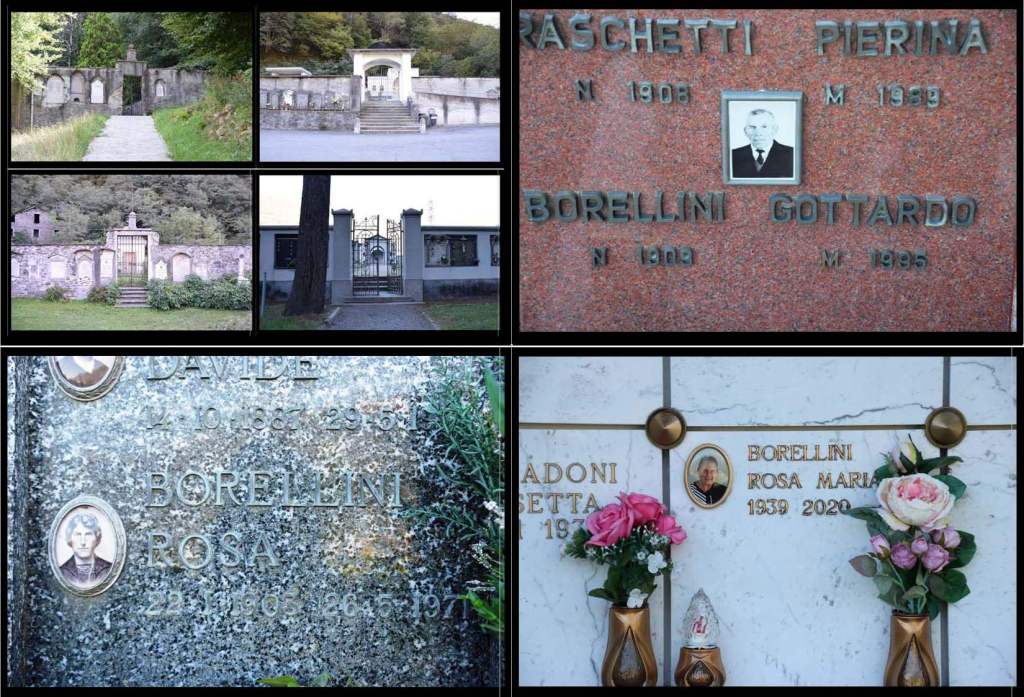
In order to be thorough, I searched four other Comune di Forcola cemeteries in the valley for Borellini’s and Borelini’s – the surname on the fresco. I checked the older Selvetta cemetery in the valley which had thirty-eight Borellini’s and also contained a tombstone that recorded the deaths of Felice Borellini and his wife – Maria Branchini – and daughter – Teresina. This cemetery, also, had one ‘Gotardo Borellini’ who was born in 1909 and died in 1995, and two Rosa Borellini’s. There were no Borellini’s in the newer Selvetta cemetery – which is close to the 14th-century Chiesetta di San Giacomo located about 100 meters east of Selvetta. Just outside Sirta in the località of San Gregorio – a tiny borgo originally called Il Porto di San Gregorio where the original inhabitants ran a ferry service in the 15th-century – I found one Borellini. This cemetery is attached to the Chiesa di San Gregorio and is called the Ex-Cimitero di Forcola-Localita’ di San Gregorio. In the newer Cimitero di Forcola-San Gregorio – also associated with Sirta – I found two Borellini’s. And, of course, the Alfaedo cemetery – associated with Selvetta – had four Borellini’s two of whom – Felice and his daughter Teresina – as previously mentioned are found in the Selvetta cemetery. None of the Borellini tombstones in any of the cemeteries displayed the surname spelled with a single ‘l’, i.e. ‘Borelini’ – as the name is found spelled on the 1893 fresco. All Borellini tombstones in all four cemeteries reflected the double ‘l’ spelling – ‘Borellini’.
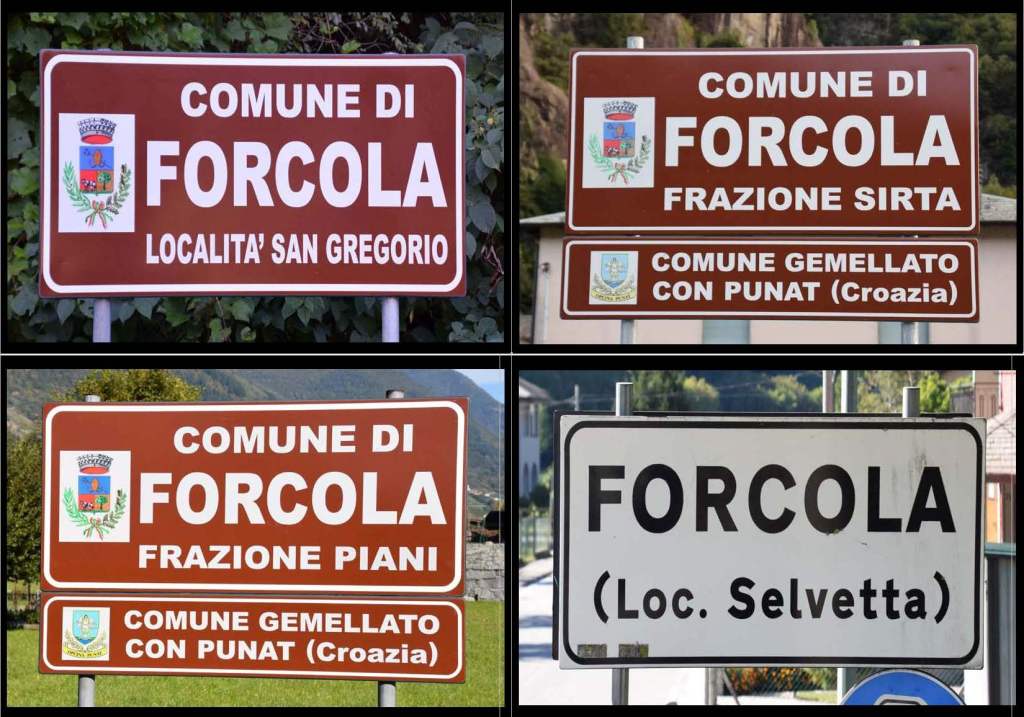
There is no village named ‘Forcola’. That there is a name without a village attached to it is a curiosity. The original territory called Forcola was formally established in the early 14th-century and was located across the Adda River. Forcola never was a village in and of itself. The only inhabited centers of the current Comune di Forcola reachable by a paved road are Piani on the Rhaetian side of the Adda River and – on the Orobic side – Sirta and the even less populated Selvetta. The rest of the comune hamlets are tiny – like the localita’ San Gregorio – and hidden in the forests of the mountains – some reachable by carriage roads and others only accessed by old mule tracks. The village that lays on the Valtellina map in the place indicated as ‘Forcola’ – on the map and in signs – is Sirta. The only carriage road to Alfaedo – where the 1893 fresco is found – begins in Selvetta. The original roads – the mulatierre – lead to Alfaedo from both Sirta (to the west) and Selvetta (to the east).
This large territory – 15.7 square kilometers – which extends to the Val di Tartano and the Val Madre, originally was part of Ardenno – the town across the river on the Rhaetian side of the Valtellina. But a search of available histories will show that the legal loyalties and boundaries of Forcola reflected the changing land ownership of the Milan nobles. The Forcola cemeteries in the valley that memorialize Borellini’s are associated with Sirta and Selvetta and the localita’ just south of Sirta – San Gregorio.
Often, cemeteries marked the graves with a wooden crucifix painted with the name and the years of birth and death. These deteriorated over the years and were sometimes supplemented with a stone marker. Nothing is ever discarded and in these small local graveyards newer stones are placed near to the deteriorated original markers or those markers are piled up in a corner of the enclosed graveyards.
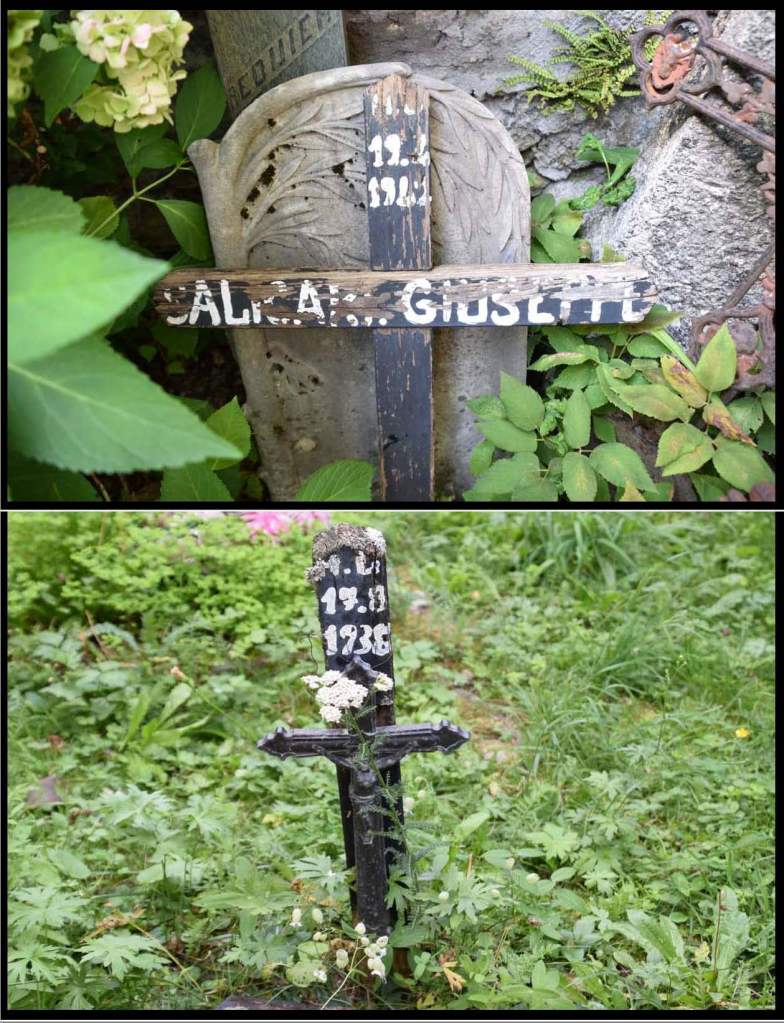
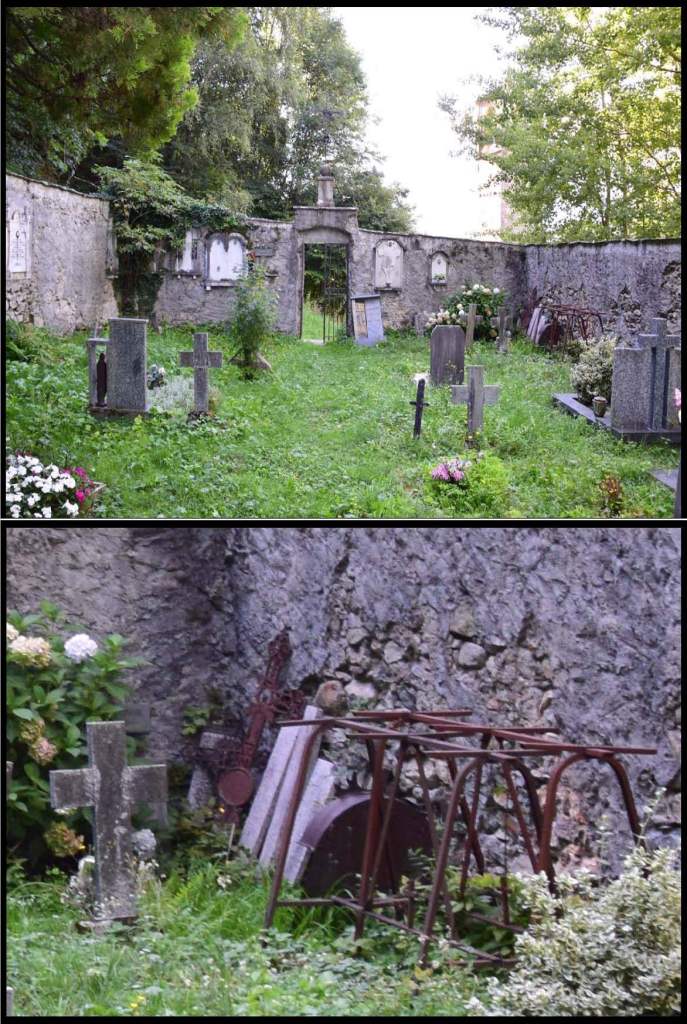
To complete my search, I checked some ancestry websites and located a Borellini relative – Elizabeth Gusmeroli – who had created a family tree that listed Giuseppe and Teresa Borellini and their children. The dates of death were blank but the dates of birth, places of birth, and names matched my information from the Alfaedo cemetery. And the Selvetta cemeteries contained the graves of many Gusmeroli families. According to this genealogy website, Felice Borellini was born in Forcola. I do not know if the designation ‘Forcola’ indicates Sirta or Selvetta. Although maps display the name ‘Forcola’ where the village of Sirta is located, there is no memorial to Felice Borellini in either Sirta cemetery.
Assuming that the family lived their lives in Alfaedo, one can posit a number of theories for the double tombstone and its location in Selvetta and not Sirta. It could be that Felice Borellini’s wife was born in Selvetta and the couple’s tombstone there is indicative of her birthplace and not his. Or the second tombstone in Selvetta could be reflective of a move down the mountain from Alfaedo to marry and/or to live. It, also, could be that the designation ‘Forcola’ is generic for any village in the territory. But I do not think this is the case since all other Borellini’s were listed as being born in either Faedo or Al Faedo and the mother of the Borellini siblings – Teresa Libera – is listed as being born in Al Prato. Because of the specificity of these location names, it would seem they came from vital record data the conventions of which may change over the years but the requirements of which in terms of accuracy do not. Although I contacted Elizabeth Gusmeroli and posted the tombstones of Giuseppe, Teresa, and Felice on the ancestry website, I have not heard from her to date. Hence, these musings are speculative and not conclusive. Here is the link to the genealogical information: https://www.geni.com/people/Giuseppe-Borellini/6000000091523797971
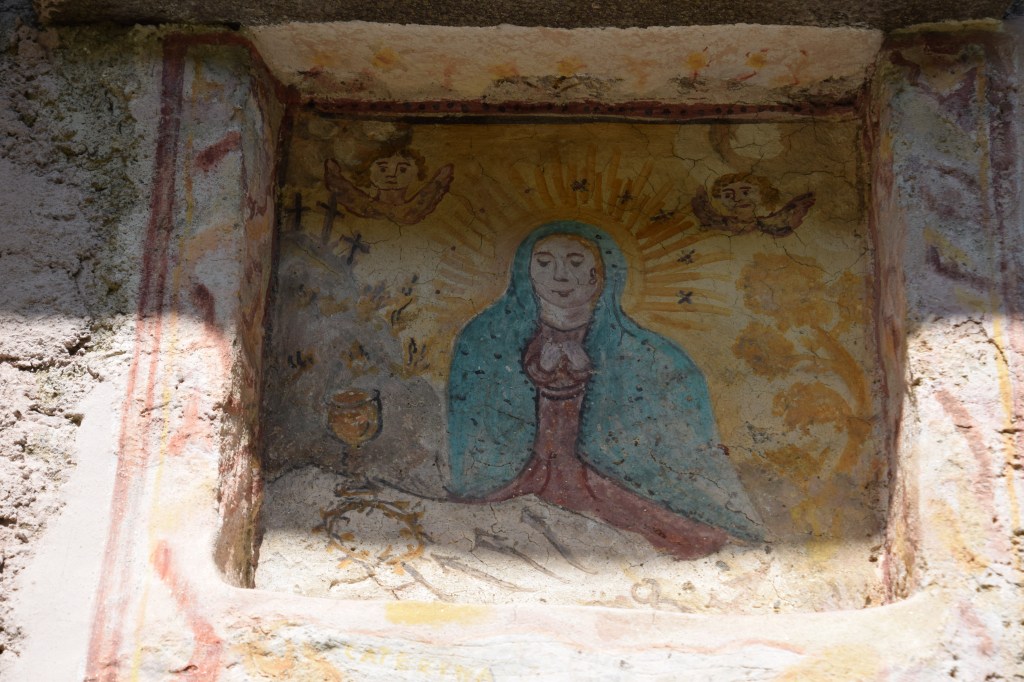
Thus, my theory is that both Gotardo and his elder sister Rosa Sabina died as children. In patriarchal Italy, losing a son would be a more signature event than losing a daughter. Hence, commemorating the death of the son with a Mater Dolorosa would reflect the norms of the culture of that time. And it could be that Rosa Sabina had not died as a child so there would be no need to memorialize her. However, I think it very unlikely that either Gotardo or Rosa lived to adulthood.
Catholic belief requires infants to be quickly baptized in order to ensure them a place with God in the afterlife. Unlike Protestants who often waited up to two years to name a child because of the high infant mortality rate in the past, Catholics generally named infants within days. For example, my grandfather was brought to the town hall and his name and existence registered a scant 16 hours after his birth. But grave markers for children – if they existed – were often very small and infants were not always mentioned on larger family tombstones. The cemeteries that I searched had designated areas for the graves of infants and very young children.
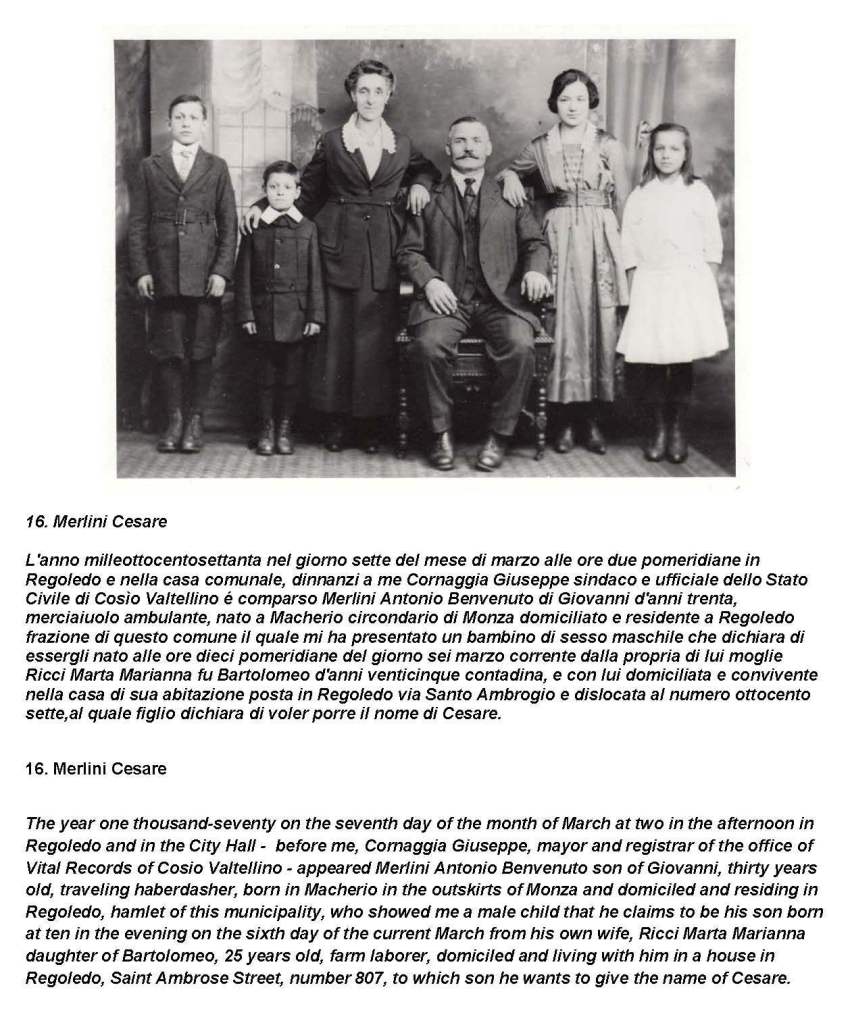
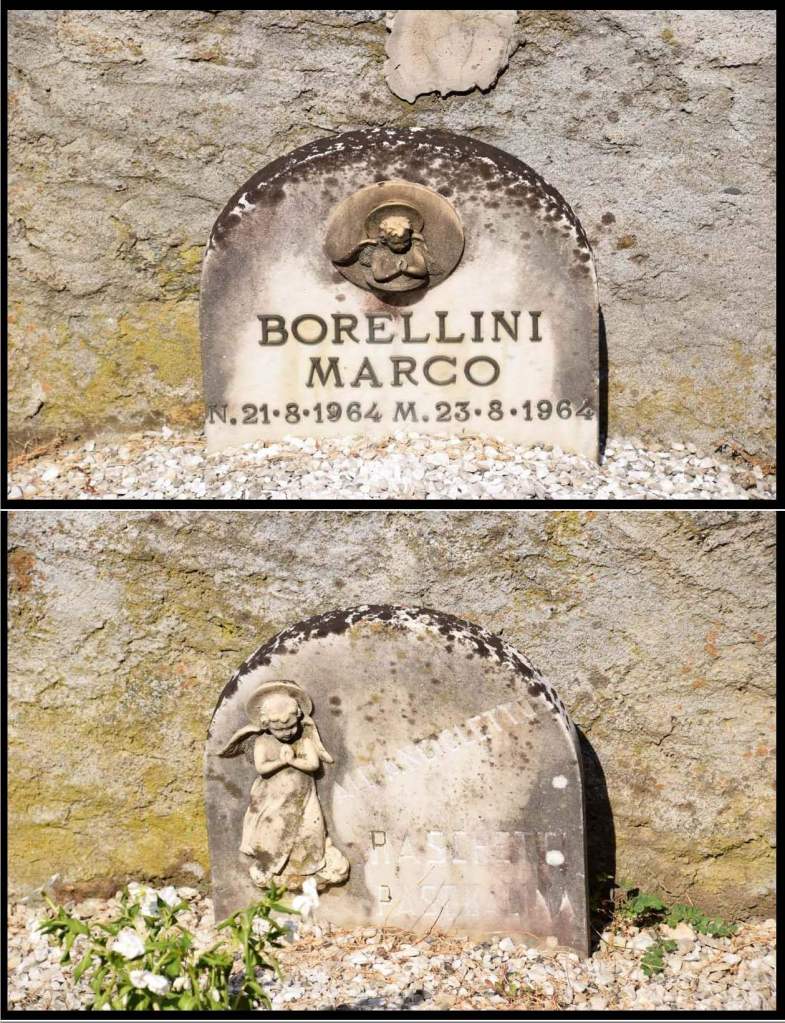
However, the adults were claimed by villages in graveyards since Catholic burial in a sanctified Catholic cemetery was a required prerequisite to the finality of one’s former place on earth and one’s expected place in the anticipated afterlife. Had Gotardo and Rosa Sabina lived to adulthood, given Italian burial and naming practices there would be some vestige of their existence in one of the cemeteries. I found no such evidence. Hence, my conclusion is thus: The 1893 Wall Madonna – a Mater Dolorosa – memorializes the short life of Gotardo Borellini – the infant son of Giuseppe and Teresa Liberi.
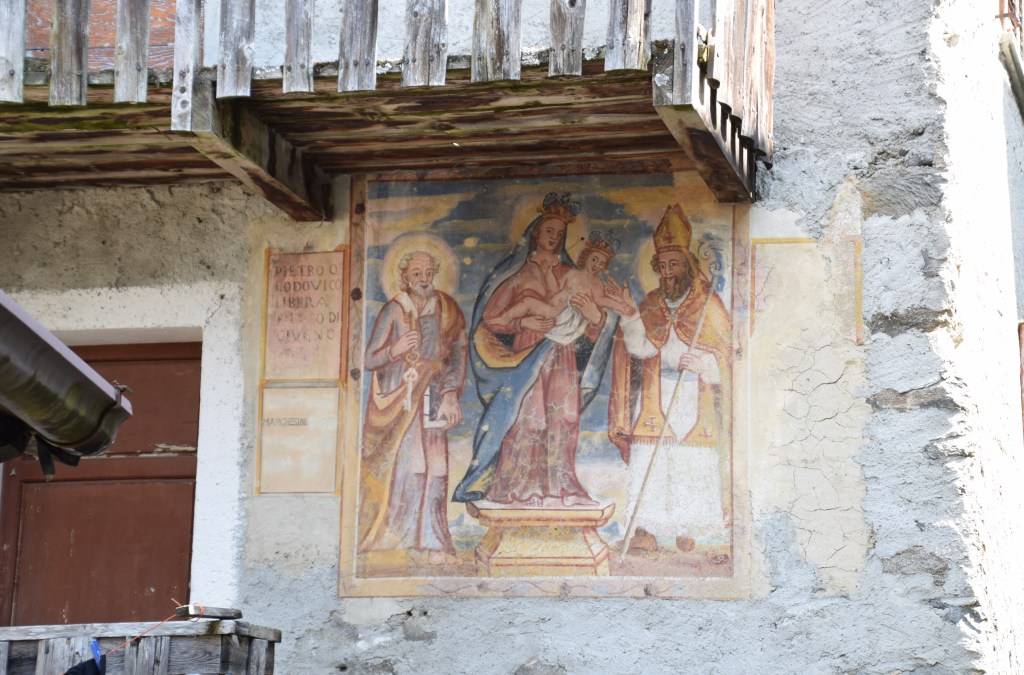
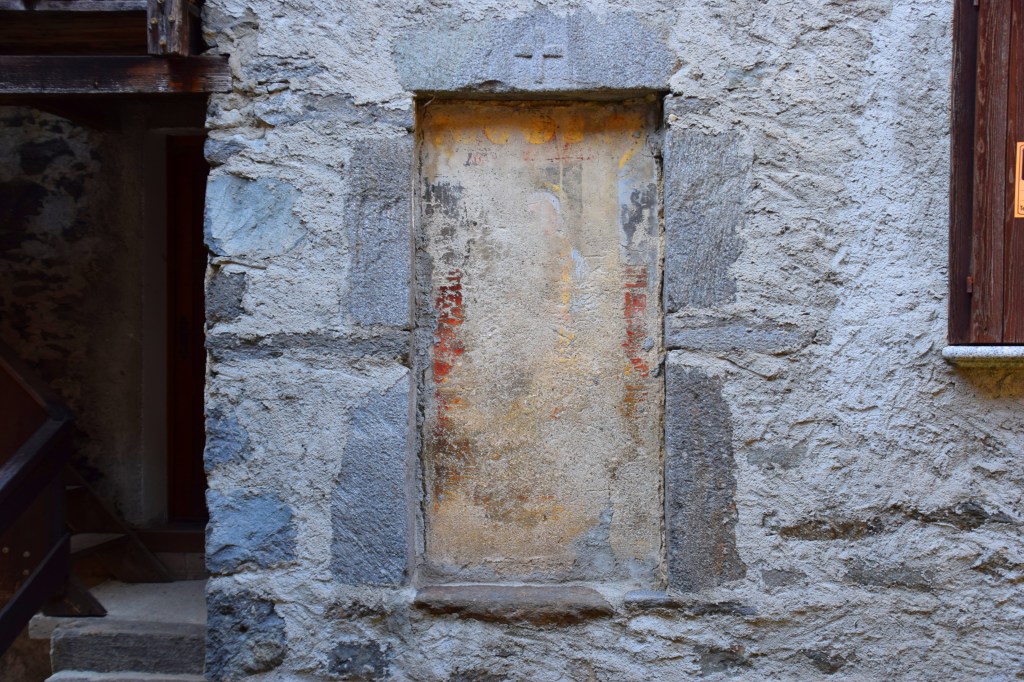
I, also, conclude that the spelling of the name ‘Borelini’ on the fresco is incorrect. Frescoes very often contain spelling errors caused by not effectively planning the space needed for names and words, and by the illiteracy of the artists and/or inscriber. Additionally, if the single ‘l’ spelling were common one would expect to find a few grave markers with the surname spelled that way. I found none.
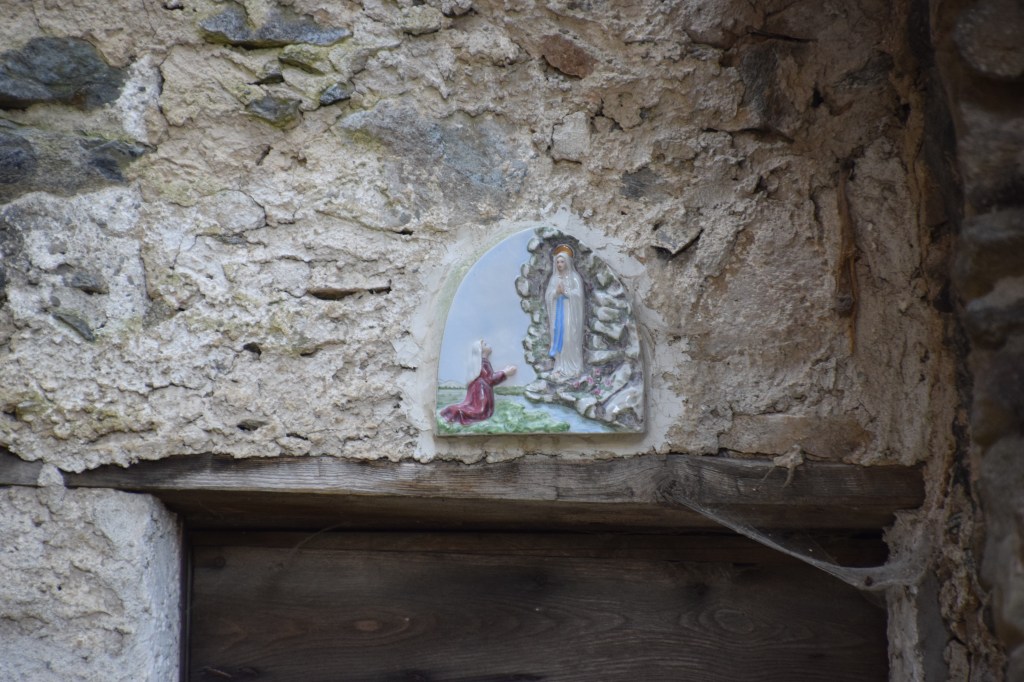
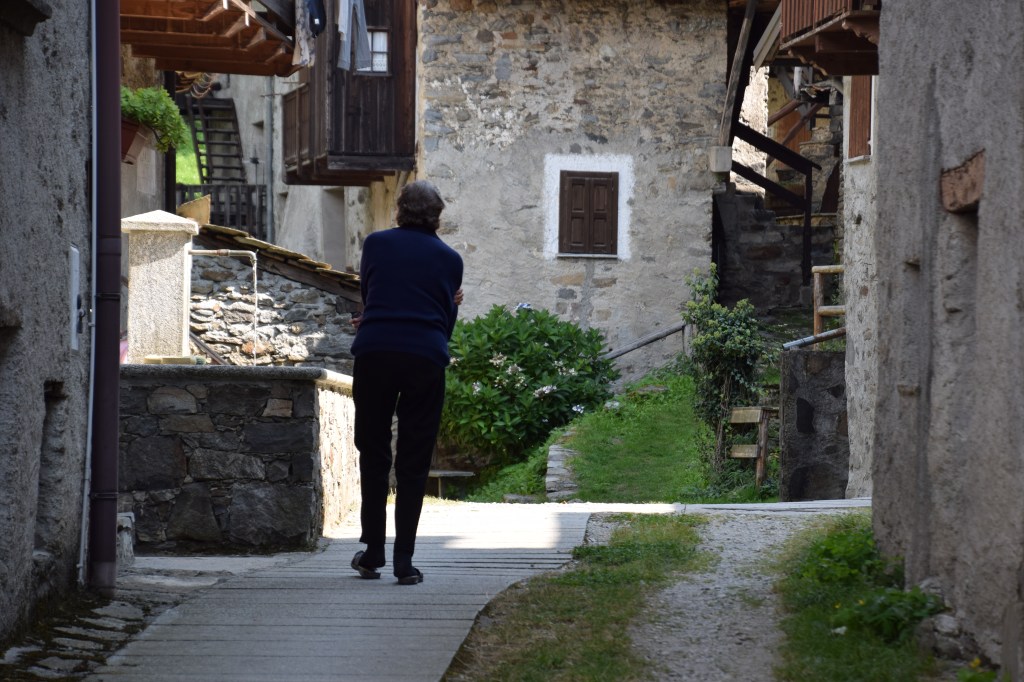
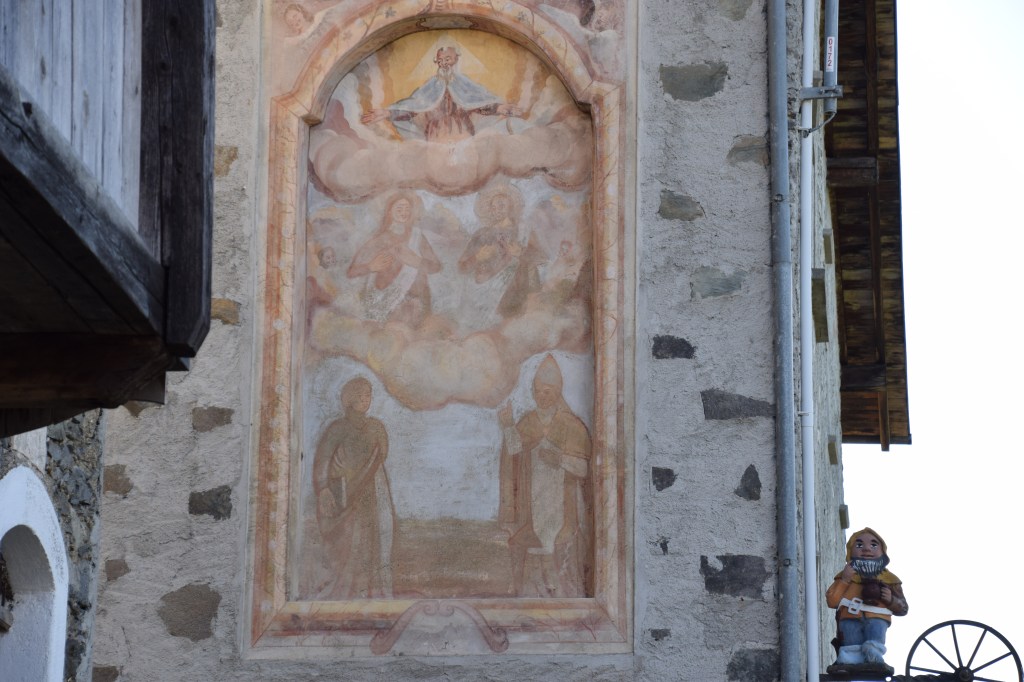
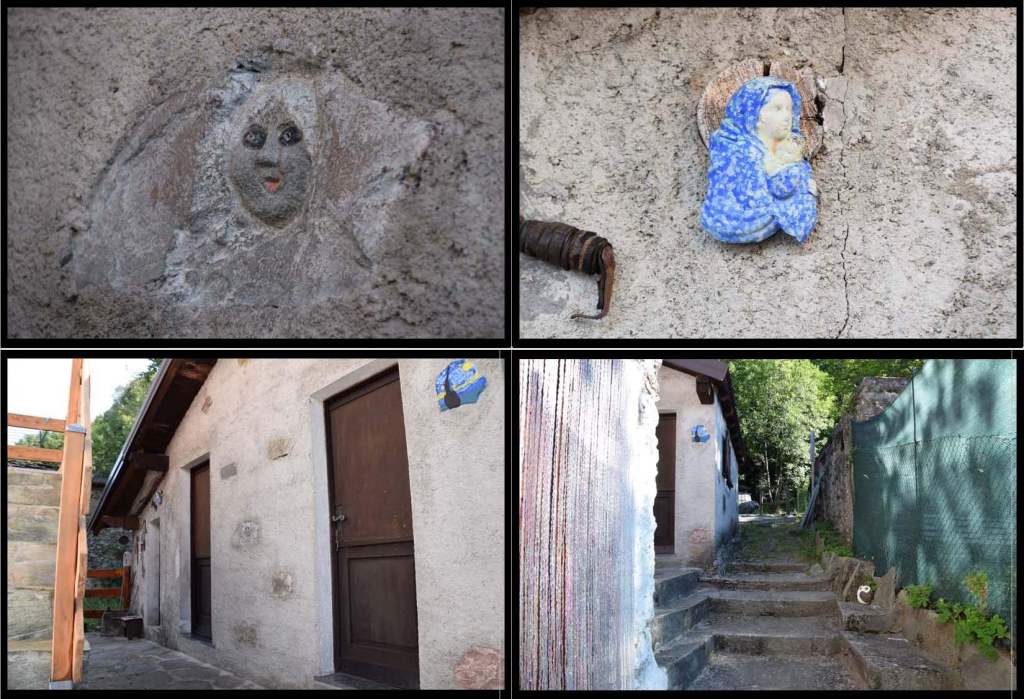
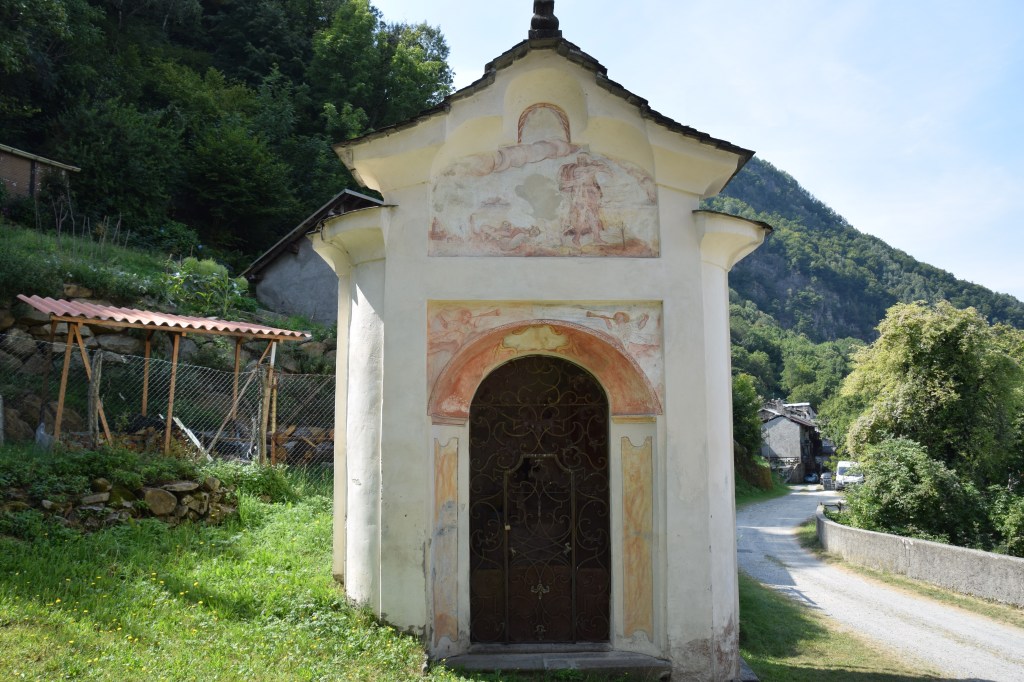
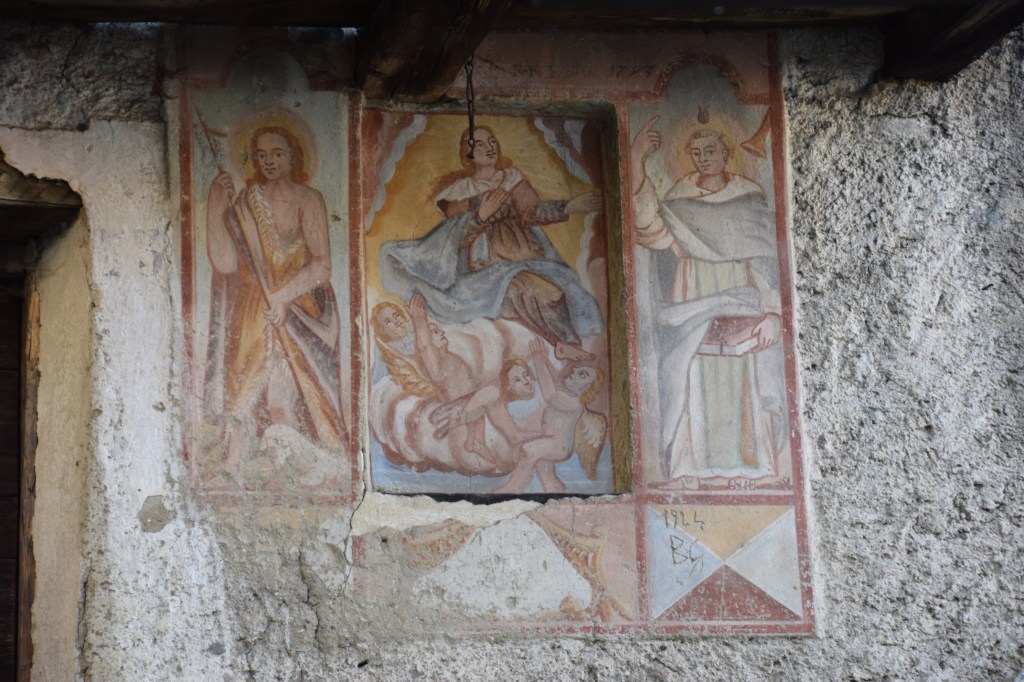
I hope you found interesting this visual narrative about the Wall Madonna’s of Alfaedo and this dialogue about my efforts to understand the provenance of Gotardo Borellini’s 1893 Mater Dolorosa! Enjoy these final images!
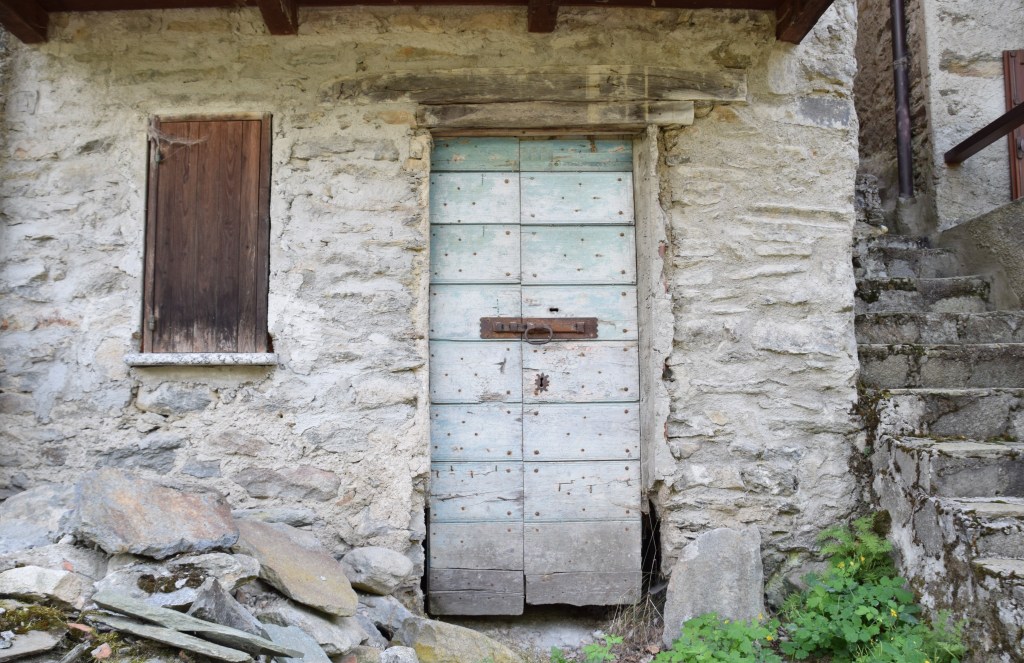
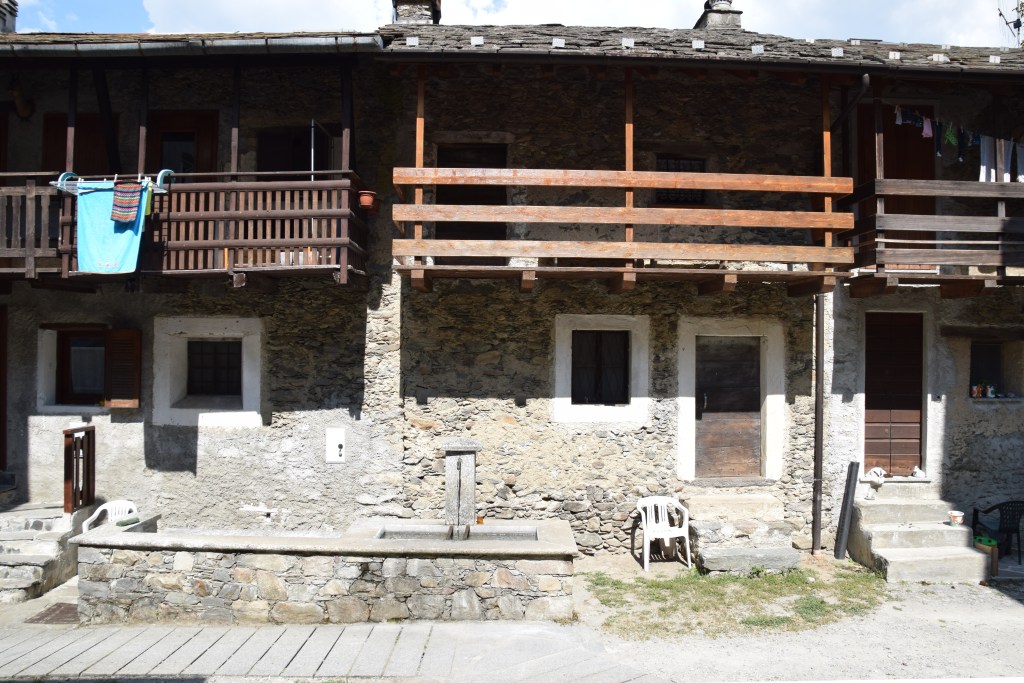
 Wall Madonna's of the Valtellina