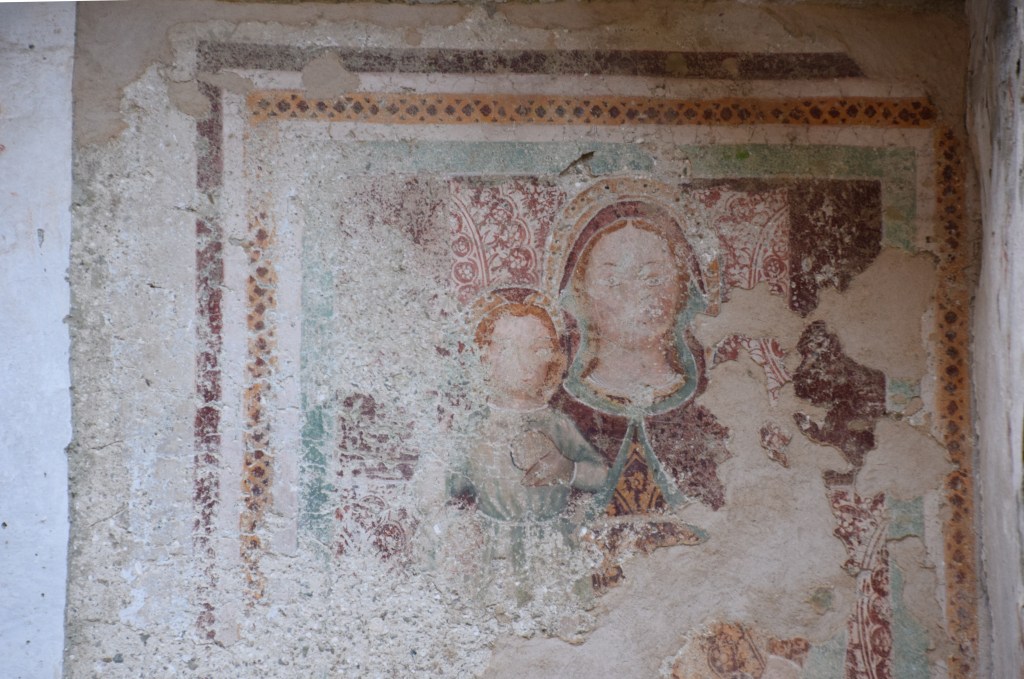
I FOUND HER! As Blanche DuBois says “I have always depended on the kindness of strangers”. I went back to Torre di Santa Maria today to continue looking for the enthroned Madonna indentified in the article I was sent by the retired director of Valtellina history. Although I hypothesized yesterday that the 17th-century Madonna I found in town might be her, I knew I was wrong.
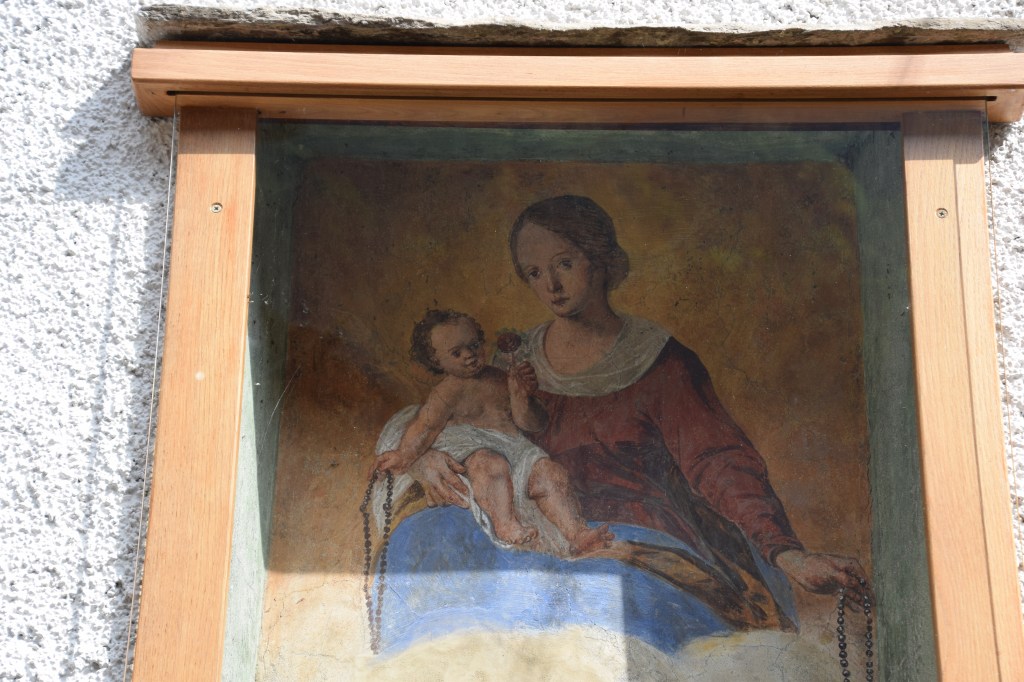
But I also knew I was not wrong when I said a resource claiming a fresco is in a town is only claiming that the fresco is somewhere in the total territory identified as the comune proper. The 15th-century Madonna Enthroned was in the ancient Contrada Bianchi in the frazione of Bianchi which belongs to Torre di Santa Maria.
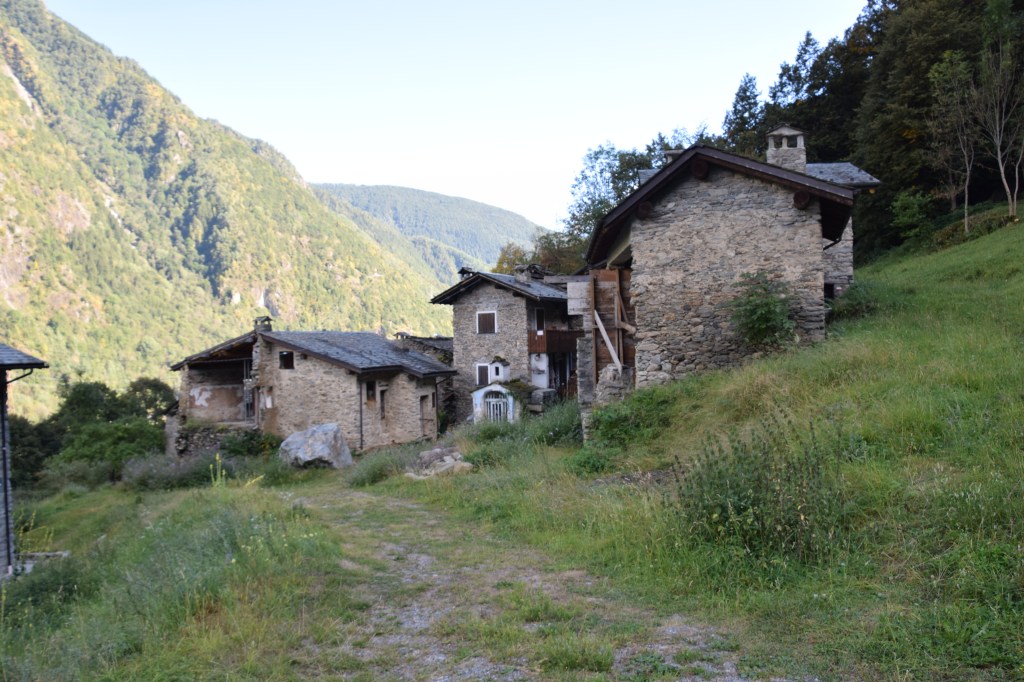
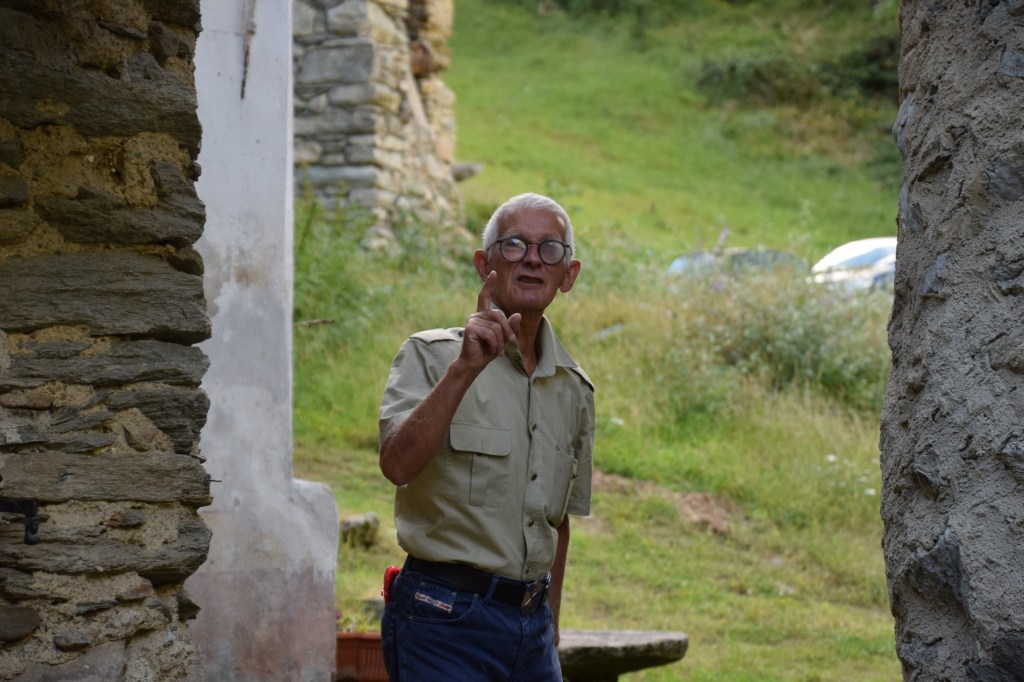
I had spent five hours searching frazioni and was thinking about walking to a frazioni called Bianchi but thought better of it because I had no idea how many miles into the mountains the skinny road went before reaching the village. I was contemplating quitting when two old men stopped me to say ‘hello’ and ask if I spoke German. I told then what I was doing – Cerco per delle Madonne sul mura – and told them I found the one near the Pizzeria. They conversed with each other and I heard the words San Giuseppe and Cristini – the former a church and the latter another frazione. They told me there used to be more Madonna’s but the houses are old and they fall down but said I might find one in Cristini. We said ‘Ciao’ and parted company. Five minutes later one old man – Peppino – was back with his car offering to take me to a Madonna. And so he drove me to and through Bianchi!
At the end of the village was a much older contrada – a district of a town. In the middle of the contrada – on the back of a half ruined home – was the magnificent Madonna Enthroned. This is a fabulous day! Here is the object of my recent quest! Thank you Peppino!!!
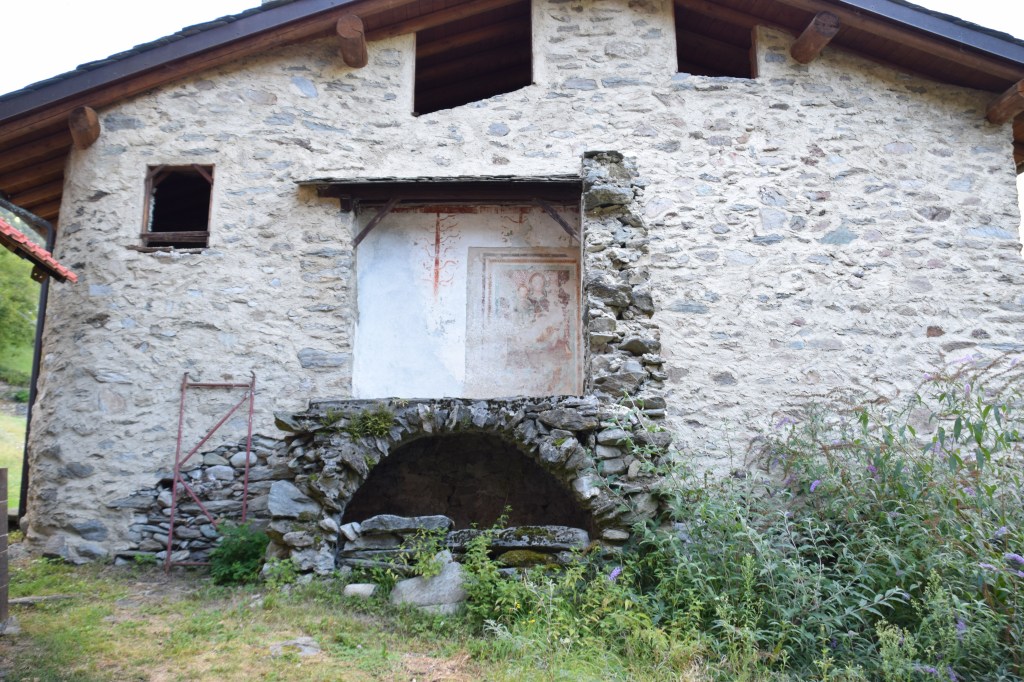
It is difficult to believe one is looking at a 600 year old home and painting both of which have survived wars, weather, renovation, abandonment, and ruin! I think this fresco may have been enclosed and that this might have been a small church. It would not be uncommon in this time period – the early to mid 15th-century – for an enthroned Madonna to have been painted as an altar piece. One such 15th-century enthroned Madonna graces the altar of the Chiesa della Madonnina on the Strada della ValMadre about 2 miles outside Fusine.
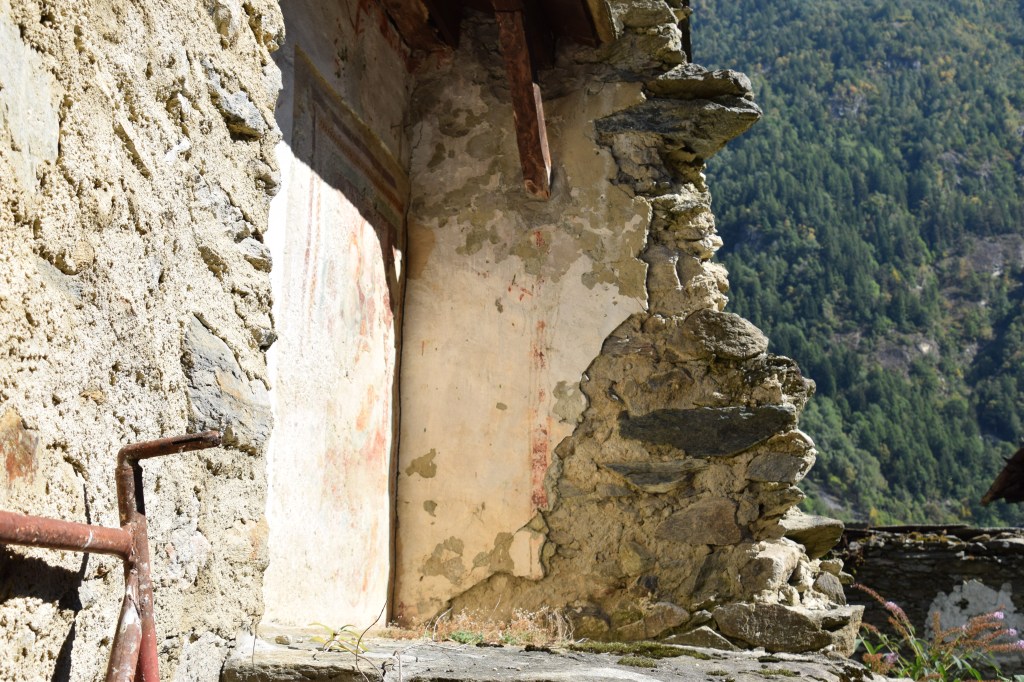
This is a side view of the enclosure for the Wall Madonna. As one can see, this wall was originally plastered and painted to match the decorations of the facing fresco. It is often the case that districts had their own small churches. It, also, might be the case that this was a fresco belonging to a family that had a small chapel in their home. And finally, an enclosure might have been built around the old fresco many years ago to preserve it and surrounding decorations added. Since the Madonna is not central to the space this might be the most likely scenario.

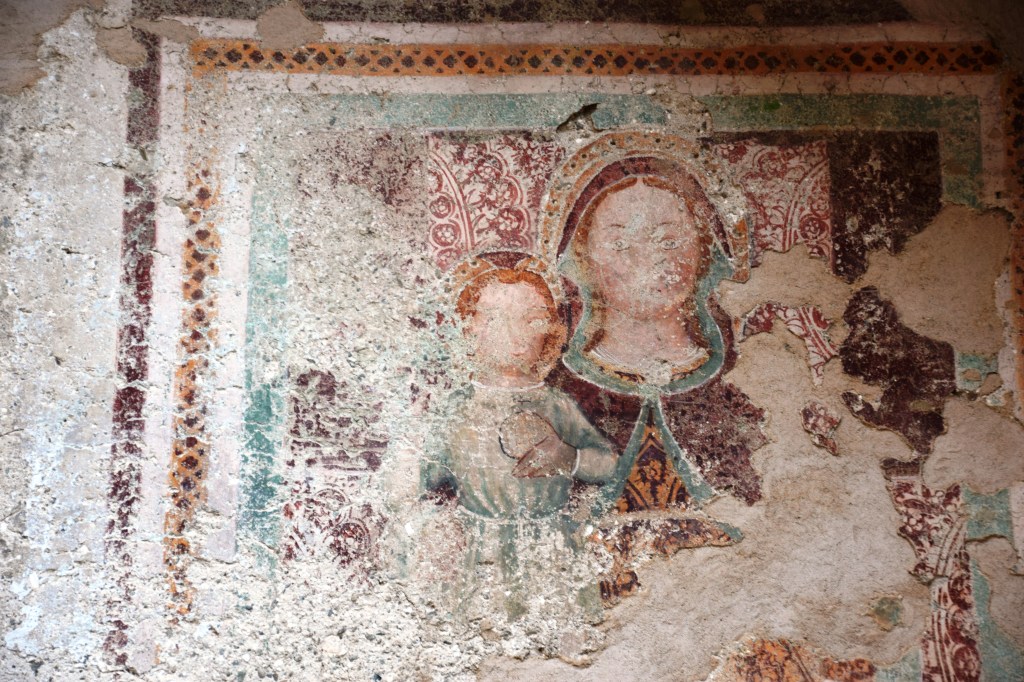
This is a colorized version of the fresco. I brightened the colors so that you could see the facial features that remain and the original embellishments. The actual fresco without brightened colors is below.
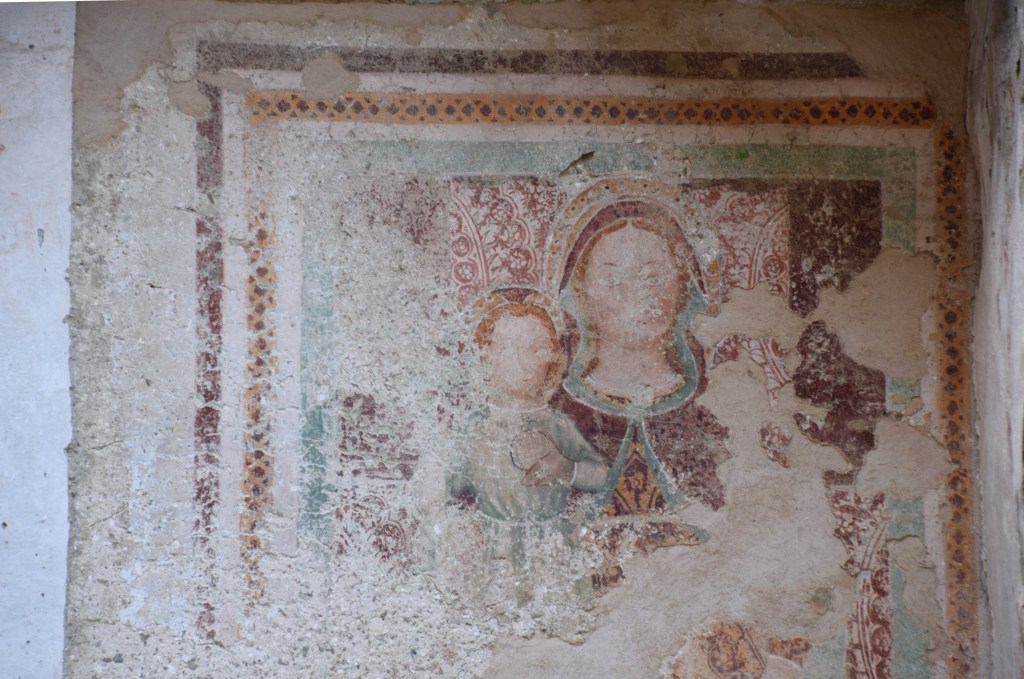
This is the fresco as it remains – without brightened colors. Here is another view.
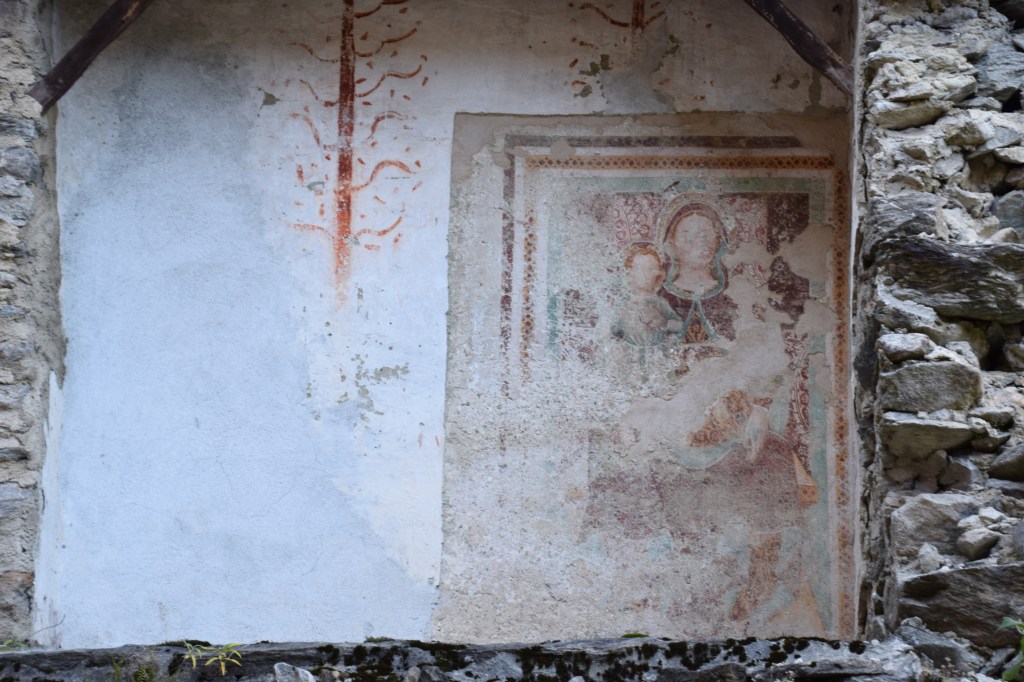
I find this beautiful fresco astonishing in its longevity and place still central to the residents of the village. Saving such a fresco is not practical in terms of renovation but it is rare that any Italian would sunder the sacred space in any way. This building was stabilized and was under renovation and before anything else was done the fresco was preserved.
 Wall Madonna's of the Valtellina