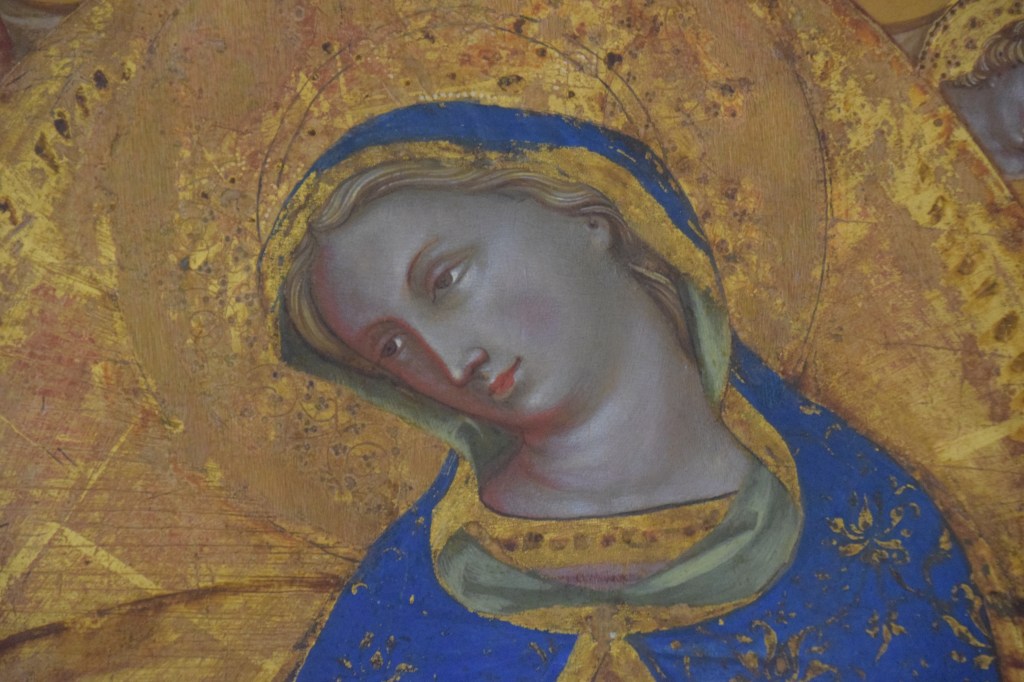
This is a post precipitated by a life change and a visit to a friend in Brauneberg, Germany. Wall Madonna’s are not the theme but they are the motivation. I hope you find the art interesting!
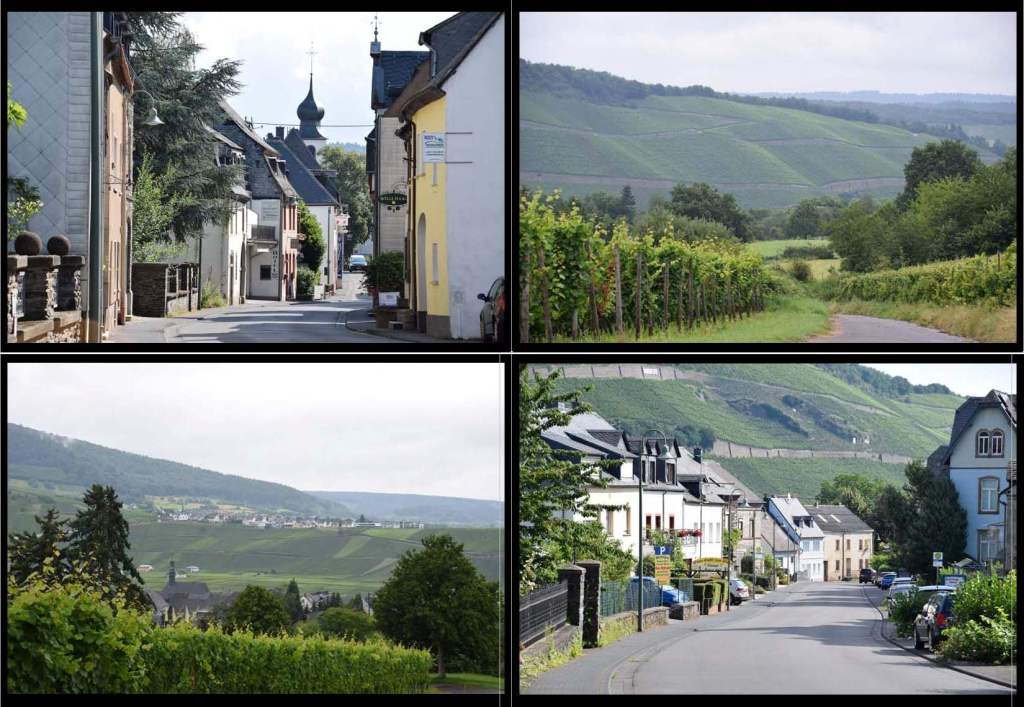
After 20 years of teaching college classes online, I resigned my position as one of the Wal-Mart workers of academia. My days as an over-qualified and underpaid adjunct are over. Too bad I never made enough money to buy the champagne to celebrate! Instead, in the midst of the beauty that is Germany and as I long for home in Dubino and my beloved Wall Madonna’s – and segued among photos of the gorgeous views to be had in the town I am in – Brauneberg – I celebrate by offering you some 14th-century Madonna ‘head-tilt’ photos.
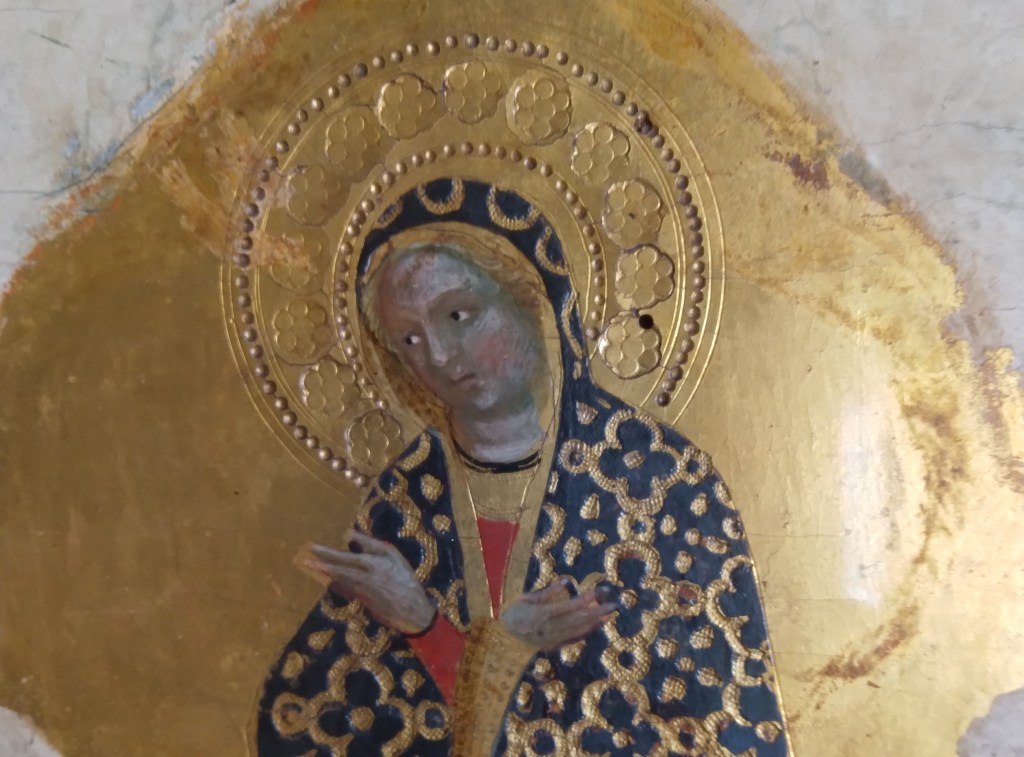
Art styles change and this demure head-tilt is a Gothic technique used to portray the Great Virgin. The bowed head and often diverted gaze that is signature to the only adored womanhood of this era, is long lost to modern styles. But I still love it. This portrayal serves the symbolism of sacred motherhood in the loving gaze and glance down at the soon to be sacrificed Jesus and it heralds the preferred deferential and subordinate femininity that reflects this time when only motherhood and absolute obedience to men – both human and divine -saved women from complete obscurity. These cropped photos of the always glorified Theotokos – Santa Maria – are all from art found in the Galleria dell’Accademia in Venice. I love Germany but Italy has my heart! Enjoy your day and this incredible art!
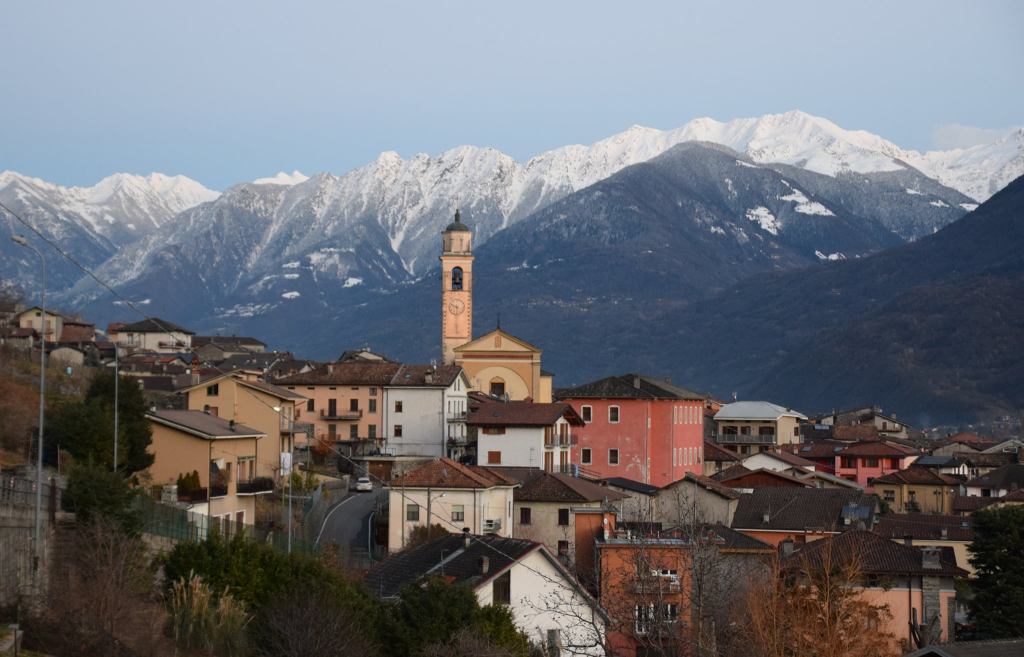
DUBINO, ITALY – My new hometown in the Valtellina since December 2020. My tiny house is behind the parish church – Chiesa dei Santi Pietro e Andrea , 15th-century
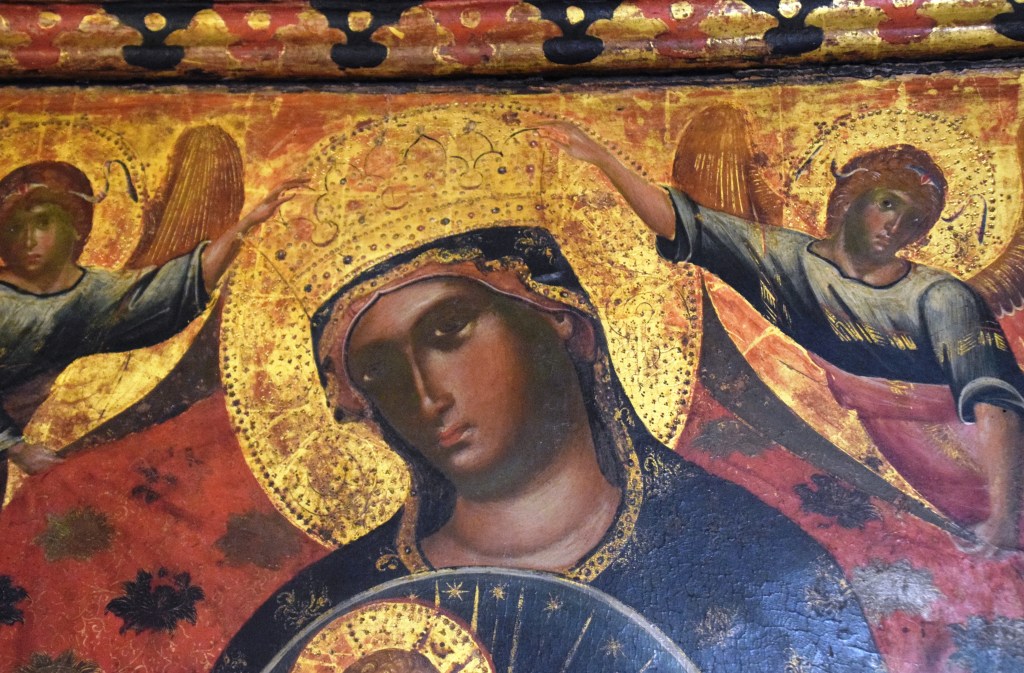
VENICE – Galleria dell’Accademia – Virgin and Child painted circa 1350 by Paolo Veneziano. Jesus is depicted in a sacred mandorla on Mary’s chest. This very elaborate and colorful painting is very difficult to photograph because of the lighting of the room reflecting off the varnished panel.
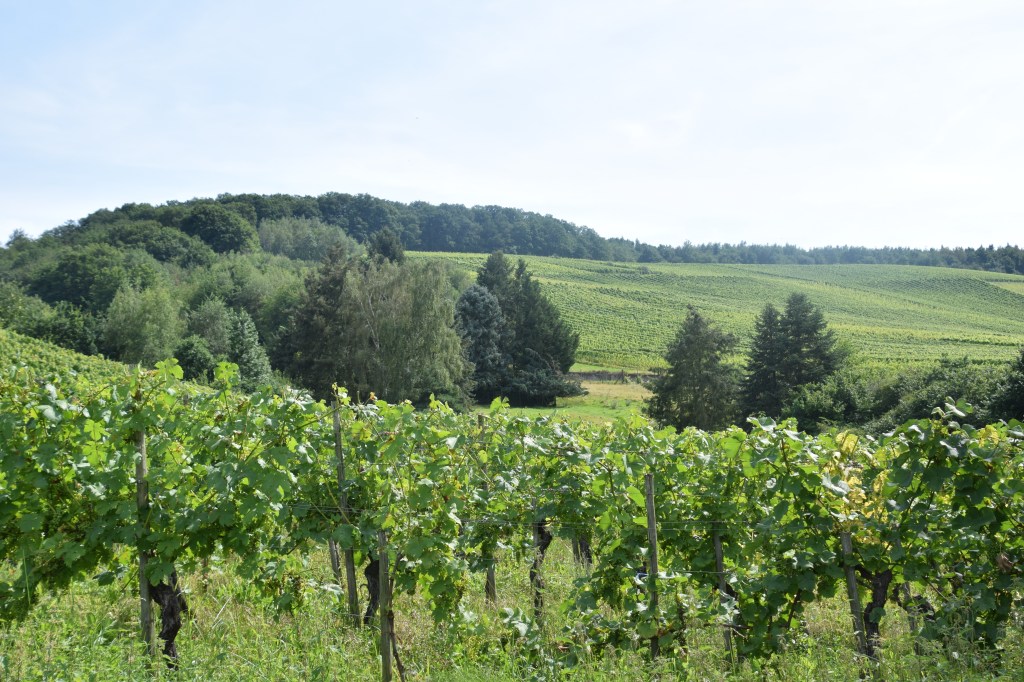
BRAUNEBERG, GERMANY – Vineyards!
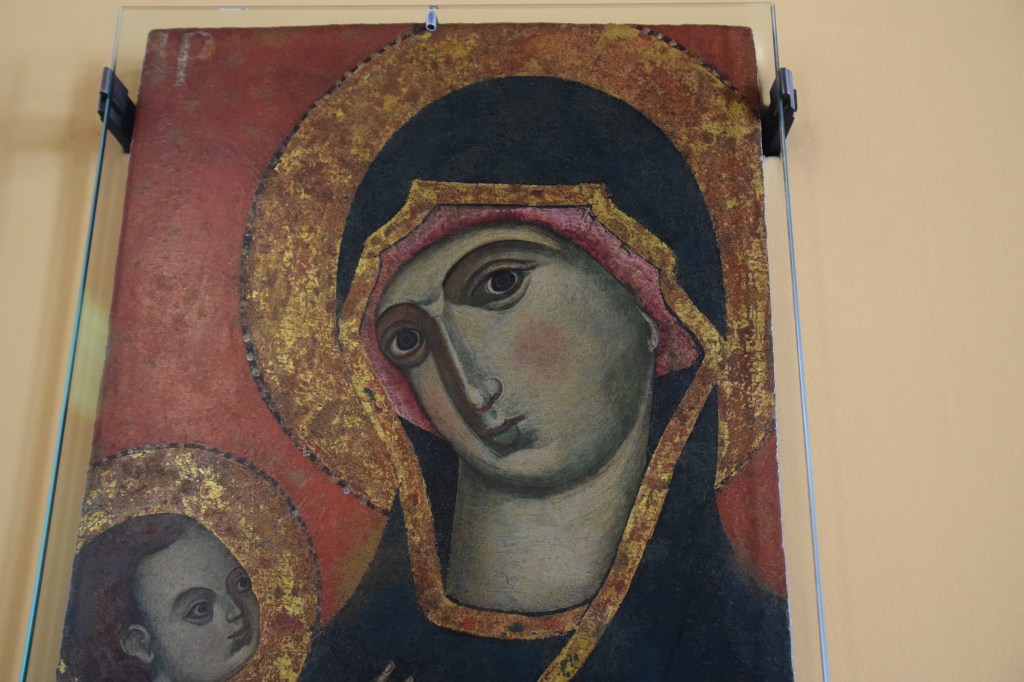
VENICE – Galleria dell’Accademia – Virgin and Child painted in the mid-1300’s by the artists of the Scuola Veneto-Bizantina. This is the Byzantine style preferred in 14th-century Venice. There was no ‘formal’ Venetian school of art. The designation ‘Scuola Veneto-Bizantina’ simply indicates that the characteristics of the work reflect the preference for the Byzantine style seen in identifiable art created in Venice by the artists who worked there during the period the unidentified/anonymous work was produced.
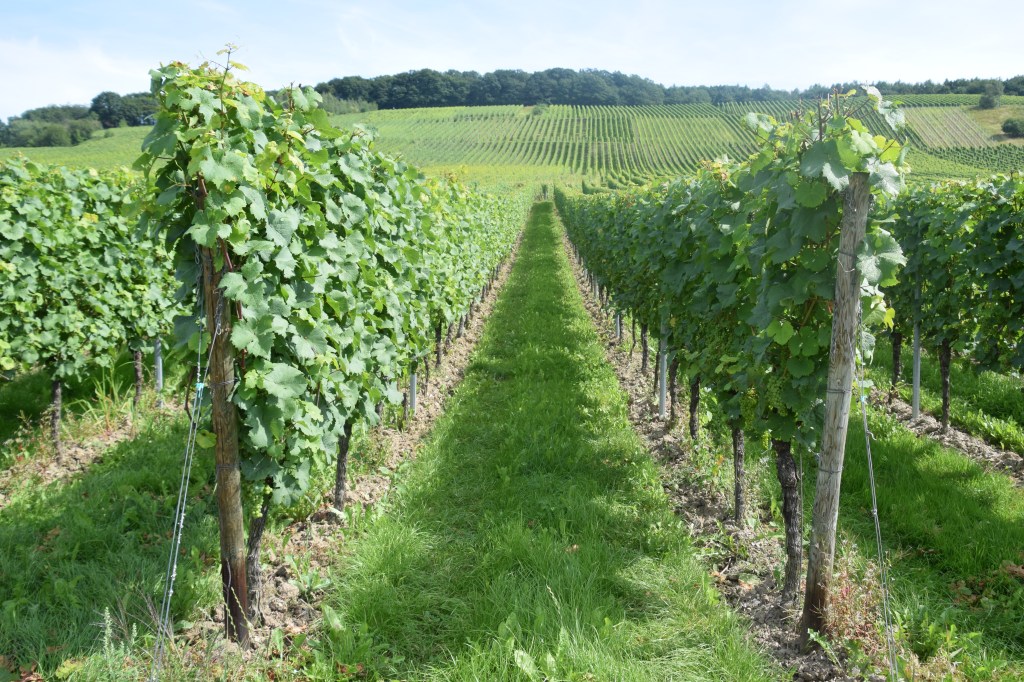
BRAUNEBERG, GERMANY – Vineyards!
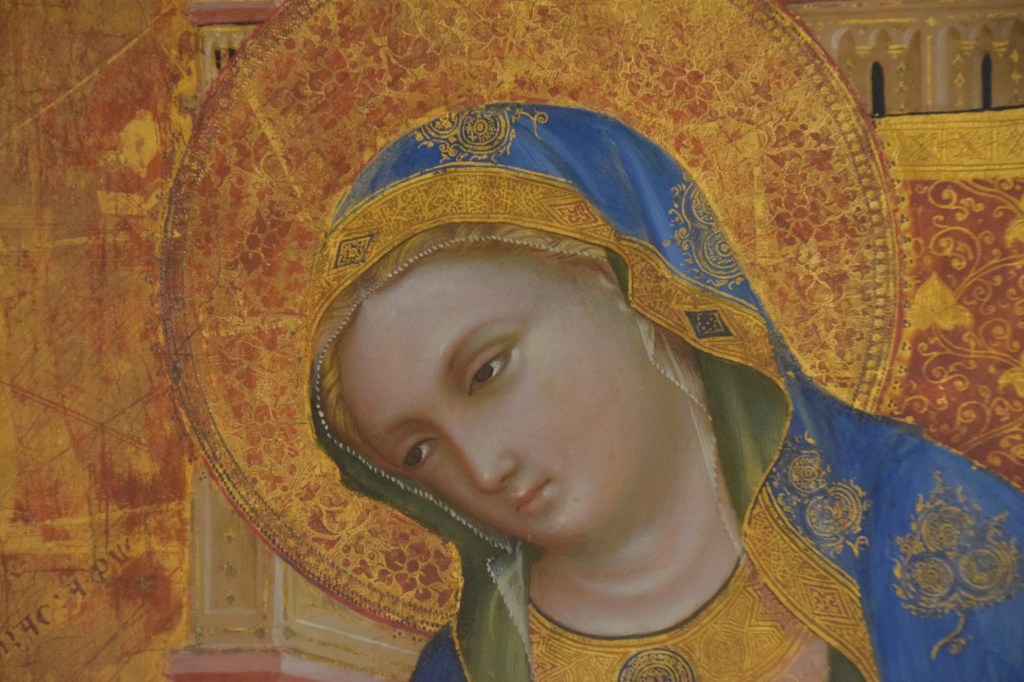
VENICE – Galleria dell’Accademia – Virgin painted circa 1360 by Lorenzo Veneziano – Lorenzo the Venetian. This Virgin is from an Annunciation Polytptych and shows the Virgin with the Archangel Gabriel and four saints – San Nicola, San Giovanni Battista, San Giacomo, and San Stefano.
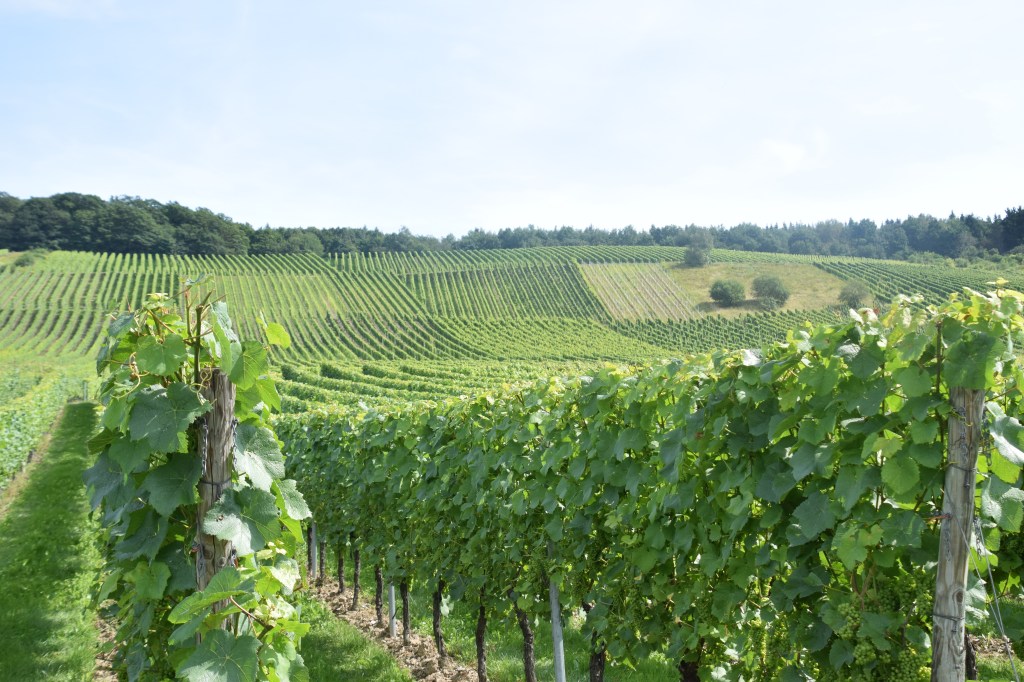
BRAUNEBERG, GERMANY – Vineyards!
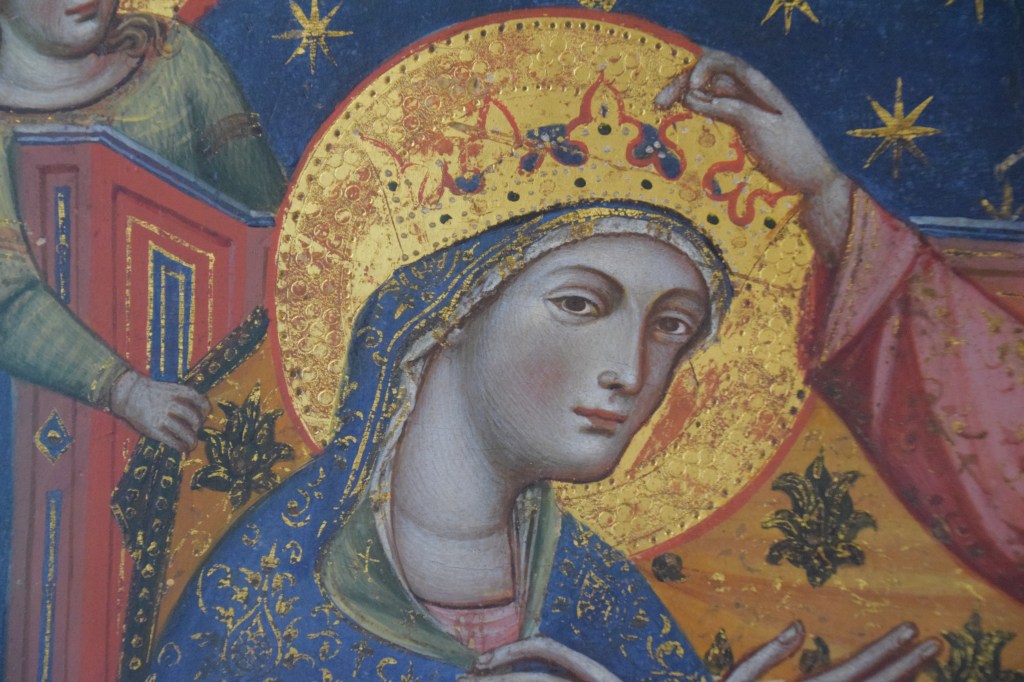
VENICE – Galleria dell’Accademia – Coronation of the Virgin painted in 1362 by Catarino Veneziano the Elder. The artist is also known as Catarino Veneziano, Catarino Veneziano I, Catarino di Marco di Venezia, and simply Catarino. The artist has been documented as being active from 1362 to 1382. He is one of the notable Venetian painters influenced by the style of Lorenzo Veneziano.

BRAUNEBERG, GERMANY – grapes ripening on the vine!
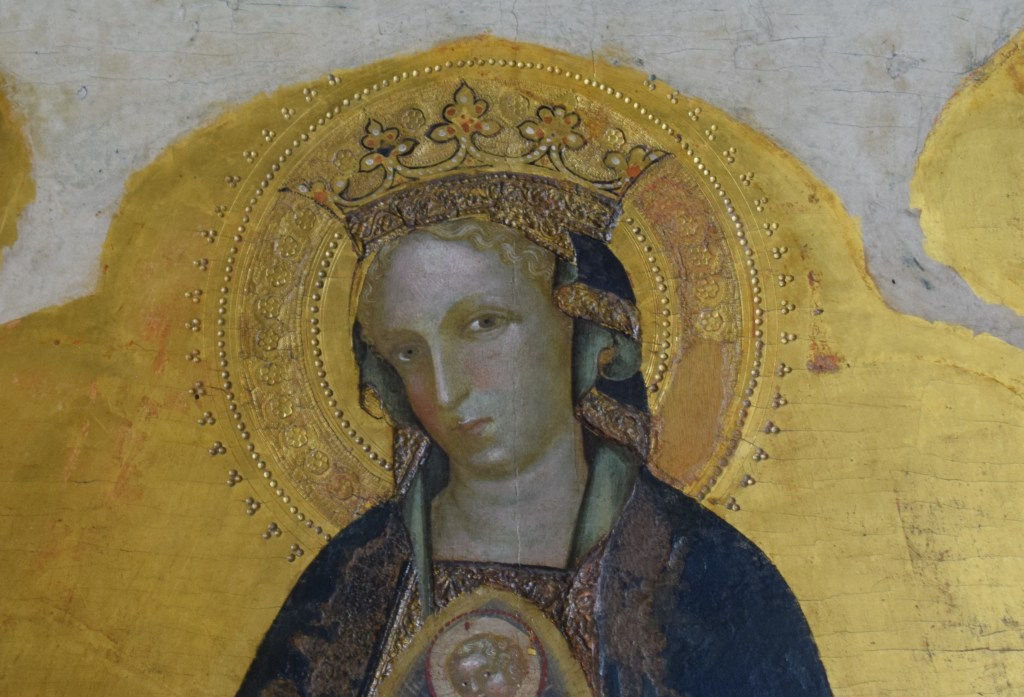
VENICE – Galleria dell’Accademia – Virgin from a Madonna della Misericordia triptych painted circa 1400 by Jacobello del Fiore. The artist is documented as working from 1400 until his death in 1439. The virgin stands between two saints – Giovanni Battista and Giovanni Evangelista. Jesus is painted inside a sacred mandorla on Mary’s chest and above her head is an Annunciation the Virgin of which was seen previously in this blog.
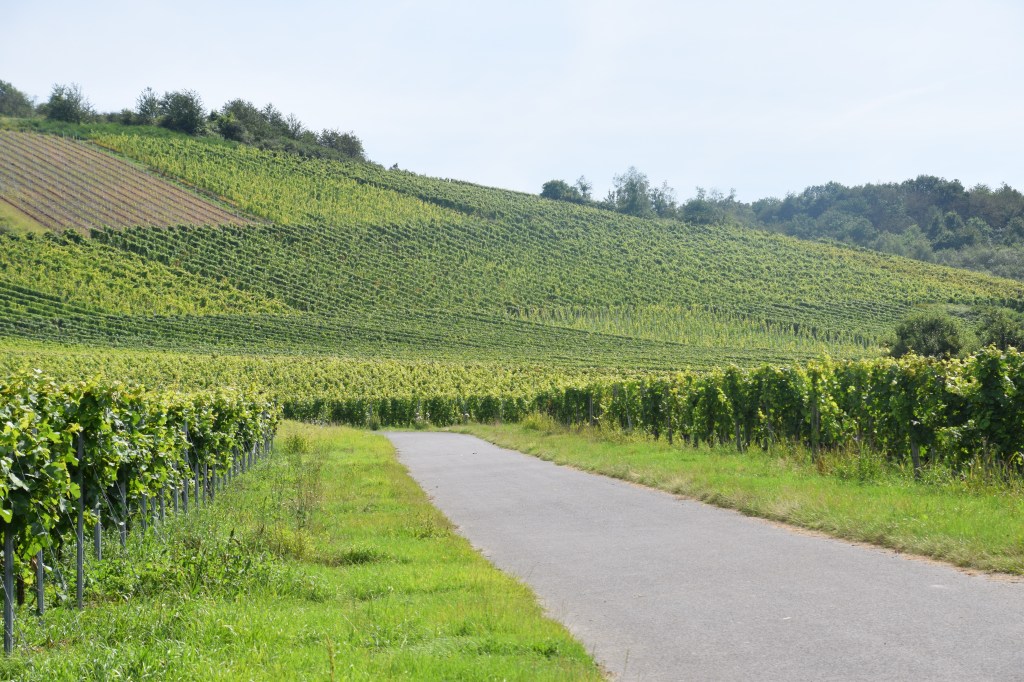
BRAUNEBERG, GERMANY – Vineyards!
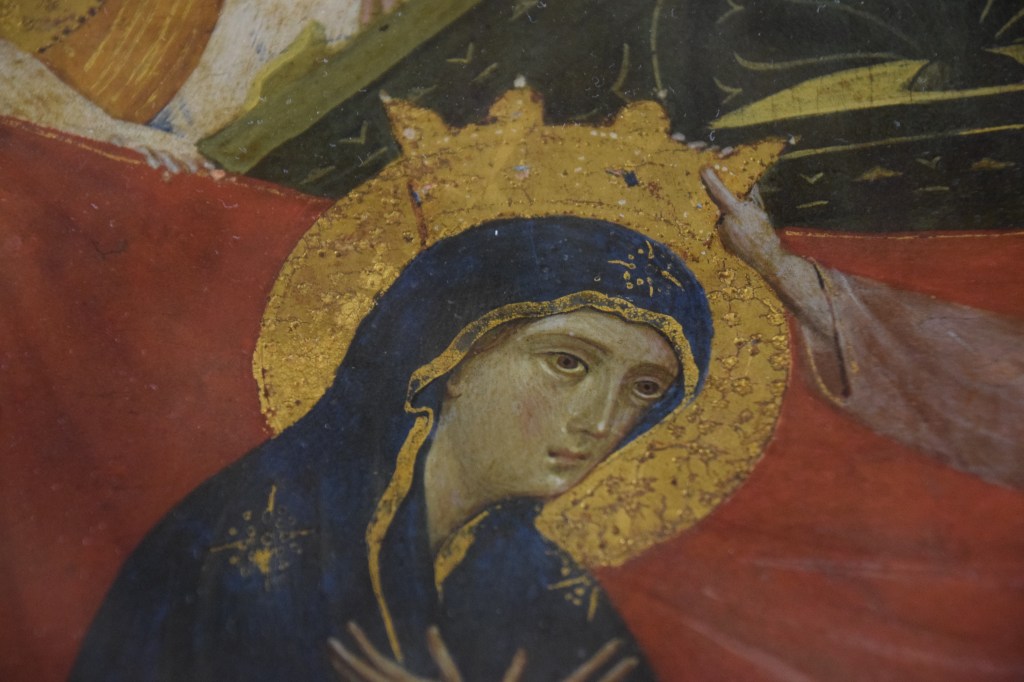
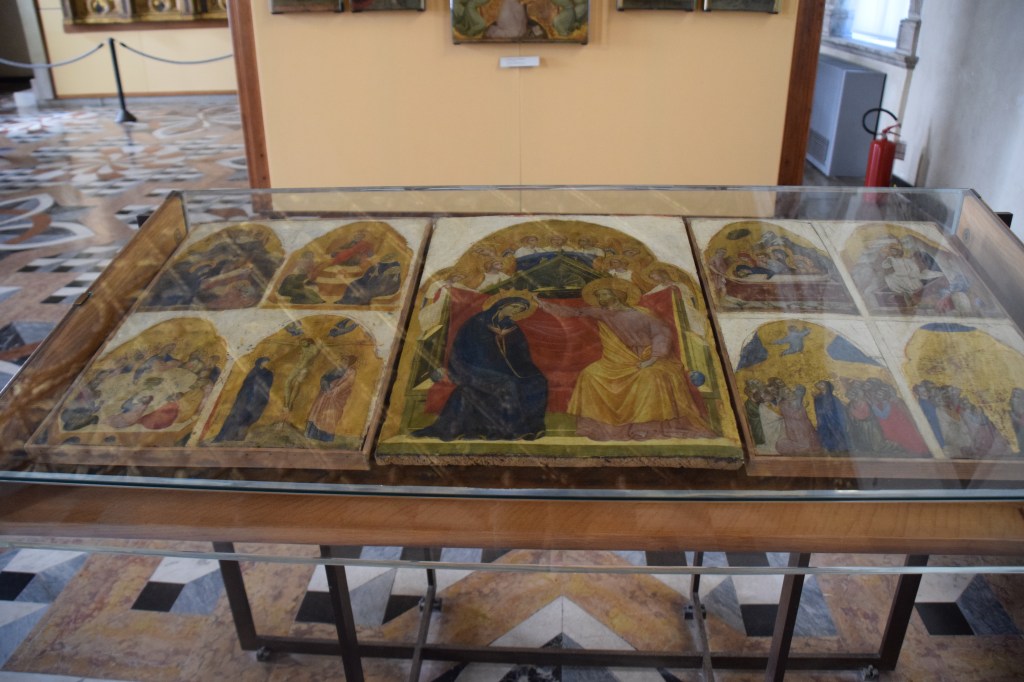
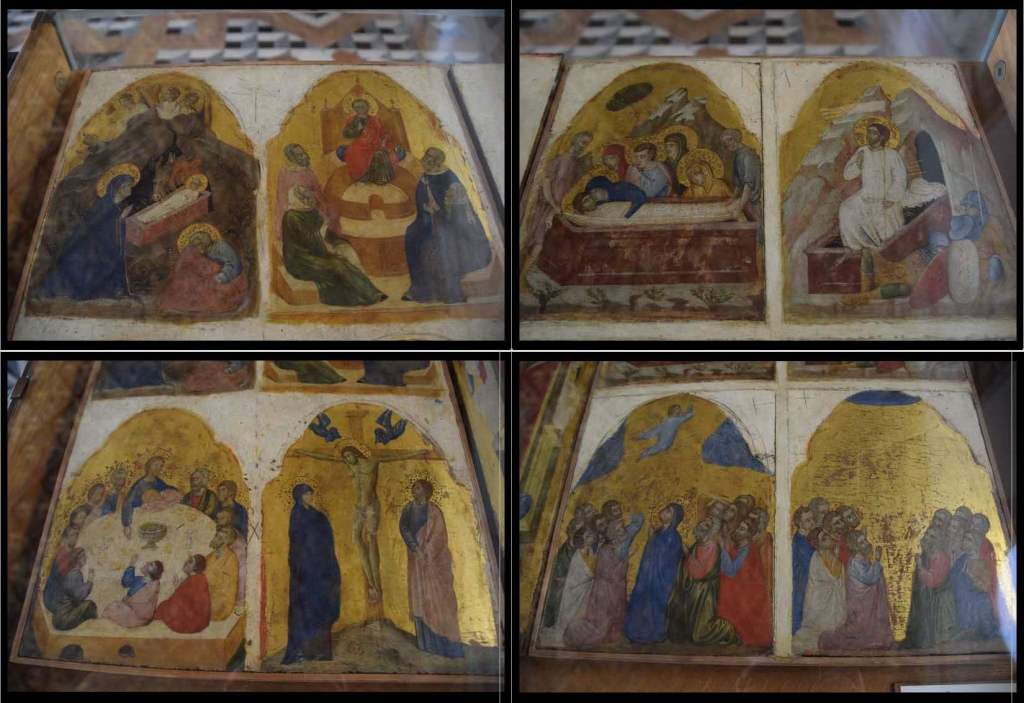
VENICE – Galleria dell’Accademia – Coronation of the Virgin painted in the mid-1300’s by the artists of the Scuola Veneziana. This is a nine-panel polyptych – a cooperative piece that surrounds the crowning of the Virgin with scenes from the life of Jesus. The work is displayed horizontally in a glass case and is difficult to view and photograph because of the glare. The work is interesting for its choices in the elaboration of the life of Christ and because one can clearly see that talents of the artist or artists involved pale in comparison to others such as Lorenzo Veneziano or Jacobello del Fiore. There was no ‘formal’ Venetian school of art. The designation ‘Scuola Veneziano’ simply indicates that the characteristics of the work reflect the styles and preferences seen in identifiable art created in Venice by the artists who worked there during the period the unidentified/anonymous work was produced.
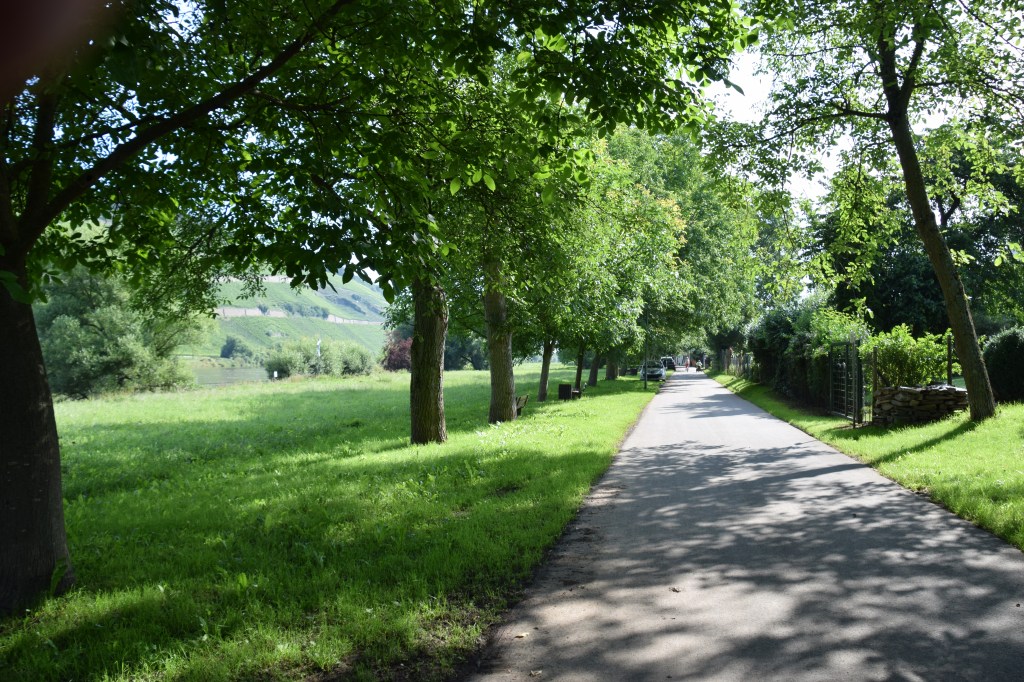
BRAUNEBERG, GERMANY – Walnut trees line the Mosel River bike path. Brauneberg is famous for its walnuts and walnut liqueur and brandy. All the trees have names. Each year the village elects a young girl as Wine Princess and a walnut tree, hence, is named after her in celebration of the walnut harvest.
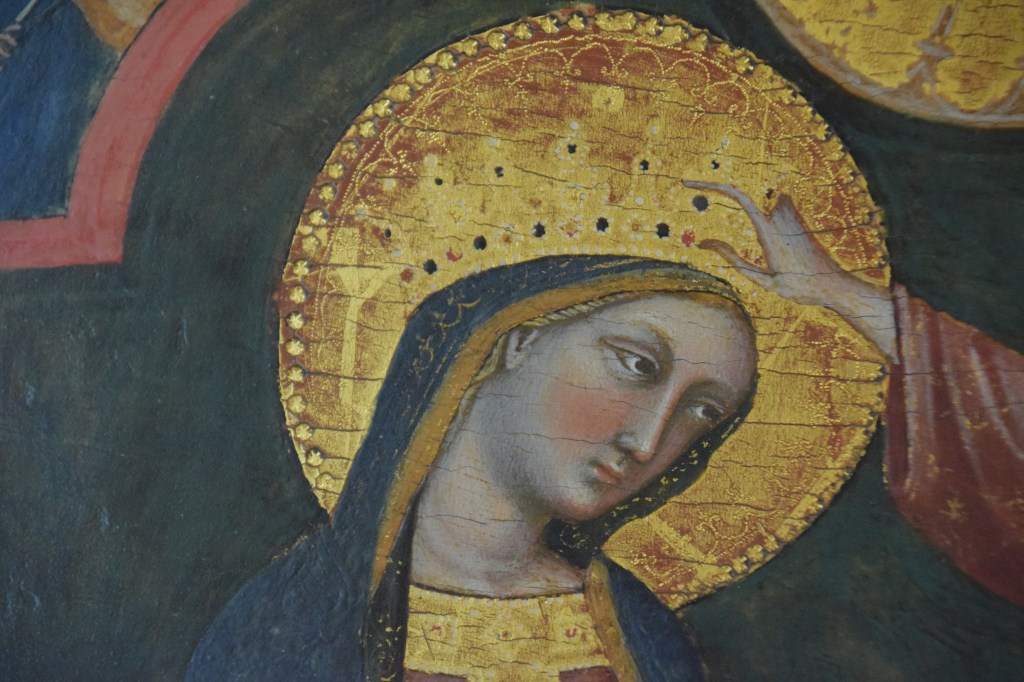
VENICE – Galleria dell’Accademia – Coronation of the Virgin painted circa 1370 by Stefano di Sant Agnese known as Plebanus. The artist was active from 1369 to 1386. He, also, is known as Stefano Veneziano – Stefano the Venetian. Because he signed his works STEFAN PLEBANUS SANCTAE AGNETIS art historians posit that he was a parish priest in the Chiesa di Sant’Agnese of Venice.
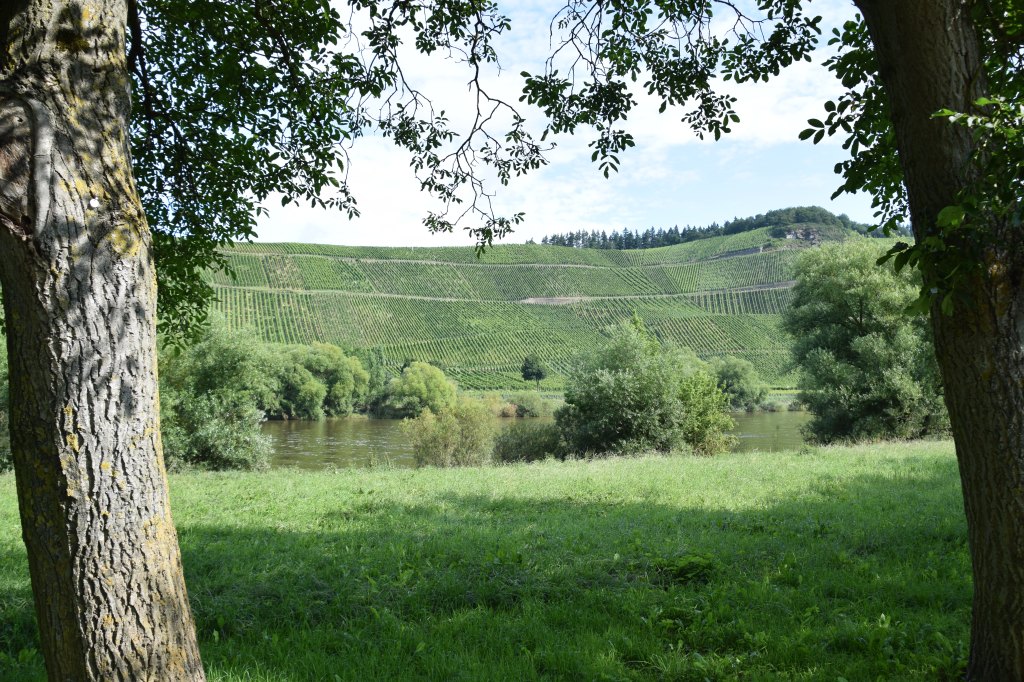
BRAUNEBERG, GERMANY – View of Mosel River from the bike path
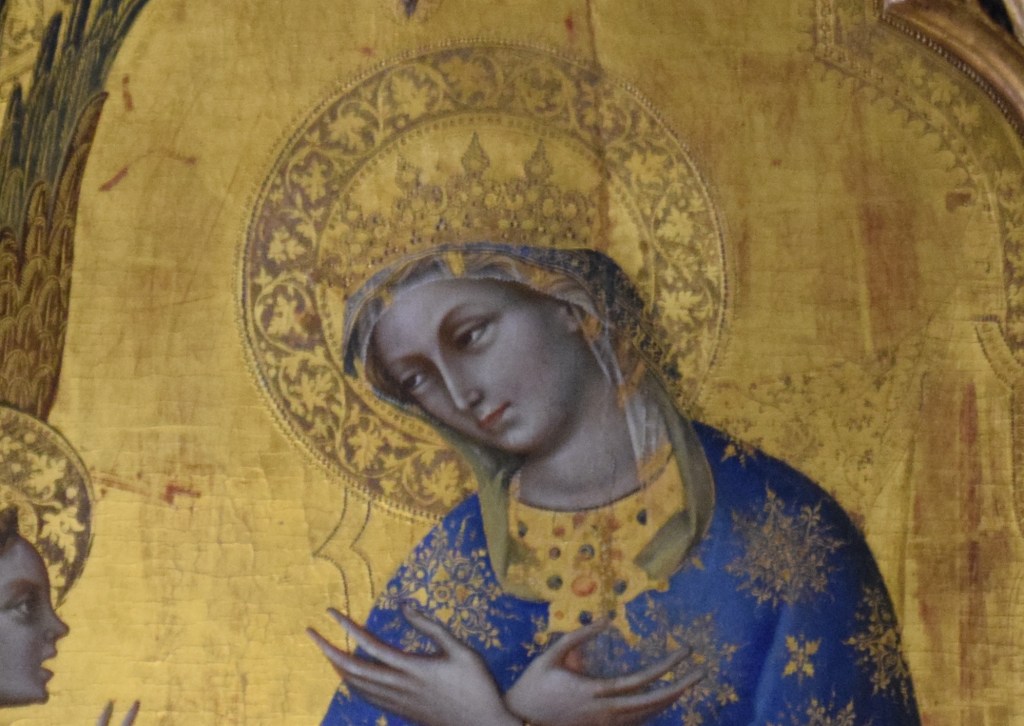
VENICE – Galleria dell’Accademia – Virgin painted in 1356 by Lorenzo Veneziano. This Virgin is from an Annunciation Polytptych known as the Lion Polyptych after Domenico Lion the donor who funded the work and who is painted in miniature at the feet of the Virgin. It was originally painted for the Chiesa di Sant’ Antonio di Castello in Venice, Castello being the sestiere where the 14th-century church is located.
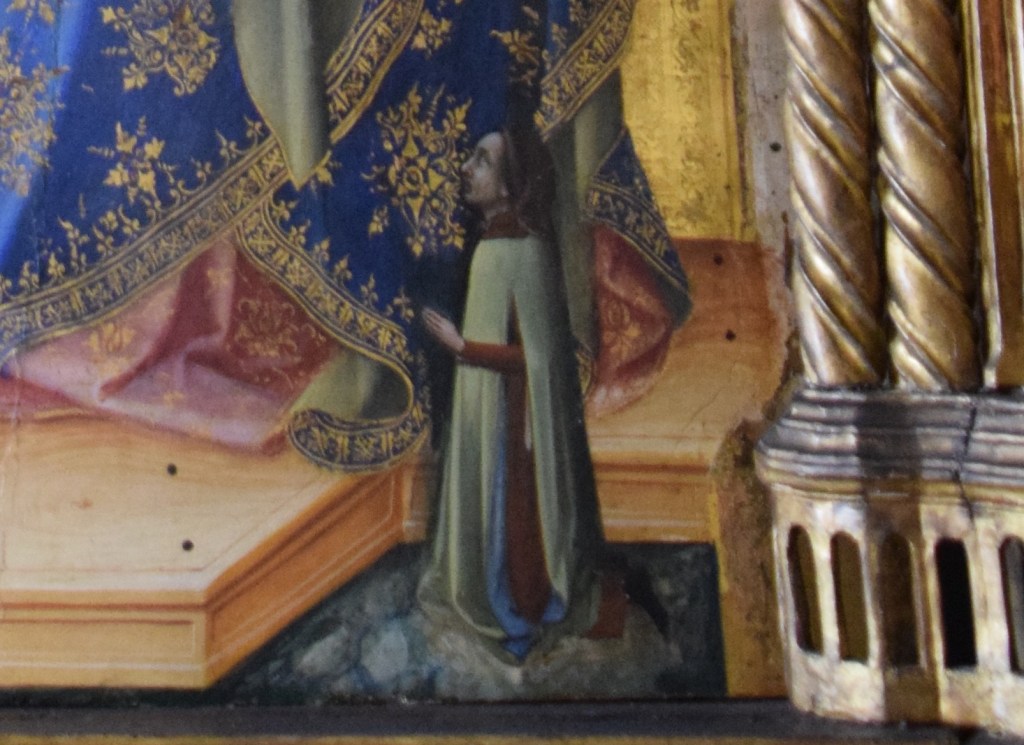
VENICE – Galleria dell’Accademia – The image of Domenico Lion. The Annunciation Polytptych known as the Lion Polyptych after Domenico Lion the donor who funded the work.
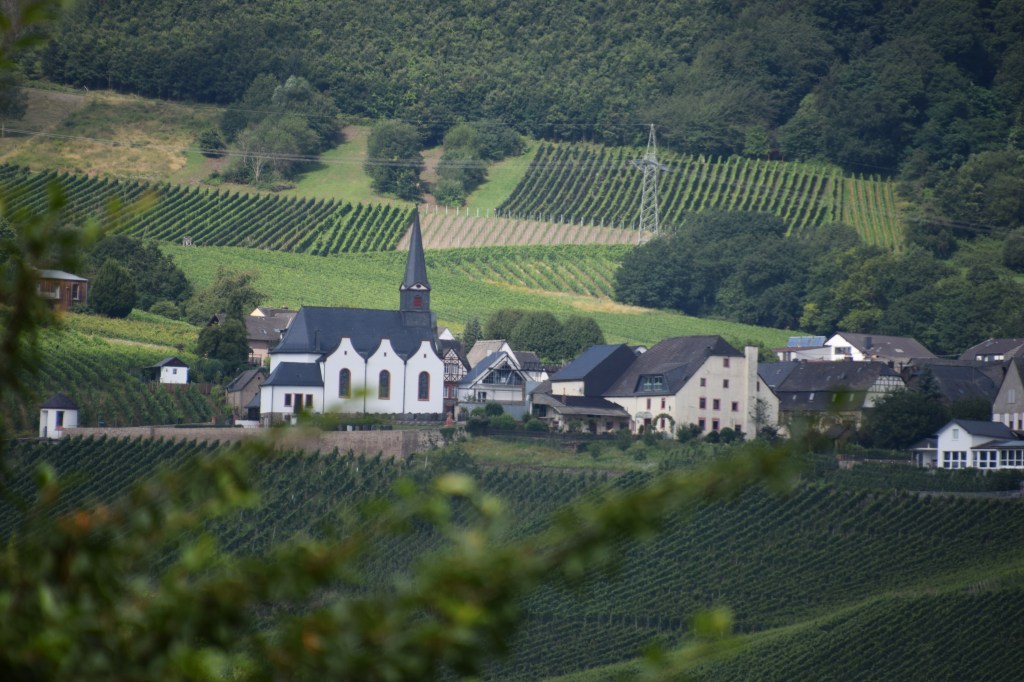
BRAUNEBERG, GERMANY – View of Osann-Monzel from Brauneberg. The village is on the other side of the Mosel River.
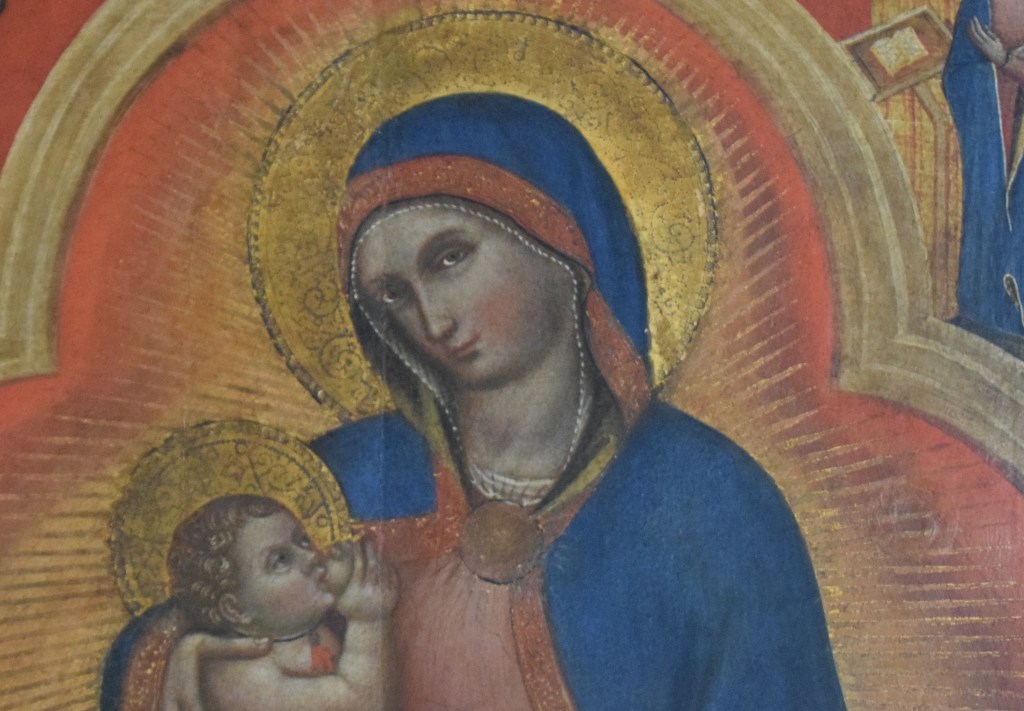
VENICE – Galleria dell’Accademia – Virgin painted in 1377 by Giovanni da Bologna. This is a Madonna del Latte – a nursing Madonna. Mary’s tilted head and directed gaze invites admiration for the infant sucking at her breast. Giovanni da Bologna was documented in Venice and Treviso between 1377 and 1389. Treviso is an ancient city with a system of canals about 28 miles north of Venice.
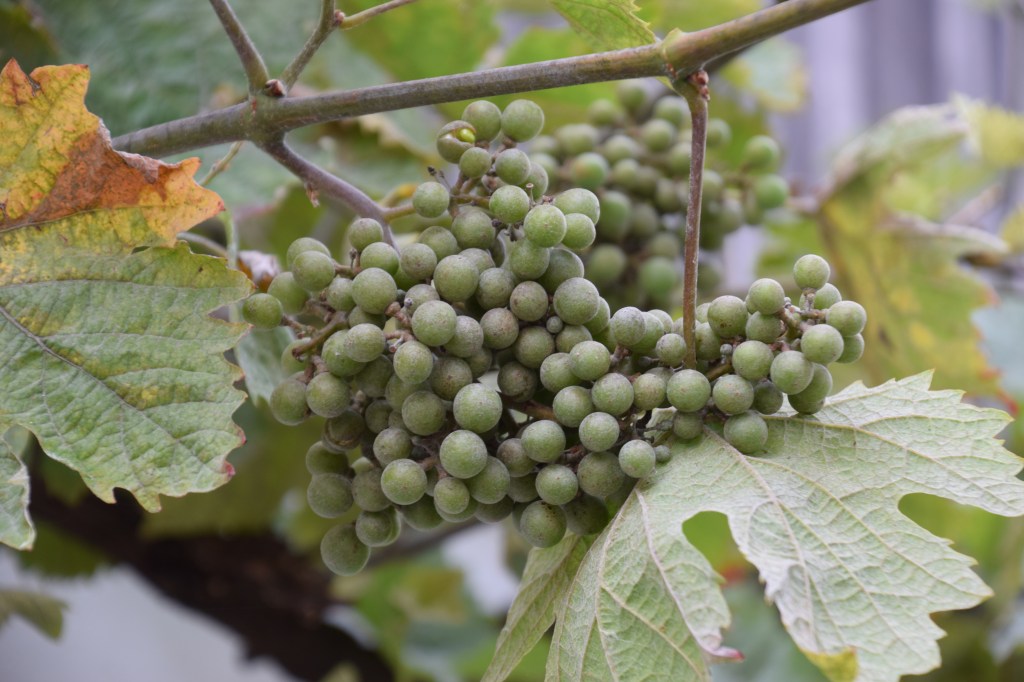
BRAUNEBERG, GERMANY – Grapes ripening on the vine!
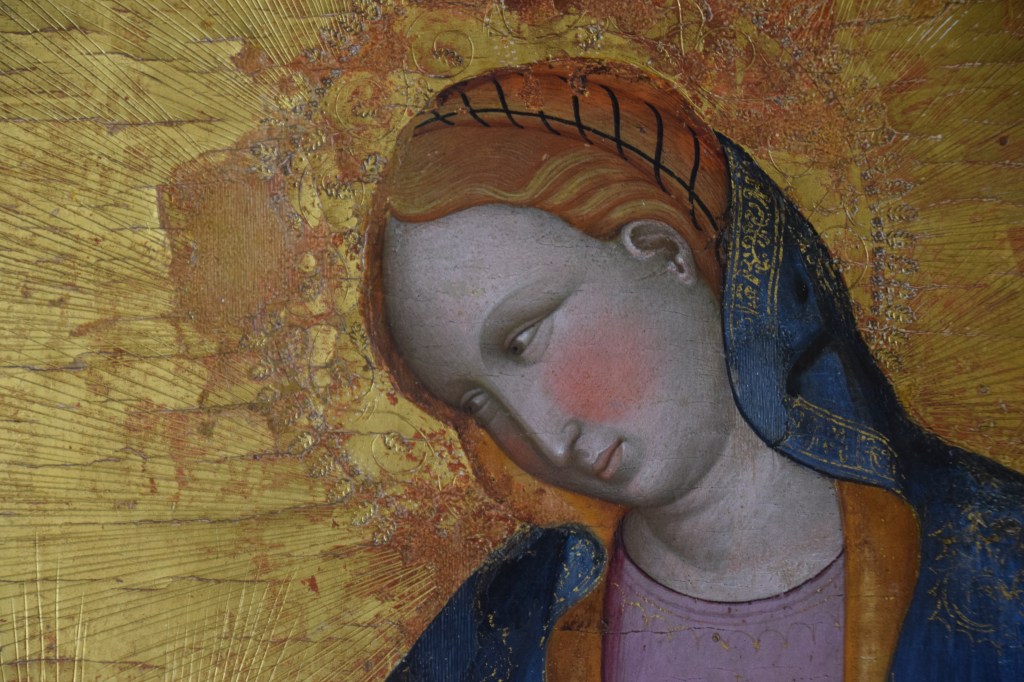
VENICE – Galleria dell’Accademia – Virgin and Child painted in the late-1300’s by the artists of the Scuola Veneziana. This painting shows a more talented artist than the previous polyptych seen in this blog. The Virgin and Child are part of a large painting the top half of which shows the entombment of Christ with Mary and Saint James the Apostle. The Entombment of Christ – his death – is juxtaposed with his infancy in the care of his Mother. Her directed gaze and tilted head symbolize the virtues of motherhood.
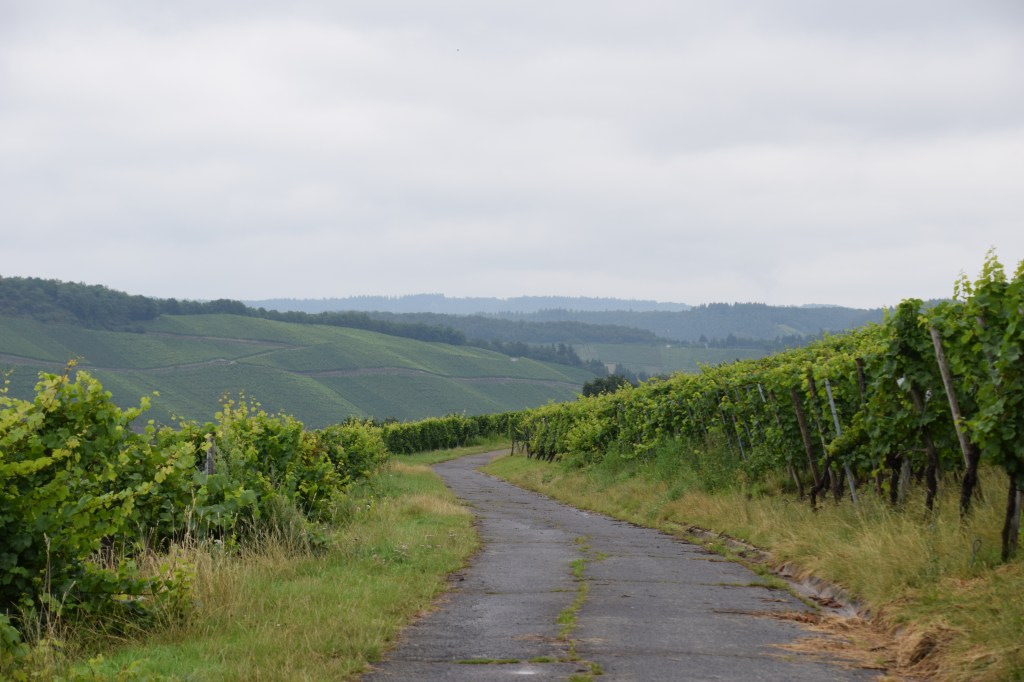
BRAUNEBERG, GERMANY – Paved roads that host tractors and tourists and local and many dog-walkers snake through the Vineyards! One can bike and walk for many miles along both sides of the river.
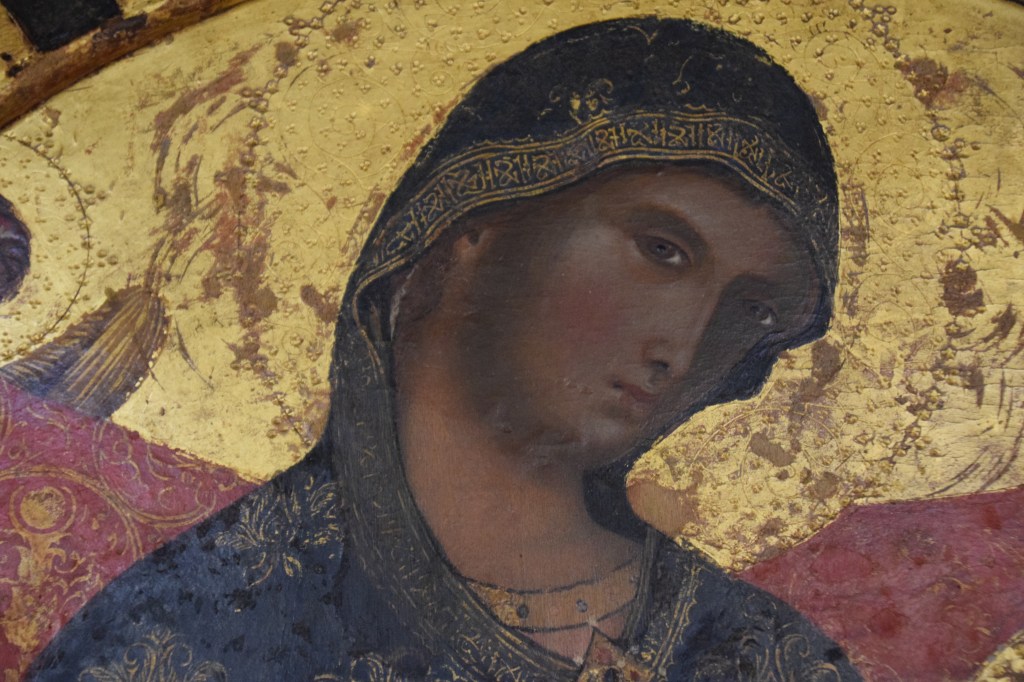
VENICE – Galleria dell’Accademia – Virgin and Child painted circa 1340 by Paolo Veneziano – Paolo the Venetian. Paolo was the instructor of Lorenzo Veneziano. Paolo Veneziano was active from 1333 to 1358 and died in 1362. He is considered the founder of the ‘Venetian School’ of painting. In this work Mary holds a rose for which the infant Jesus reaches as he gazes up at His Mother. Her tilted head and gaze directed at the viewer speak to the coming sorrow of the life of Christ. There is no happy motherhood seen in this work.
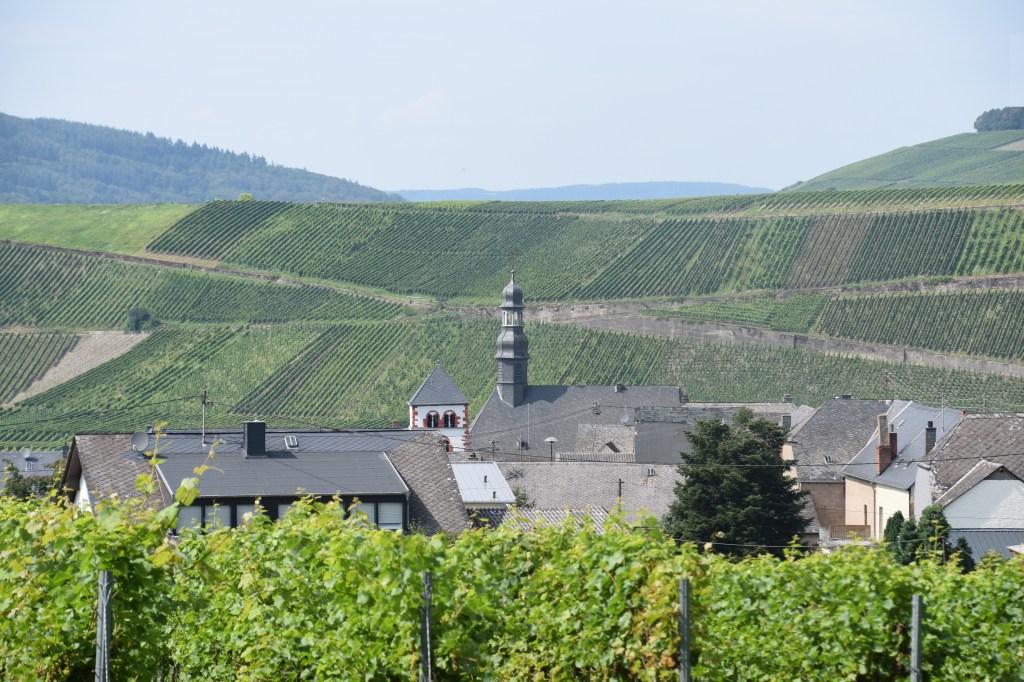
BRAUNEBERG, GERMANY – View of Sankt Josef church from the vineyards. The church was part of a Cloister of nuns established in 1450. The 15th-century chapel was torn down in 1750 to build the new church. Only the pastors of the church are buried on its grounds.
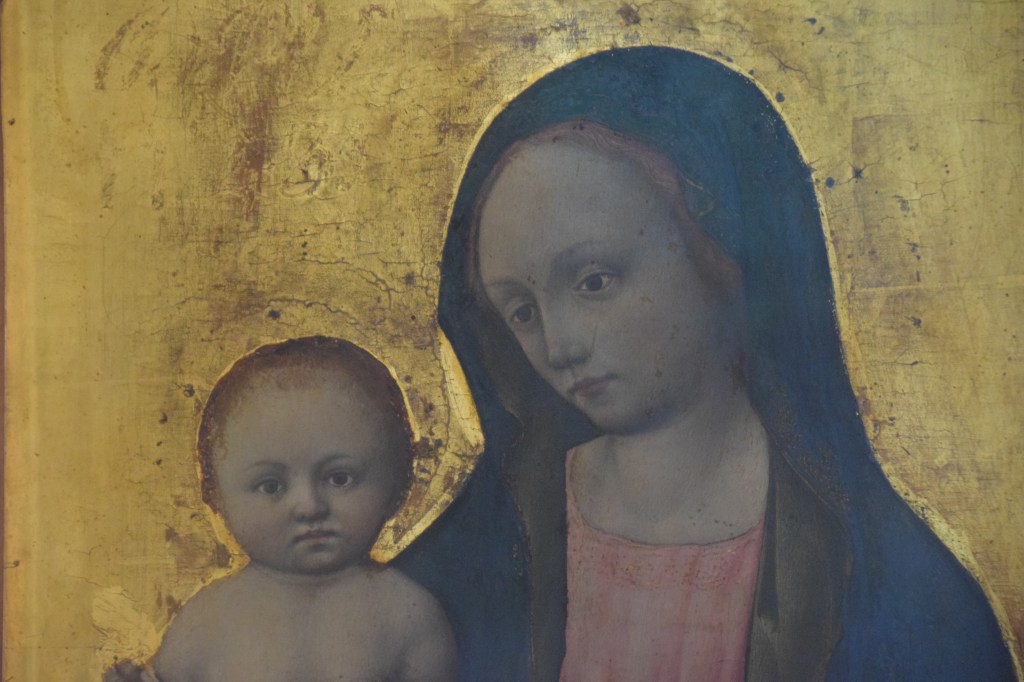
VENICE – Galleria dell’Accademia – Virgin and Child painted circa 1440 by Antonio Vivarini. Antonio Vivarini was believed to have been born on the island of Murano circa 1415 and died in 1480. One can already seen the changes in the faces of the Virgin and Child. The facial features and colors are rounder and softer and more naturalistic. However, the tilted head remains an aspect of the portrayal. There is no joy in this depiction of Mother and Child. Both reflect a somber sadness. Jesus looks directly at the view and Mary casts her gaze and head down in submission to coming loss and grief. A beautiful painting of a sorrowful myth.
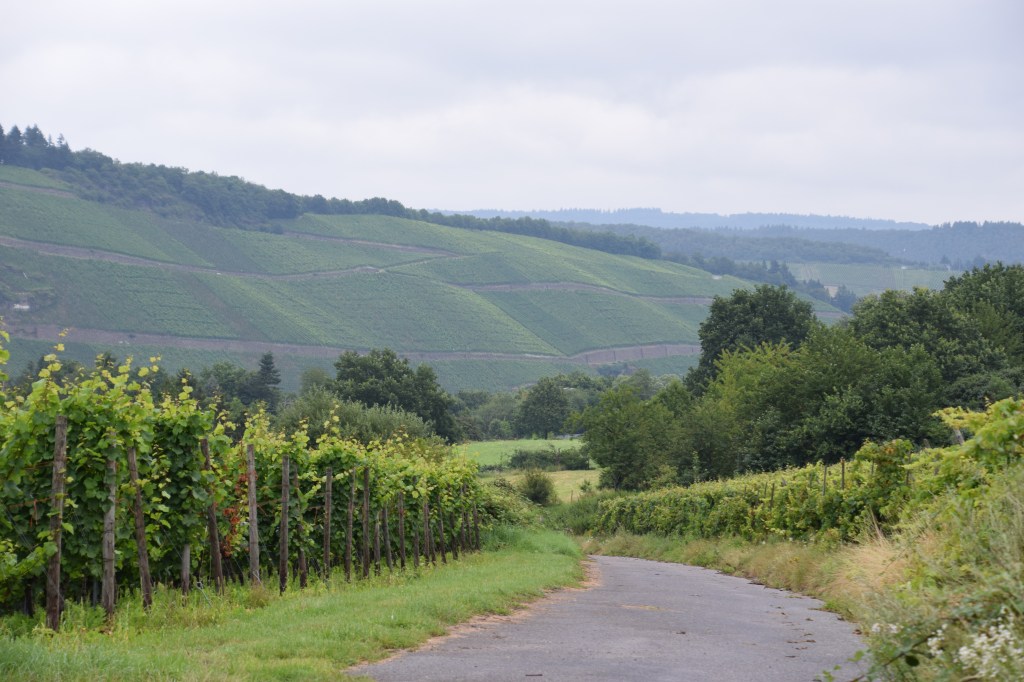
BRAUNEBERG, GERMANY – Walking through the extensive vineyards. The types of grapes are shown in informational signs along the roads which, also, display the name of the winery that owns the vines.

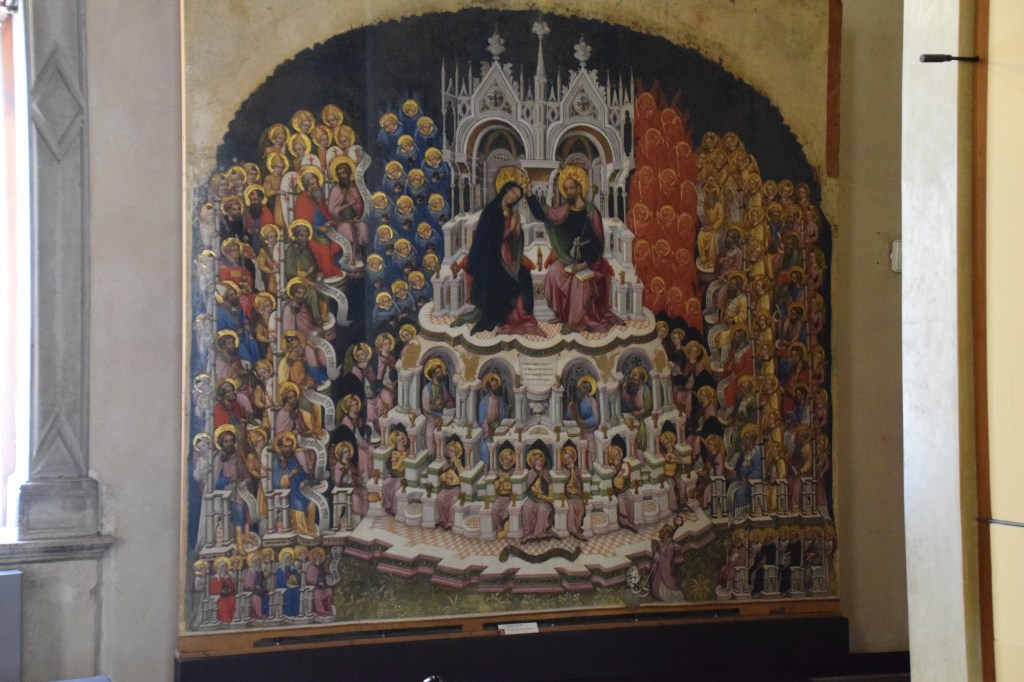
VENICE – Galleria dell’Accademia – Coronation of the Virgin painted in 1439 by the artist know as the Maestro de Ceneda. This is a massive painting – intricate and colorful. It display prevents a good photo no matter what time of day one visits the gallery. Only the Virgin bows her head in this work
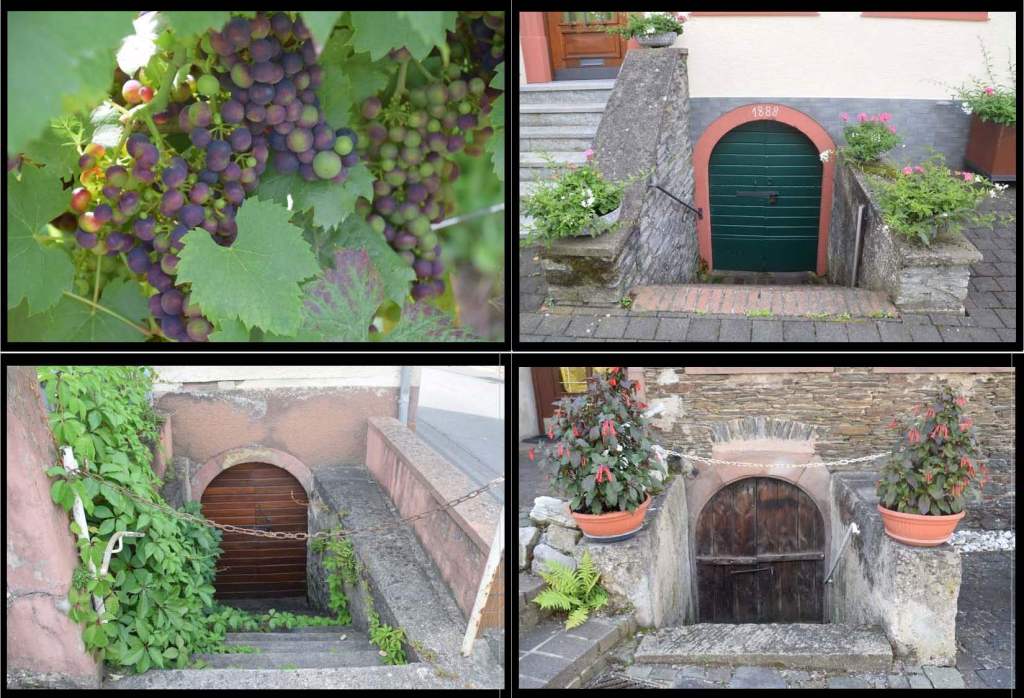
RAUNEBERG, GERMANY – A montage of Weinkeller doors. All the old homes here have these ‘underground’ doors leading to their wine cellars.
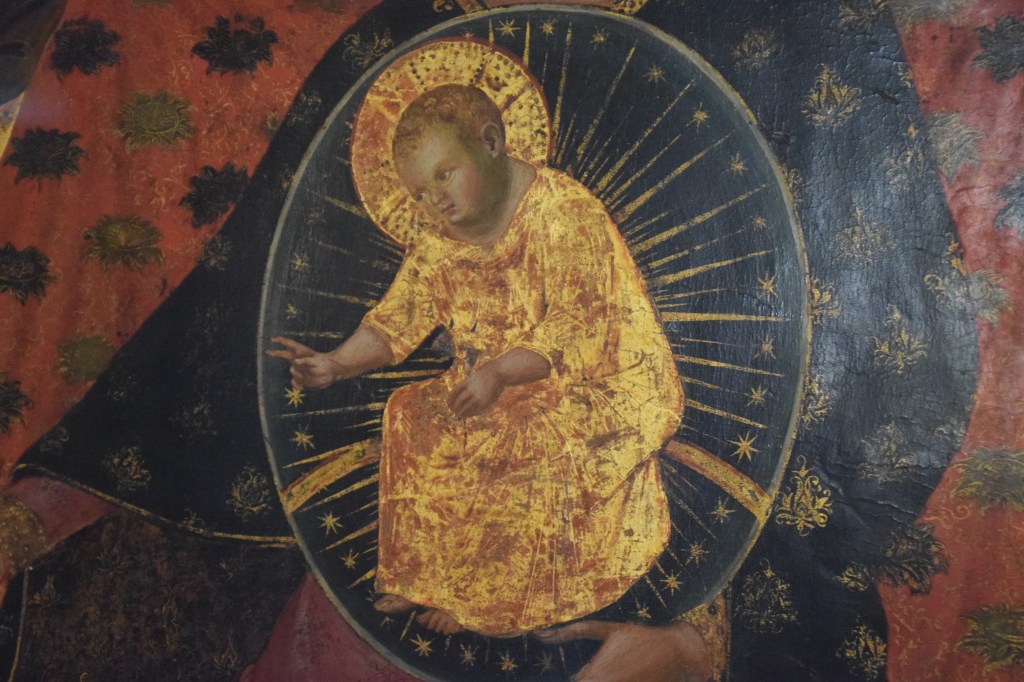
VENICE – Galleria dell’Accademia –Jesus in a sacred mandorla being held by the Virgin – painted by Paolo Veneziano in 1350. I thought I would end with the depiction of Jesus – the focus of all of the sacred art of this century – as painted by the father of the Venetian School of art – Paolo Veneziano. A ‘cropped’ Mary was posted previously in this blog. This painting is difficult to photograph because of its placement in the bright room and the fact that it is covered by glass to preserve it. The Madonna and Child and raiments are so bright and colorful – my photos do not do the work justice. Although Jesus’ gazes down and outward offering a benediction to the viewer – his head is not bowed as is his mother’s.
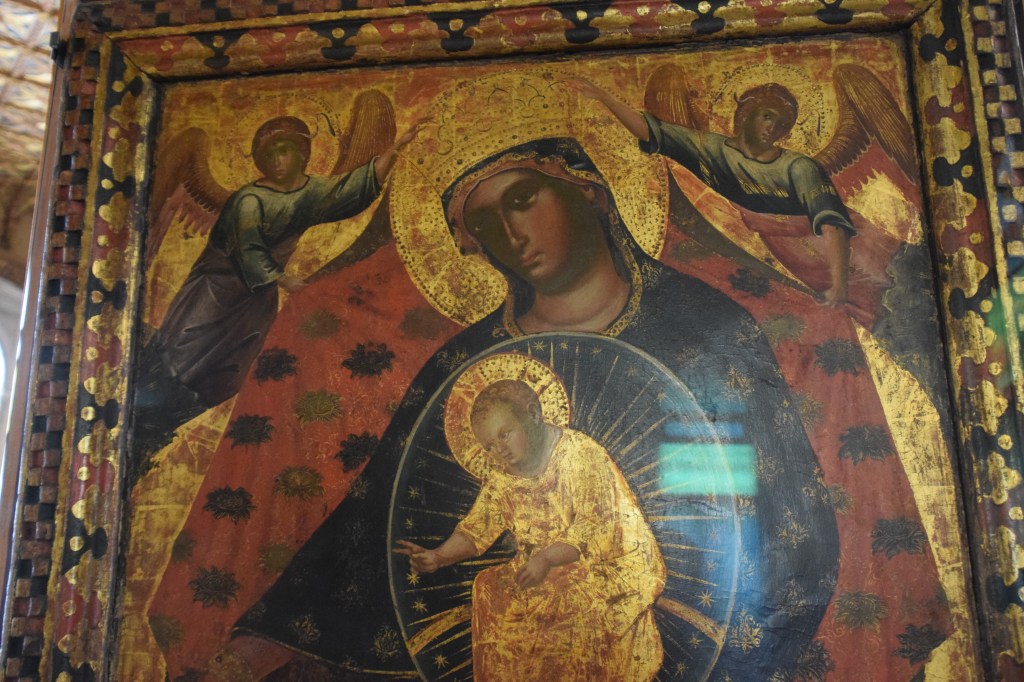
VENICE – Galleria dell’Accademia –Madonna and Child – Jesus in a sacred mandorla being held by the Virgin – painted by Paolo Veneziano in 1350.
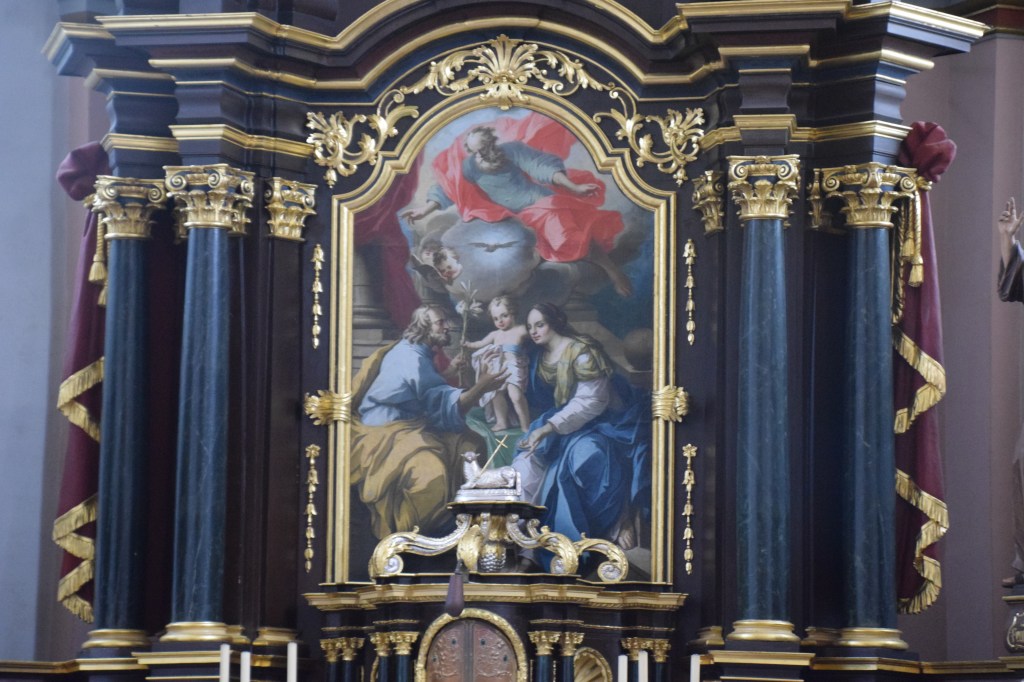
BRAUNEBERG, GERMANY – My last image of Brauneberg. Taken through plate glass at a slight side angle – this is the Baroque altar painting from the Church of Sankt Josef. The church is closed except for mass but the parish has installed a glass wall to allow tourists to see inside. One can see the more modern and naturalistic depiction of the Virgin. Here is a Sacra Famiglia with Jesus and Joseph holding Joseph’s blooming staff. Men in ancient times brought a staff to the formal betrothal of a virgin. The virgin being courted chose from the men who came to the formal ceremony. When Mary accepted Joseph’s proposal of marriage – his staff blossomed into lilies. The lily – the flower which the Archangel Gabriel hands to the Virgin to announce her pregnancy and the flowers of the staff of Joseph symbolize in Christianity both purity and fertility. .
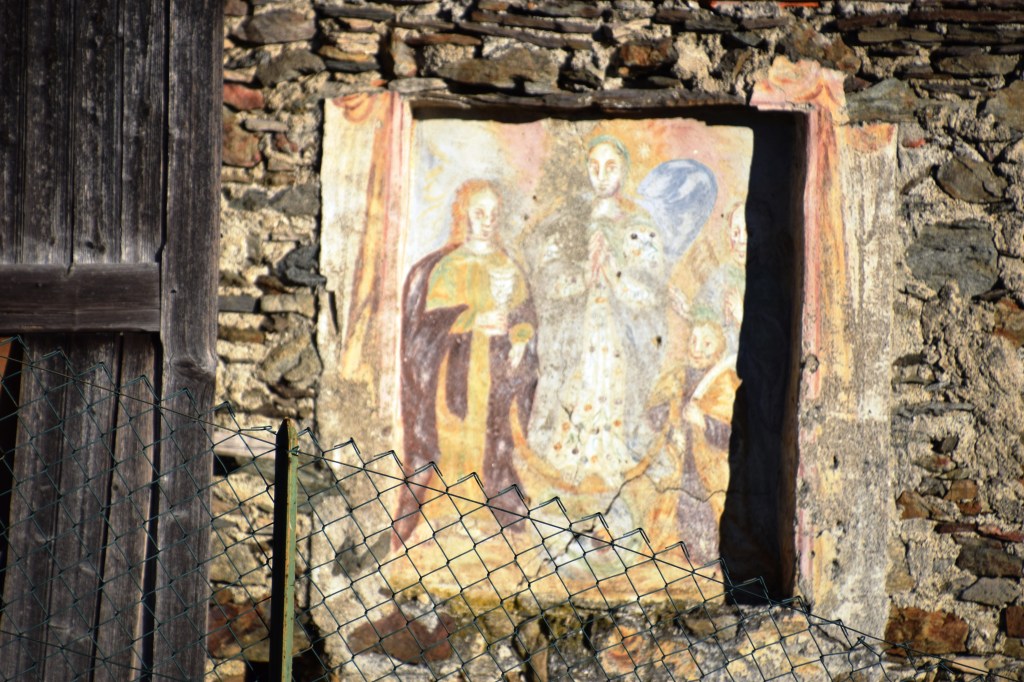
DUBINO, ITALY – Wall Madonna – I end this blog with a Wall Madonna from Dubino – the town in the Valtellina where I now live. This is my favorite Dubino fresco but it is certainly not the best preserved or the highest quality art. It is located on the via Dosso on the side of what was once likely a one-room home but is now a small stone barn. via Dosso is an old road running from the far western border of the village and across the mountain face to Nuova Olonio. Dosso was once a tiny quarter of Dubino and here a small cluster of ancient stone houses still stands. An enthroned Virgin is depicted standing with one saint to her right and two to her left. The showed of the recessed fresco obscures the third saint. It was clearly once more colorful and a likely restoration has damaged what was surely a much better executed – by a more talented artist – original version of this 18th-century painting. I end here and hope you have enjoyed the journey.
 Wall Madonna's of the Valtellina