PONTE IN VALTELLINA – Wall Madonna’s and other frescoes
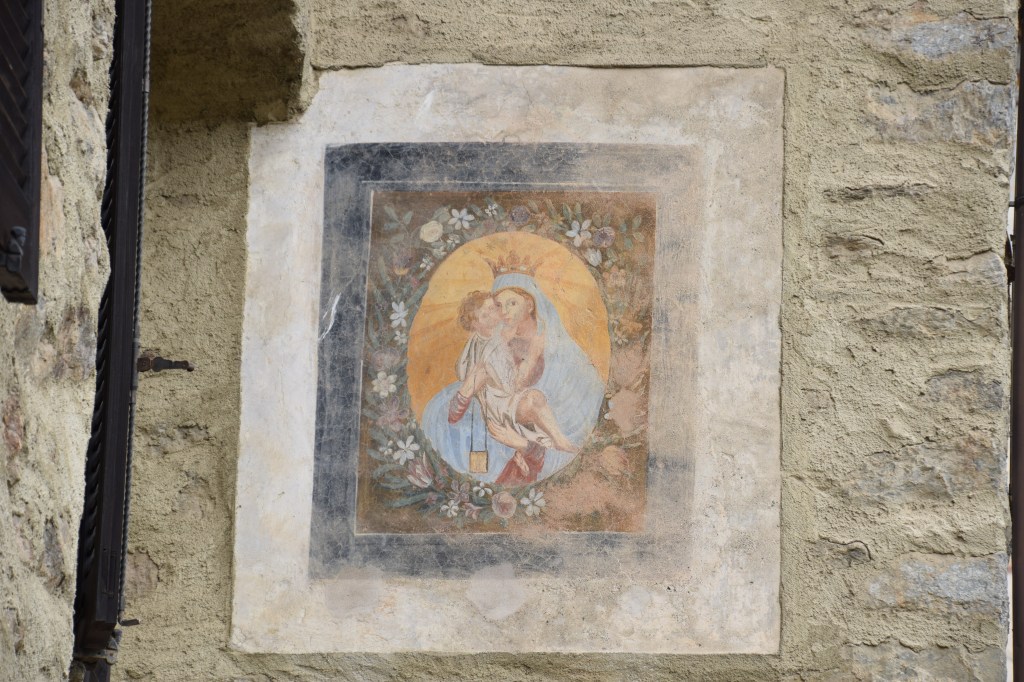
PONTE IN VALTELLINA – Wall Madonna – Madonna del Carmelo, late 18th-century – the fresco is featured on page 14 of the the 2010 article “Segni sacri sulle case: Pittura murale devozionale tra comunicazione e memoria” written by Giovanna Virgilio and published by the Comunità Montana Valtellina di Sondrio.
This image of Mary called the Madonna del Carmelo – shows her holding the scapular – a part of the religious habit worn by the monks who call themselves Carmelites. This special garb is associated with a group of 12th-century hermits who went to Carmel (one of the states associated with the crusades) in order to devote themselves to prayer and serving the poor. They established their order there and chose Mary as their patron.
Mary is called the Queen of Carmel who offers special support for those who wear the scapular. There are two types of scapular. One type is associated with the Benedictines from the 7th-century. This is a long piece of cloth worn over the shoulder. This scapular is the devotional type that is worn by the ordained or laypersons to signify their devotion to the Christian lifestyle. Scapular like this are smaller and worn like a necklace. They can have embroidered or embossed prayers or verses on them.

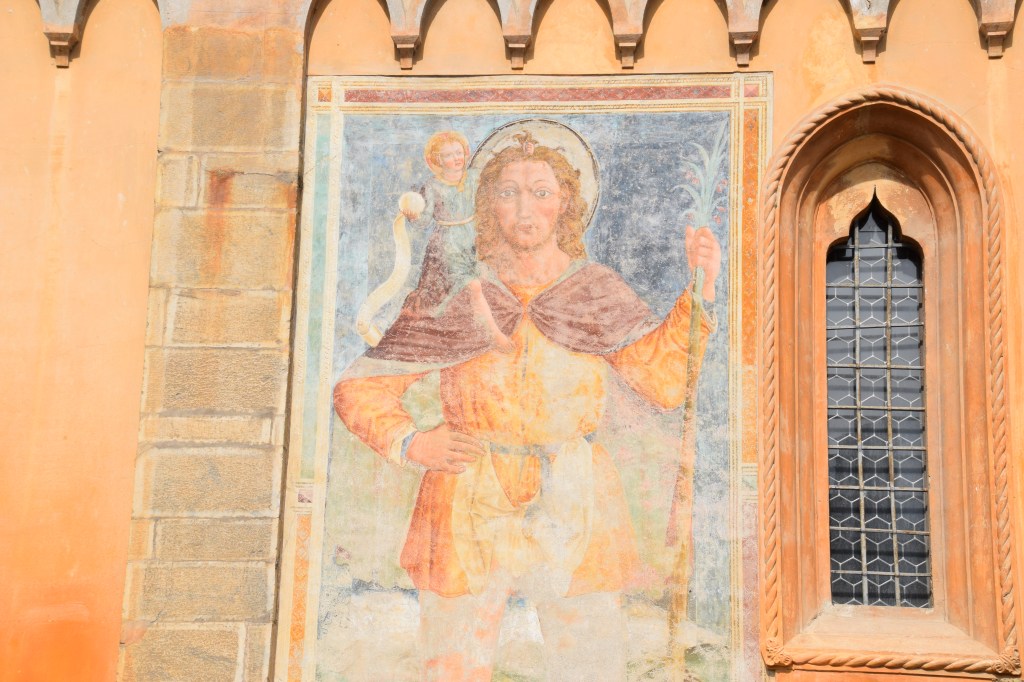
PONTE IN VALTELLINA – Chiesa di San Maurizio – 14th-century – St Christopher with Jesus as the Salvator Mundi on his shoulder – the fresco was painted in the 15th-century and the author was not recorded. This gorgeous artwork graces the right side of the church if one is standing facing the entry doors.
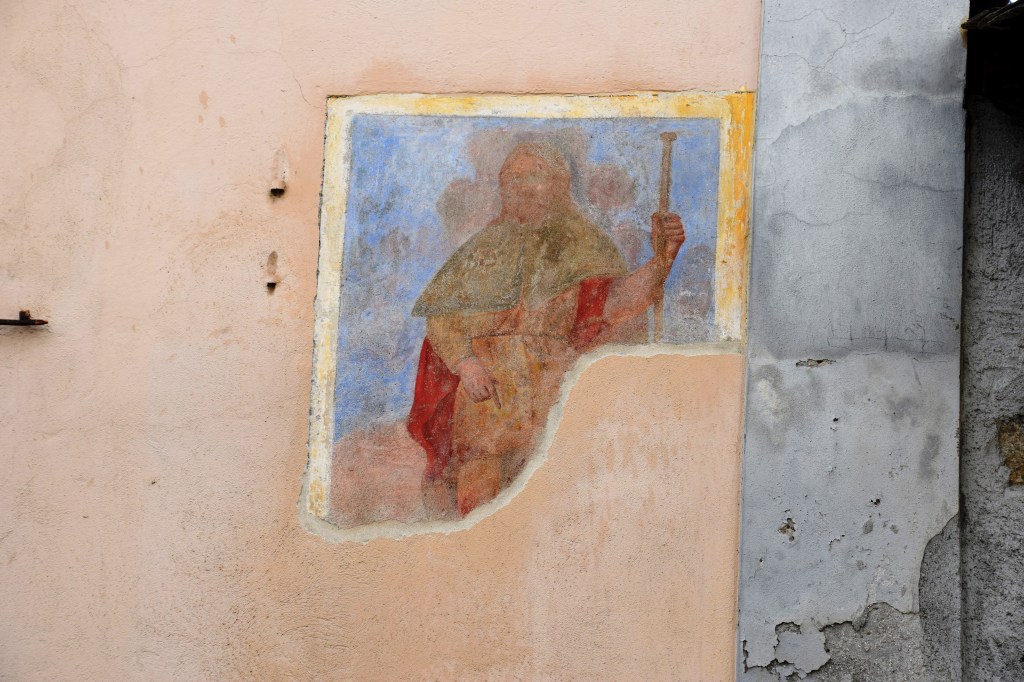
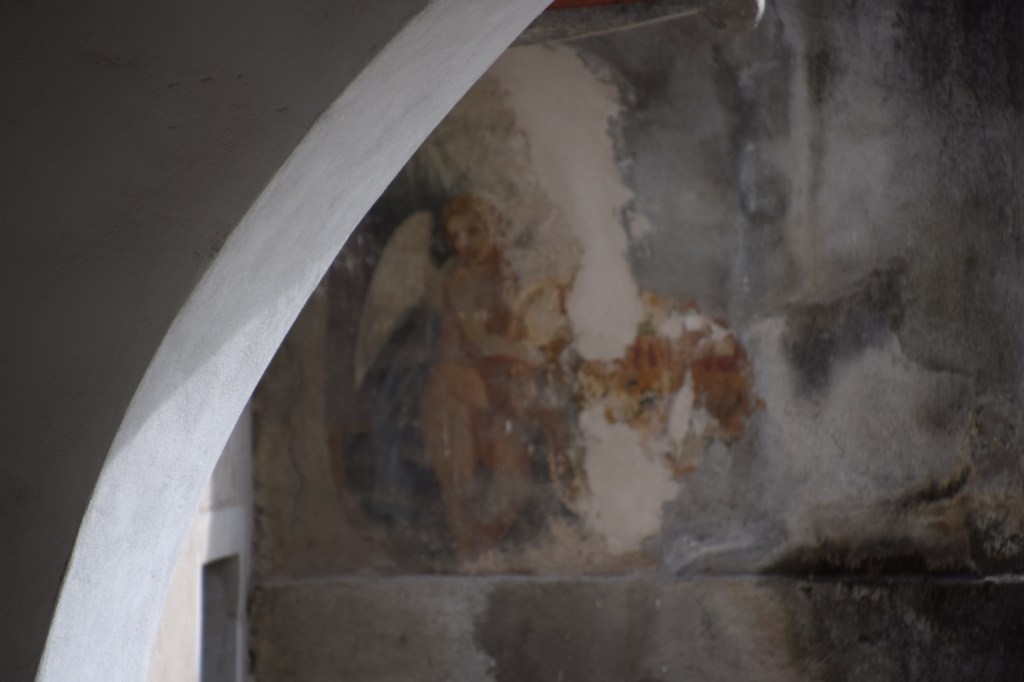
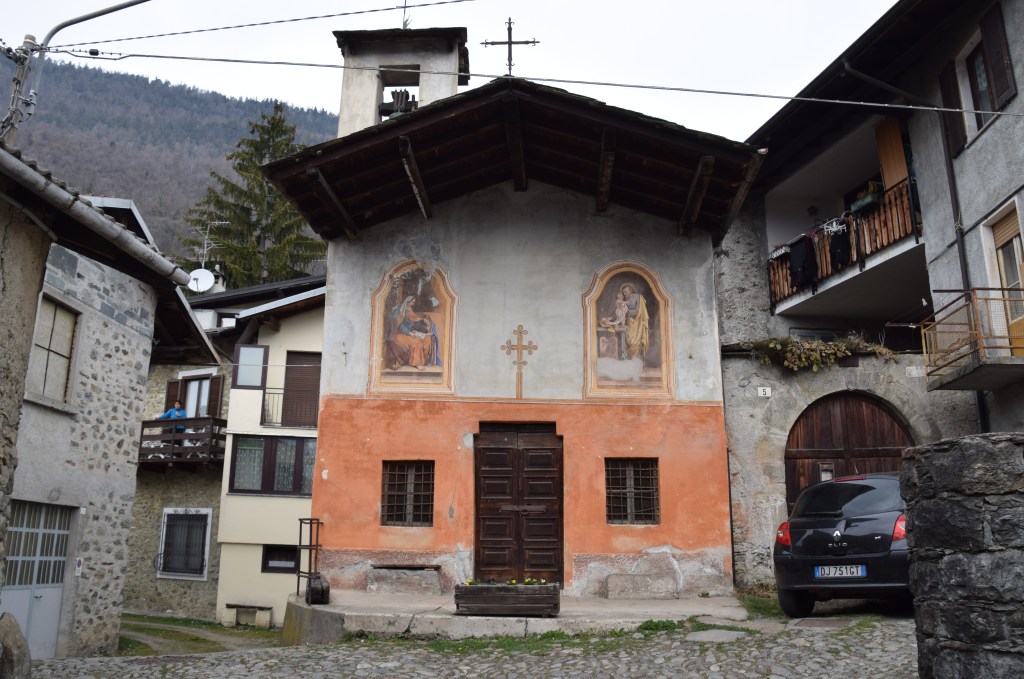
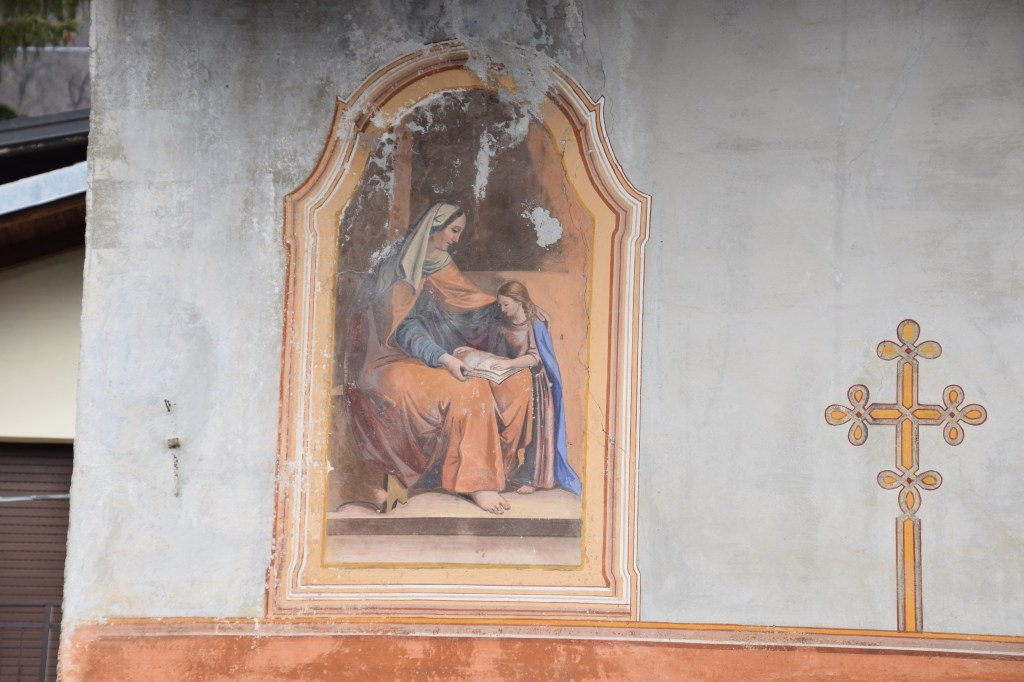
PONTE IN VALTELLINA – Chiesa di San Giuseppe – I am not certain I have correctly identified this small church. I cannot locate information. It is found in the back of the village in its own small square. It was clearly updated probably in the 19th-century. There are two frescoes. On the left is the Virgin Mary tutoring Jesus. One can clearly see this is Jesus even though the child has long hair and feminine qualities. When Jesus and Mary are depicted together the color of the mantles and gowns are reversed. Here Mary wears a red mantle and a blue gown and Jesus wears a blue mantle and a red gown. The colors are symbolic with blue representing at times purity, the heavens and the majesty of enthronement. The color symbolism and imagery, also, is recursive to the originating icons of Byzantium. At that time the color blue indicated royalty. The red symbolizes the human or earthy natures of Jesus and Mary.
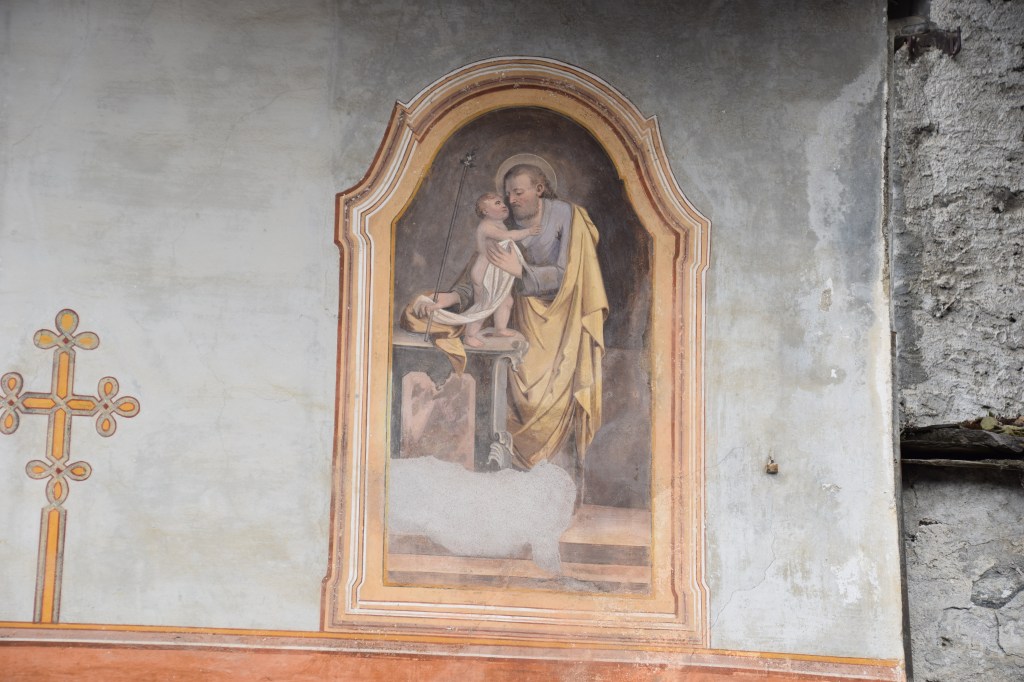
On the right is Joseph who is seen interacting with Jesus as a toddler. We know this is Joseph by the flowering staff that he holds. The color symbolism is not relevant for imagery not depicting Jesus and the Great Virgin
 Wall Madonna's of the Valtellina