CHIURO – Wall Madonna’s and other frescoes
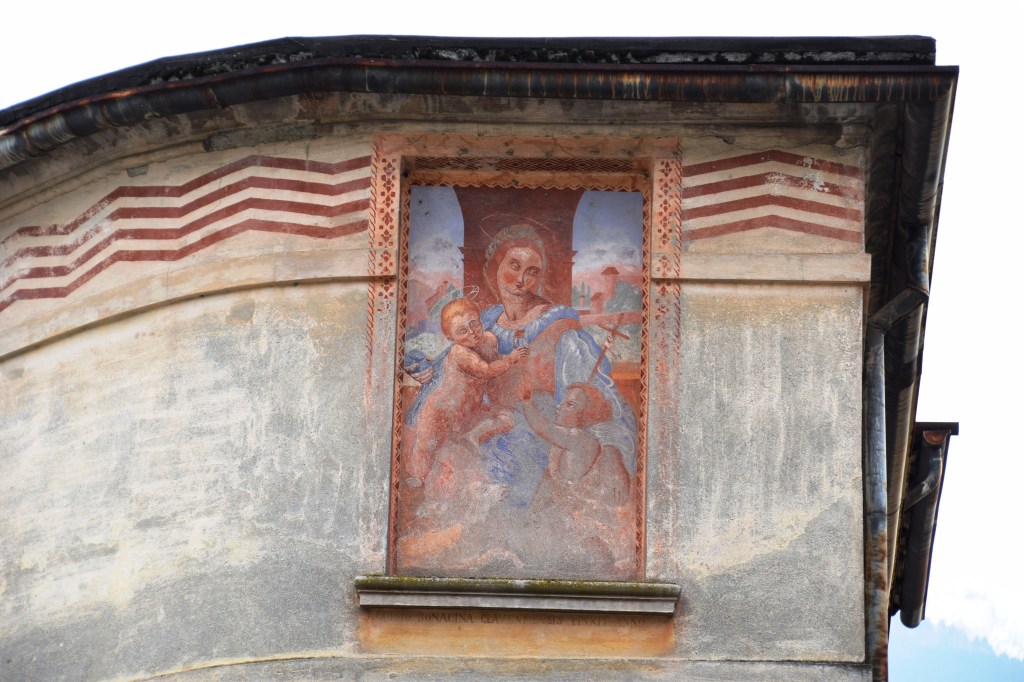
CHIURO – Wall Madonna – Madonna con Bambino con san Giovannino – painted circa 1928 by Aloisio Bonacina. This Wall Madonna is featured on page 49 of the 2010 article “Segni sacri sulle case: Pittura murale devozionale tra comunicazione e memoria” written by Giovanna Virgilio and published by the Comunità Montana Valtellina di Sondrio
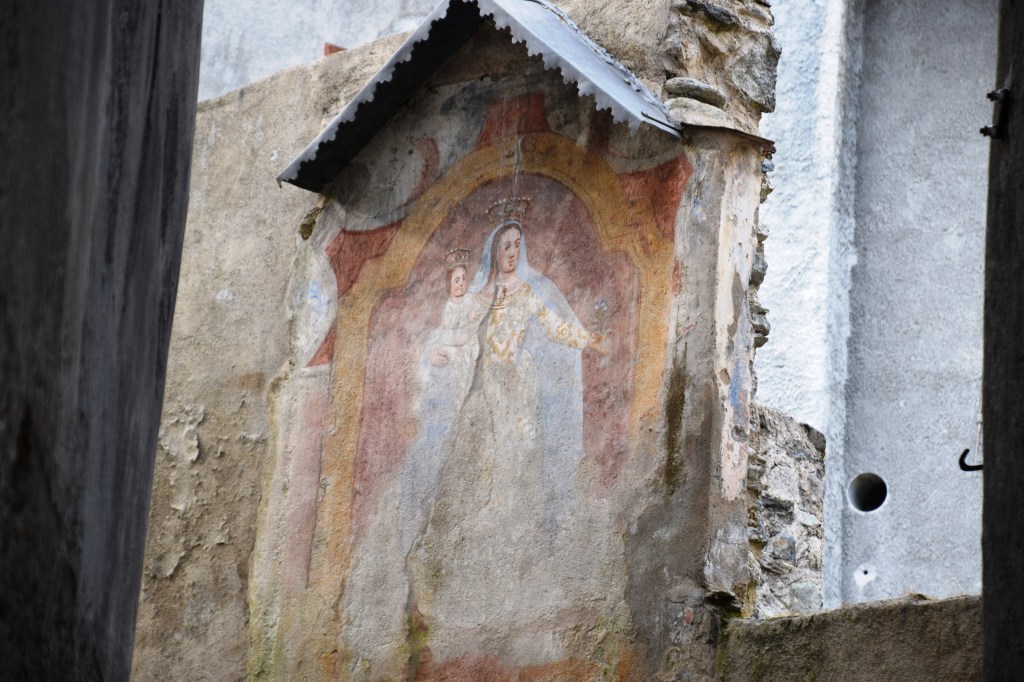
CHIURO – Wall Madonna – Enthroned Madonna and Child – I love the positioning of this large fresco and the remains of its once vibrant colors and intricate details. The fresco dominates a narrow street and the surrounding wall of an ancient home.
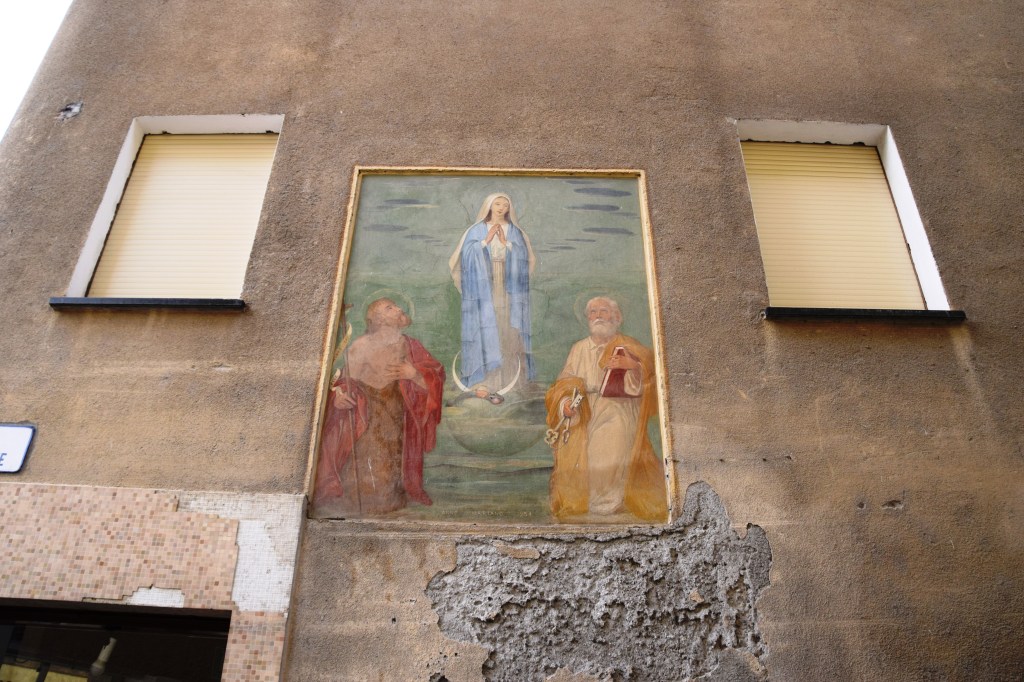
CHIURO – Wall Madonna – Madonna Immacolata con san Giovanni Battista e san Pietro – painted in 1954 by Torildo Conconi. This fresco is featured on page 25 of the 2010 article “Segni sacri sulle case: Pittura murale devozionale tra comunicazione e memoria” written by Giovanna Virgilio and published by the Comunità Montana Valtellina di Sondrio
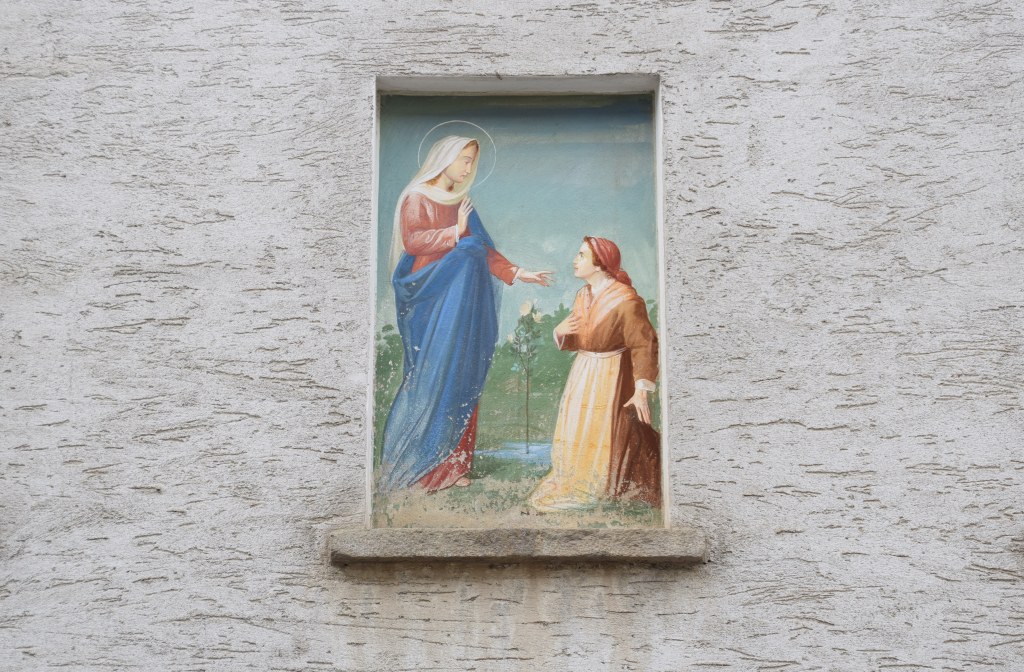
CHIURO – Wall Madonna – Apparizione della Madonna di Caravaggio – painted in 1955 by Torildo Conconi. This fresco is featured on page 33 of the 2010 article “Segni sacri sulle case: Pittura murale devozionale tra comunicazione e memoria” written by Giovanna Virgilio and published by the Comunità Montana Valtellina di Sondrio
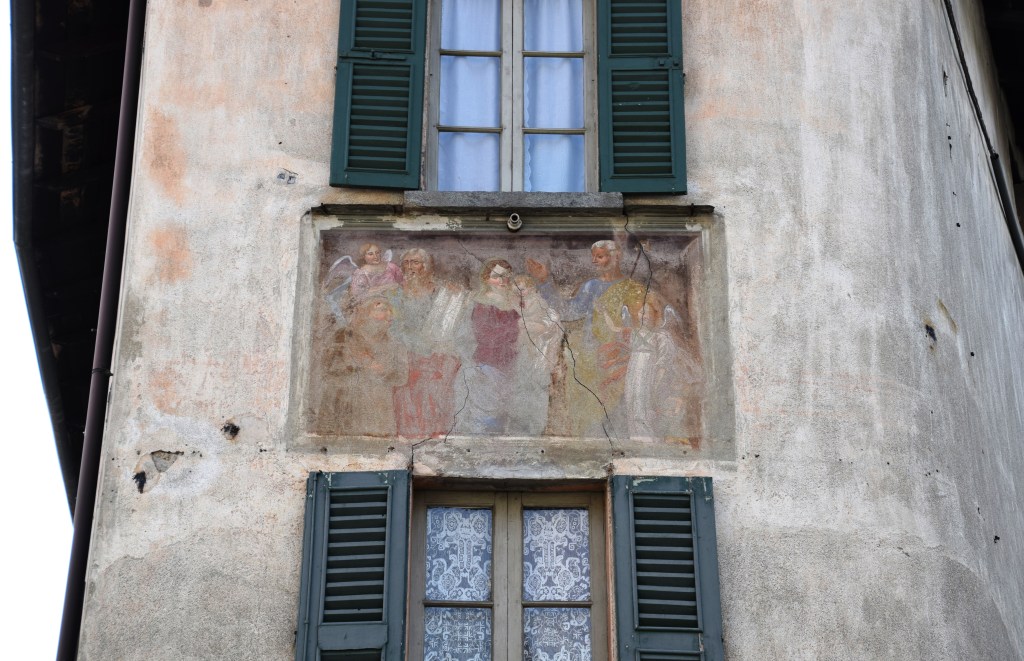
CHIURO – Wall Madonna – Madonna con Bambino, san Matteo, san Giuseppe, san Raffaele arcangelo e un santo francescano – painted in the first half of the 19th-century and featured on page 37 of the 2010 article “Segni sacri sulle case: Pittura murale devozionale tra comunicazione e memoria” written by Giovanna Virgilio and published by the Comunità Montana Valtellina di Sondrio
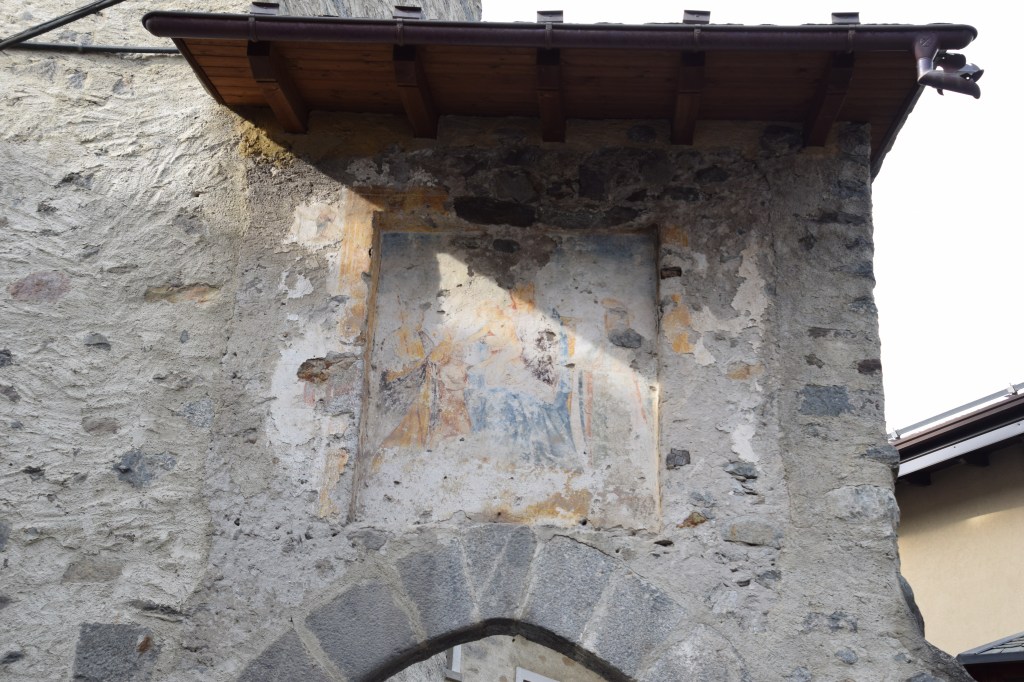
CHIURO – Wall Madonna – eroded but clearly an enthroned Madonna and Child between two saints.
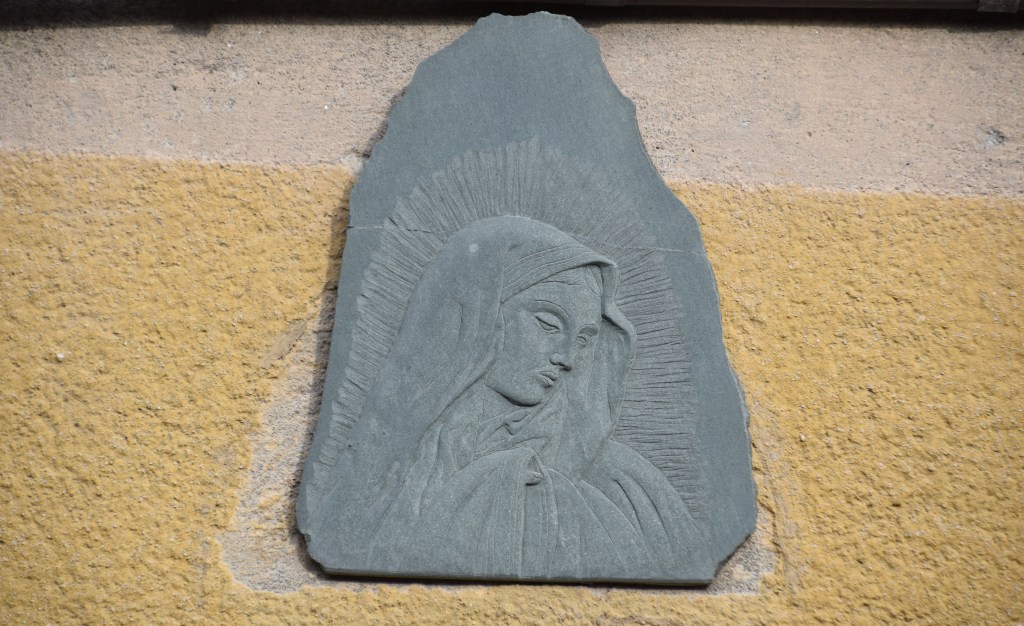
CHIURO – Wall Madonna – a modern Wall Madonna carved in stone and seen above the entry door to a home that has been renovated
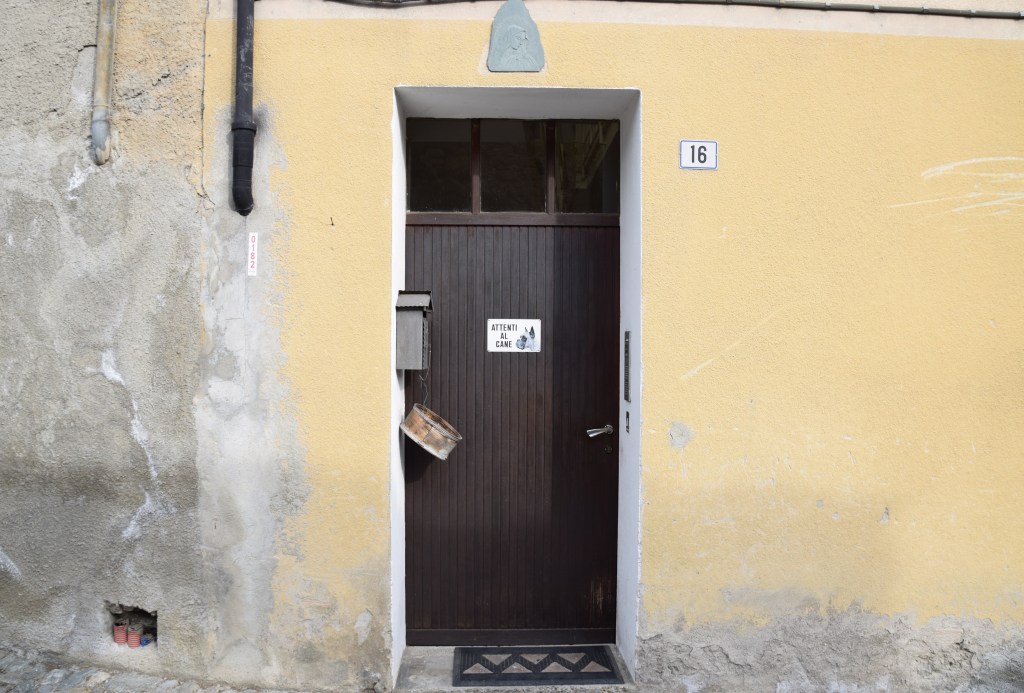
CHIURO – Wall Madonna – a modern Wall Madonna placed above the entry door to a renovated home
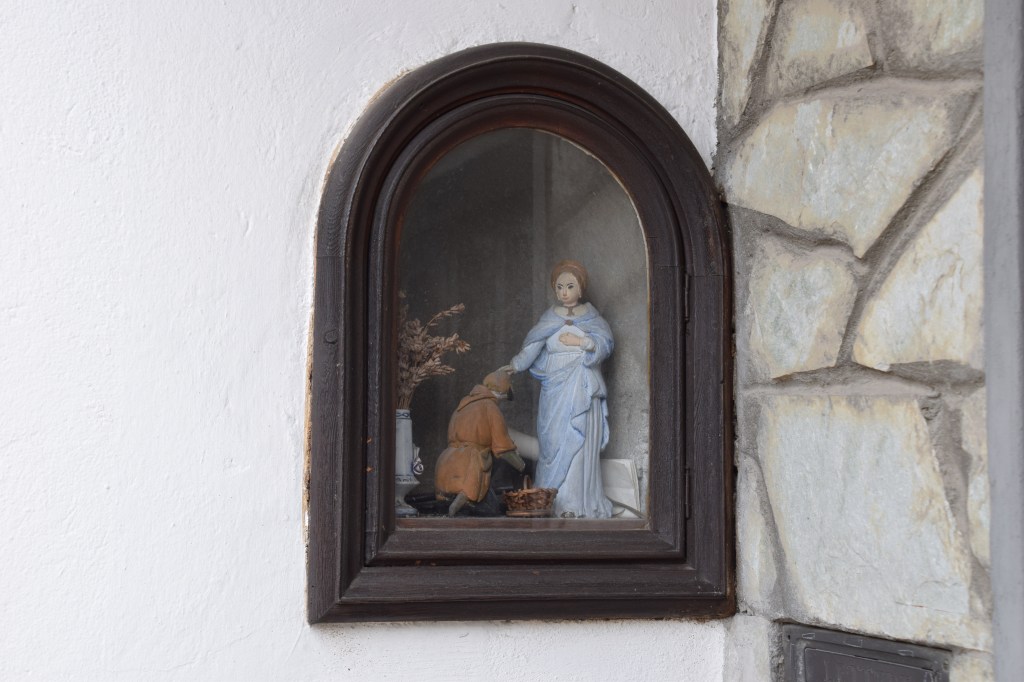
CHIURO – Wall Madonna – a modern Wall Madonna
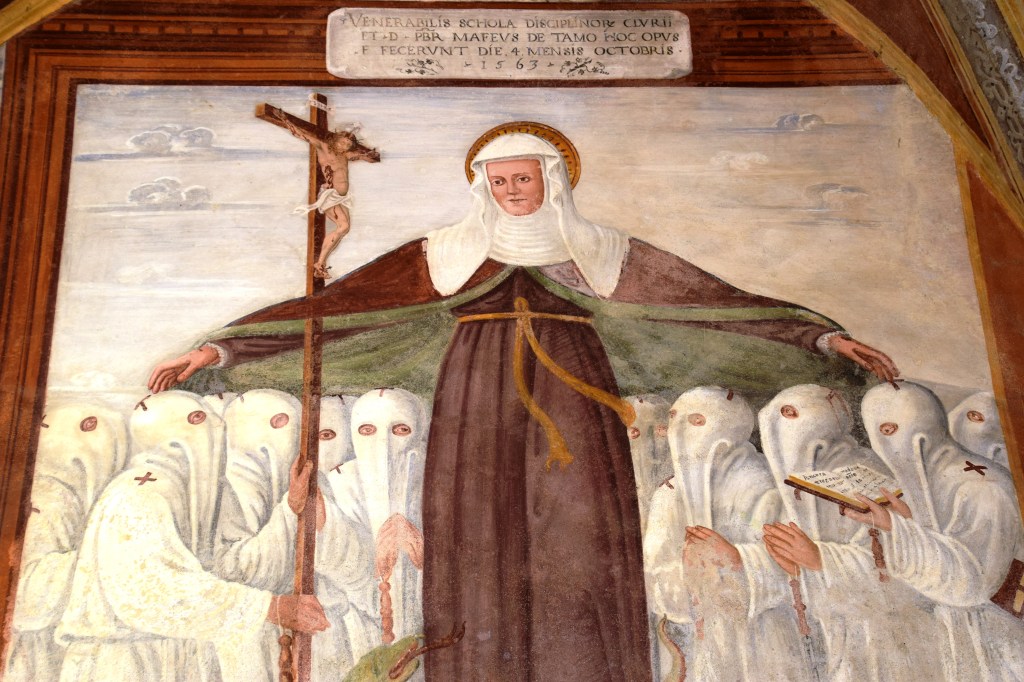
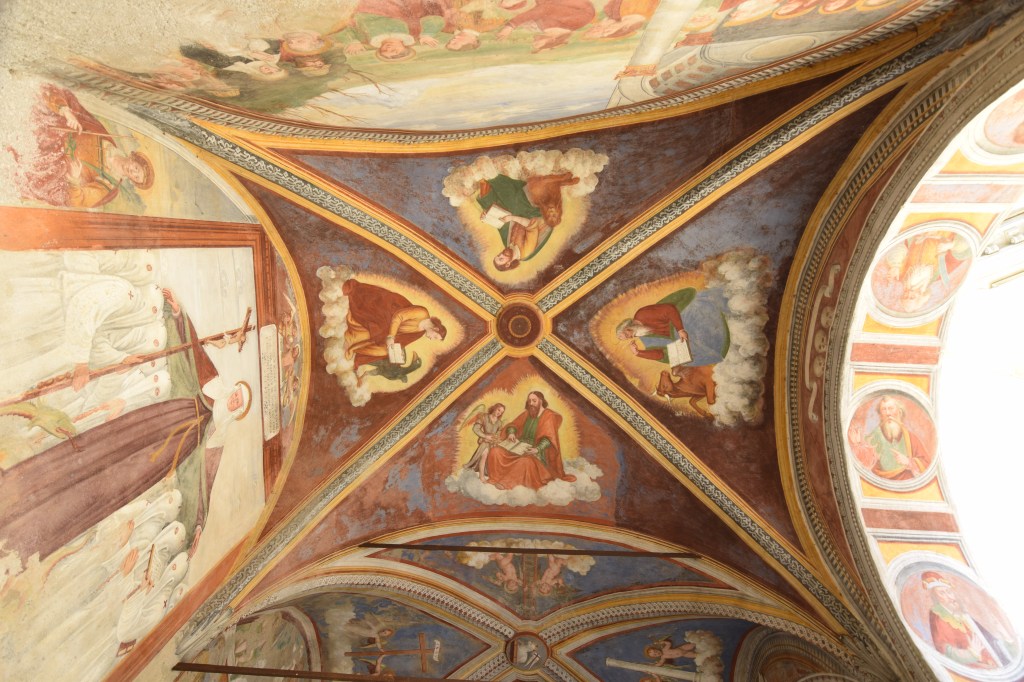
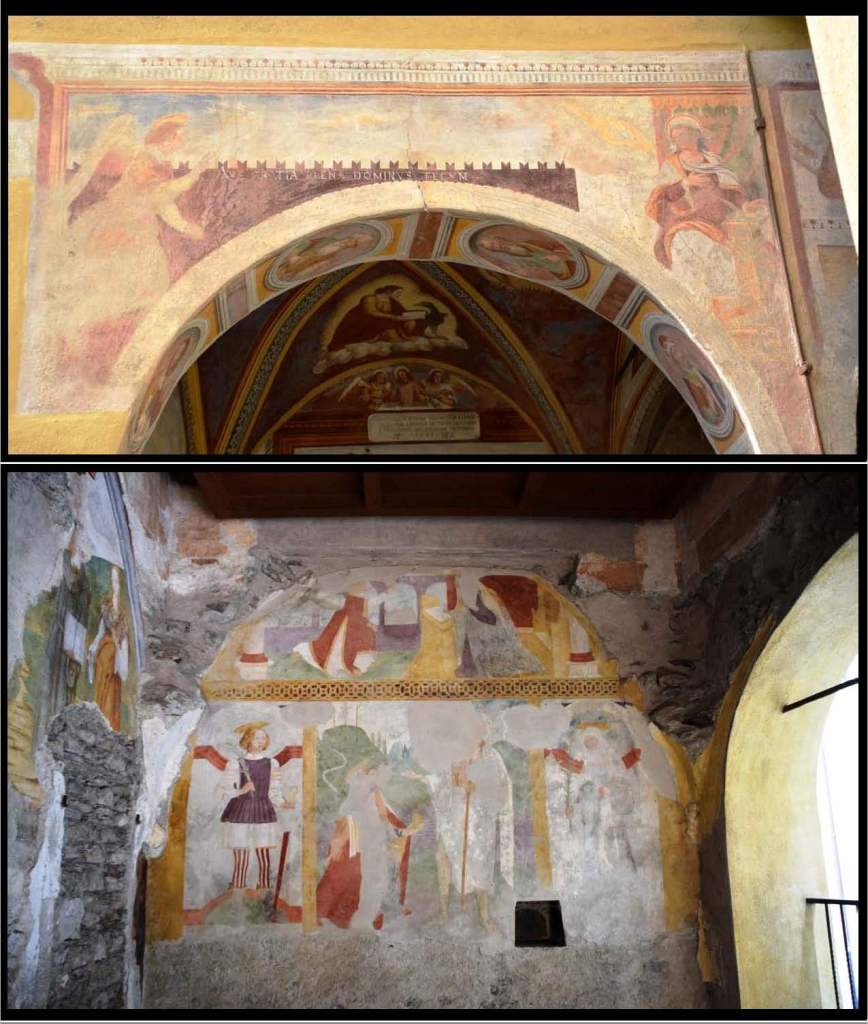
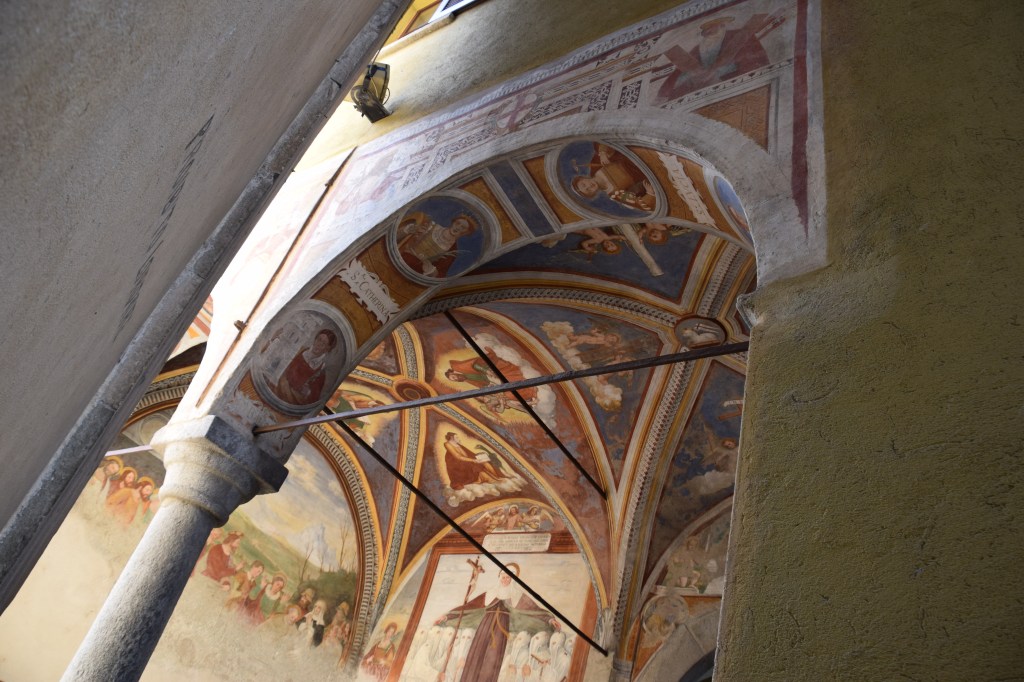
CHIURO – Cappella e Portichetto dei Disciplini, 14th-century – painted in 1563 by Cipriano Valorsa (1515-1604). My favorite representation of Mary is the Madonna della Misericordia and so I love this chapel for the image of Santa Marta offering the ‘protection of the mantle’ – sheltering the white hooded penitents – the Confraternita dei Disciplini. The original Disciplini were recognized in 1277 by Pope Gregory IX as a legitimate religious group of lay brothers who practiced what is called ‘natural asceticism’. They are better known as Flagellants because they whipped themselves in imitation of Jesus’ suffering and to do penance for the sins they believed brought the Black Death. The group was censured in 1349 by Pope Clement VI as religious fanatics. This is when they adopted hoods to hide their identities. This allowed them to practice their ‘unnatural asceticism’ without being recognized and thus held to account by church leaders. By the 15th-century – the date of the oldest and original frescoes – the confraternity had gained broad appeal among men and in northern Italy – especially Bergamo. This chapel was dedicated to those ‘disciplined’ men who – although not ordained – lived strict lives that disavowed sins defined by the church as particularly damaging to one’s soul. The chapel was part of the cemetery of the Disciplini – a grand funeral and burial being one benefit of membership in the group.
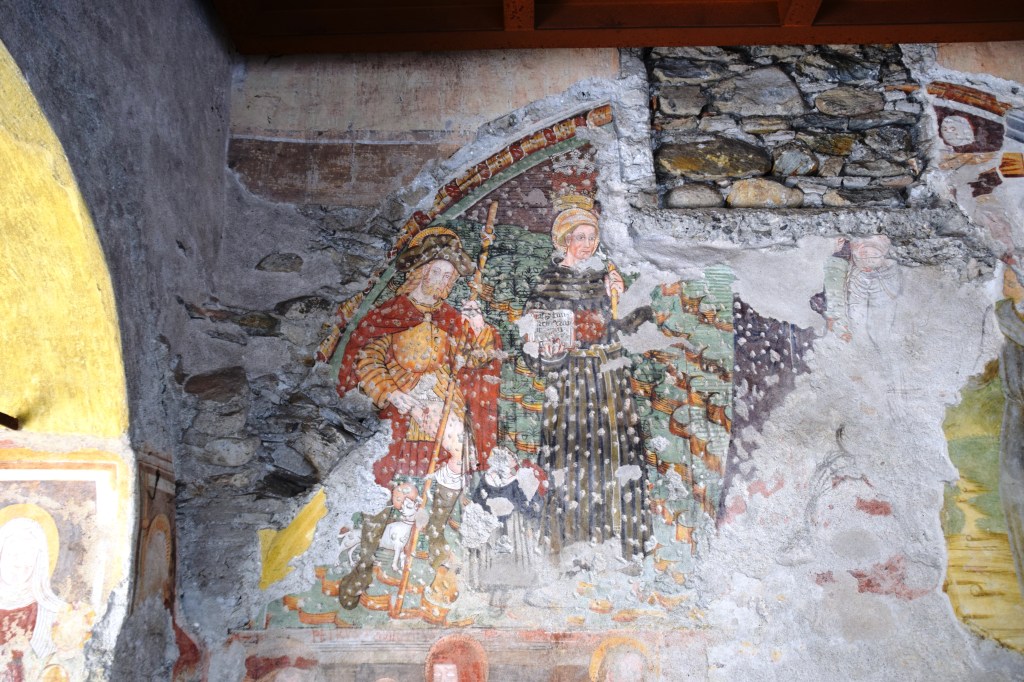
The following are the frescoes from the 14th-century Cappella e Portichetto dei Disciplini, 14th-century. Most of the frescoes were painted in 1563 by Cipriano Valorsa (1515-1604). However, the walls of the upper chapel were painted in the 14th-century by an unknown author. The white ‘chips’ one sees all over the frescoes indicates that a newer fresco was placed over these original frescoes. A wall was ‘damaged’ like this to prepare it for holding new plaster.


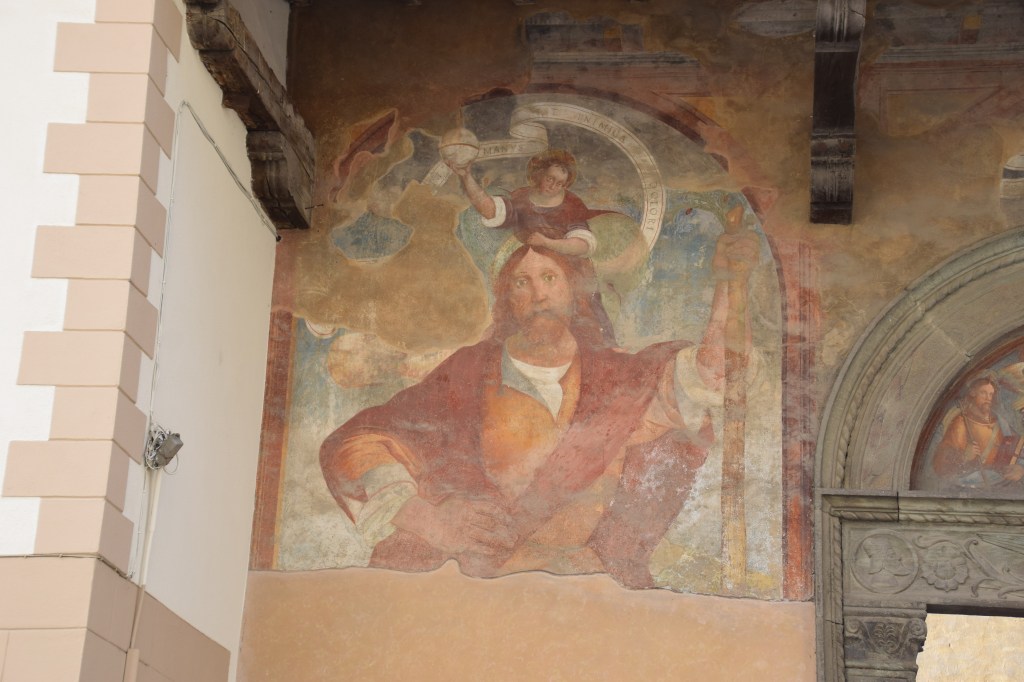
CHIURO – Chiesa Parrocchiale dei Santi Apostoli Giacomo e Andrea, 14th-century – the portone leading to the courtyard of the church – St Christopher carrying Jesus as the Salvator Mundi on his shoulders. This fresco was painted by Cipriano Valorsa (1515-1604) who also painted the deposition in the lunette to St Christopher’s left. The current church building dates to the 17th-century but the gateway dates to the original 16th-century entrance

CHIURO – Chiesa Parrocchiale dei Santi Apostoli Giacomo e Andrea, 14th-century – the portone leading to the courtyard of the church – This is the full lunette fresco from the gateway. This is a deposition with the body of Christ supported by two angels and Sts Peter and Paul on either side. This fresco was painted by Cipriano Valorsa (1515-1604). The surrounding door frame is beautiful and was carved by a Valtellinese sculptor – Galini Cozteno – working in the mid-15th and early 16th-centuries.
CHIURO – Chiesa Parrocchiale dei Santi Apostoli Giacomo e Andrea, 14th-century – the portone leading to the courtyard of the church – This is the full lunette fresco from the gateway. This is a deposition with the body of Christ supported by two angels and Sts Peter and Paul on either side. This fresco was painted by Cipriano Valorsa (1515-1604).
The surrounding door frame is beautiful and was carved by a Valtellinese sculptor – Galini Cozteno – working in the mid-15th and early 16th-centuries. At the top center is carved a Madonna and Child with the Coat-of-Arms of the Quadrio family that features the eagle to indicate loyalty to the Ghibelline political faction which supported the Roman Emperor – as opposed to the Guelph faction who were loyal to the Pope in Rome. Beneath Jesus are two angels holding the Christogram with the Greek letters – HIS – an abbreviation of the Greek name for Jesus – IHΣΟΥΣ. The date inside the Chritogram and beneath the Greek letters is 1522.
There a carved signature by the artist underneath the Christogram that says IO GALINI DE COZTENO FECIT HOC OPUS – I, Galini de Cozteno made this work. Cozteno was a 15th and early 16th-century sculptor from the Valtellina. Cozteno – listed in text as Galinus Cozteno rather than Galini Cozteno – is cited in Charles Callahan Perkins 1868 book – Italian Sculptors: Being a History of Sculpture in Northern, Southern, and Eastern Italy on page 150. Because of the assumed difficulties of carving an ‘s’, the sculptor’s name can be seen listed in other books on art with an ‘s’ rather than a ‘z’ as is represented on the stone and his first name given as Galinus. But this carved lintel makes clear that the sculptor was fully capable of making a discernible s and z.
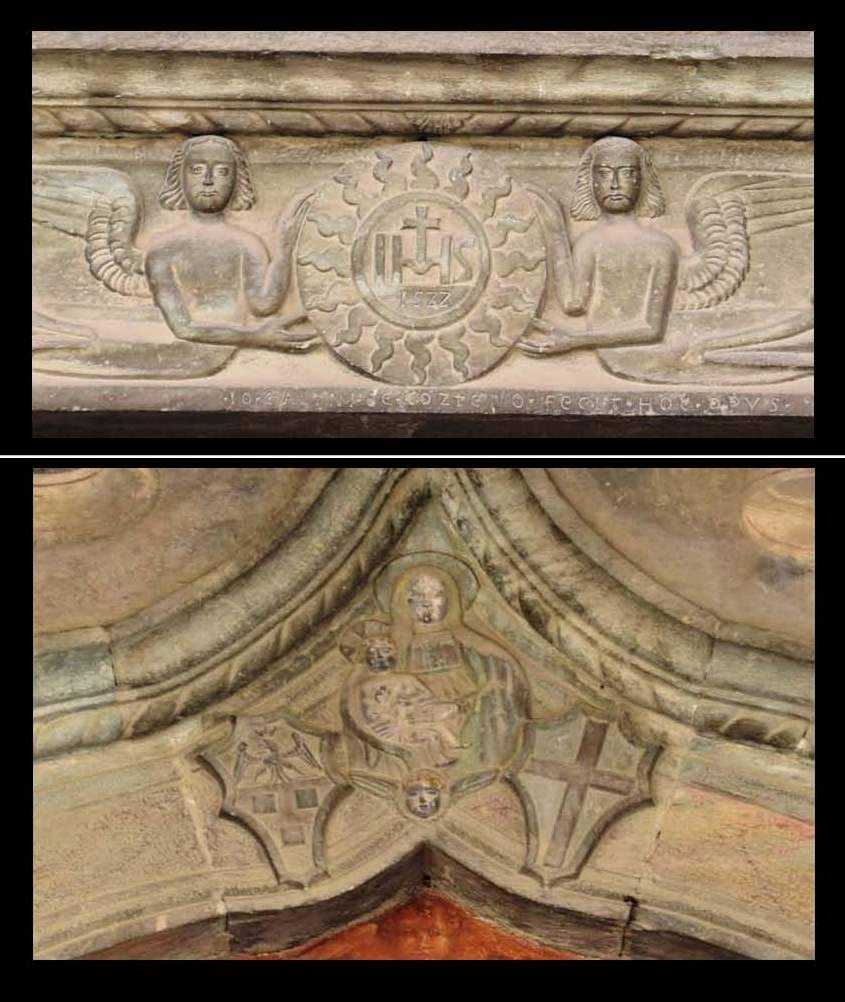
CHIURO – Chiesa Parrocchiale dei Santi Apostoli Giacomo e Andrea, 14th-century – the portone leading to the courtyard of the church – Details of the Galini Cozteno carving of 1522.
CHIURO – Chiesa Parrocchiale dei Santi Apostoli Giacomo e Andrea, 14th-century – the portone leading to the courtyard of the church – Details of the Galini Cozteno carving of 1522. At the top center is carved a Madonna and Child with the Coat-of-Arms of the Quadrio family that features the eagle to indicate loyalty to the Ghibelline political faction which supported the Roman Emperor – as opposed to the Guelph faction who were loyal to the Pope in Rome. Beneath Jesus are two angels holding the Christogram with the Greek letters – HIS – an abbreviation of the Greek name for Jesus – IHΣΟΥΣ. The date inside the Chritogram and beneath the Greek letters is 1522.
There a carved signature by the artist underneath the Christogram that says IO GALINI DE COZTENO FECIT HOC OPUS – I, Galini de Cozteno made this work. Cozteno was a 15th and early 16th-century sculptor from the Valtellina.

CHIURO – Chiesa Parrocchiale dei Santi Apostoli Giacomo e Andrea, 14th-century – the portone leading to the courtyard of the church – This is the full gateway. This is a deposition with the body of Christ supported by two angels and Sts Peter and Paul on either side. This fresco was painted by Cipriano Valorsa (1515-1604). The surrounding door frame is beautiful and was carved by a Valtellinese sculptor – Galini Cozteno – working in the mid-15th and early 16th-centuries.
 Wall Madonna's of the Valtellina