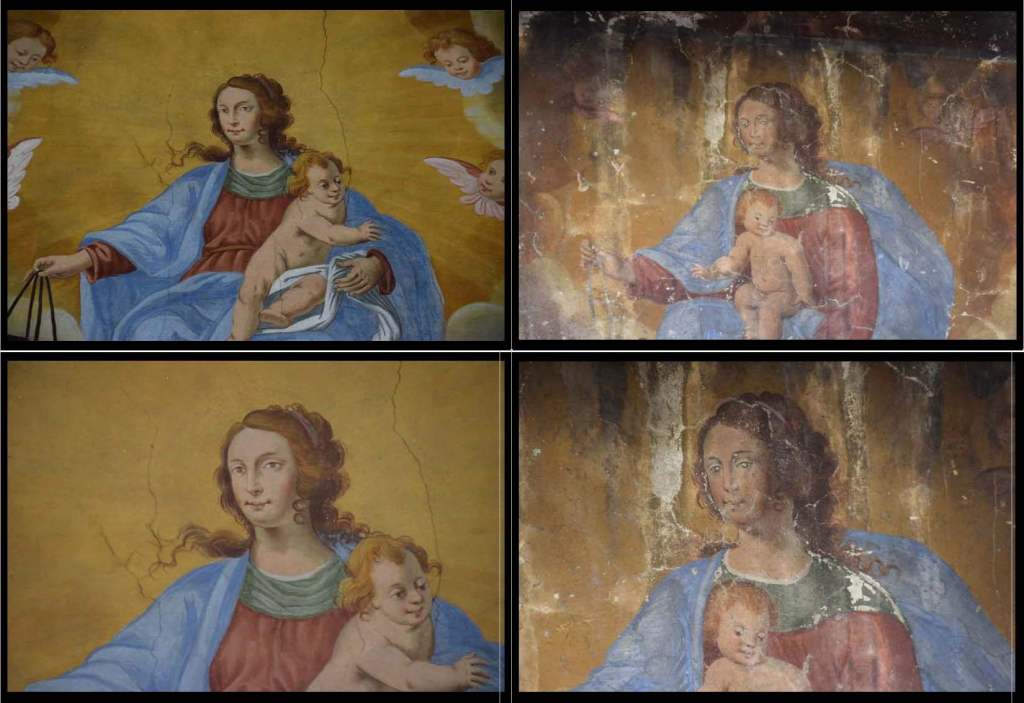
After I found the fourth Wall Madonna painted by Francesco Ambrosione I decided to visit the upper villages of Mangialdo, Barboni and Ruvari – all frazioni of Castione Andevenno – and all very old. But I had to drive through Triangia to get to them. Triangia is a frazione of Sondrio and because I stopped to take a walk I made a really exciting discovery. The parish church was open and there was a 1681 painting of the Madonna & Child between two saints and it looked exactly like the old fresco I found in Gatti! I have offered montages for comparison. On the top left is a detail from the painting I found the 16th-century Chiesa di San Bernardo – the parish church of Triangia. The bottom left show a detail of the Madonna. The painting is dated to 1681. On the top right is the Wall Madonna that I found on a building in Gatti that was dated to 1716. I think they are remarkably similar and could be by the same artist. Here are more views of the artworks.
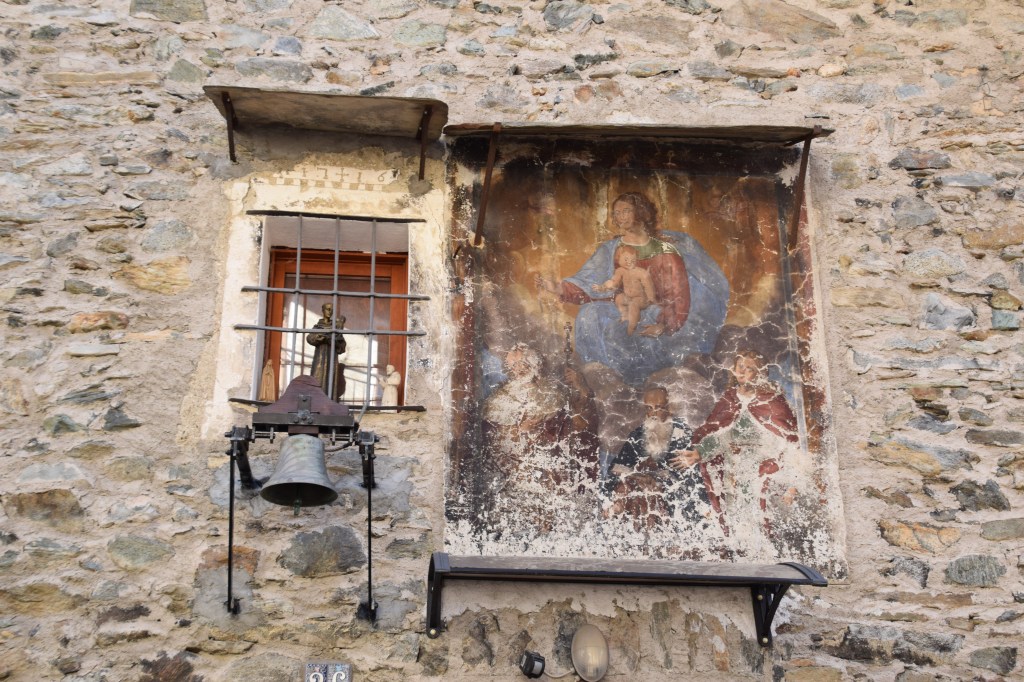
This is a full view of the Wall Madonna I found in Gatti. The Madonna is located in the center of a double row of very old homes. It is quite near the western side of the village and just inside the rows of old from from the town fountain and laundry.
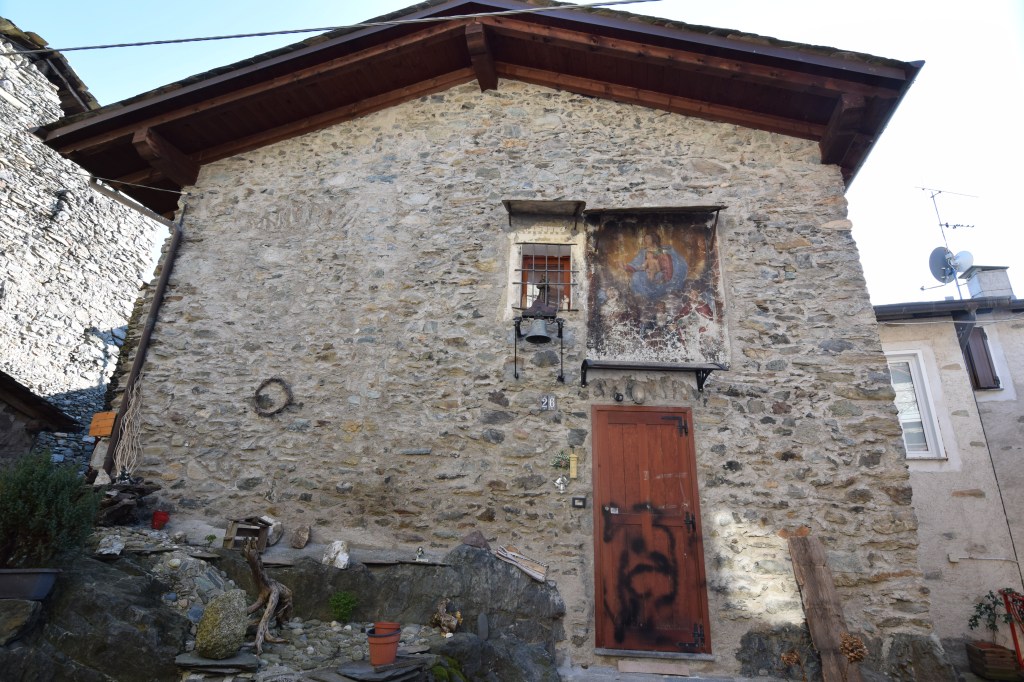
This is a full view of the home taken with a wide-angle lens. Unfortunately some vandal spray-painted graffiti on the front door.
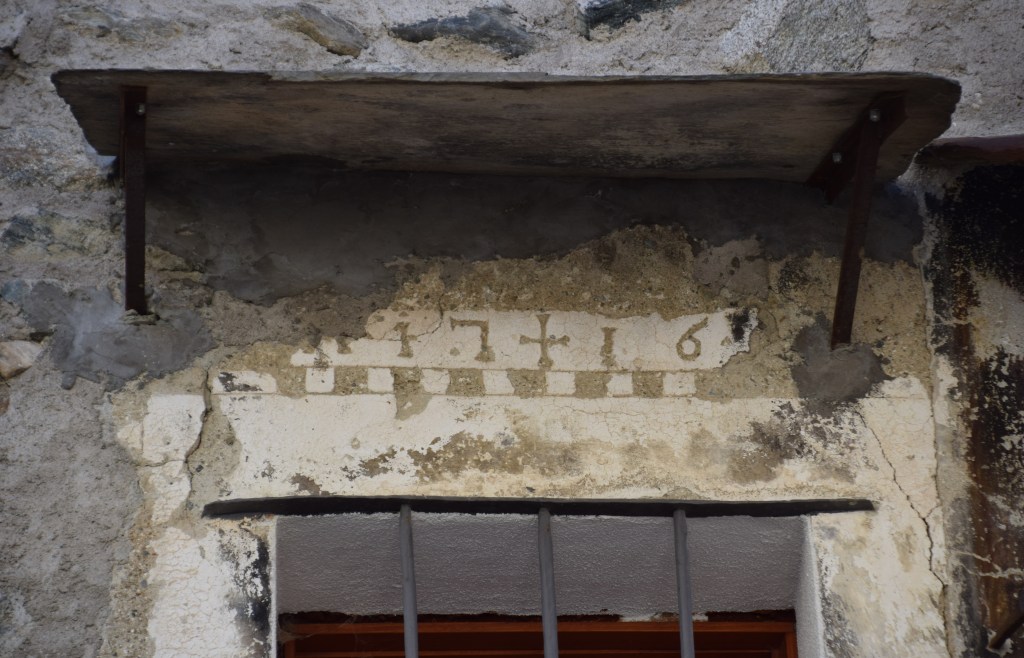
Here is a photo of the date on the front of the home – 1716
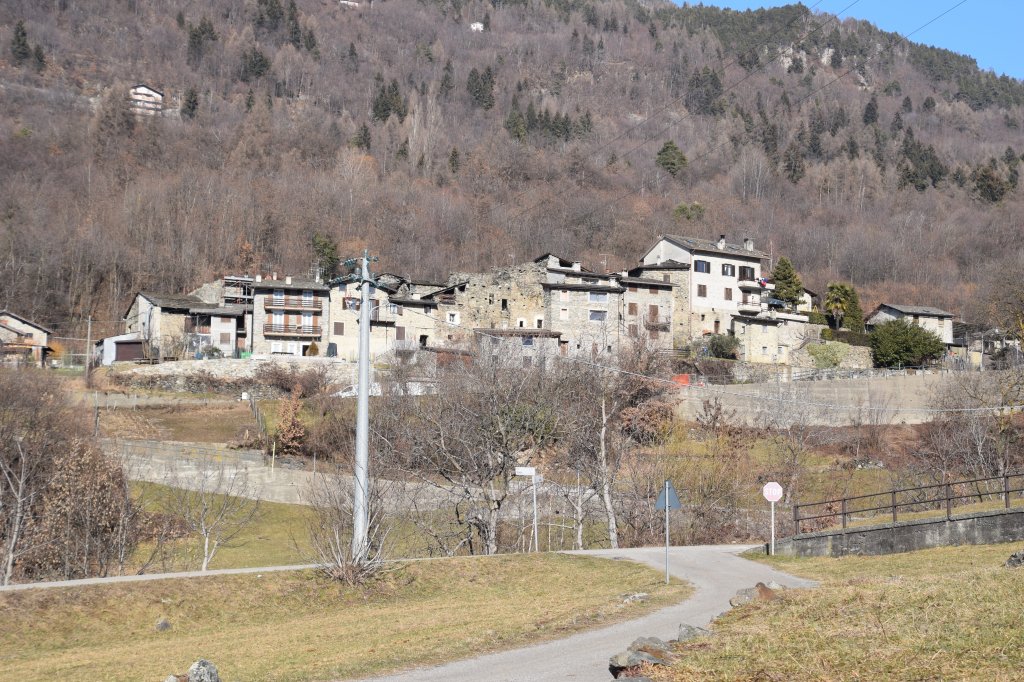
A view of Gatti from the cemetery where one can always find free parking.
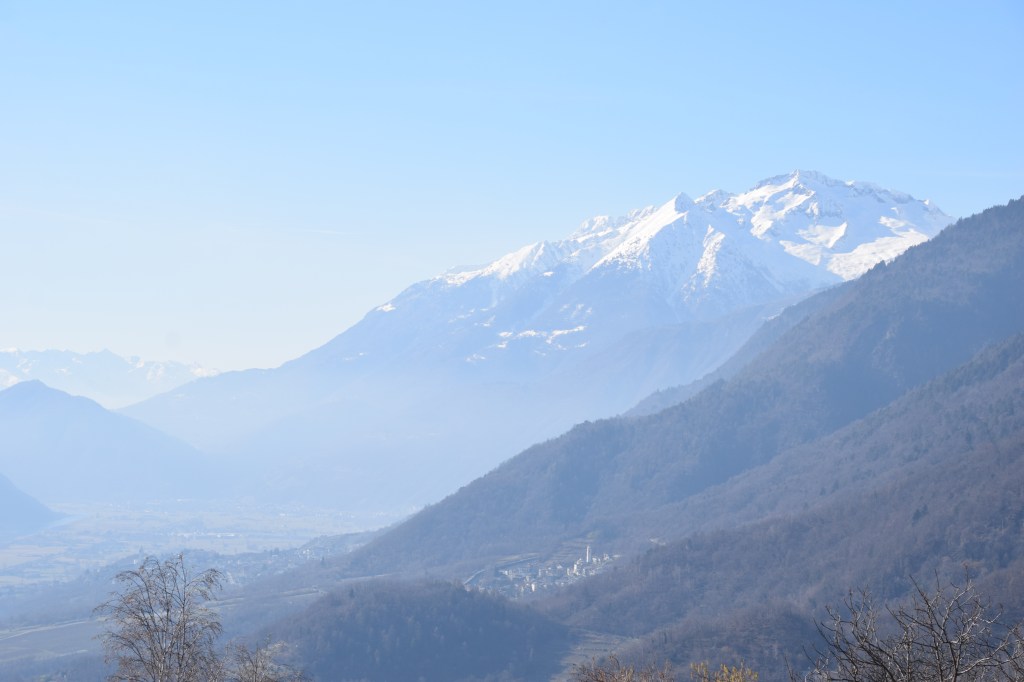
This is the view from Gatti of Postalesio. This is the Rhaetian Alps side of the Valtellina – the side that gets the sun.
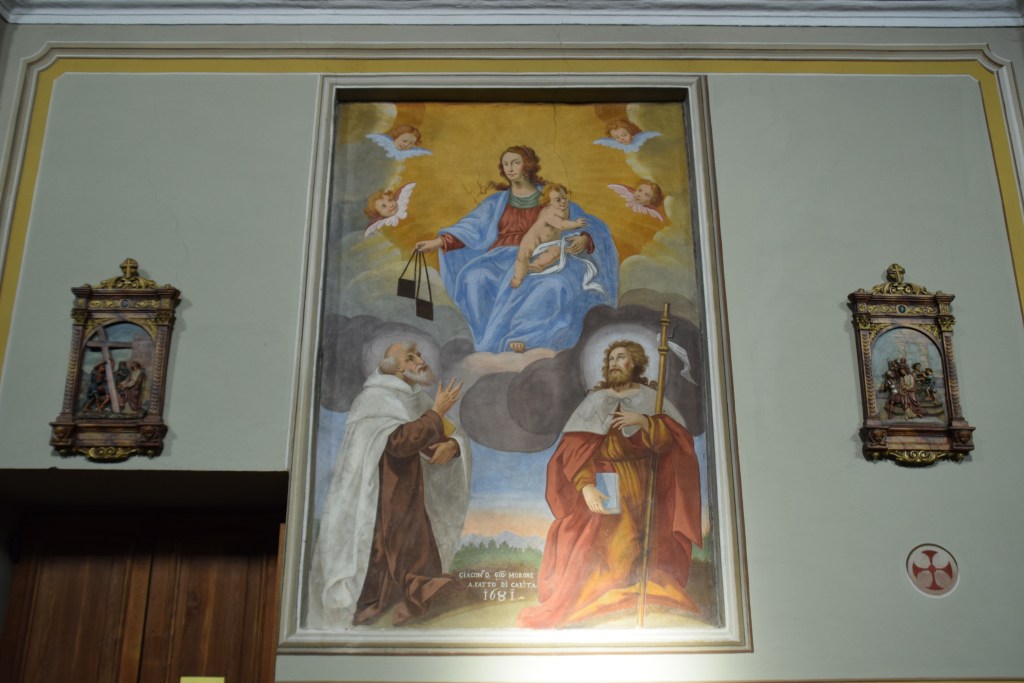
This is a full view of the painting in the parish church of Triangia – Chiesa di San Bernardo, 16th-century. The painting is dated 1681band dedicated by Giacomo Morrone

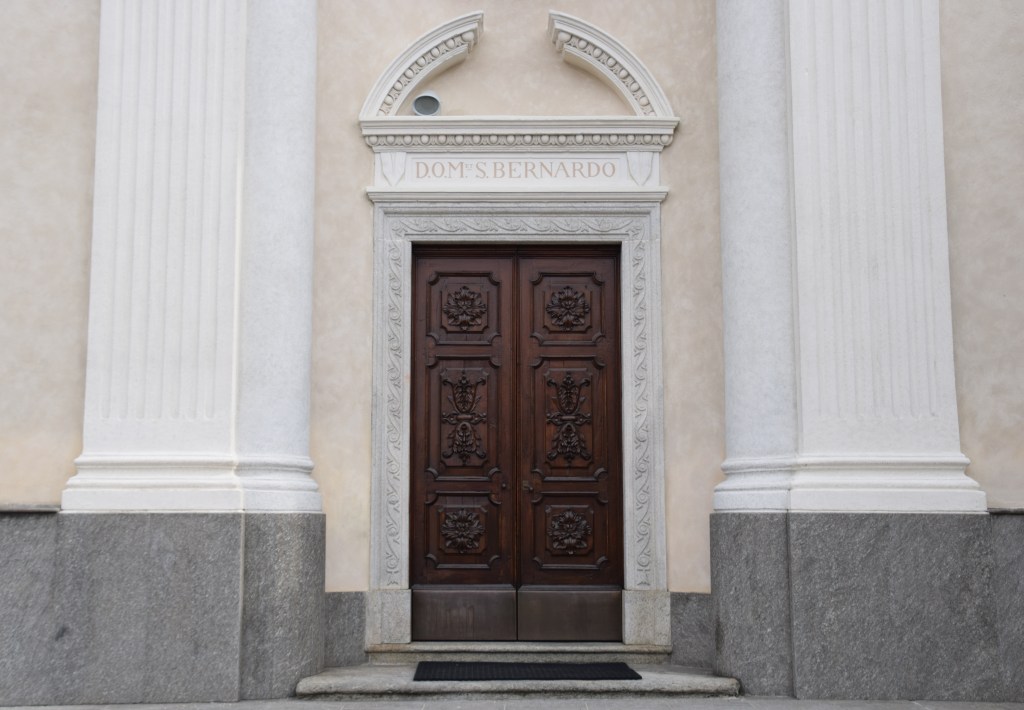
The entry doors to the church – Chiesa di San Bernardo.

This is a view of the Orobie Alps from Triangia
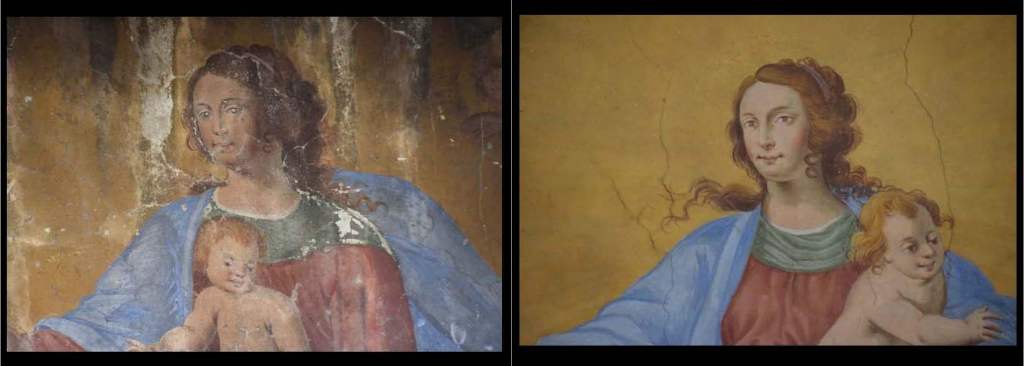
A side-by-side comparison of the head and upper torso of the Madonna – Gatti Wall Madonna on the left and church painting from Triangia on the right. I think the look amazingly similar.
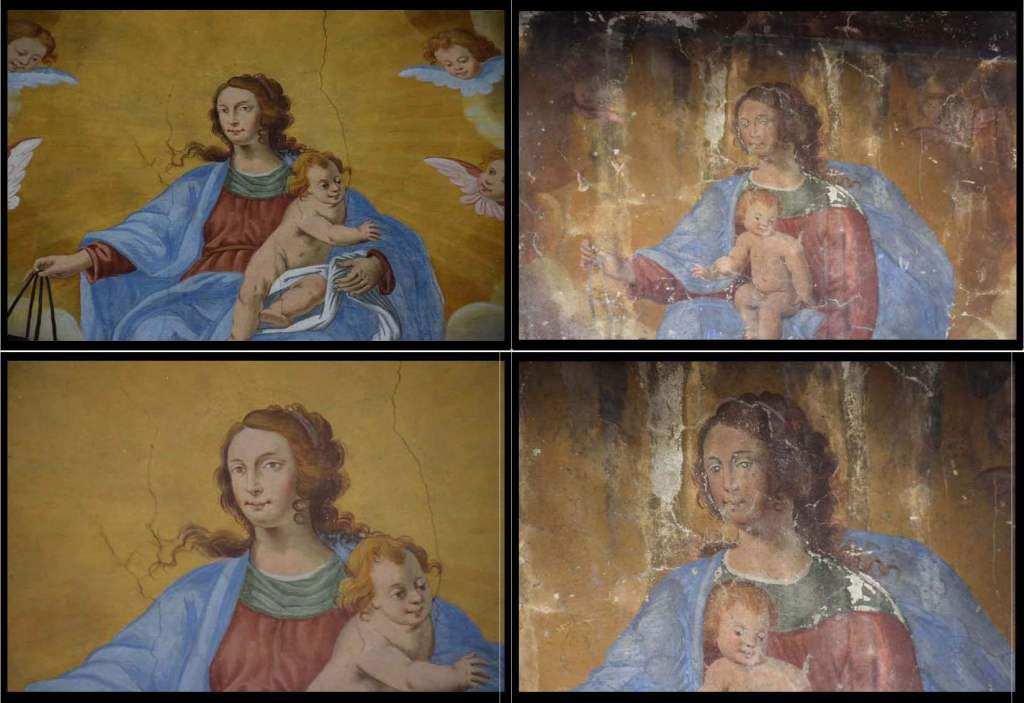
The colors are the same, the hair if the same, the face and neck are the same, the mouth is the same – What do you think?
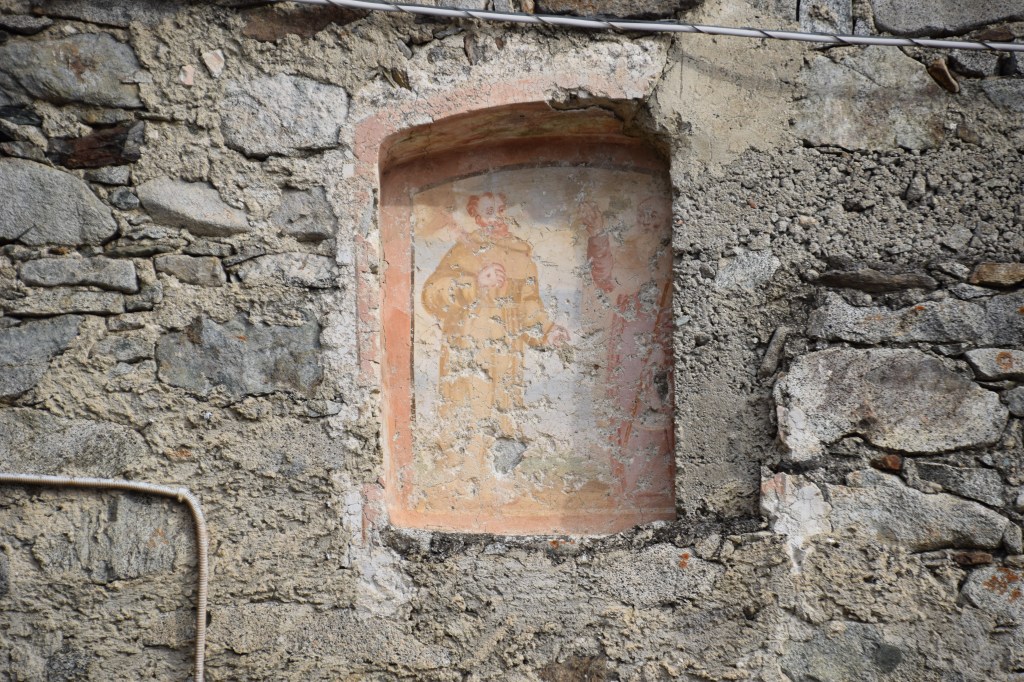
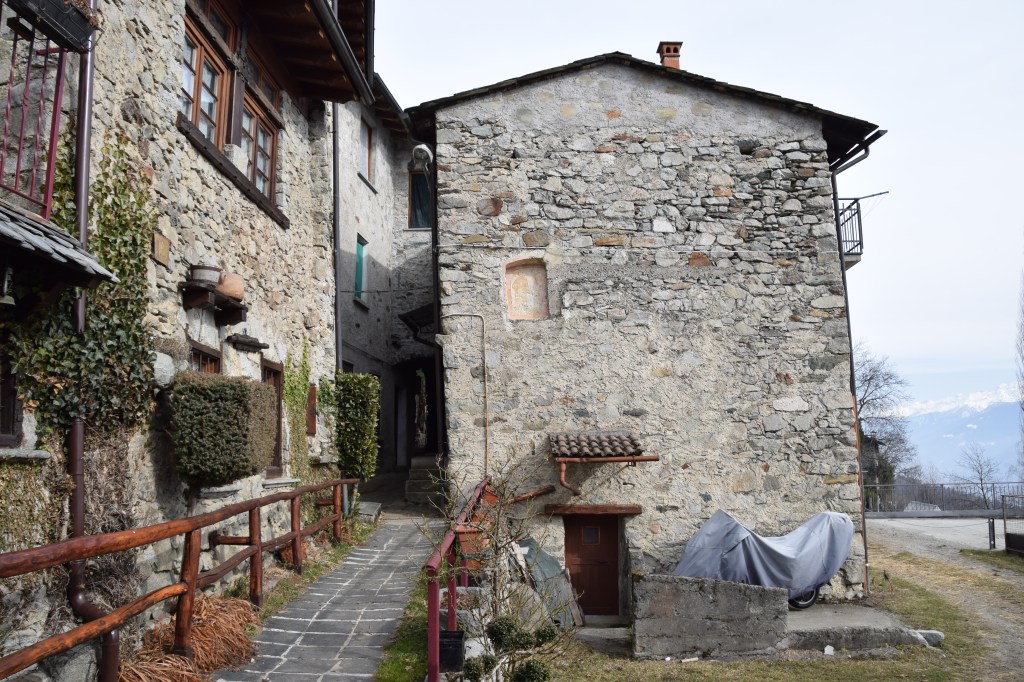
One last photo – a fresco of two male saints that I found at the very western end of Ruvari – the frazione that sits above Triangia and a few meters west of Barboni. It is clear this is quite old and the fresco was once larger. The saint on the left is St Francis of Assisi. The stigmata on his right hand is clearly visible. I think the saint on the right is St Anthony the Abbot.
 Wall Madonna's of the Valtellina